Automotive Digital Twins in Design and Manufacturing
Published: October 5, 2026 • Reading Time: 6 min • Last Updated: October 5, 2026
Learn how automotive digital twins support vehicle design, virtual validation, factory planning and maintenance, including their data needs, benefits and limits.
Contents
- What is a digital twin, and how is it different from a 3D model?
- Use in vehicle design
- How virtual validation and physical testing work together
- Factory planning and production lines
- Service life, maintenance and data management
- Benefits and limitations
- How to plan a digital-twin project
- Frequently asked questions
- Is a digital twin always real-time?
- Does a digital twin eliminate the need for physical prototypes?
- Are digital twins only used for electric vehicles?
- Summary: Choose the question before the model
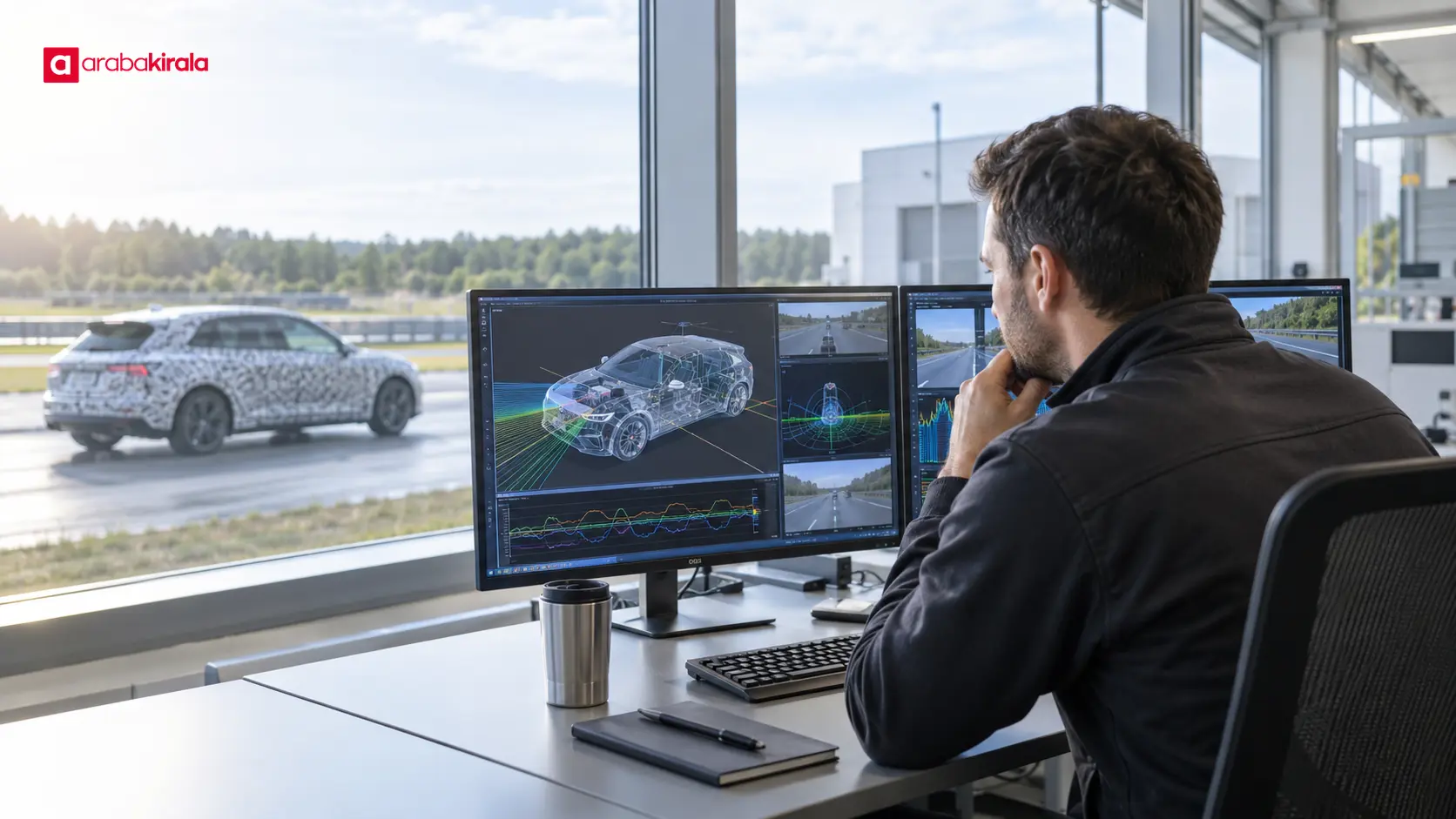
An automotive digital twin is a data-informed digital representation of a real vehicle, component, production asset or process. This guide explains how a twin differs from a static 3D model, how teams use it in vehicle development and factory production, what data it depends on, and how to judge its results. It can support decisions about a physical system, but it is not automatically a perfect copy or a tool that knows every future condition.
What is a digital twin, and how is it different from a 3D model?
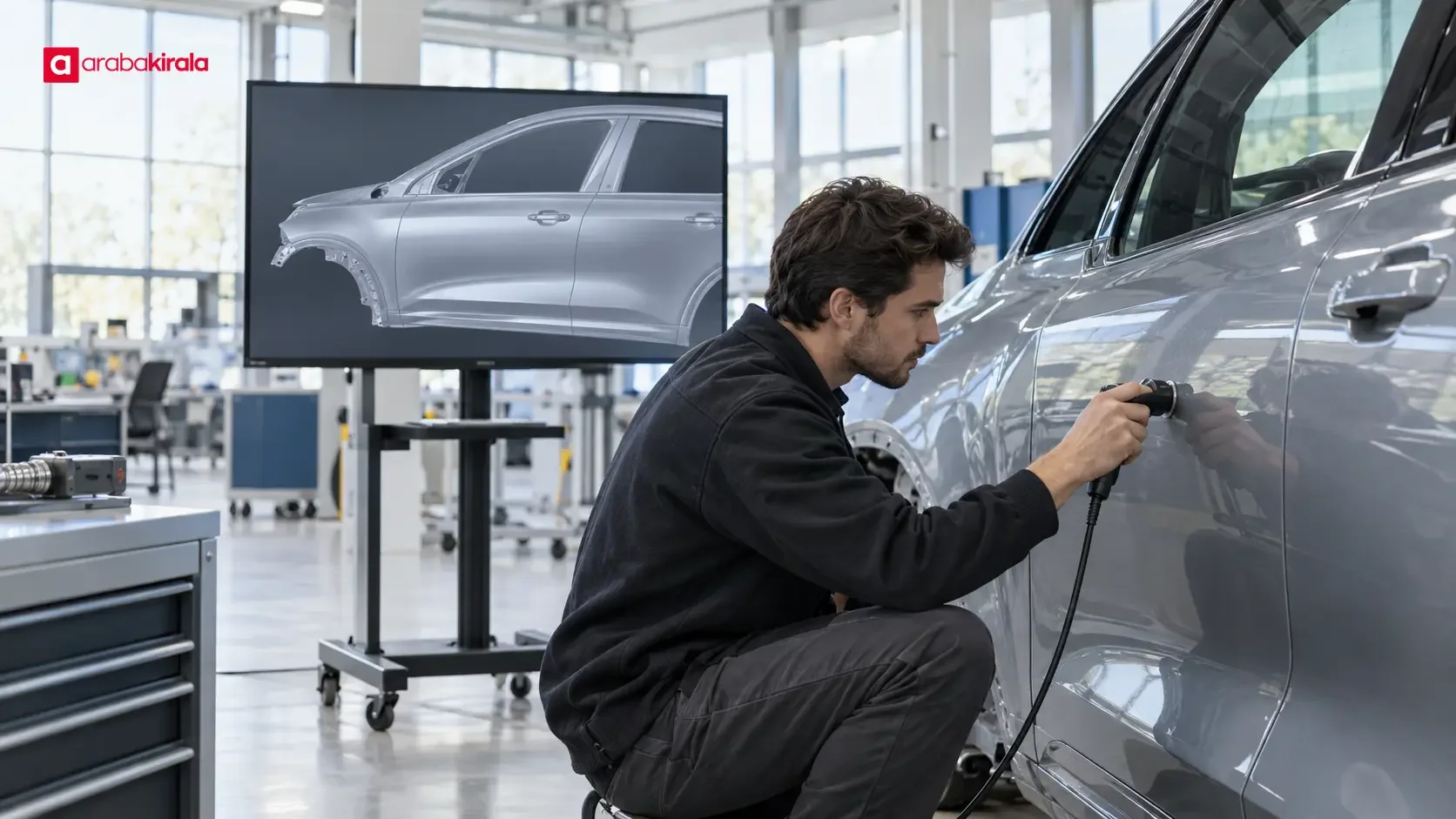
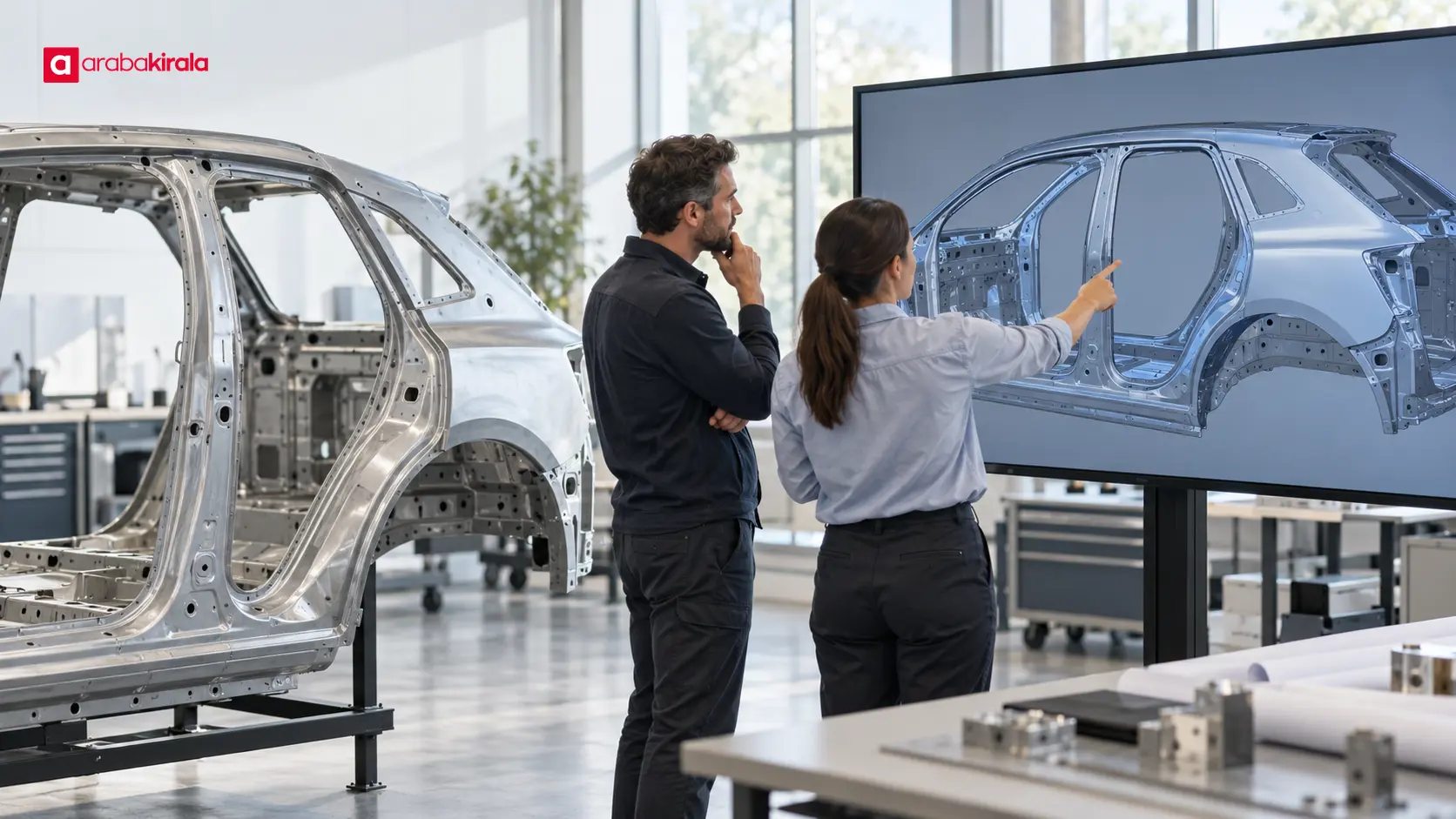
A three-dimensional model describes an object's shape and selected technical properties. A digital twin adds behavior, operating context and, where available, data from the physical system over time. A vehicle-body model may show geometry; a twin-oriented workflow can link that representation to relevant factors such as load, temperature, vibration or manufacturing conditions so engineers can investigate performance questions. Projects do not all use the same inputs. The purpose of the work and the measurement infrastructure determine what is useful.
The word “twin” does not mean that the digital representation is identical to reality or continuously current. Sensors, test results, manufacturing records and engineering models may update at different rates. Variables outside the defined scope are not represented, while measurement errors and model assumptions can affect outputs. Teams therefore need to know which asset, period and operating conditions the model covers.
Use in vehicle design
Design teams can use digital representations to study how parts and systems work together. Models for the body, powertrain, battery, thermal management or cabin can be connected according to the project's needs. The aim may be to evaluate design options before building a physical prototype, find interface issues and make test plans more focused. A digital study does not replace physical testing in every case. Engineers decide which questions a simulation can answer and which require tests.
For example, a virtual airflow analysis can help compare aerodynamic design variants. A safety assessment such as crash performance must be considered alongside suitable validated methods, applicable technical requirements and physical testing. Results are only as useful as the model's validation for the intended application. A different vehicle configuration, material or set of boundary conditions may not support the same level of confidence.
How virtual validation and physical testing work together
Virtual testing examines selected conditions in a model before a prototype is built. An engineering team can vary inputs such as load, temperature, road excitation or component behavior to conduct sensitivity studies. This can reveal areas that need attention and conditions that deserve closer investigation. A simulation, however, produces results within the assumptions supplied to it; it cannot be assumed to discover every unexpected physical interaction.
Physical testing measures how real hardware behaves. Comparing test measurements with a digital model's predictions can help tune the model or establish the applications in which it is adequate. In a useful workflow, each method informs the other: virtual analysis can help target tests, while physical measurements help evaluate model credibility.
Factory planning and production lines
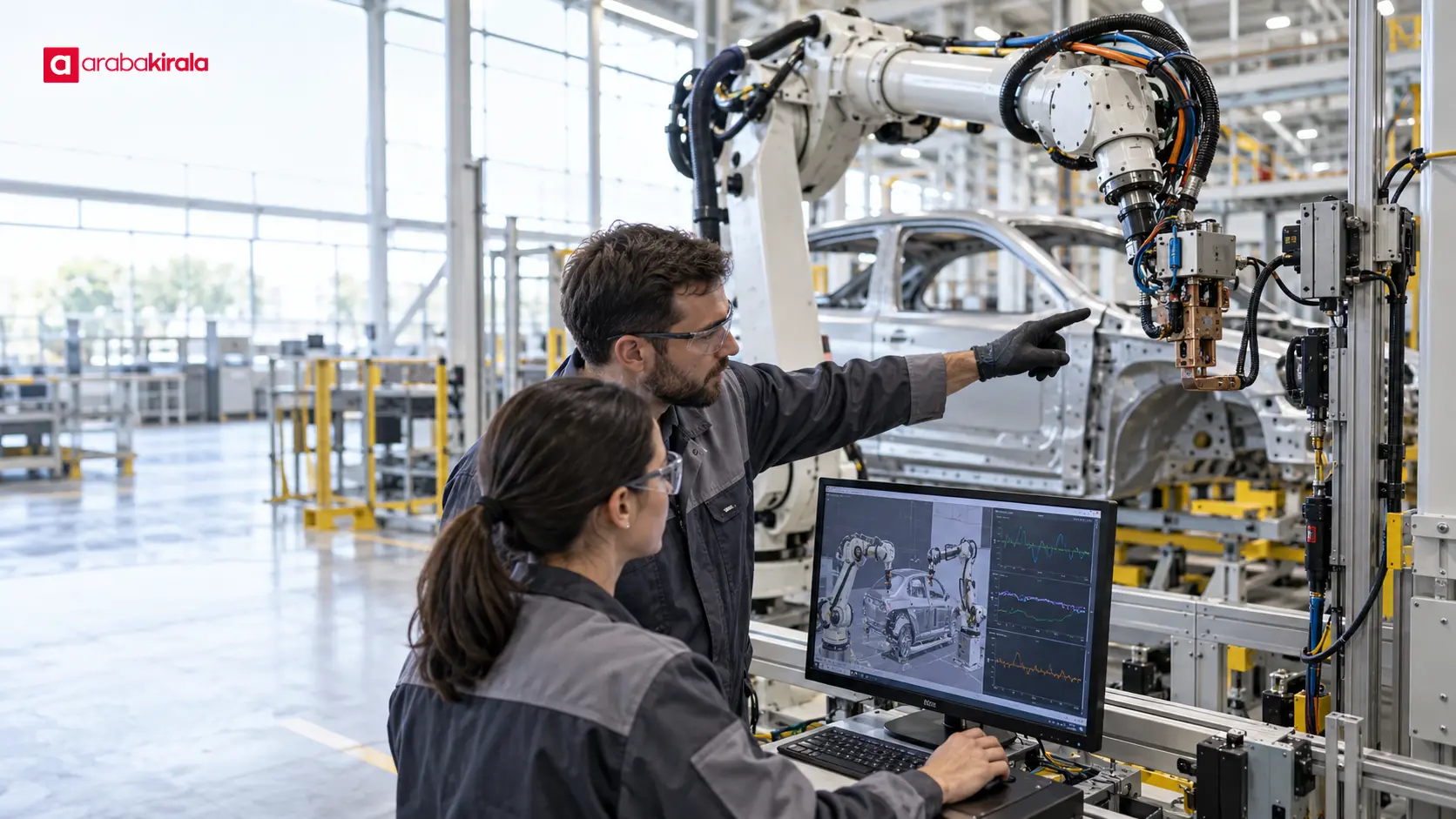
A factory digital twin is more than a building drawing. A process model may represent a production cell, machines, robot paths, material flow and work sequencing. When linked to real production data, it can help teams examine decisions such as line balancing, capacity use or a layout change before altering an operating line. This is useful when several stations influence one another and a team needs to understand where a bottleneck may form.
During production, signals such as equipment state, cycle data and quality records may be connected to a model if the required infrastructure exists. A visualization by itself does not prove the cause of a problem. It needs to be interpreted alongside operator knowledge, maintenance history and measurement quality. If the model drifts away from the real production system, decisions made without updating it can mislead.
Service life, maintenance and data management
Digital-twin methods can remain useful after a vehicle has been built for certain defined applications. Data from a vehicle or component can help examine operating conditions and changes over time. In fleet or service settings, such analysis may add information for maintenance planning; a single indicator should not be treated as a definitive diagnosis or remaining-life estimate. The component covered by a measurement, how current the data is and the conditions represented by the model all matter.
Data management is part of the technical design. If sensor identity, timestamp, unit, software version and vehicle configuration are inconsistent, records that appear comparable can be matched incorrectly. Projects should also define access permissions, retention and intended uses. Vehicle data may contain personal or sensitive information, so privacy and security needs should be addressed under relevant requirements and system design.
Benefits and limitations
A digital twin can help teams examine design choices earlier, target physical experiments, evaluate production flow and give different groups a shared view of a system. When assumptions are visible, engineers can discuss the consequences of a proposed change more systematically. These benefits depend on suitable scope and reliable data; they cannot be assumed to appear equally in every project.
Implementation costs go beyond software. Sensor and connectivity infrastructure, data preparation, model validation, specialist expertise, cybersecurity and integration all take work. A highly detailed model that is not maintained may be less useful than a simpler representation that stays current. Assess success by whether the model supports a defined decision and whether its results can be checked, rather than by visual realism alone.
How to plan a digital-twin project
Start with a concrete question that needs an answer. Questions such as “Where does production waiting increase?” or “Under which conditions should this design change be evaluated?” help set a useful scope. Next define the physical-system boundary, required data sources, model update frequency and the people who will use the decision. These choices turn a project from an attractive display into a practical engineering tool.
- Define the decision: Identify a specific design, testing, production or maintenance issue.
- Set boundaries: Specify the vehicle, component, line or period to be represented.
- Assess data: Review its source, frequency, accuracy, missing records and units.
- Validate the model: Compare its results under intended conditions with suitable measurements.
- Assign upkeep: Establish how model changes, versions and access will be managed.
- Track the purpose: Monitor measures tied to the original decision, not model coverage alone.
Frequently asked questions
Is a digital twin always real-time?
No. Some representations receive data frequently, while others update when test or production records become available. Update frequency depends on the purpose and the data infrastructure. A screen that looks live does not by itself prove that every physical property is reflected instantly.
Does a digital twin eliminate the need for physical prototypes?
Not in every situation. Virtual analysis can make prototype and test work more focused, but physical validation remains necessary where real hardware behavior must be established. The decision depends on the feature being examined and its validation requirements.
Are digital twins only used for electric vehicles?
No. The method can apply to vehicle components, production equipment and factory processes. Battery and thermal behavior are important applications for electric vehicles, but the underlying concept is not tied to a particular powertrain.
Summary: Choose the question before the model
An automotive digital twin connects a defined digital representation of a physical system with data and behavioral models to support design, testing, production or maintenance decisions. A sound first step is to state the decision you want to improve, then check whether the required data is available and dependable. Validate the model against relevant measurements, record its boundaries and review results with appropriate specialists. This gives the twin a concrete role in an engineering workflow instead of treating it as a visual copy.
Legal Disclaimer: All content, articles and information on the Araba Kirala website are provided solely to inform users. No information shared on this website constitutes definitive advice or guidance. Araba Kirala Teknoloji A.Ş. and its authors cannot be held responsible for any direct or indirect damages arising from the application of information on the website. For all questions and requests regarding car rental, please contact the office from which you will rent your vehicle.