Automotive Part Traceability: From Production to the Vehicle
Published: October 8, 2026 • Reading Time: 9 min • Last Updated: October 8, 2026
Learn how serial and lot identifiers connect automotive parts with production, assembly and service records, and how traceability supports quality investigations and maintenance history.
Contents
- What does automotive part traceability mean?
- How is a component identified?
- Part number, serial number and lot
- Links to production data
- From production to the vehicle
- Materials and supply
- Processing, inspection and assembly
- Service and the vehicle’s life
- How traceability supports quality and safety work
- How to check traceability for a component
- Data standards, digital identity and limits
- What traceability means for vehicle owners and buyers
- Summary and next step
- Frequently Asked Questions
Automotive part traceability is the record system that links a component’s identity to its material and production history, its production group, and its place in an assembly flow. This guide explains how part, serial and lot numbers work, how records follow a component from production through assembly and service, how they support quality and safety investigations, and what to check when verifying a part’s identity.
What does automotive part traceability mean?
A vehicle contains thousands of parts and subassemblies. Traceability identifies a component through its production history and use, rather than relying on its name alone. A part number may identify a product type or design family. A serial number can distinguish one individual item, while a lot number can identify a group made under shared production conditions. Coding practices vary, so a number has meaning only within the definitions used by the organization that created its record.
Traceability does not necessarily mean that every component is tracked live throughout the vehicle’s entire life. The scope depends on the links established across the manufacturer’s and supply chain’s records. The practical goal is to investigate questions with evidence: which component is involved, what production conditions are associated with it, and which products may contain it?
How is a component identified?
Part number, serial number and lot
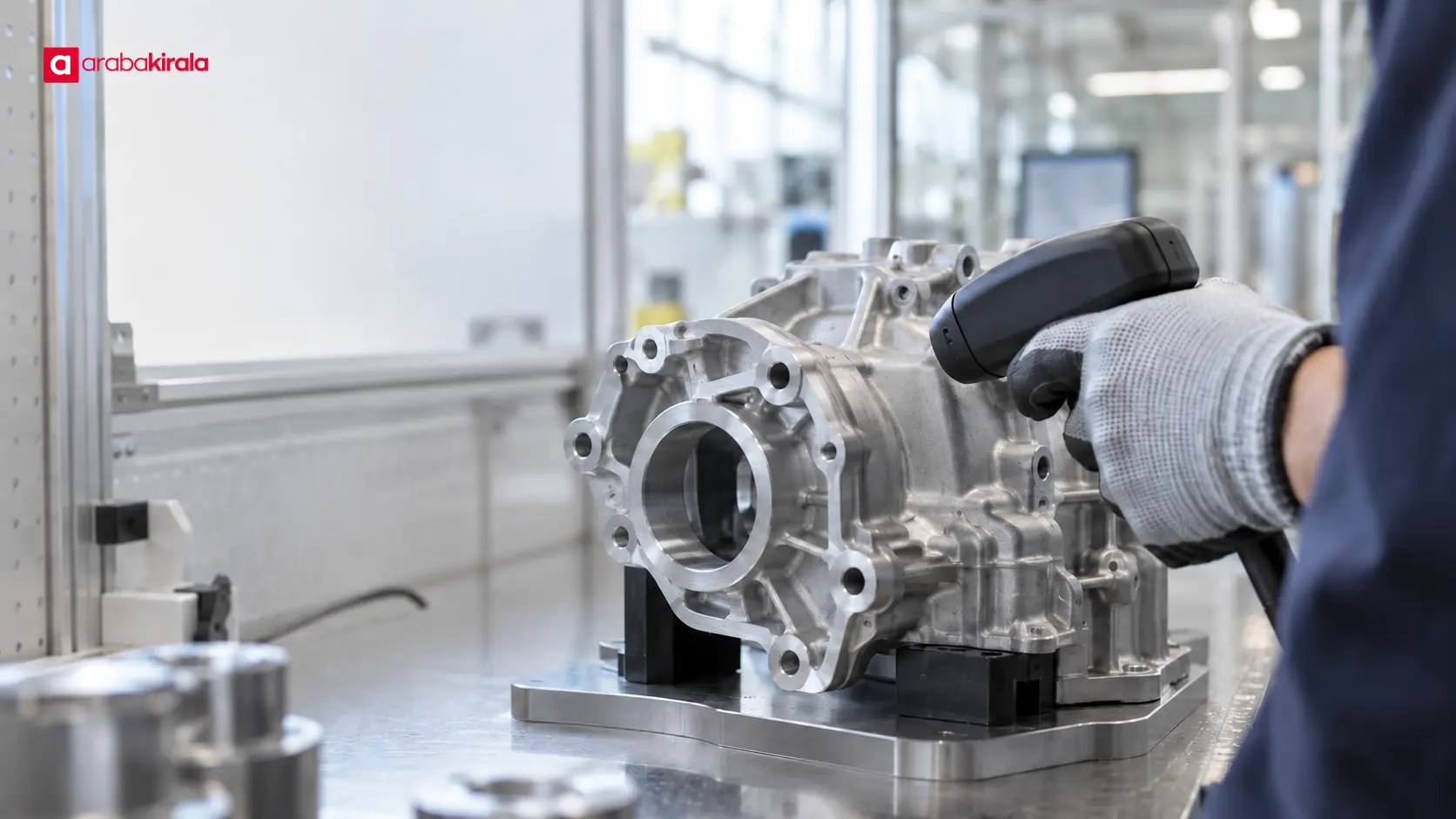
A part number distinguishes a type of part within a design or product family. Many parts of that type may share it. A serial number provides an identity for an individual item; a lot number points to a group of products made together or under shared conditions. These identifiers are not interchangeable. Investigating a lot may involve reviewing a group, while a serial number can support a more specific review of one component’s production record.
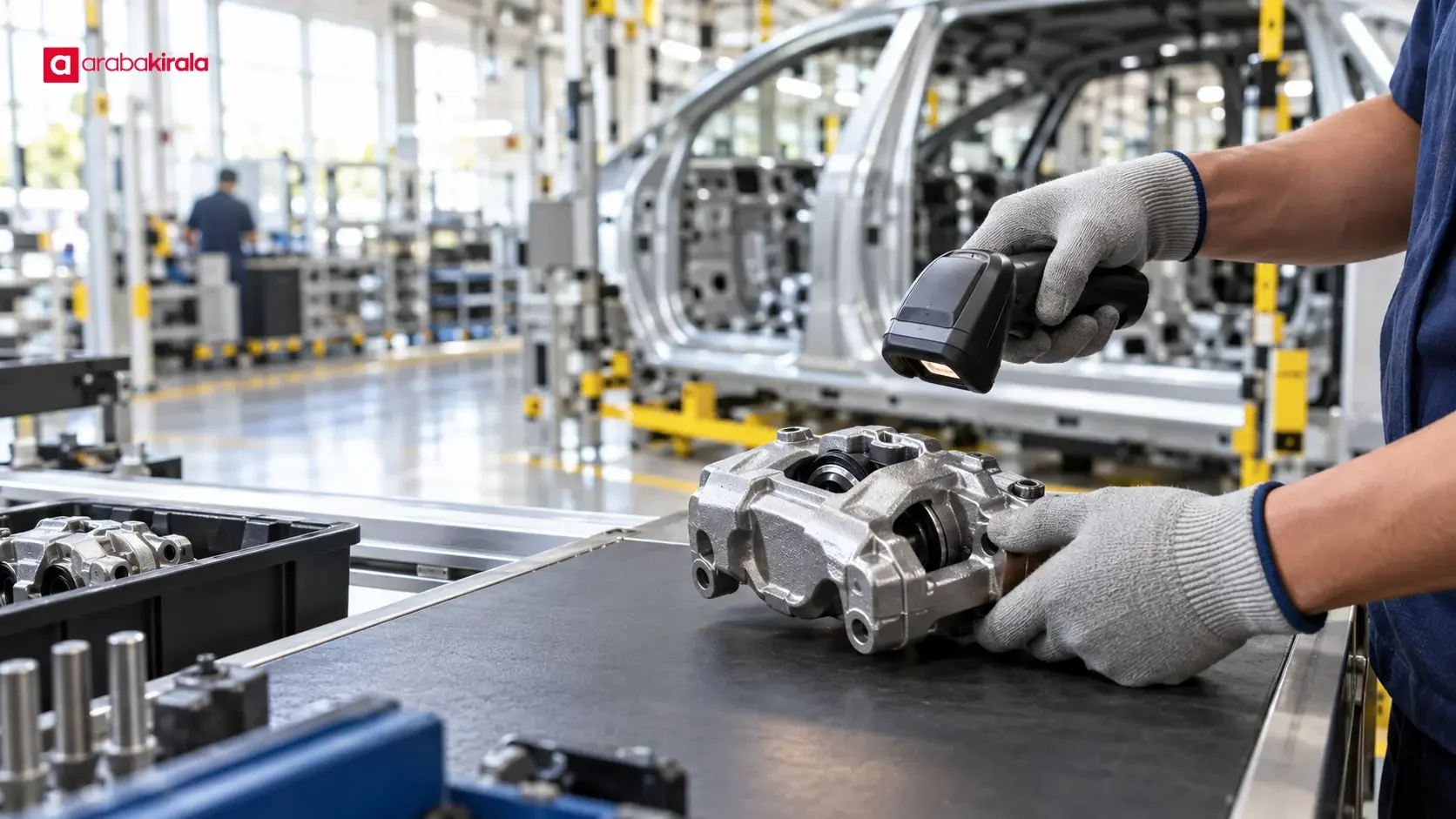
An identity may be laser marked on the part, placed on a label, or printed on packaging. Direct marking may not be practical for very small components, so packaging labels and shipment records can help preserve the link. A barcode or two-dimensional code may accompany a human-readable identifier. A scanner can read the code quickly, but the code alone does not explain production history unless it connects to a record system.
Links to production data
An identity can be associated with records such as production time, material lot, machine or station, measurement results, and quality checks. The data collected depends on the component, process and quality plan. For the records to be useful, units, times and identifiers need consistent definitions; changes should be traceable; and the data must be linked to the correct part.
A recorded measurement does not prove that a component is flawless under every condition. Records show which checks were performed and what their results were. When a concern arises, specialists assess that evidence alongside specifications, process information, material data and other technical findings.
From production to the vehicle
Materials and supply
For some products, traceability begins with raw materials or subcomponents. A manufacturer may associate the lot information of supplied material with its own work order. That connection can make it possible to trace a finished product back to a relevant material group when an issue is investigated. This depends on the transfer of suitable identifiers and records between supplier and manufacturer; the same level of data should not be assumed across every supply chain.
Processing, inspection and assembly
As a component passes through production stations, records such as a work order, timestamp, equipment identity or inspection result may be connected to its code or production lot. During assembly, another link can identify which vehicle body or subassembly received the component. This brings the component identity together with the vehicle identity. A misread code or incorrect association at assembly can leave a gap, which is why process checks matter.
Production records are not a large data file carried physically on each component. A short identifier on a code often serves as a key to more detailed information in a controlled record system. Access permissions, data storage and software used across facilities can affect which information is available and when.
Service and the vehicle’s life
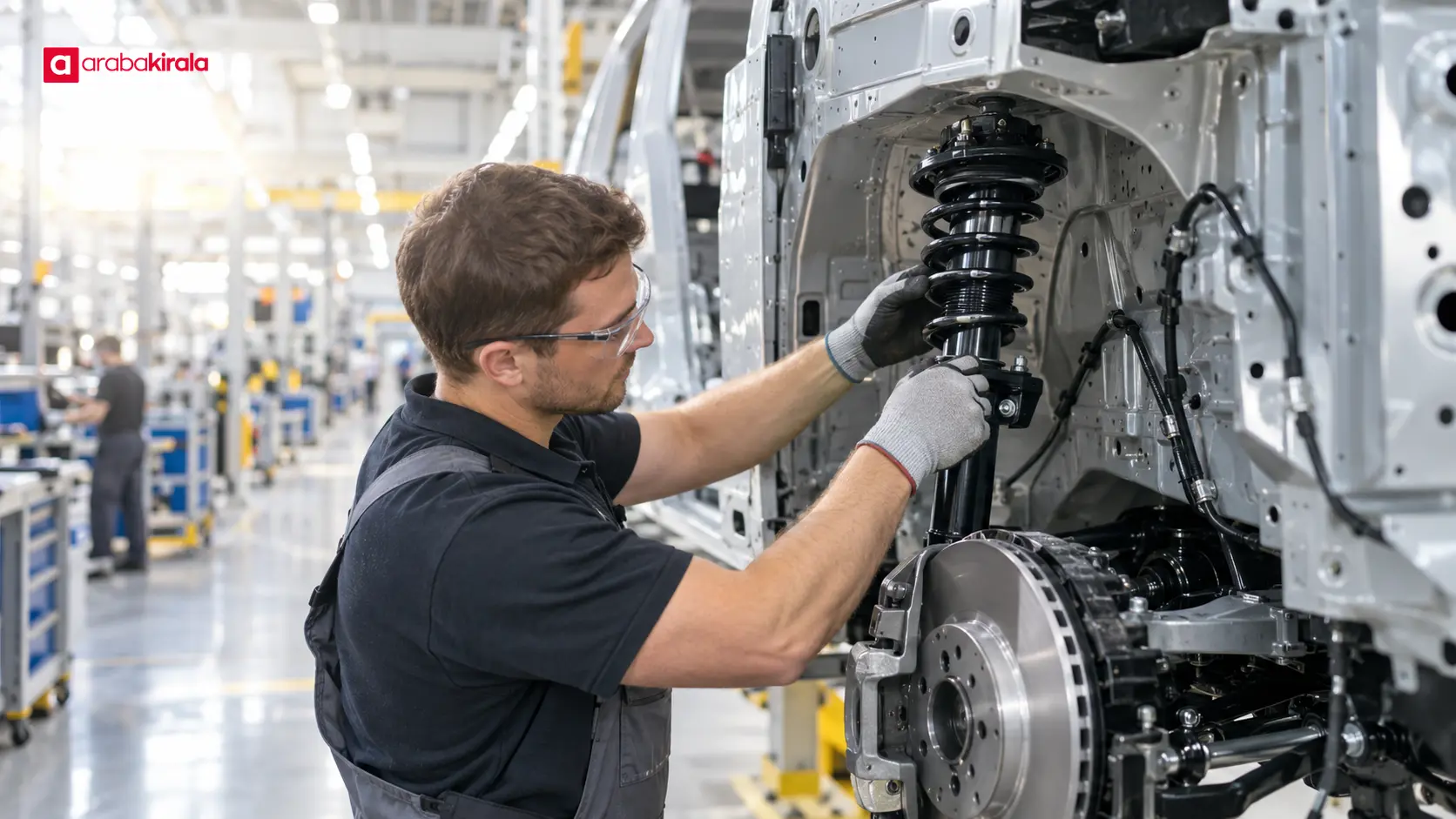
When a vehicle enters service, a technician may use the part number, physical marking, vehicle identity and maintenance history. These details can help identify a suitable replacement, understand earlier work, and connect a recurring fault with production or assembly records. Service documentation can also leave a useful record of the replaced component and the work performed. The vehicle identity and service event need to be matched correctly for that history to be reliable.
How traceability supports quality and safety work
When a nonconformance is found, records can help define the scope of an investigation. Lot information may narrow down a production range; a serial number may reveal an individual product history; and an assembly link may help identify related vehicles. A manufacturer evaluates these records as part of technical assessment, field investigation and any applicable official process. Traceability does not automatically remove risk or, by itself, prove that a part is safe or unsafe. Engineers and quality specialists need to assess the findings.
Well-maintained records can help keep an investigation focused. If teams know which parts share material, process or production-range links, they can examine the relevant group. Missing records may leave uncertainty and require broader sampling or additional technical review. Traceability therefore depends not only on collecting information, but also on preserving correct relationships and being able to retrieve the records when needed.
The same approach can help manufacturers learn from production issues. If a similar nonconformance appears across shifts, stations or material lots, teams can look for shared patterns. Corrective work can then address the cause rather than only replacing an individual item. A correlation alone does not establish cause; process specialists need to evaluate it with measurements and technical investigation.
How to check traceability for a component
- Read the identifier: Note the part, serial or lot number and manufacturer marking visible on the component or its packaging.
- Preserve the evidence: Avoid removing labels or scraping codes. If packaging must be discarded, document the identity first. Do not alter a physical marking.
- Link it to the vehicle: Compare the vehicle identity and service history with records showing which part was fitted and when. If fitment is uncertain, ask a qualified service provider or the organization that supplied the part to verify it.
- Confirm what the code means: Find out which manufacturer system defines the identifier. A readable code does not mean that a public history page exists.
- Record discrepancies: If an identifier is faint, unreadable or inconsistent with documents, record the issue and relevant photos rather than guessing or rewriting the number.
These steps do not conclusively prove a component’s origin; they help assess whether the identity and records are consistent. If a safety-critical component is damaged, incorrectly seated or showing signs of failure, do not base the decision to continue driving on a code scan alone. Stop in a safe place and obtain qualified technical assistance.
Data standards, digital identity and limits
Different facilities and companies may use shared standards for identifying parts and exchanging data. Standards aim to make code formats or information transfer compatible; they do not guarantee that every organization uses the same system or that every field is available to every user. The contents of a two-dimensional code also depend on the manufacturer and application.
Digital traceability can draw on different sources, including production execution, quality management, enterprise resource planning and service record systems. When data moves between systems, identity mapping, timestamps, version information and access permissions matter. Who can access a record, how long it is kept and whether it can be shared externally depend on organizational processes and applicable data protection practices. A consumer should not assume that entering a serial number will reveal every production record.
What traceability means for vehicle owners and buyers
Traceability does not mean that vehicle owners need to inspect the production file for every component. In everyday maintenance, the useful priorities are fitting the correct part to the correct vehicle and documenting the work. A service record that clearly states the vehicle identity, work date and part description makes the maintenance history easier to understand. If a part label or package is available, connecting its identifier to the service record can also be helpful.
For a used vehicle, consistent service documentation can support a review of whether fitted parts appear compatible with the vehicle. A single label or code does not by itself prove that a component is genuine, unused or part of a complete vehicle history. Assess physical condition, maintenance documents and a specialist inspection together. If a safety system or critical component raises concern, ask a qualified service center to inspect it.
Summary and next step
Automotive part traceability links a part, serial or lot identity with material, production, inspection, assembly and service records. These connections help teams investigate the scope of quality issues and relate a component to a vehicle’s history. Coverage varies by manufacturer and process, so seeing a code does not mean that the full history is accessible. If you have a question about a component, preserve its marking and service documentation, then ask the part supplier or a qualified service provider how the identity can be verified.

Frequently Asked Questions
What is the difference between a part number and a serial number?
A part number identifies a product type or design family and can be shared by many items. A serial number may distinguish one individual item. A lot number identifies a production group. Which identifiers exist and what they mean depends on the manufacturer’s record system.
Does a barcode or QR code show a component’s full history?
No. A code may contain a short identifier or provide access to information in a record system; its content depends on the application. Scanning it does not mean the record is public or that the entire production history is stored in the code.
Does traceability prove that a component is genuine?
Not on its own. Traceability helps examine whether identity and production records are consistent. Physical characteristics, supply documents and technical suitability also need consideration. For a questionable component, request verification from the supplying organization or a qualified service provider.
What happens when a traceable part has a problem?
If its serial or lot identity links to production and assembly records, teams can use that information to define an investigation’s scope and identify products made under related conditions. The outcome and any action cannot be determined from a number alone; technical investigation is needed.
Which service records should a vehicle owner keep?
Keep documents that clearly show the vehicle identity, date, work performed and description of any replaced component. If a part label or package is available, linking its identifier to the service document can make the maintenance history clearer. Store documents containing personal information securely.
Legal Disclaimer: All content, articles and information on the Araba Kirala website are provided solely to inform users. No information shared on this website constitutes definitive advice or guidance. Araba Kirala Teknoloji A.Ş. and its authors cannot be held responsible for any direct or indirect damages arising from the application of information on the website. For all questions and requests regarding car rental, please contact the office from which you will rent your vehicle.