Assessing Seat and Headroom for Different Passenger Heights When Renting in Beylikdüzü
Published: October 9, 2026 • Reading Time: 7 min • Last Updated: October 9, 2026
Learn how to assess seat position, headroom, legroom and seat belt fit for passengers of different heights when renting a car in Beylikdüzü.
Contents
- Why cabin space depends on the passenger
- Try the driver’s position
- Reach to the pedals and steering wheel
- Head restraint and visibility
- Assess front and rear passengers separately
- Front passenger seat
- Rear seats and the middle position
- A checklist for a brief seating check
- Confirm vehicle details for a Beylikdüzü rental
- Balance comfort with a suitable driving position
- Frequently Asked Questions
When renting a car in Beylikdüzü, a vehicle category or passenger count alone cannot tell you whether everyone will sit comfortably and in a suitable position. This guide explains how to check the driver’s and passengers’ seat positions, headroom, legroom and seat belt fit, and how a brief seating check can help you assess a car before a journey.

Why cabin space depends on the passenger
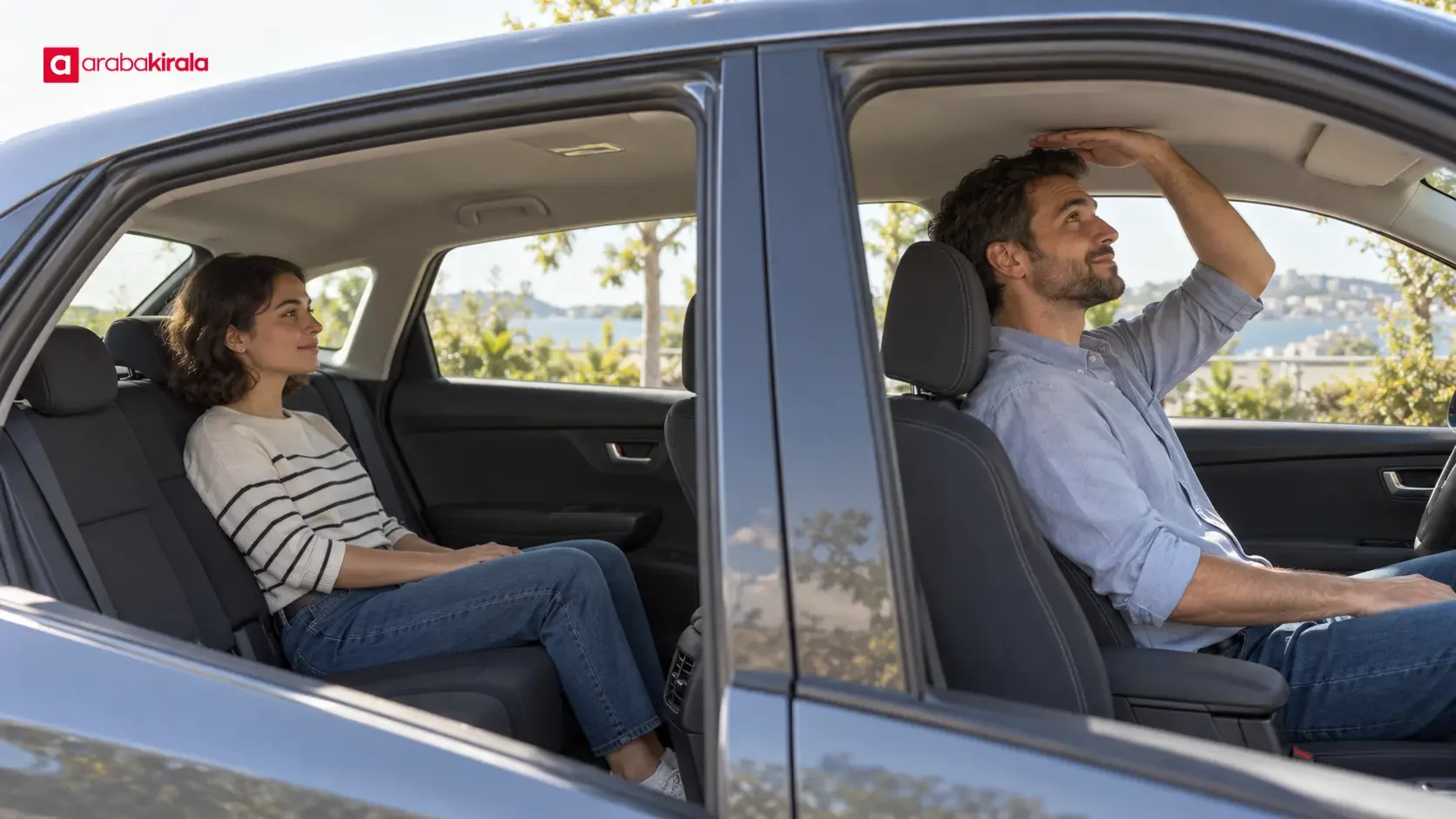
Interior room is not determined by the overall width or length of a car alone. Seat cushion length, roof shape, the seat’s height and recline adjustments, steering wheel position and rear backrest angle all affect posture. In the same car, a passenger with long legs may focus on knee room while someone with a longer torso may notice headroom first. A shorter driver may need to move the seat forward or raise it to improve visibility, while still retaining comfortable pedal access and a secure driving position.
That is why broad descriptions such as “five seats” or “large boot” are not enough to judge fit. Consider who will travel, which seats each person will use and how long they will be sitting. If more than one person will drive, each driver should try their own position where possible.
Try the driver’s position
Reach to the pedals and steering wheel
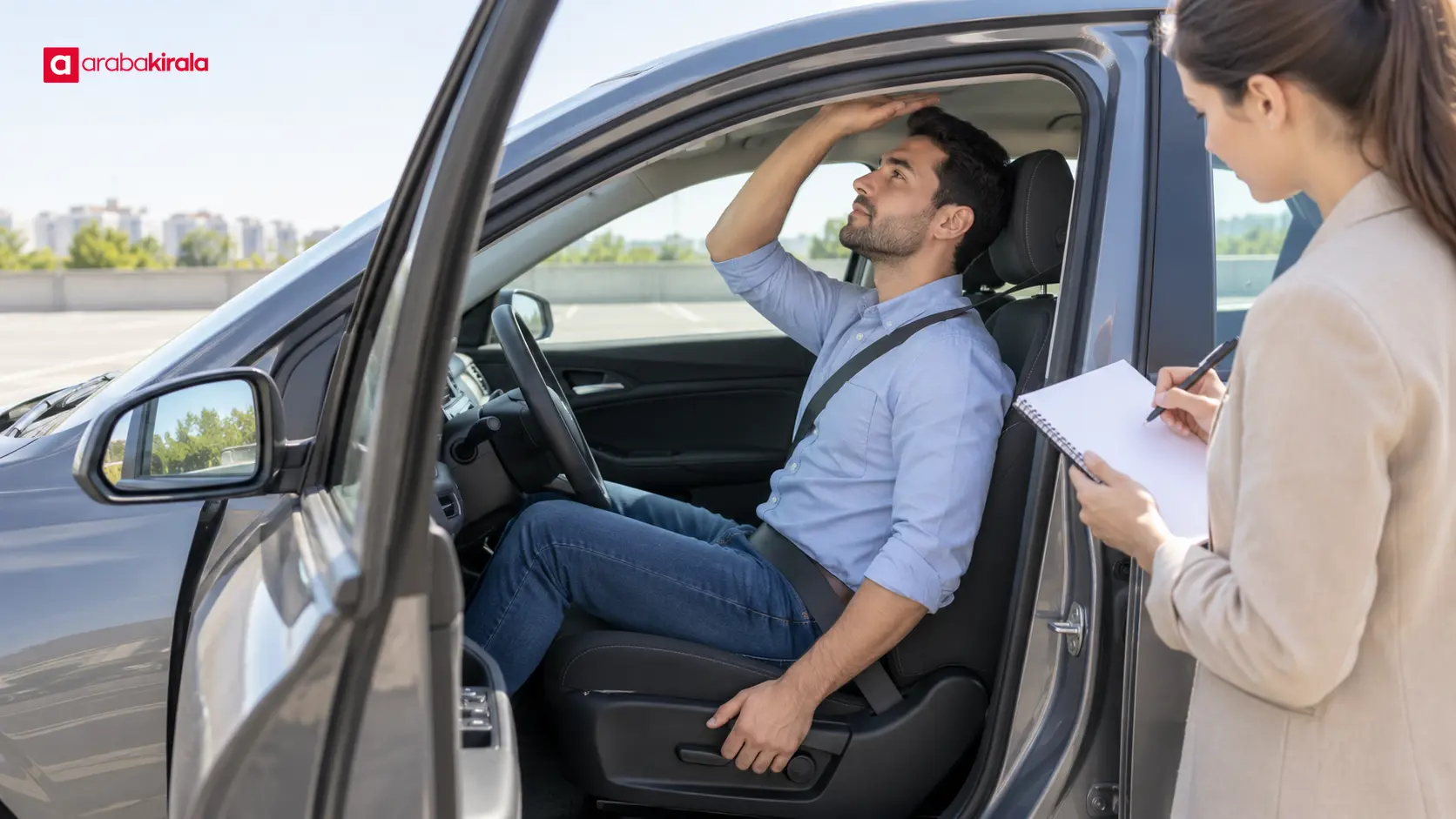
Adjust the seat while the car is parked. Look for a position close enough to press the brake fully and with control, but far enough away that your legs are not cramped. Avoid locking your knees, and check that your arms are not overstretched when turning the steering wheel. If the steering wheel adjusts, try a position that lets you see the instruments and hold the wheel comfortably with both hands. Do not adjust the seat, wheel or mirrors while the car is moving.
Shorter drivers using a height adjustment should also check the remaining space above their head. Taller drivers moving the seat back should make sure they can still reach the pedals and control the wheel. Rather than reclining the backrest excessively, find a position that supports your back and allows the seat belt to lie correctly. Adjustment procedures and head restraint guidance vary by vehicle, so follow the instructions provided for that car.
Head restraint and visibility
The head restraint is part of a suitable seating position as well as a comfort feature. Consult the vehicle manual for adjustment instructions and check whether your head is supported in a natural position. If your head comes close to the headliner, sun visor or door frame, see whether the seat can be adjusted to provide adequate space. A position that requires you to lean your head forward or sideways may not be suitable for a longer drive.
Check your view through the windscreen, side windows and mirrors from the position you will actually use. After adjusting the seat, head restraint and mirrors, make sure your view is clear. If raising the seat improves visibility but reduces headroom, consider the two together; one good measurement does not make the whole position suitable.
Assess front and rear passengers separately
Front passenger seat
The front passenger’s height and the driver’s seat position affect the available knee room. Once the driver’s seat is set for driving, sit in the front passenger seat and check whether your knees press against the dashboard or seatback and whether your feet fit comfortably. The amount of rearward travel can matter to a passenger with long legs. Do not compromise the driver’s safe reach to the pedals to create more passenger space.
Rear seats and the middle position
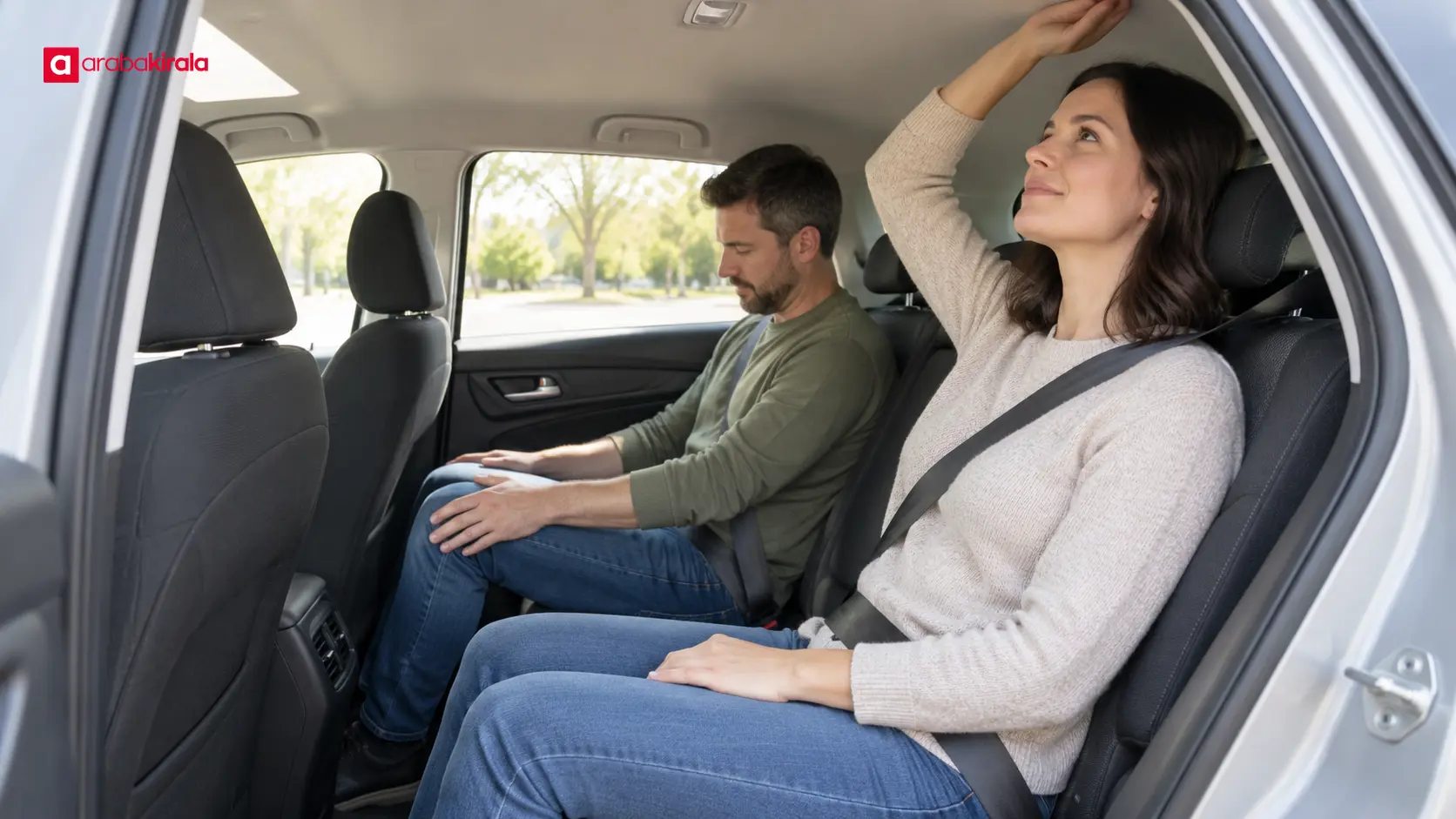
In the rear row, check more than knee room. Distance from the roof, foot space beneath the front seats, shoulder contact with the door and backrest angle also affect comfort. If passengers are different heights, having each person try the seat they will use gives a better indication. The middle position may differ from the outer seats because of the cushion shape or a floor tunnel, so assess it separately if someone will sit there.
Check that the seat belt lies correctly across the shoulder and hips. If it presses against the neck, face or abdomen, review the seat and belt adjustment using the vehicle’s instructions. For child passengers, separately check the appropriate child restraint for the child’s size and whether it is compatible with the vehicle’s attachment points. Install the restraint according to its manufacturer’s instructions, and consult both the vehicle and child seat documentation.
A checklist for a brief seating check
- Consider every passenger: Assess the driver, front passenger and each rear seating position separately.
- Look for a natural posture: Can you sit without bending your head, squeezing your knees or reclining excessively?
- Try the controls: From the driver’s seat, can you comfortably reach the pedals, steering wheel, gear selector and mirrors?
- Inspect belt fit: Does the belt sit correctly on your body, and can a child restraint be installed as intended?
- Account for journey length: For a long drive, take a short seating trial and consider whether luggage will reduce passenger space in the cabin.
These checks cannot guarantee personal comfort. Fit varies with body shape and journey length. If the space feels marginal or you cannot find a suitable position, considering another available vehicle before collection may be more practical.
Confirm vehicle details for a Beylikdüzü rental
If a reservation identifies a vehicle group rather than a specific model, the exact cabin layout may not be settled in advance. Before booking, tell the rental branch about clear needs such as using a child seat, travelling with a particular passenger configuration, or accommodating a very tall or short driver. Ask how the suitable vehicle group is determined and whether you can inspect the interior at handover. Availability and collection details depend on the branch, so confirm them with the relevant office.
At collection, set the seat and head restraint for yourself. If another person will drive, allow them to adjust their position too. If an adjustment control or seat mechanism does not work properly, notify staff before driving. If your trip extends beyond Beylikdüzü, assess the cabin for the actual route and passenger arrangement. This section can naturally connect to relevant ArabaKirala location or booking information, but do not add a page address unless it has been verified.
Balance comfort with a suitable driving position
Do not decide based on a single measurement. Headroom, legroom, access to driving controls, mirror visibility and seat belt fit should work together. Have each passenger try the seat they will use, and account for a child seat or luggage in the real arrangement. When one adjustment changes another aspect of the space, check the whole position again.
In short, for a Beylikdüzü car rental, first identify passenger heights and seating positions, then make a brief trial in the driver’s and passenger seats. Contact the branch you plan to rent from when you need confirmation about the vehicle group or the car that will be handed over. This makes your choice depend on the space you will actually use rather than a general vehicle description.
Frequently Asked Questions
How can I compare cabin space for passengers of different heights?
Have each person sit in the seat they will use and check headroom, knee room, foot space and belt fit. Set the driver’s seat to a realistic driving position before assessing the front and rear passenger areas.
What should taller drivers check when renting a car?
Check whether you can move the seat back while retaining comfortable access to the pedals and steering wheel, and whether your head approaches the roof. If the adjustment range seems limited, tell the branch about your cabin-space needs before collection.
Can shorter drivers raise the seat to improve visibility?
If the car has a height adjustment, try a position that improves visibility while retaining headroom, pedal access and suitable belt fit. Follow the vehicle manual for instructions on using the adjustment.
Why check headroom in the rear seats?
The roofline and seatback can affect rear headroom. If a passenger must bend their head in a natural seated position or the belt does not fit correctly, reassess whether that seating position suits the journey.
Does a child seat change how I assess cabin space?
Yes. A child seat occupies rear space and can affect how far forward the front seat needs to be. Check compatibility, attachment method and installation instructions in the manufacturers’ documentation, and ask the branch about details for the vehicle being supplied.
What should I ask about cabin space before booking?
Ask whether the booking confirms a specific model or a vehicle group, whether you can inspect the interior at handover, and whether equipment such as a child seat fits the vehicle. Sharing a need for a tall passenger or a particular seating layout can help you get information about suitable options.
Legal Disclaimer: All content, articles and information on the Araba Kirala website are provided solely to inform users. No information shared on this website constitutes definitive advice or guidance. Araba Kirala Teknoloji A.Ş. and its authors cannot be held responsible for any direct or indirect damages arising from the application of information on the website. For all questions and requests regarding car rental, please contact the office from which you will rent your vehicle.