What Is a Car Blind Spot? A Guide to Checking Your View
A car blind spot is an area around a vehicle that the driver cannot see clearly through the windows or mirrors from the normal driving position. Parts of the body, roof pillars, head restraints, and the limited view provided by mirrors can hide nearby road users. Mirror adjustment helps, but it cannot show every point around a car. Set up your seat and mirrors before moving, then reassess the surrounding traffic before a lane change or other maneuver.
What causes a blind spot?
Each mirror covers a limited field of view. The area shown by a side mirror does not necessarily connect seamlessly with the area visible through the side window. A vehicle, motorcycle, or bicycle may move into the gap between those views and become difficult to see. The location and size of blind spots vary with the car’s design, mirror placement, seat position, and the driver’s height.
Blind spots are not fixed empty spaces. A road user can enter or leave an area that is hidden from one viewing angle as traffic moves. A clear mirror at one moment therefore does not prove that the adjacent lane will still be clear when you begin moving. Recheck the scene close to the maneuver and continue watching the road ahead.
Set your seat before adjusting the mirrors
Begin with a comfortable driving position. Adjust the seat so you can reach the pedals and steering wheel without stretching and can see the road through the windshield. Sit back against the seat, keep the head restraint in a useful position, and make sure you can glance at the mirrors without leaning far away from your normal posture. Adjust the seat first because changing it later changes the angle from which you see the mirrors.
Position the interior mirror to give a view through the rear window. Set each side mirror so it shows useful space beside and behind the car. If a large portion of the vehicle’s own body fills the mirror, less of the adjacent road is visible. Adjust the angle while parked and check how the view changes as a vehicle moves from the rear window area toward the side. There is no single mirror angle that works for every driver and vehicle; seat position, body shape, and mirror design all matter.
Do not adjust mirrors while driving. A brief distraction can take your attention away from traffic. If you are unfamiliar with the car, take time while parked to understand what each mirror shows. Clean windows and mirrors also matter: dirt, water, or glare can make an already limited view harder to use.
How to check before changing lanes
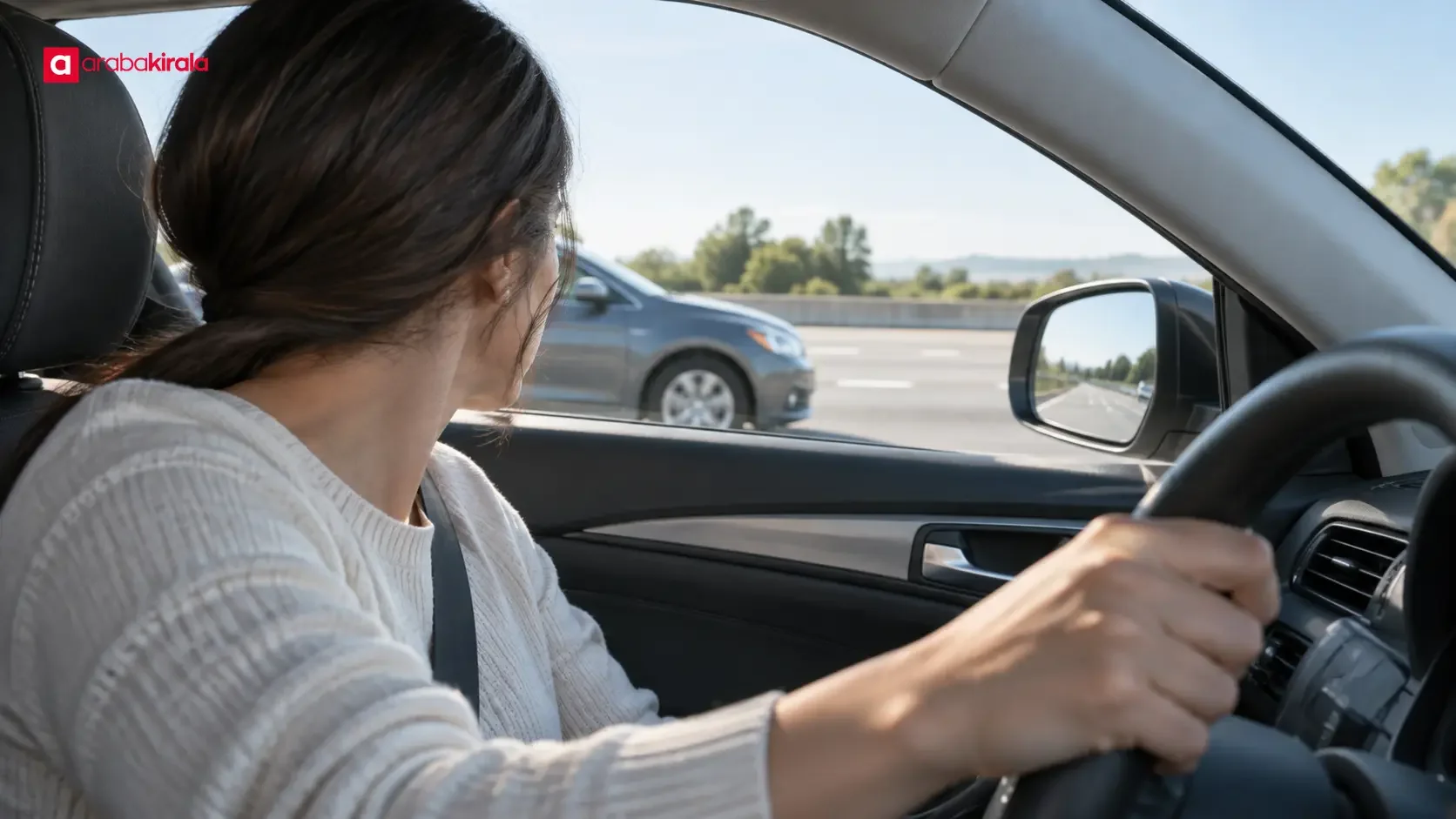
First assess whether the lane change is appropriate for the road and traffic. Signal in good time to communicate your intention. A signal does not confirm that the lane is clear or give you priority. Check the traffic ahead and behind, then look at the interior mirror and the side mirror on the side you plan to move toward. After those mirror checks, briefly turn your head toward that side to check the blind spot directly, while keeping the vehicle under control.
Make a final assessment immediately before moving, since the position of nearby traffic may have changed during your checks. Consider the speed and distance of cars, motorcycles, and bicycles in the adjacent lane. If there is not enough room to move without forcing another road user to brake or swerve, wait for a safer opportunity. Do not rush to enter a gap. Keep the direct glance brief so you do not lose sight of the road ahead for longer than necessary.
Relying only on mirrors leaves the hidden area unchecked. Turning your head for too long can also be unsafe because the road ahead still needs attention. Mirror checks and a short direct glance work together. After each look, return your attention to the path of travel and the movement of traffic.
Blind spots when parking, turning, and reversing
Blind spot checks are useful beyond lane changes. Before pulling out of a parking space, turning, or maneuvering in a confined area, look for vehicles and people who may be close to the car. Parked vehicles, walls, and other obstacles can block the view. Before reversing, check the area around the vehicle. If the car has a camera or parking sensors, treat them as aids rather than a complete view of the surroundings.
During a turn, a pedestrian, cyclist, or motorcyclist may be beside the vehicle and outside the view from one mirror. Check the relevant mirror and the area you can see directly before beginning the turn, then keep observing as the car moves. Larger vehicles also have areas their drivers may not be able to see. Avoid lingering close beside them and do not assume their driver has noticed you.
What do blind spot warning systems do?
Some cars have a blind spot warning system that monitors defined areas and gives a visual or audible alert when it detects something, depending on the system. Its coverage and operating limits vary. Read the vehicle’s manual to understand what the specific system is designed to detect and how it signals a warning.
Use the warning as additional information, not as proof that the lane is clear. A system may not detect every road user in every condition. The absence of a warning does not replace mirror checks and a direct look. If the system alerts you, reassess the situation before deciding whether to move.
Getting familiar with a rental car
Rental cars can differ in seat adjustment, mirror shape, pillar placement, and visibility. Before driving away, set the seat and mirrors for your own position. Find the mirror controls and check whether adjustment is manual or electric. If the car has a blind spot warning or camera, learn the basic controls from the vehicle manual or ask the staff member handling the handover how the equipment operates. Do not assume a feature is fitted to every car.
If you notice a visibility issue before setting off, discuss it with the branch you are renting from. For a question about a particular mirror control or driver assistance feature, consult the vehicle manual and ask the branch about the car being handed over. General visibility checks remain useful regardless of the car’s equipment: clear windows, correctly positioned mirrors, and active observation.
Frequently asked questions
Do mirrors eliminate car blind spots?
No. Correctly positioned mirrors can reduce blind areas, but vehicle design and the driver’s position may leave areas that are not visible in them. Before changing lanes, combine mirror checks with a brief direct look toward the side.
Which mirrors should I check before changing lanes?
Check the interior mirror and the side mirror on the side you intend to move toward, then briefly check that side’s blind spot directly. Keep tracking traffic and the road ahead. Signaling communicates your intention but does not replace these checks.
Can I rely on a blind spot warning system?
Use it as a driving aid. Its coverage and limits depend on the vehicle and system, so follow the vehicle manual and continue checking mirrors and surroundings yourself.
Is it safe to adjust mirrors while moving?
Adjust them while parked in a safe place. If your seat position changes, recheck the mirror views before continuing.
Use mirrors as one part of the check
A car blind spot is an area hidden by the vehicle or outside the mirrors’ field of view. A safe routine starts with a suitable seat position and mirror setup, then combines signaling, mirror checks, and a brief direct look before a maneuver. Keep monitoring traffic throughout. If you cannot see enough to make a safe decision, wait until the view or traffic situation improves.
Legal Disclaimer: All content, articles and information on the Araba Kirala website are provided solely to inform users. No information shared on this website constitutes definitive advice or guidance. Araba Kirala Teknoloji A.Ş. and its authors cannot be held responsible for any direct or indirect damages arising from the application of information on the website. For all questions and requests regarding car rental, please contact the office from which you will rent your vehicle.