
What Do Cell Voltage and Battery Pack Voltage Mean in an Electric Vehicle?

Published: October 19, 2026 • Reading Time: 8 min • Last Updated: October 19, 2026
Understand the difference between cell and pack voltage, how series and parallel connections affect a battery, and what voltage means for everyday EV use.
Contents
- What does voltage describe?
- Cell, module, and pack: three different levels
- The cell is the basic electrochemical unit
- Modules organize groups of cells
- The pack is the complete energy system
- How series and parallel connections change a battery
- Voltage, capacity, energy, and power are not interchangeable
- What does voltage tell a driver?
- Why voltage matters during charging
- High-voltage battery safety
- How this helps when renting an electric vehicle
- A short technical checklist
- Summary: think from cell to pack
- Frequently Asked Questions
Electric vehicle battery voltage makes more sense when you distinguish the voltage of an individual cell from the voltage of the complete battery pack. This guide explains what cell voltage measures, how cells are arranged into modules and packs, how series and parallel connections affect voltage and capacity, and why the distinction is useful when reading vehicle information. It also separates voltage from charge percentage, energy, power, range, and charging speed.

What does voltage describe?
Voltage is the electrical potential difference between two points, measured in volts (V). It helps drive electric charge through a circuit, but it does not tell you by itself how much energy a battery stores. Current is measured in amperes (A), while energy is commonly expressed in watt-hours (Wh) or kilowatt-hours (kWh). These quantities are related, but each describes something different.
When a vehicle specification lists “battery voltage,” it often refers to the nominal voltage of the battery pack. Nominal voltage is a reference value used to describe the system. The pack’s actual operating voltage changes with state of charge, temperature, electrical load, and cell chemistry. A single voltage figure therefore does not describe the voltage at every moment or establish battery health on its own.
Cell, module, and pack: three different levels
The cell is the basic electrochemical unit
A cell stores and releases energy through electrochemical processes. Cells come in different physical formats, including cylindrical, prismatic, and pouch designs. A cell’s nominal voltage depends on its chemistry and design. Its voltage changes as it charges and discharges, and the permitted operating range is defined for that particular cell.
The nominal voltage of one cell is not the voltage of the vehicle’s full battery. Many cells are electrically connected to build a system suited to the vehicle. The cell’s shape or dimensions alone do not determine the pack voltage or the car’s driving range.
Modules organize groups of cells
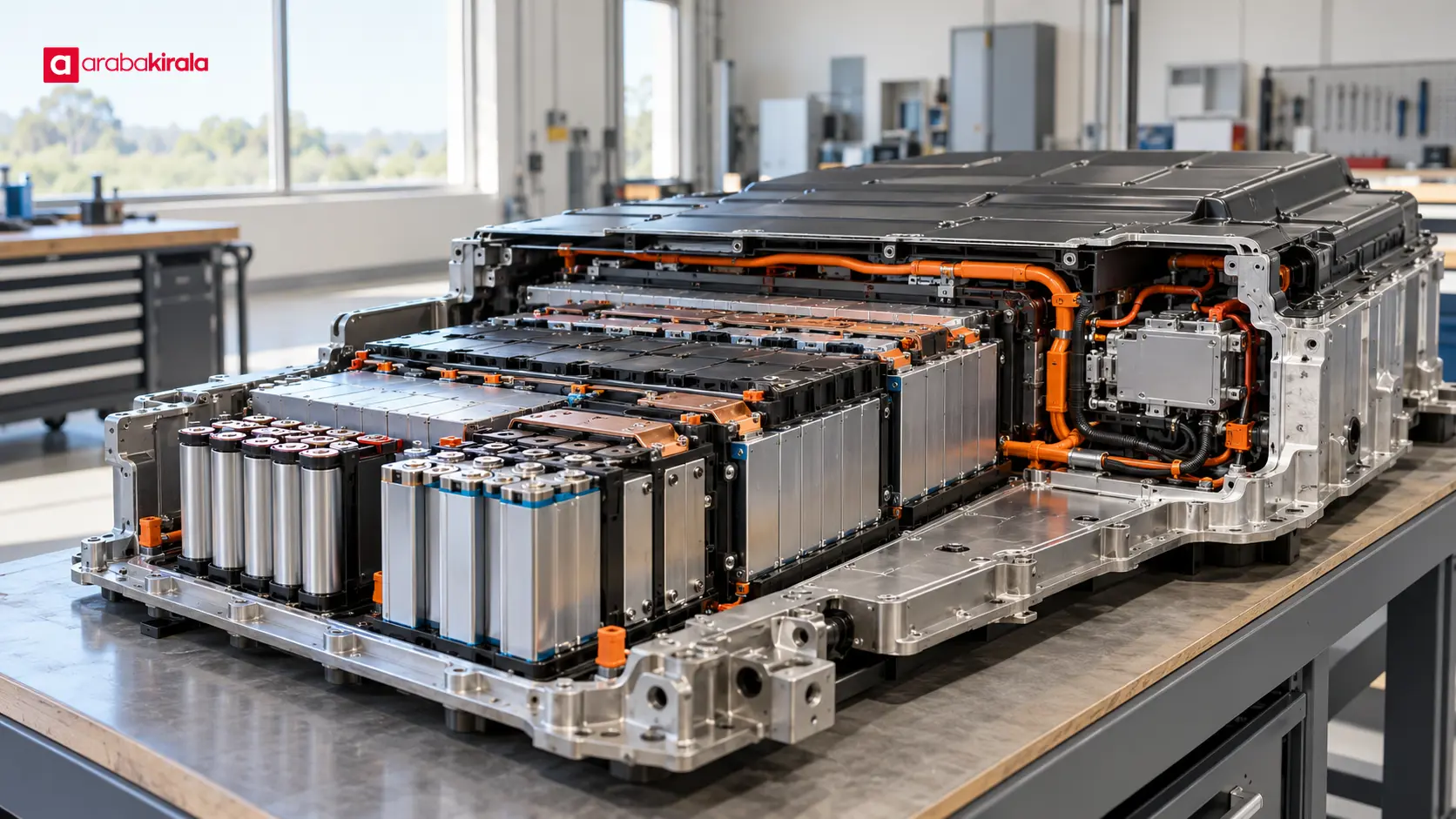
In many battery designs, cells are held together and electrically connected in modules. A module can include structural supports, insulation, connections, and monitoring components. Some vehicles use clearly defined modules; others arrange cells within the pack in different ways. There is no single module count or layout that applies to every electric vehicle.
The pack is the complete energy system
A battery pack can include cells or modules, an enclosure, electrical connections, sensors, protective components, and a battery management system. Pack voltage is the voltage measured across the relevant terminals of this assembled system. The vehicle’s power electronics and motor are designed to operate within an electrical range, so pack voltage is part of the vehicle’s overall electrical architecture.
How series and parallel connections change a battery
Connecting cells in series adds their voltages. Each cell sits along the same electrical path, so the total voltage of a series string is approximately the sum of the cell voltages. Series connections allow a battery to reach a higher system voltage. The cells or groups still need to be monitored and kept within their operating limits; the battery management system tracks their condition and helps manage operation.
With a parallel connection, like terminals are connected together. Voltage stays close to that of one cell while the arrangement can provide greater current capability and capacity. Real battery packs may combine series and parallel groups. The chosen layout depends on design goals such as energy, power, available space, thermal management, and safety. Cell count alone is not enough to work out a pack’s voltage or capacity.
Voltage, capacity, energy, and power are not interchangeable
Voltage (V) describes potential difference. Capacity is commonly stated in ampere-hours (Ah) and describes electric charge that can be delivered. Energy describes the amount of work stored and is measured in Wh or kWh. A useful approximation is that energy in watt-hours is related to voltage multiplied by capacity in ampere-hours. Because operating voltage varies, specifications may use a defined reference such as nominal voltage for an energy calculation.
Power describes how quickly energy is transferred and is measured in watts (W). At the same power, a higher-voltage system can operate with lower current, which is one factor engineers consider when designing cables and components. Still, voltage by itself does not guarantee greater range, faster charging, or better efficiency. Battery capacity, motor and inverter design, temperature control, charging equipment, and driving conditions all matter.
What does voltage tell a driver?
Most drivers do not need to monitor cell or pack voltage during ordinary use. The dashboard more commonly displays battery state of charge, estimated range, energy consumption, and charging information. A percentage is a managed estimate of usable battery energy; it is not another way of displaying voltage. Acceleration, hills, cold weather, and rapid charging can change the battery’s power demand and operating behavior.
If you see a voltage reading on a technical screen or service report, the measurement point and conditions matter. Pack voltage, module voltage, and cell-group voltage are not interchangeable. Comparing a number directly with a different vehicle can also mislead because chemistry and pack design vary.
Why voltage matters during charging
Charging is a controlled transfer of energy among the charging equipment, vehicle, and battery management system. The available charging power depends on the limits of the charger and vehicle, as well as battery temperature and state of charge. As the battery fills, the system may manage charging power to keep cells within their allowed range. A higher pack voltage does not automatically mean faster charging at every charging point.
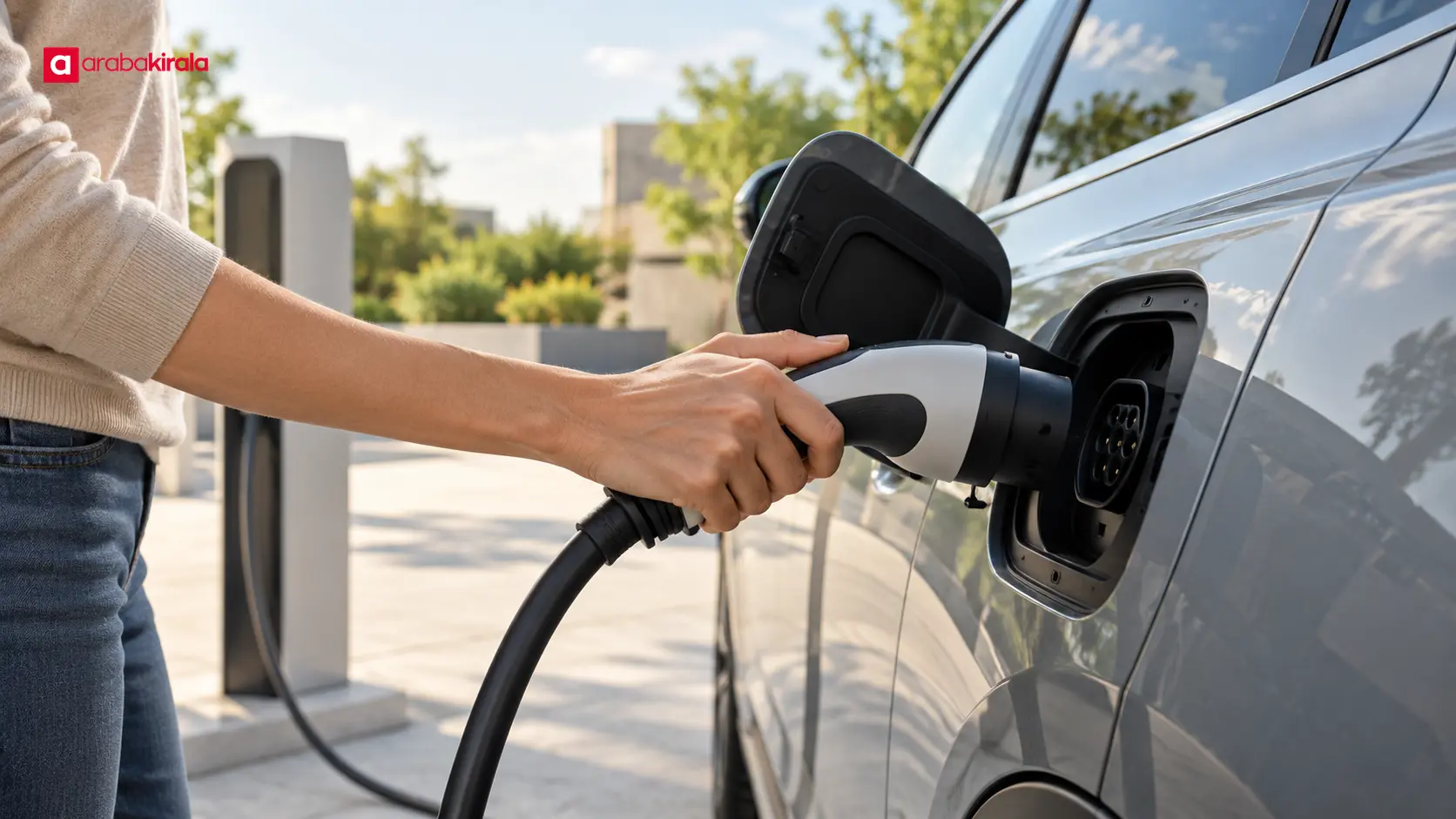
Charging power, measured in kilowatts (kW), describes the rate of energy transfer. Battery capacity, measured in kWh, describes an amount of energy. Percentage and time estimates on a display can change with conditions. Follow the vehicle’s manual, avoid forcing a cable or connector, and do not use visibly damaged charging equipment.
High-voltage battery safety
High-voltage circuits in electric vehicles can cause severe electric shock or burns. Orange cables are used in many vehicles to identify high-voltage components, but appearance alone cannot establish that a part is safe to touch. Do not open the battery enclosure, handle high-voltage connections, or attempt a repair. After a collision, flooding, impact, smoke, unusual heat, or a warning message, follow the vehicle maker’s safety instructions and contact qualified technical support.
Routine driver checks do not require opening the battery case. Do not use a charging cable or socket that is visibly damaged, and do not handle wet or damaged equipment. If a battery warning remains or returns, follow the owner’s manual and seek service assistance. Approaching a high-voltage circuit with an ordinary meter to check its voltage can be dangerous.
How this helps when renting an electric vehicle
For a short rental, knowing the exact cell or pack voltage is rarely necessary. Understanding charging and the vehicle’s current charge level is more useful. Before pickup, ask the branch where you will rent the vehicle about its connector type, how the charge level at handover is handled, nearby charging options, and information that may affect your planned route. These details can vary by vehicle, reservation, and pickup location.
At pickup, check the dashboard’s battery percentage and estimated range, and remember that they are different measures. If a charging cable is provided, confirm its type and condition. Plan any charging stops using the estimate alongside factors such as weather, road, speed, and cabin heating. Range figures are estimates, so leaving a practical reserve makes a trip plan more robust.
A short technical checklist
- Identify the reading: Is it for a cell, module, or pack, and is it nominal or measured at that moment?
- Separate the units: V is voltage, Ah is charge capacity, kWh is energy, and kW is power.
- Account for the connections: Series connections affect voltage; parallel groups can increase capacity and current capability.
- Read driver displays correctly: Battery percentage and estimated range are not direct voltage readings.
- Keep clear of high-voltage components: Inspection and repair belong to trained technicians.
- Get vehicle-specific rental details: Ask the pickup branch about charging connectors and handover practices.
Summary: think from cell to pack
Cell voltage describes one electrochemical unit; pack voltage describes the larger system built from many cells. Series connections raise voltage, while parallel connections can increase capacity and current capability. Voltage relates to energy, power, range, and charging, but it is not a substitute for any of them. In everyday driving, use the dashboard and owner’s manual, and leave technical work to qualified professionals. If you are renting an electric vehicle, your next step is to confirm the connector and handover charge details with the pickup branch, then plan your route around charging options.
Frequently Asked Questions
Why is cell voltage different from battery pack voltage?
Cell voltage is the value across one cell. A pack combines many cells in series and parallel groups. Series-connected cells add their voltages, so the pack voltage differs from that of a single cell.
Does electric vehicle battery voltage stay constant?
No. Operating voltage can change with state of charge, temperature, and electrical demand. The nominal figure in a specification is a reference for describing the system, not a promise that the pack will always measure that value.
Does higher voltage mean more driving range?
Not by itself. Range depends on usable battery energy, vehicle efficiency, weather and road conditions, speed, and energy used by auxiliary systems. Voltage is one element of the electrical design.
Does the battery percentage display show voltage?
No. The percentage is a managed estimate of available battery energy. Voltage is electrical potential difference. The two are related, but they are different measurements.
Can I measure the battery pack voltage myself?
Do not try to measure a high-voltage circuit. It can cause serious injury. Technical measurements should be performed by qualified service personnel with appropriate equipment and training.
Should I ask about voltage when renting an electric car?
For trip planning, the charging connector, available charge level, and charging options along your route are usually more useful. You can ask the branch about technical details if you are curious, but do not base a charging plan only on nominal voltage.
Legal Disclaimer: All content, articles and information on the Araba Kirala website are provided solely to inform users. No information shared on this website constitutes definitive advice or guidance. Araba Kirala Teknoloji A.Ş. and its authors cannot be held responsible for any direct or indirect damages arising from the application of information on the website. For all questions and requests regarding car rental, please contact the office from which you will rent your vehicle.












