Virtual Safety Car vs Safety Car in Formula 1: What’s the Difference?
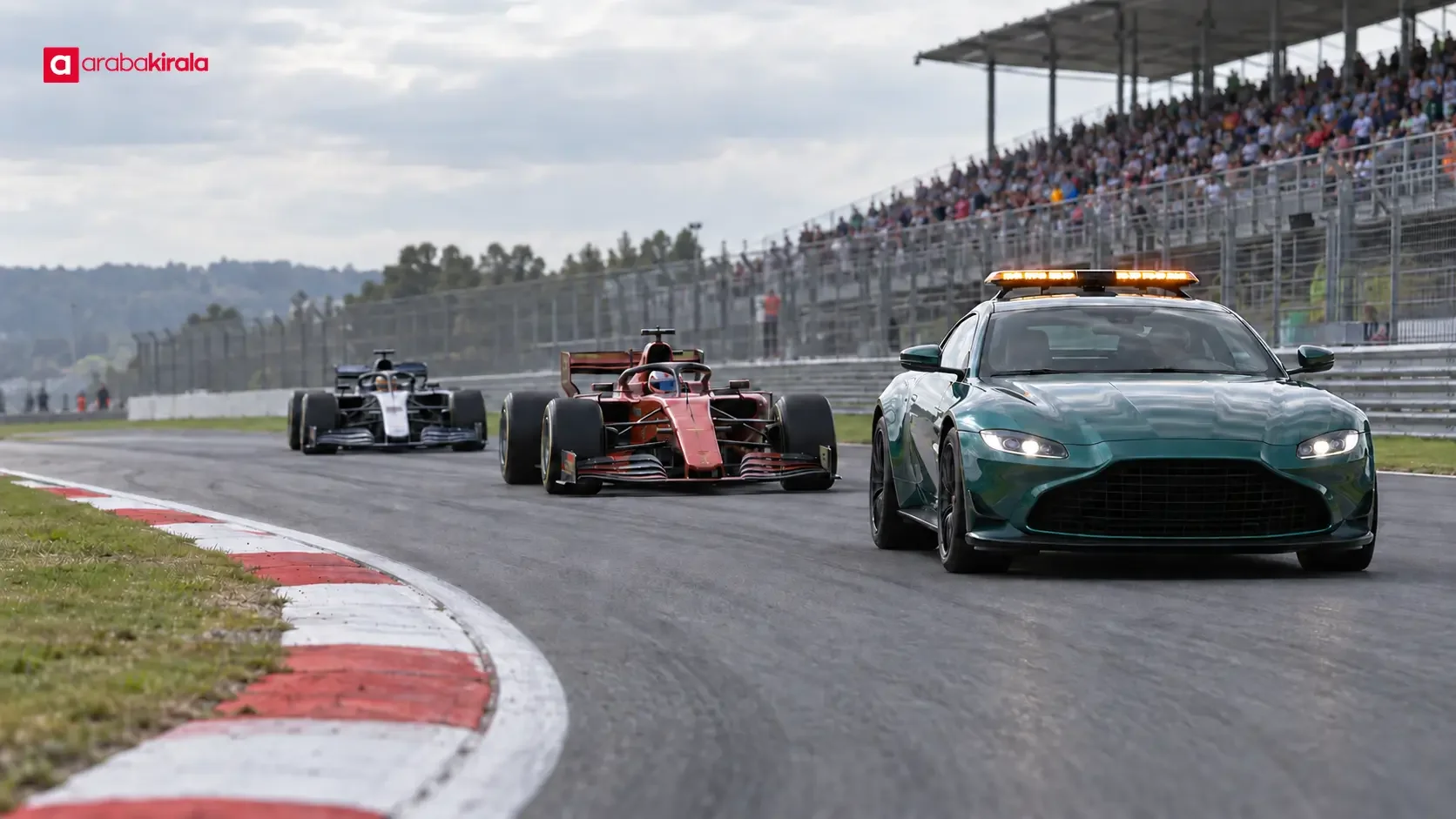
The F1 Virtual Safety Car (VSC) and the Safety Car (SC) are two procedures used to control speed when a hazard makes normal racing unsafe. Under both, drivers must reduce their pace and follow race-control instructions. The main difference is that a physical Safety Car leads the field under an SC period, while a VSC uses timing targets and no car on the circuit to pace the drivers. That difference shapes how the field is spread out, how a restart unfolds, and how teams weigh a pit stop.
Why Formula 1 uses these procedures
A stopped car, debris, or work by marshals can make full-speed racing through part of a circuit unsafe. Race control selects a procedure suited to the circumstances so that drivers slow down and trackside personnel can respond. The aim is to manage the risk while the incident is dealt with, then return to racing when conditions allow.
Neither procedure removes the hazard by itself. Both change how drivers use the track and how the race is conducted during a period of reduced speed. They are also different from a red flag, which suspends the session. Understanding that distinction helps explain why cars may continue circulating under a VSC or behind a Safety Car rather than stopping altogether.
How the Virtual Safety Car works
When race control deploys the VSC, drivers receive a notice through the team and car systems. They must slow down and meet minimum time targets through designated parts of the circuit. The targets are designed to prevent a car from covering a sector faster than the permitted time. Drivers need to monitor the instructions and timing information; simply matching the speed of the car ahead is not enough to show compliance.
During a VSC, drivers cannot use normal racing pace to gain positions. They must keep to the applicable speed and position requirements, subject to the exceptions in the regulations. There is no physical Safety Car at the head of the field. As a result, the cars do not automatically gather into one close queue, and the gaps between them often remain broadly similar to those before the VSC.
Race control announces when the VSC is ending. Drivers then follow the restart instructions and resume racing pace in accordance with the procedure. The timing of acceleration is governed by the official signal and applicable rules; a single television image does not show every instruction each driver has received.
How the Safety Car works
Under an SC period, a real Safety Car enters the circuit and leads the competing cars. Drivers join the queue behind it, reduce their speed, and follow rules governing overtaking and their place in the line. The Safety Car provides a visible pace for the field and helps bring the cars together in a controlled formation.
As the queue forms, large time gaps between cars can shrink. A leader who had built a substantial advantage may have less of that time cushion when racing resumes, although the running order does not change automatically. The Safety Car therefore changes the competitive shape of the race: drivers may restart closer together and have less room to manage a gap.
Before the Safety Car returns to the pit lane, race control communicates the restart procedure. The leading car follows the Safety Car until the announced process allows racing to resume. Drivers must watch the car ahead and the official signals closely. The field is compact at this point, so sudden or unsafe movements can create a hazard.
The main differences between VSC and SC
- Physical car: A VSC does not put a Safety Car on the track. An SC period does.
- How pace is controlled: Under VSC, drivers comply with timing targets. Under SC, they follow the pace of the Safety Car.
- Shape of the field: VSC often leaves the existing gaps broadly intact. SC brings cars into a queue and reduces major time gaps.
- Restart: A VSC ends through an official restart signal. An SC restart follows the procedure for the Safety Car to leave and the field to resume racing.
- Strategic effect: Both interrupt full-speed racing. Because an SC gathers the field, it can create a closer restart; a VSC more often preserves separation between cars.
These are general effects, not a promise that every car will retain exactly the same gap under VSC or that every SC period will produce an identical queue. The incident, circuit, car positions, and race-control instructions all matter.
Why pit-stop strategy can change
A pit stop under VSC or SC conditions has to be judged against the pace of cars on the circuit and the time needed to travel through the pit lane. When the track pace is reduced, the relative cost of entering the pits may differ from that under green-flag racing. That can make a stop attractive in some circumstances, but it does not make every stop an automatic gain. Teams weigh tyre condition, rivals’ positions, pit-lane time, and the traffic a driver may meet after rejoining.
An SC can gather the field, so a driver returning from a stop may join a closer group than before. The driver might gain track position through the timing of the stop, or lose places when other cars pass during the pit cycle. Under VSC, larger gaps can remain, which changes the traffic and position calculation. The right call depends on the race at that moment; there is no universal strategy that applies to every team or circuit.
For viewers, it helps to look beyond the label on screen. Note which tyres the driver has fitted, how long the stint was expected to last, where nearby rivals are, and how much of the race remains. An early or late stop alone does not show whether the decision was good; the outcome also depends on what happens after the car rejoins.
Reading race-control messages during a broadcast
Broadcast graphics, circuit panels, team radio, and the race-control notices shown on screen can help identify the active procedure. A VSC notice means drivers must meet the timing targets. An SC notice, together with a Safety Car on track, means the field is being brought behind that car. Separate messages may mark the start, continuation, and end of a procedure.
A brief change in the gap between two cars is not by itself proof that a driver broke a rule. VSC timing is assessed through designated parts of the circuit, and an SC period has its own rules about the queue and instructions. A timing graphic captures a moment rather than every relevant condition. Official race-control messages provide useful context for understanding a disputed incident.
Frequently asked questions
Can drivers overtake during a VSC?
A VSC is not a normal opportunity to race for position. Drivers must observe the speed and position restrictions in force. Whether a pass is permitted in a particular circumstance depends on the applicable rules and race-control instructions.
Does the Safety Car stop the race?
No. The cars continue circulating at a controlled pace behind the Safety Car. This differs from a red flag, which suspends the session and brings the cars to a halt under the relevant procedure.
Is a VSC always shorter than an SC period?
Duration depends on the incident and the time needed to make the circuit safe for racing. There is no fixed duration that makes one procedure shorter in every case. Race control can update or end the procedure as circumstances change.
Can an SC change the leader?
The Safety Car can reduce time gaps, but it does not automatically change the order. Pit stops, official decisions, and what drivers do after the restart can affect the positions.
In short: both slow the race, but manage the field differently
During a VSC, drivers reduce speed to meet timing targets while a physical Safety Car stays off the track; gaps often remain broadly intact. During an SC period, a real car leads the field and brings competitors into a closer queue, reducing large time differences. Both procedures help control speed in hazardous conditions, yet they affect the race’s shape and pit strategy in different ways. Knowing which one is active makes the slower pace, changing gaps, and restart easier to follow.
Legal Disclaimer: All content, articles and information on the Araba Kirala website are provided solely to inform users. No information shared on this website constitutes definitive advice or guidance. Araba Kirala Teknoloji A.Ş. and its authors cannot be held responsible for any direct or indirect damages arising from the application of information on the website. For all questions and requests regarding car rental, please contact the office from which you will rent your vehicle.