What Does the Blue Flag Mean in Formula 1? Being Lapped
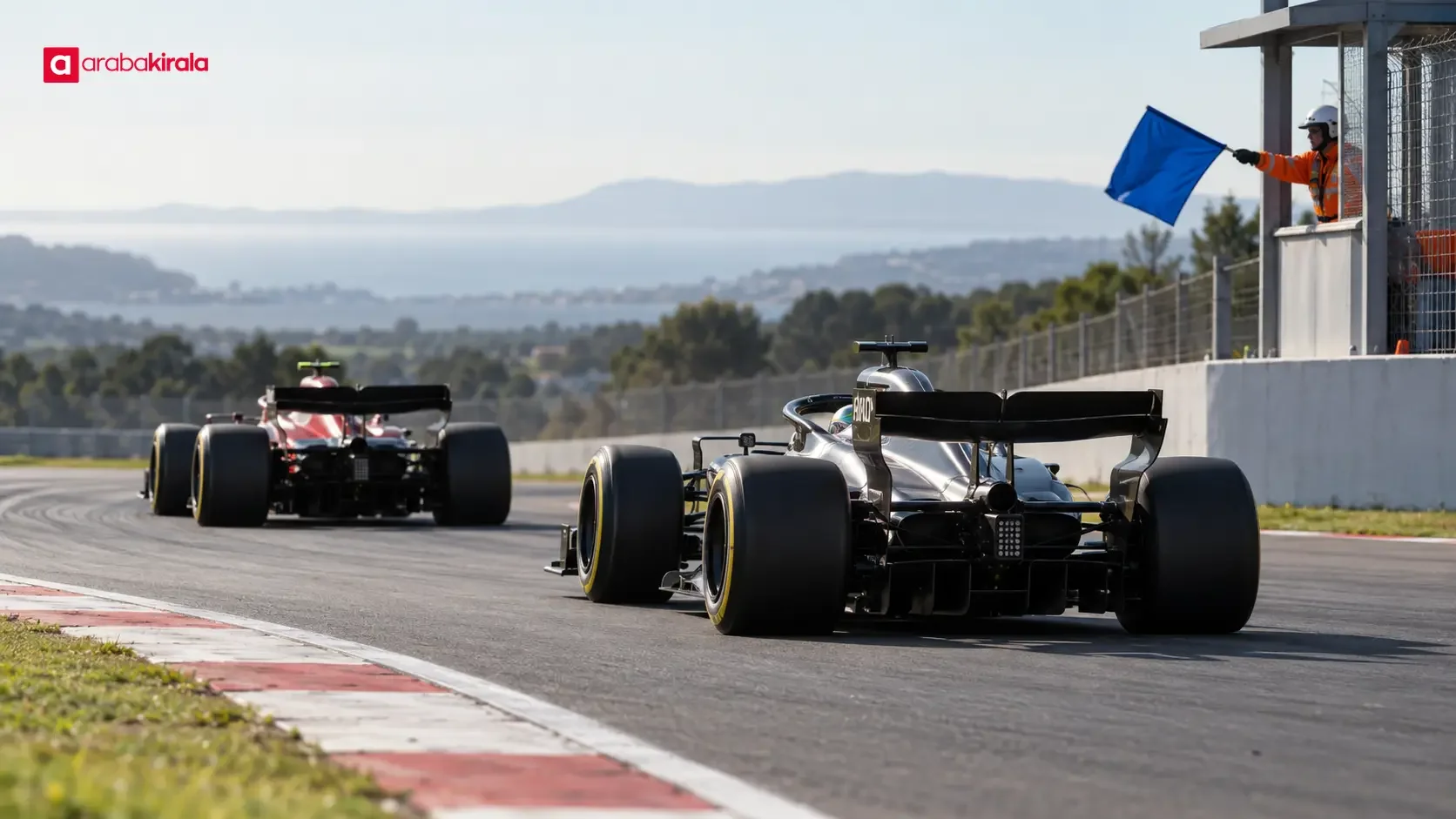
In Formula 1, a blue flag warns a driver that a faster car is approaching from behind and that the pass should be allowed. It is most often discussed when a leading car catches a slower car that is a lap down. The flag is not, by itself, a penalty or an instruction to retire. It is a signal about traffic that helps drivers manage a pass while continuing to race safely. Understanding the lap difference, the flag’s purpose, and the race-control context makes the situation easier to follow.
What does a blue flag mean in Formula 1?
The blue flag tells a driver that a quicker car is closing and that the driver should not hold up its progress. A common case is a leader catching a car that has not completed as many laps. Once the leading car passes it on track, the slower car has been lapped. The driver who is being lapped is expected to make the pass possible in a predictable way, leaving the faster car room to proceed.
This does not mean the slower driver must brake sharply, swerve off the racing line without warning, or leave the track. Any response should account for the other car’s position, the shape of the circuit, and the available space. Blue flags may be shown by trackside marshals, while information about approaching traffic can also reach drivers through cockpit displays or team radio. Race control oversees how the signal is used and how incidents are assessed.
How does a driver get lapped?
Race positions are measured by completed laps. During a race, cars do not all cross the start and finish line the same number of times at the same moment. A car near the front may catch and pass one farther back before that second car has completed the same distance. The passed car is then one or more laps behind the leader, depending on the race situation. Being lapped describes a gap in completed distance; it does not mean that the car has stopped competing.
A lapped driver can still race other cars around them and remain part of the classification. The blue flag concerns the approaching faster car and the need to facilitate its pass. It is not a blanket instruction to yield to every competitor in every position battle. Keeping those two ideas separate helps explain why a lapped car can continue defending its place against a rival while still responding appropriately to a faster car coming through.
How should a driver respond to a blue flag?
The practical message is to avoid obstructing the faster car and to make the pass straightforward. The driver needs to be aware of the closing car, choose a suitable opportunity, and avoid sudden or misleading movements. A straight, a braking zone, or another section may offer a clearer pass depending on the circuit and the cars’ positions. There is no single maneuver that fits every situation, because track layout, visibility, grip, and nearby traffic all affect what is safe.
Race officials monitor whether drivers respond appropriately. If a driver repeatedly ignores warnings or unnecessarily impedes another car, officials may review the incident. A penalty is not automatic every time a blue flag is shown. Any decision depends on what happened, the circumstances, and the applicable sporting rules. A flag is a warning and instruction in the traffic situation; a sanction requires an assessment of the conduct.
Blue flags compared with other Formula 1 flags
Each flag communicates a different message. A blue flag relates to a faster car approaching and the need to let it pass. A yellow flag warns of danger or an unusual condition on the track and calls for caution; the precise response depends on the situation and race instructions. A red flag stops a session or race. A black flag can direct a particular driver to leave the session or race. Similarities in how flags are displayed do not make their meanings interchangeable.
Drivers must take account of all relevant signals at once. If a collision, stopped car, or other hazard limits the space available for a pass, safety conditions shape how the drivers can respond. For viewers, distinguishing the flags helps make sense of why race control may expect caution in one case and the facilitation of a pass in another.
How lapped traffic can affect race strategy
Lapped traffic can influence pace and timing. A faster car may need to wait for a suitable section to pass, while the lapped driver is expected to facilitate that move. The location of the pass can affect which driver enters the next corner first and when the faster car can return to clear air. This may matter through a sequence of corners, but the effect varies with the circuit and the specific encounter.
A lap down does not erase a driver’s own race. The driver may still be contesting position with cars nearby that are on the same lap. Meanwhile, the approach of a faster car creates a separate traffic situation covered by the blue flag. Treating the flag as a command to surrender every position can lead to a mistaken reading of the race. It addresses a particular passing relationship, rather than all battles on track.
How viewers can interpret a blue flag
When a broadcast shows a blue flag, check which car is approaching, how many laps the cars have completed, and whether the slower car is being caught by one of the leaders. Timing graphics and commentary can help establish that context. If a driver does not move aside instantly, that alone does not prove a violation: a safe, predictable passing opportunity may not yet be available. If the driver continues to impede the faster car after repeated warnings, officials may review the sequence.
It also matters which driver receives the signal and when. A blue flag shown to one car is not a general command to every car on the circuit. As positions and lap counts change, the traffic relationship changes too. It is better to follow the full sequence and any race-control decision than to infer a penalty or a driver’s intention from one image.
Frequently asked questions about the blue flag
Does a driver who sees a blue flag have to leave the track?
No. A blue flag does not tell a driver to leave the circuit. The driver should make the pass easier in a safe and predictable manner, without an uncontrolled move that could put either car at risk. The suitable place to pass depends on the conditions at that moment.
Is a lapped driver out of the race?
No. A lapped car continues racing and can still appear in the classification. The flag concerns how the driver should respond to a faster car approaching; it does not mean the car has retired or been disqualified.
Does every blue flag lead to a penalty?
No. The flag is a signal and instruction, but it does not automatically impose a sanction. Officials assess whether a driver’s actions amounted to an infringement in the circumstances.
Is the blue flag only used when the leader approaches?
The signal concerns a faster car that needs to pass. That car may be the leader, but the relevant context includes the cars’ positions, lap status, and the race-control instruction, not simply who is first.
In short, the Formula 1 blue flag helps manage a speed and lap difference between cars. A lapped driver remains in the race and should facilitate the faster car’s progress safely and predictably. Knowing how this differs from other flags, and leaving incident decisions to race officials, makes the rule easier to understand for drivers and viewers alike.
Legal Disclaimer: All content, articles and information on the Araba Kirala website are provided solely to inform users. No information shared on this website constitutes definitive advice or guidance. Araba Kirala Teknoloji A.Ş. and its authors cannot be held responsible for any direct or indirect damages arising from the application of information on the website. For all questions and requests regarding car rental, please contact the office from which you will rent your vehicle.