Formula 1 Flag Signals: What They Tell Drivers During a Race
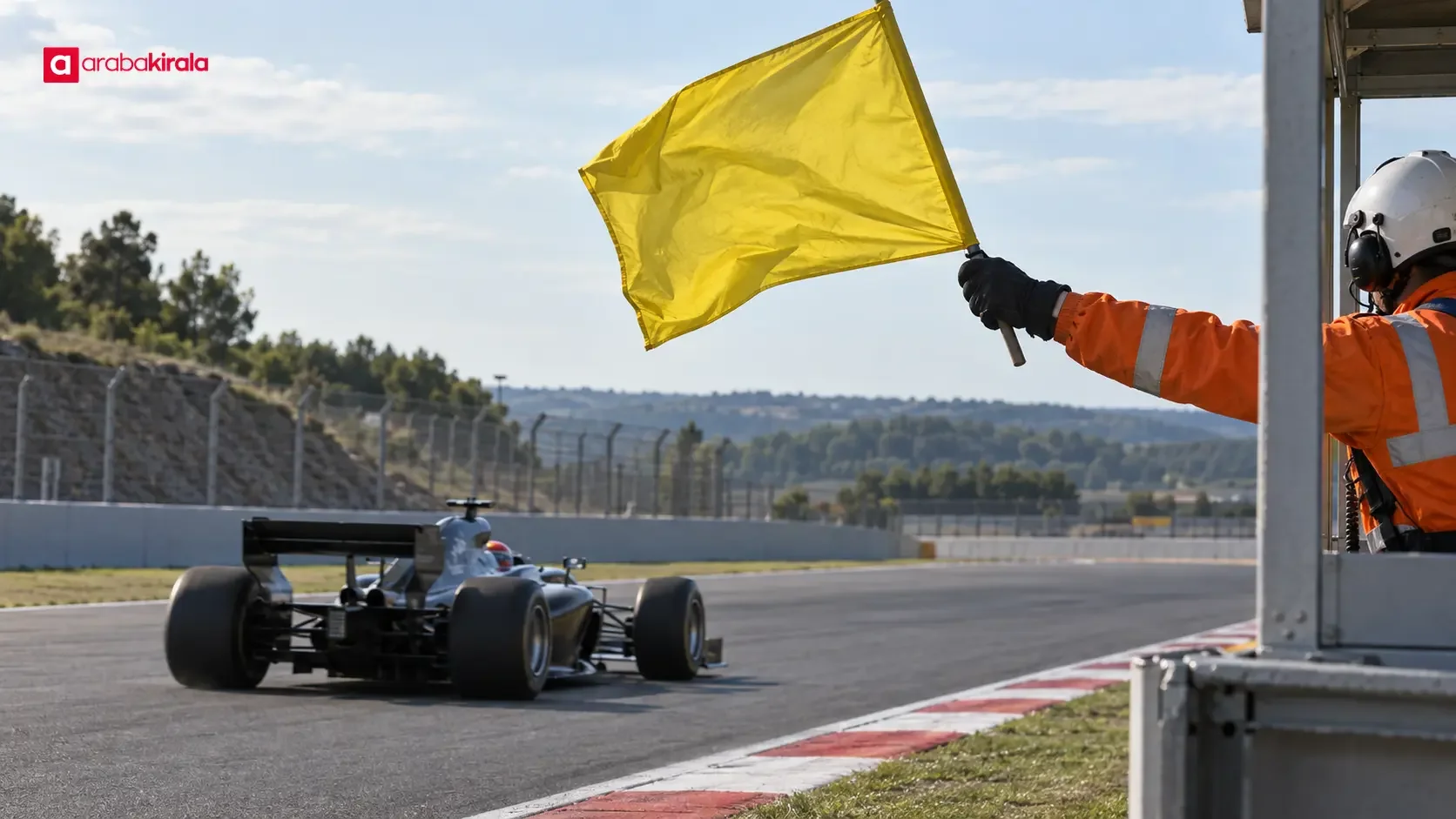
Formula 1 flag signals communicate hazards, changes in track conditions and instructions to drivers. Marshals show flags at points around the circuit, while electronic panels in or beside the cockpit can relay related warnings. Learning the colours makes it easier to follow why a driver slows, why a session pauses, or why traffic on track changes. A flag’s location and the directions from Race Control matter alongside its colour.
This guide covers the principal flags spectators are likely to see. Their practical application can depend on the session and the instructions issued by Race Control. It is best to understand each flag as a safety or race management message, rather than assume that its colour alone explains every detail of what drivers must do.
Yellow flag: a hazard ahead
A yellow flag warns that there is a hazard on or beside the track in the relevant sector. It may be a stopped car, debris, a recovery operation, or a surface that has become slippery. Drivers should be alert, reduce speed as needed, keep control of the car and be ready to change direction. The flag does not necessarily identify the precise obstacle, so drivers must also assess the track ahead.
A single yellow generally signals caution near a hazard. Double waved yellows indicate a more serious situation and the need for a more substantial reduction in speed or a change of direction. Drivers are expected not to overtake in the affected area. A yellow flag is not an invitation to exploit another car’s slower pace; it protects drivers, marshals and anyone working trackside.
What should a driver watch for under yellow?
The driver needs to judge how much of the track remains usable, whether a car or piece of debris is on the racing line, and whether visibility is reduced. Rain, dust or smoke can make a hazard harder to see. The immediate priorities are to slow safely and maintain control. Drivers also need to observe where the warning ends and should not resume normal racing behaviour while still in the hazard area.
Red flag: the session is stopped
A red flag indicates that a race, practice session or qualifying session has been stopped. Race Control may use it when conditions are unsuitable for continuing, after a serious incident, or when an obstruction needs to be dealt with safely. Drivers should reduce speed and follow the prescribed route and instructions. The flag does not by itself mean that every driver should immediately enter the pit lane or stop wherever they happen to be. The procedure for that session and Race Control’s directions determine what happens next.
A red flag does not necessarily mean the event is over. If conditions allow, the session may be resumed or completed later. The timing and method depend on the situation and official instructions. For spectators, the signal means track activity has been interrupted; announcements from Race Control provide information about the next step.
Green flag: the track is clear again
A green flag indicates that the preceding warning has ended or that the relevant part of the circuit is open again. Drivers can return to the normal flow of the session, while continuing to drive safely. Green does not guarantee that every part of the circuit is free of risk. Rain, low visibility or changing grip can still require caution.
Green signals can also feature in the process of resuming racing after a safety car or virtual safety car period. The restart itself follows the applicable procedure and instructions. So although the broad message is that the track is open, drivers must follow any specific directions they receive as the field returns to racing.
Blue flag: a faster car is approaching
A blue flag alerts a driver that a faster car is closing in. The phase of the race, the lap difference and the positions of the cars affect the expected response. It is therefore misleading to read a blue flag as a simple instruction to pull over immediately. A driver must act in line with the applicable directions while avoiding a sudden move that puts another car at risk or disrupts a safe racing line.
For spectators, the blue flag also explains why two cars may be interacting without fighting for the same position. They may be on different laps, and a faster car may be catching a car that is not directly contesting its place. The signal helps drivers recognise this traffic and manage its effect on their race.
Black flag and black-and-white flag
A black flag is a serious signal directed to a particular driver. It usually instructs that driver to leave the session and return to the pit lane, and is commonly shown together with the car’s number. This is an individual message, not a general signal to the whole field. The driver and team follow the official communication from Race Control.
A black-and-white flag can be used to warn a driver about unsporting or otherwise unacceptable conduct. It signals that the behaviour should not be repeated. The two flags have different functions: the black-and-white flag is a warning, while the black flag is a more definitive instruction. Officials assess the specific incident and decide what action is appropriate.
Black flag with an orange disc: check the car
The black flag with an orange disc can instruct a driver to return to the pit lane so the car can be checked for a technical problem. A damaged or loose part may create risk for the driver and others on the circuit. The signal does not explain every detail of the fault; the driver follows the instruction and the team examines the car.
This does not mean that every technical problem receives the same response. Race Control considers the car’s condition and the safety implications. When spectators see this flag, they can understand that race officials have ordered an inspection or action to make the car safe.
White flag and chequered flag
A white flag warns that a slow-moving vehicle is on the circuit. That vehicle could be a competing car, a safety car or an intervention vehicle. Drivers need to account for the difference in speed and the vehicle’s position as they approach. The flag does not always explain why the vehicle is moving slowly, so drivers continue to watch the surroundings and other signals.
The black-and-white chequered flag marks the end of a session or race. In a race it is generally shown to cars as they cross the finish line. Seeing the flag does not mean that drivers can stop taking care immediately; they continue in a controlled manner and follow officials’ directions after the finish. For spectators, it is the official finish signal, while the final classification may also depend on the stewards’ review and official results.
How are flags communicated, and why do they matter?
Marshals display flags at designated points to alert drivers to hazards and changing conditions. Electronic panels can relay the same kinds of messages, helping drivers receive warnings from the cockpit. The point at which a warning becomes visible and the sector it covers matter, so drivers use the trackside signals and electronic indications together. Teams can also pass information over the radio, but a team message does not replace official instructions from Race Control.
Flags help preserve safety and order on track. Slowing for yellow, following the red-flag procedure and responding appropriately to blue all require drivers to consider other cars and the people working around the circuit. For viewers, knowing the basic messages makes it easier to understand why the pace changes and how an incident affects the race.
Frequently asked questions
What is the difference between a single and double yellow flag?
Both warn of a hazard. Double yellows indicate a more serious risk and call for a greater reduction in speed or a change of direction. In either case, drivers should not overtake in the affected area and must keep the car under control.
Does a blue flag always mean a driver must pull over immediately?
No. It warns that a faster car is approaching. The expected response depends on the race situation and official instructions, and a sudden move that creates danger is not appropriate.
Does a red flag mean the race is over?
Not necessarily. It stops the session. Depending on conditions and Race Control’s decision, the session may resume or be completed later.
Does the chequered flag finish the race?
Yes. It signals the end of the race or session. Drivers still need to drive in a controlled way after the finish and follow officials’ directions.
How do electronic panels relate to flags?
Electronic panels can relay flag messages shown by marshals. Both provide warnings about track or session conditions, and Race Control determines the applicable instructions.
Legal Disclaimer: All content, articles and information on the Araba Kirala website are provided solely to inform users. No information shared on this website constitutes definitive advice or guidance. Araba Kirala Teknoloji A.Ş. and its authors cannot be held responsible for any direct or indirect damages arising from the application of information on the website. For all questions and requests regarding car rental, please contact the office from which you will rent your vehicle.