What Is Ground Effect in Formula 1? Its Impact on Cornering
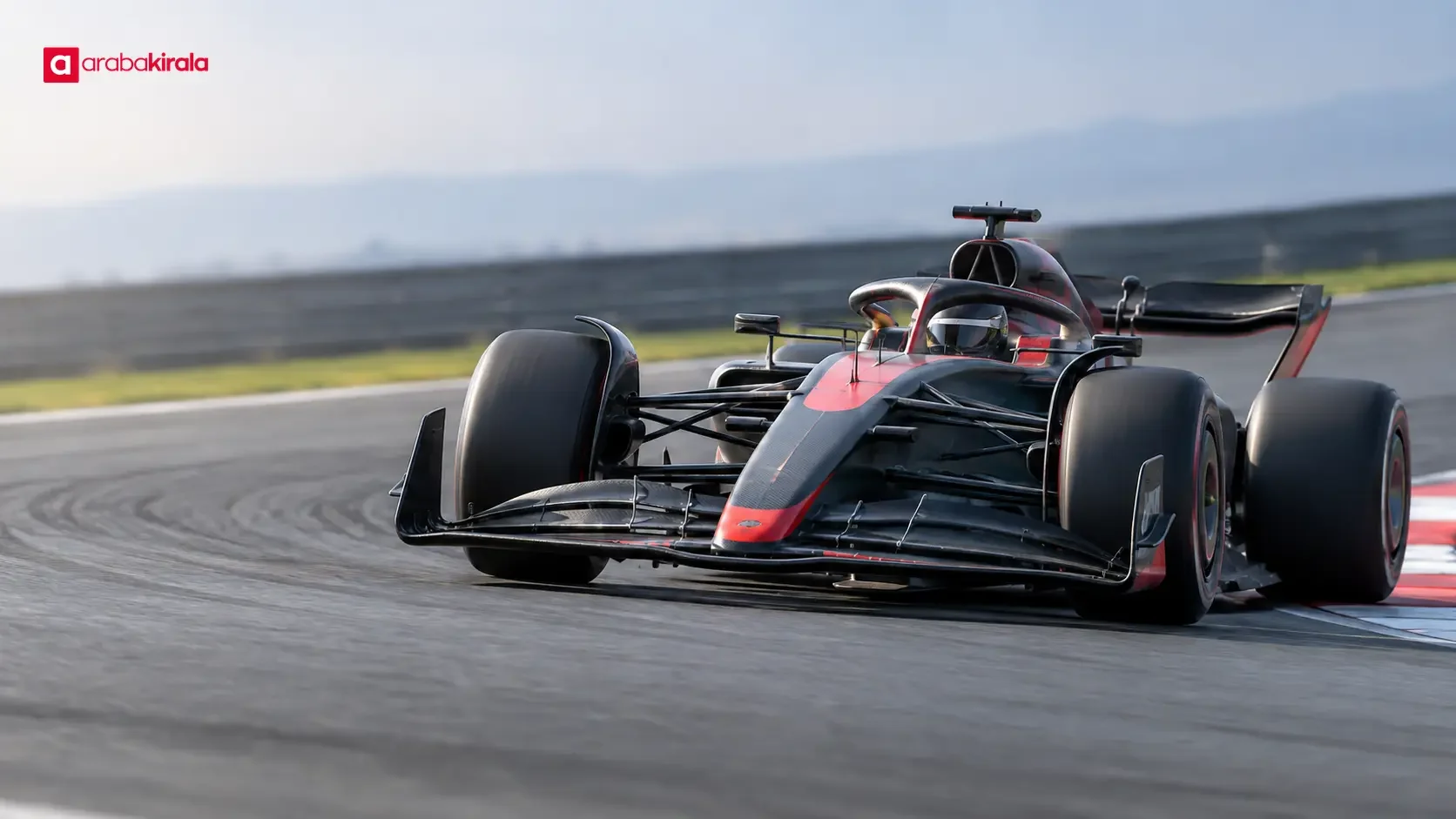
Formula 1 ground effect is the use of airflow beneath a car to create a pressure distribution that pushes the car toward the track. The resulting aerodynamic load helps the tyres maintain contact with the road, particularly at speed and through fast corners. The floor is central to this effect, but it does not work in isolation: the diffuser, floor edges, front and rear wings, ride height, suspension movement, and the car’s motion all influence the airflow.
How ground effect works
Air enters beneath the car and travels through channels shaped by the floor. The bodywork guides and accelerates the flow, while the diffuser at the rear helps the air expand and leave the underside in a controlled way. The resulting pressure difference between areas around the car contributes to a downward aerodynamic force. That force adds load to the tyres without adding physical mass to the car. It is therefore different from the car’s static weight, and it changes with speed and airflow conditions.
The diffuser is the rising, shaped section at the rear of the floor. Its geometry helps manage the transition as air exits from under the car. If the flow remains organised, the floor can continue producing useful aerodynamic load. The front wing and other bodywork help direct air toward and around the floor. These parts form a connected system: a change to one area can alter the flow and the balance elsewhere.
How downforce affects cornering
Tyres can generate only a finite amount of lateral force, and their grip depends on load and operating conditions. Aerodynamic downforce adds vertical load as speed rises, which can help the tyres produce more grip in a corner. In suitable conditions, that allows a car to maintain higher cornering speeds. It does not mean every corner can be taken at the same speed, or that aerodynamics is the only factor. Tyre condition and temperature, track surface, braking, suspension, and the driver’s line all matter.
At lower speeds, aerodynamic load generally falls, so mechanical grip becomes more influential. Mechanical grip comes from the tyres, suspension, and chassis working together. In faster corners, aerodynamics can play a larger role. Teams therefore aim for a car that behaves consistently across different parts of a circuit, rather than one that is optimised for a single corner type. Braking on entry, turning through the apex, and accelerating on exit each place different demands on the car.
Ground effect and wing-generated downforce
Wings also use airflow to create downforce. Ground effect refers mainly to the way the floor and airflow under the car contribute to that force. These sources are not mutually exclusive; the wings and floor operate as parts of the same aerodynamic package. Teams need to balance load between the front and rear. If the balance shifts, the car may respond differently on corner entry or exit, which a driver can experience as understeer or oversteer.
Wing angle and body shape also affect drag, the resistance that opposes forward motion. More downforce is commonly considered alongside more drag, so teams weigh cornering grip against straight-line speed. An efficient floor may contribute useful load without relying entirely on larger wing settings, but the outcome depends on the design and circuit. There is no single setup that is automatically best at every track.
Why ride height and stable airflow matter
The gap between the floor and the track is an important part of the airflow environment. As a car accelerates, aerodynamic forces and suspension movement can change its ride height. If the floor is too close to the surface or moves in an unexpected way, the airflow can become less stable and the downforce may vary. Designers have to balance aerodynamic efficiency with a car that behaves predictably over the track surface.
Changes in aerodynamic load can affect how confident a driver feels in the car. The body moves differently on a straight, under braking, and through the stages of a corner. Producing a high load in a controlled test or a simulation is not enough by itself; the flow also needs to remain useful in real track conditions and across different speeds and directions. Teams assess their choices using measurements, telemetry, and driver feedback.
Following another car and disturbed air
A car moving through the air changes the flow behind it. The following car may encounter airflow that reaches its wings and floor in a different or less orderly state. Under some conditions, this can reduce its downforce or change its balance, making the available grip in a corner less predictable. The effect depends on factors such as the gap between cars, their speeds, corner shape, and aerodynamic design. No single following distance produces the same result in every situation.
Ground-effect designs make the airflow beneath and around the car especially important, but the ability to follow or pass another car cannot be explained by ground effect alone. Tyre condition, straight-line speed, braking points, track width, and driver decisions also shape the outcome. It would be too strong to say that ground effect by itself eliminates the difficulty of following another car.
How teams assess ground effect
Teams examine airflow around and beneath the car using a combination of aerodynamic analysis, controlled testing, and track data. Measurements help show how the car behaves, while telemetry and driver feedback help relate those results to speed, body movement, and balance. A component is not judged only by whether it can produce more load in isolation. Engineers also consider where the load is produced and whether the airflow remains stable across different speeds.
Setup needs vary from circuit to circuit. A track with long straights and fast corners presents different demands from a tight circuit dominated by slower turns. Air and track-surface conditions can also affect airflow and tyre performance. Teams therefore work with a car package and conditions for each event; there is no universal “best ground-effect setup” for the full season.
Frequently asked questions about ground effect
Does ground effect glue a car to the track?
That phrase is a metaphor for aerodynamic load. The car is not physically attached to the track. Airflow creates a downward force that increases the load on the tyres and can help them generate grip. Since the force varies with speed and airflow, it is more limited at low speeds.
Does ground effect help in slow corners?
It still contributes, but aerodynamic load generally decreases as speed falls. Mechanical grip and the driver’s control of braking and throttle therefore become more prominent in slow corners. Aerodynamics is often more influential in faster turns.
Is ground effect the only source of downforce?
No. Ground effect describes the contribution made by airflow beneath the car. Wings and other bodywork also produce aerodynamic load. Overall performance depends on how those sources work together and how consistently the car maintains its balance.
Does ground effect work the same way on every Formula 1 car?
The basic principle is shared, but the result depends on the floor, diffuser, wings, suspension, ride height, and other design choices. Track layout and conditions matter too. Each car’s aerodynamic package determines how effectively it uses the underlying principle.
In summary
Formula 1 ground effect uses the airflow beneath a car to contribute to downforce. That load can support tyre grip, especially in fast corners, while the floor, diffuser, wings, and ride height shape the car’s balance and the stability of its airflow. Teams develop the whole aerodynamic package to balance cornering performance with straight-line speed and predictable handling. Ground effect does not replace tyre or mechanical grip; it is one part of a car’s overall performance.
Legal Disclaimer: All content, articles and information on the Araba Kirala website are provided solely to inform users. No information shared on this website constitutes definitive advice or guidance. Araba Kirala Teknoloji A.Ş. and its authors cannot be held responsible for any direct or indirect damages arising from the application of information on the website. For all questions and requests regarding car rental, please contact the office from which you will rent your vehicle.