How Do Race Distance, Lap Count, and the Chequered Flag Relate in Formula 1?
Published: October 8, 2026 • Reading Time: 7 min • Last Updated: October 8, 2026
A practical guide to how circuit length and lap count define Formula 1 race distance, when the chequered flag ends a Grand Prix, and why time limits or interruptions can change the planned finish.
Contents
- What does Formula 1 race distance mean?
- How does circuit length determine the number of laps?
- Lap distance versus race distance
- How does the chequered flag end a race?
- Why do time limits and interruptions matter?
- Practical ways to follow the race
- Why race distance affects the viewing experience
- Summary: read the three signals together
- Frequently Asked Questions
Formula 1 race distance determines how much ground a Grand Prix is planned to cover and how many laps that requires at a particular circuit. This guide explains how circuit length affects the lap count, what the chequered flag signals, how time limits matter, and why an interruption can make the actual race differ from its plan. The key is to read distance, laps, and race control together rather than treating the lap counter as the whole story.
What does Formula 1 race distance mean?
Race distance is the planned total length of the Grand Prix. Organizers relate that total to the length of one circuit lap and the number of laps required. The general rule is that a Grand Prix is planned to exceed 305 kilometres. The Monaco Grand Prix is the notable exception, with a shorter race distance. As a result, there is no single lap count used at every event: the number of laps changes with the circuit so that the planned total fits the relevant distance requirement.
This total should not be confused with the distance covered in one lap. Circuit length describes one complete circuit; multiplying it by the planned lap count gives the scheduled race distance. Since the lap count must be a whole number, the resulting distance need not match the same exact kilometre figure at every Grand Prix. The circuit layout therefore shapes the lap count, while the distance rules set the broader framework.
How does circuit length determine the number of laps?
A longer lap generally means fewer laps are needed to reach the planned race distance. On a shorter circuit, drivers complete more laps to cover a comparable total. This lets the race distance adapt to the physical layout of each venue. Circuit length alone does not explain every detail: event regulations and the conditions under which the race is actually completed also matter.
The lap count helps viewers follow the event as it unfolds. Completing one lap means making a full circuit and recording another passage through the timing system. The leader’s lap count indicates the race phase, while the gaps between cars show whether other competitors are on the same lap or one or more laps behind. Consequently, cars on track do not necessarily cross the finish line after completing an identical number of laps.
Lap distance versus race distance
Lap distance is the length of one complete circuit. Race distance is the planned total across the scheduled laps. A short lap does not automatically make the whole Grand Prix short; it usually means the lap count is higher. Keeping these two measurements separate makes it easier to understand why the number of laps varies from circuit to circuit.
How does the chequered flag end a race?
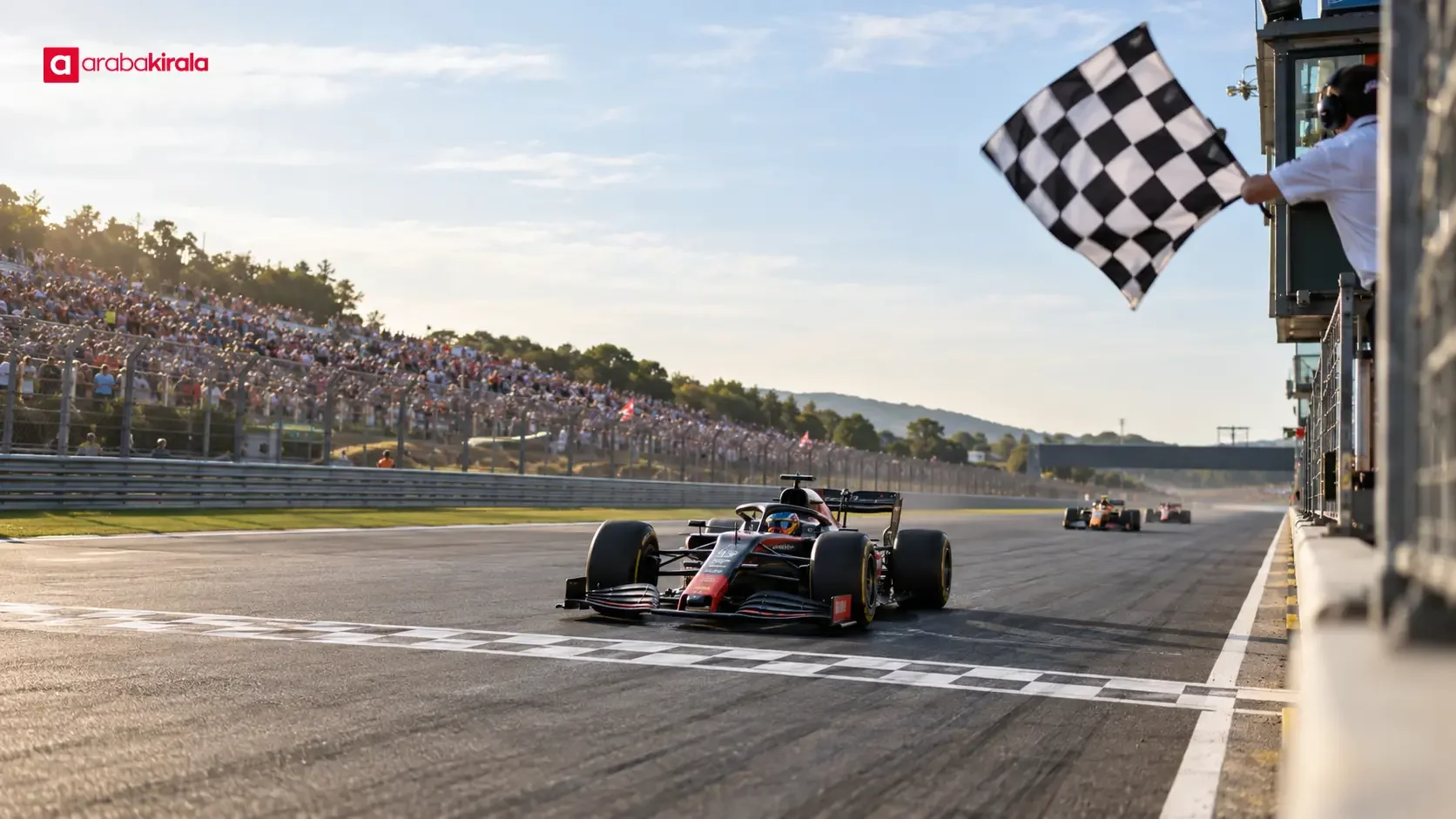
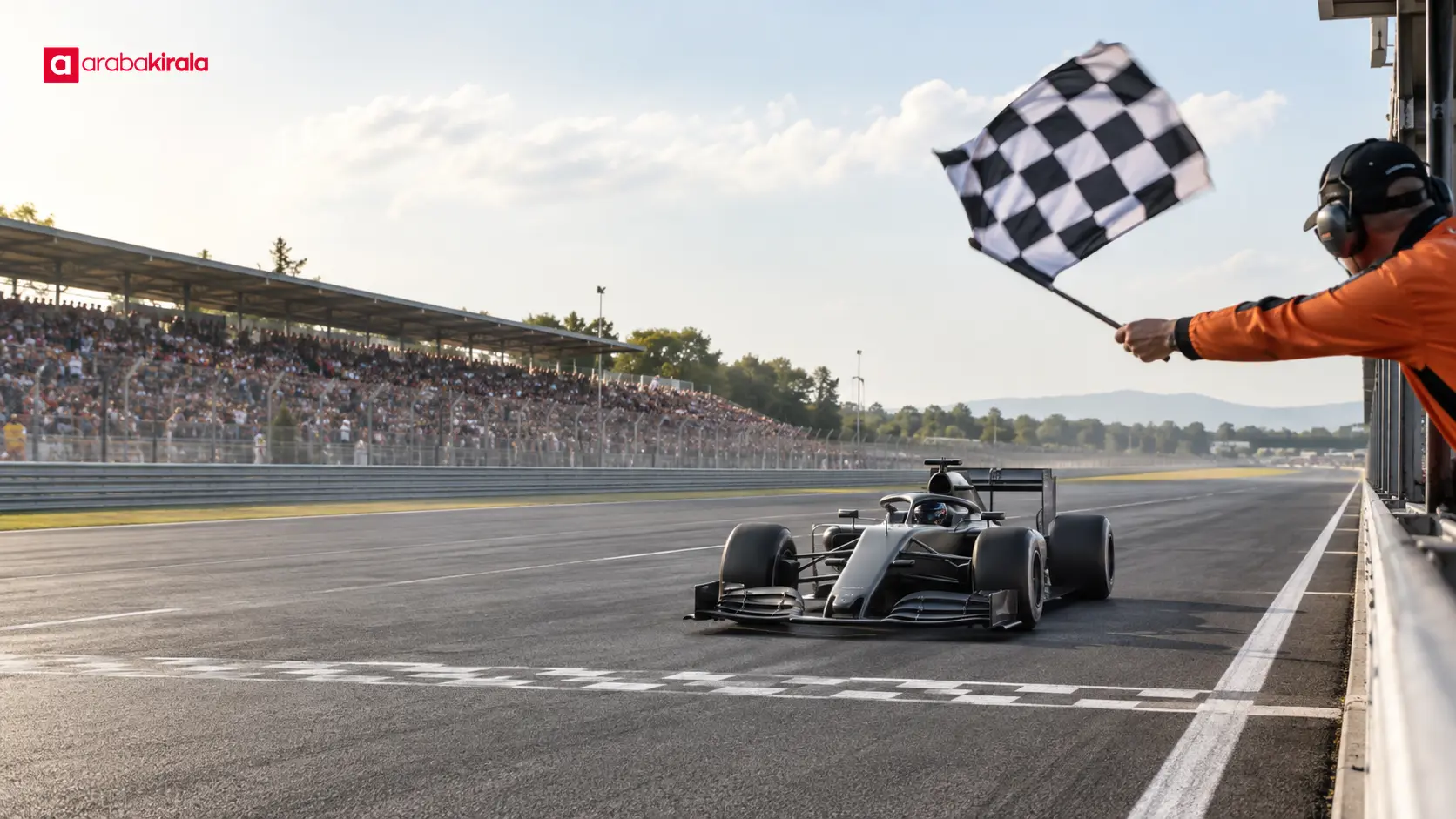
The chequered flag is the visual signal for the finish. In the normal race sequence, it is shown when the leader completes the required distance and crosses the finish line. The remaining drivers then cross the line in turn. The flag being shown to the leader does not mean every car finishes at that same moment. The order in which cars complete their finish and their lap difference from the leader remain relevant to the classification.
The finish is not determined simply by looking at the last number on the lap counter. Race control follows the leader’s passage over the line and the applicable race procedure. The lap counter provides context; the chequered flag signals the finish. These usually align in an uninterrupted race, but a stoppage or unusual circumstance can affect how the finish unfolds.
Why do time limits and interruptions matter?
Formula 1 Grands Prix have a maximum time framework as well as a planned lap count. If a race is interrupted for a significant period or approaches the applicable time limit, it may end before the planned number of laps is completed. So “how many laps were scheduled?” and “how many laps did the race actually last?” can have different answers. The exact way a time limit applies depends on elapsed time, interruptions, and the regulations in force for the event.
A red flag indicates that the race has been stopped, for example because of track conditions or danger. Drivers follow race control instructions. Whether the event resumes, continues, or is classified as complete depends on the circumstances and the applicable procedure. The lap count visible when a red flag appears should not automatically be treated as the final result. The official timing and race control decision establish the outcome.
If the finish signal appears before the planned lap count because of an error or unusual event, the result should not be judged from a broadcast image alone. The official classification explains which lap is counted and how the order is recorded. When a race has been interrupted, checking the official results alongside the live coverage is the clearest way to understand the final status.
Practical ways to follow the race
- Separate circuit length from planned laps. Neither figure alone tells the full distance; consider them together.
- Watch the leader’s lap count. It shows the race phase. Other cars may be a lap or more behind, so their position needs that context.
- Read the chequered flag as the finish signal. It marks the normal finish, but cars cross the line at different times.
- Follow interruption signals. A safety car, red flag, or restart can change the planned sequence. Look for official updates when that happens.
- Distinguish the plan from the result. The pre-race lap count is the plan; the final classification records what was officially completed.
Why race distance affects the viewing experience
Distance and lap count help explain the structure of a Grand Prix over time. More laps provide more timing points and opportunities to observe changes, but they do not by themselves determine how exciting a race will be or who will win. The circuit, weather, and events during the race also shape what happens. Treat distance as a way to understand the event’s framework, not as a forecast of its outcome.
Distance information is also a useful reference when checking a race guide or official calendar. Looking up the event name together with its circuit and planned laps helps identify the right session. For current dates and event-specific details, consult Formula 1 and the event organizer’s official notices, since season schedules and procedures can change over time.
Summary: read the three signals together
Formula 1 race distance connects the circuit’s lap length to the planned lap count. The general Grand Prix target exceeds 305 kilometres, with Monaco as the shorter-distance exception. The chequered flag signals the normal finish, while time limits and interruptions can make the actual lap count differ from the schedule. To follow a race, watch the circuit distance, the leader’s lap count, and the finish signal together. If the race is stopped, use the official classification to confirm the final result.

Frequently Asked Questions
How many kilometres is a Formula 1 race?
The general Grand Prix rule plans a distance exceeding 305 kilometres. Monaco is the shorter-distance exception. The number of laps varies according to the length of each circuit.
Why do Formula 1 races have different lap counts?
Circuits have different lap lengths. A longer circuit needs fewer laps to reach the planned race distance, while a shorter one needs more. That is why every Grand Prix does not use the same lap count.
Does the chequered flag mean the race is over?
Under normal conditions, the flag signals the finish when the leader crosses the line after completing the required distance. Other cars complete their own finish passages, and the classification accounts for their lap gaps.
Can a race finish before its planned lap count?
Time limits or a race stoppage can prevent the scheduled lap count from being reached. The procedure and official result depend on the circumstances and the rules applied by race control.
Does a red flag mean the race has ended?
A red flag means the race has been stopped; it does not by itself mean the event is over. Whether racing resumes and how the result is classified are determined through the official decision.
Why are the lap counter and chequered flag different indicators?
The lap counter shows the leader’s completed laps and the race phase. The chequered flag is the finish signal. If an interruption or unusual situation occurs, the official classification clarifies how the indicators relate to the final result.
Legal Disclaimer: All content, articles and information on the Araba Kirala website are provided solely to inform users. No information shared on this website constitutes definitive advice or guidance. Araba Kirala Teknoloji A.Ş. and its authors cannot be held responsible for any direct or indirect damages arising from the application of information on the website. For all questions and requests regarding car rental, please contact the office from which you will rent your vehicle.