Formula 1 Tyre Colors: Hard, Medium, Soft and Wet Tyres
Published: October 4, 2026 • Reading Time: 7 min • Last Updated: October 4, 2026
Formula 1 tyre colours distinguish hard, medium and soft slicks for dry conditions from intermediate and full wet tyres for rain. Learn what each colour means, how it differs from compound codes, and how tyre choice shapes race strategy.
Contents
- What do Formula 1 tyre colours show?
- Dry-weather tyres: white, yellow and red
- White: hard
- Yellow: medium
- Red: soft
- Wet-weather tyres: green and blue
- Green: intermediate
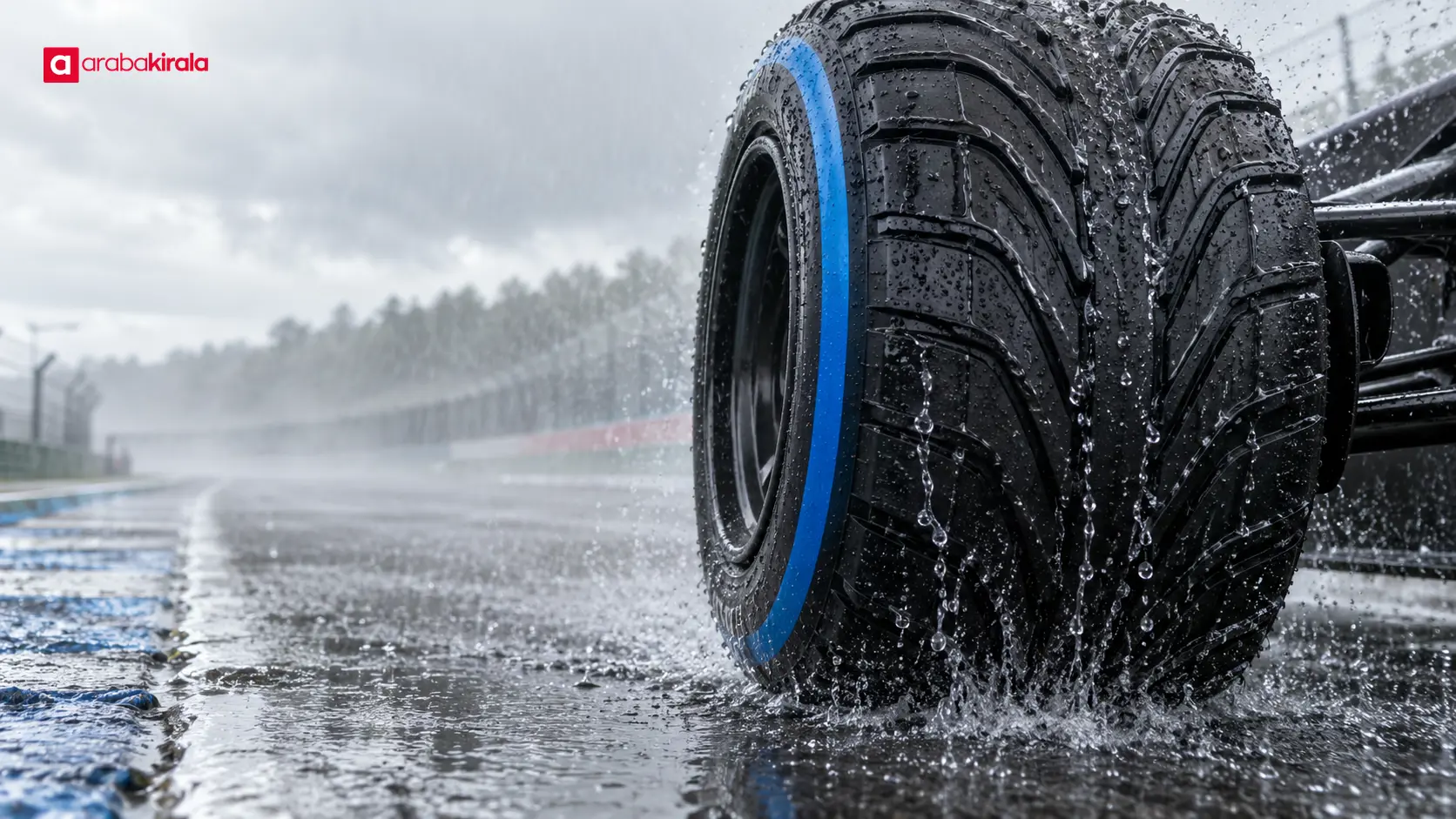
- Blue: full wet
- Colour categories and C compound codes are different
- How does tyre choice affect race strategy?
- How to use tyre colours while watching a race
- Frequently asked questions
- Is a red Formula 1 tyre always the fastest?
- Are white, yellow and red tyres made from the same compounds at every race?
- What is the difference between green and blue wet tyres?
- Do Formula 1 tyre colours apply to road-car tyres?
- Summary and next step
Formula 1 tyre colours help viewers see whether a car is using a dry-weather slick or a tyre designed for rain. This guide explains the white, yellow and red markings on slicks, the green intermediate and blue full wet tyres, and why a colour category is not the same as a specific compound code. It also shows how tyre characteristics influence pace, pit-stop timing and race strategy.
What do Formula 1 tyre colours show?
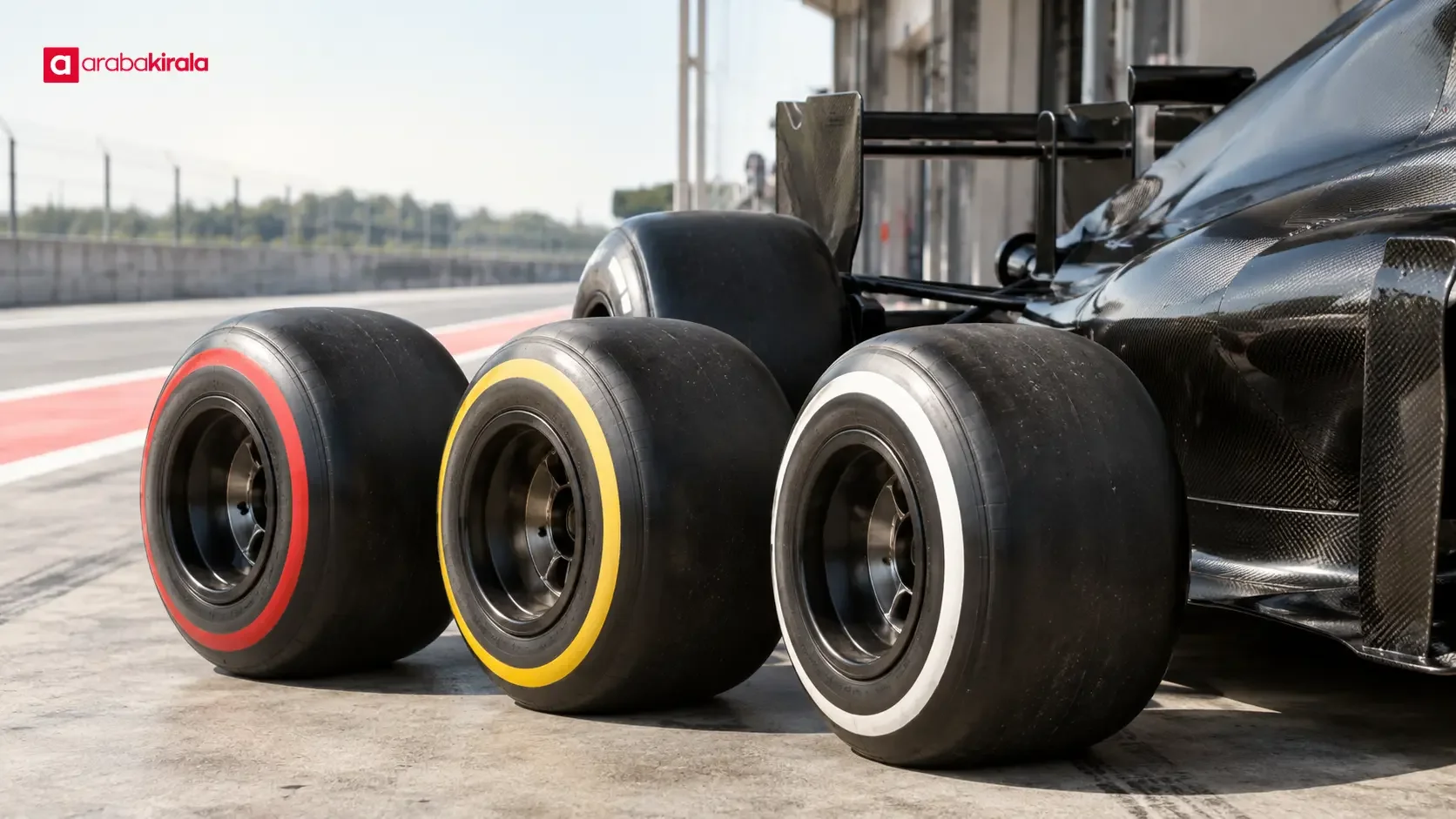
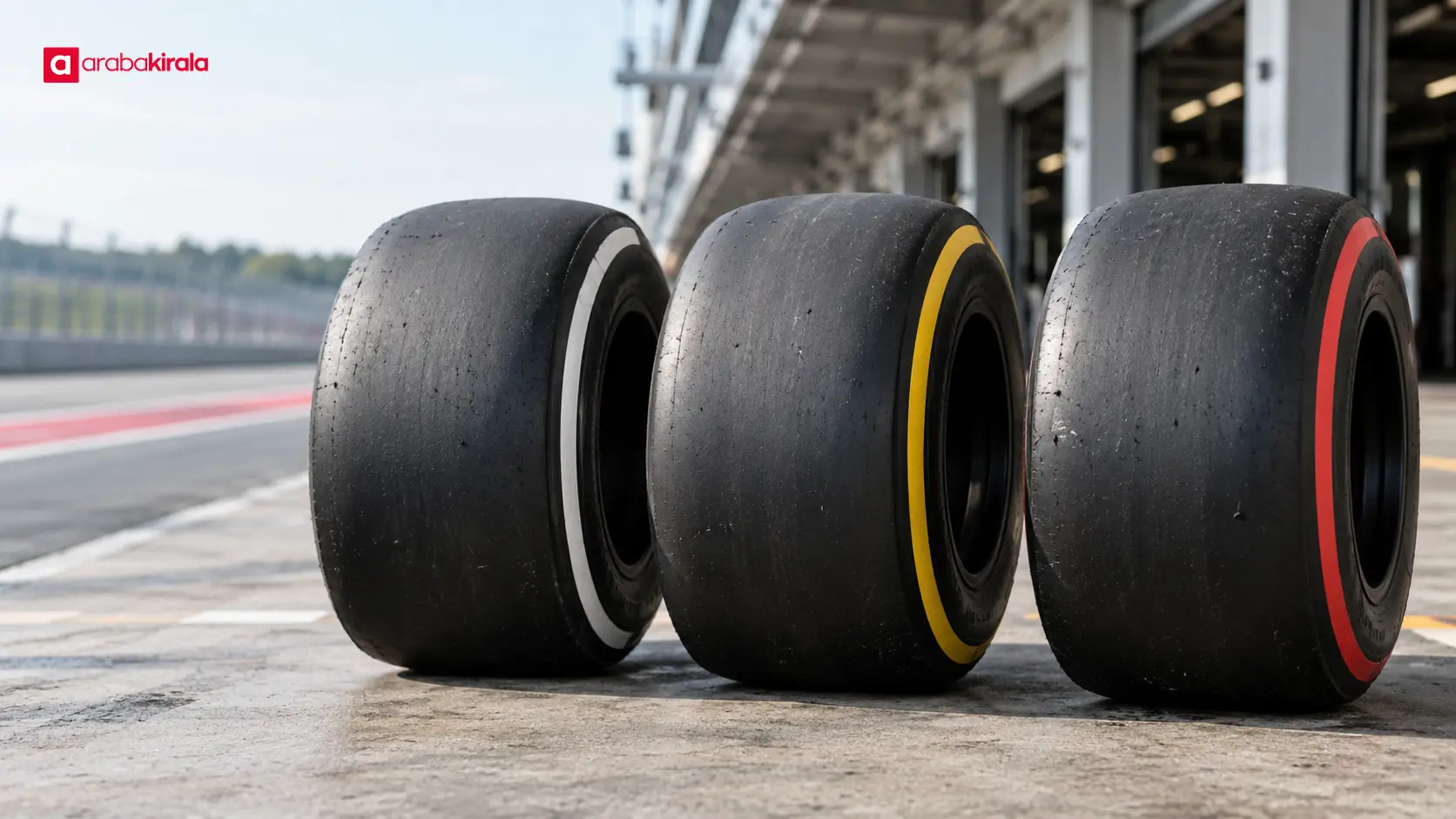
The coloured marking on a tyre’s sidewall makes its category easier to identify. For dry conditions, white denotes hard, yellow medium and red soft slick tyres. For wet conditions, green identifies the intermediate and blue the full wet tyre. The colour tells you the category; it does not by itself specify how many laps a tyre will last or guarantee a particular lap time.
Colour coding helps spectators follow tyre choices from the grandstand or on screen. Yet a category of the same colour need not represent an identical rubber compound at every Grand Prix. The available dry compounds are selected for each event, so the compound that earns the hard, medium or soft label can change from one circuit to another.
Dry-weather tyres: white, yellow and red
White: hard
The hard slick generally places more emphasis on durability than the other dry options. It may support a longer stint in suitable conditions, while taking longer than a soft tyre to reach its most effective operating range. Teams consider track demands, surface abrasiveness, temperature and expected pace when deciding whether the hard is useful.
“Hard” does not mean “slow on every circuit.” A tyre needs to reach and remain within a suitable temperature range. In cooler conditions or during a short run, a harder slick may take longer to deliver its best performance; elsewhere, its durability can become more valuable. The colour identifies a class, not a guaranteed result.
Yellow: medium
The medium slick sits between the hard and soft categories, offering a balance between grip and durability. Depending on the circuit and conditions, it can be useful at different stages of a race. Teams decide how to deploy it as part of a wider plan rather than treating the yellow tyre as a fixed solution for every event.
“Medium” does not mean the tyre will perform exactly halfway between hard and soft at every track. A particular C compound may be labelled medium at one event while a different C compound receives the same label elsewhere. Seeing yellow is a useful clue, but it does not prove that the tyre is identical to a yellow-marked tyre from another race.
Red: soft
The soft slick is the dry-weather option that can provide more mechanical grip and strong performance over a shorter run. It can suit a fast qualifying lap or a stint in which immediate pace matters. The trade-off is that wear and performance loss may become more pronounced over extended use.
A soft tyre is not automatically the best choice. Track temperature, surface, traffic, how the car loads its tyres and how the driver manages them all affect performance. Teams monitor lap times and tyre condition to decide when to stop and which tyre to use next.
Wet-weather tyres: green and blue
Green: intermediate
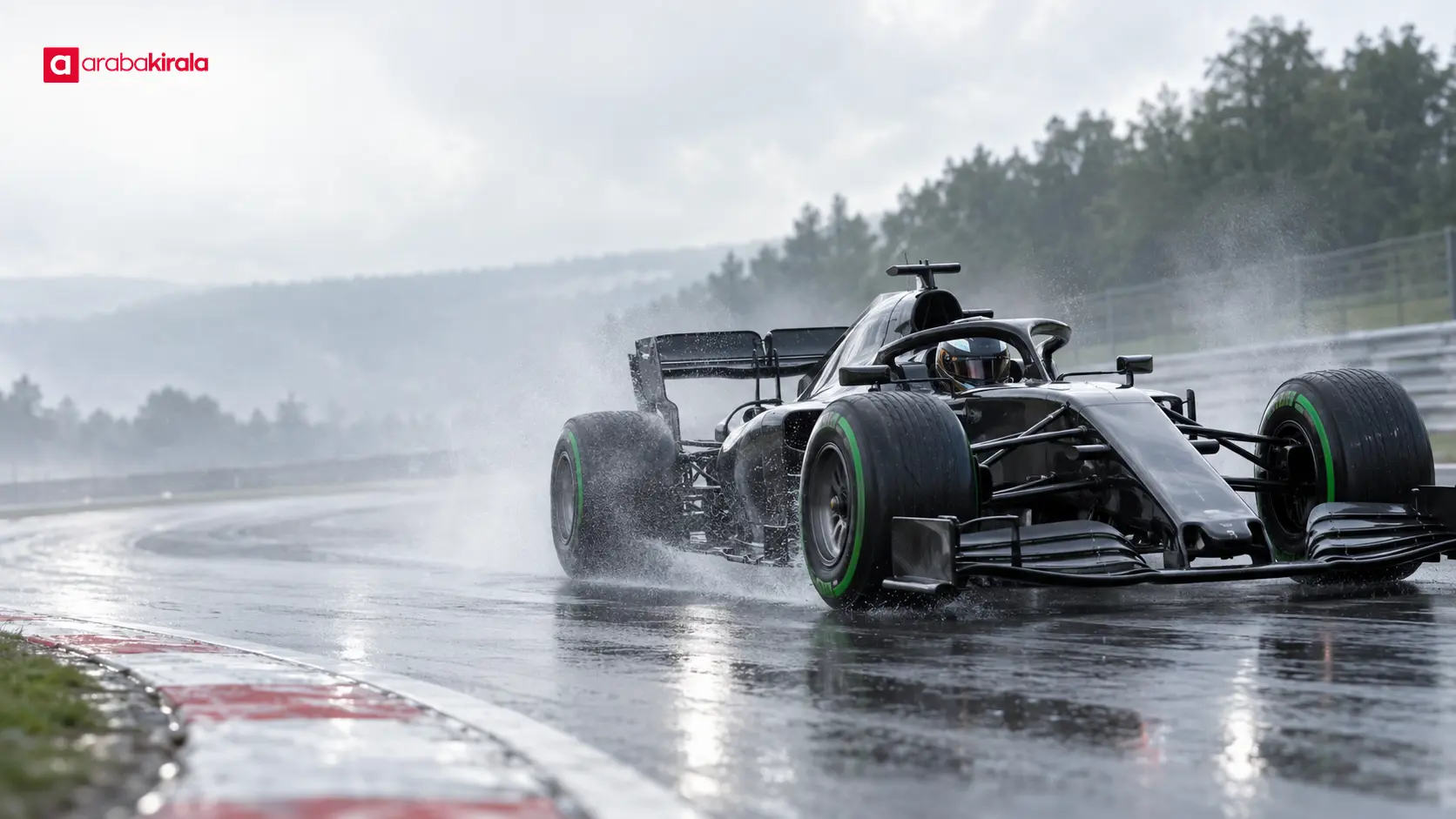
The green intermediate is intended for a wet track without deep standing water. It can also be used as the circuit begins to dry, making it a transition option between slicks and full wet tyres. Its tread pattern helps move water away from the contact area, unlike the smooth surface of a dry slick.
Choosing the right tyre as conditions change involves more than asking whether the track is wet. The amount of water, whether rain is continuing, how quickly the racing line is drying and the grip in different parts of the circuit all matter. The move from intermediates to slicks, or to full wets, is closely tied to control and safety.
Blue: full wet
The blue full wet tyre has a tread designed for heavier rain and greater amounts of water on the track. Its grooves help disperse water from the contact area and are intended to reduce the risk of aquaplaning. It may be more suitable than an intermediate when water is deeper, although tyre choice can change as conditions evolve.
In heavy rain, grip is not the only concern. Spray from cars can reduce visibility for drivers. A tyre’s ability to disperse water cannot by itself make every condition safe; race control may slow or suspend a session depending on what drivers can see and the overall conditions.
Colour categories and C compound codes are different
Colour tells viewers whether a tyre is hard, medium, soft or intended for rain. Codes such as C1 and C2 distinguish dry slick compounds. The available compound range and the selections made for an event can vary by season, so it is inaccurate to say that red always means C5 or white always means C1. Pirelli’s announced 2025 dry range, for example, included a C6, illustrating why the soft category is not tied to one fixed C code.
Not every compound is used at each Grand Prix. A limited selection is made for dry conditions based on the circuit, and the tyres in that selection are designated hard, medium and soft for the event. Colour is a quick visual guide; the event’s official tyre selection and technical information explain the precise compounds.
How does tyre choice affect race strategy?
Tyres are the only parts of an F1 car that touch the circuit, so they contribute directly to grip, braking and cornering speed. Compound choice, warm-up behaviour and wear can affect pace and pit-stop planning. A softer option may deliver short-term speed but increase the chance of an earlier change; a harder option may last longer but take more time to reach its best operating temperature.
Teams do not make this decision from colour alone. They consider how abrasive the track is, the forces generated by corners and acceleration zones, air and track temperatures, the chance of rain and data from earlier running. Front and rear tyres can also wear at different rates, changing how the car behaves. Strategy is therefore an ongoing process of managing tyres, not a single choice at the start.
The FIA’s 2025 Sporting Regulations required a driver who had not used intermediate or wet tyres during the race to use at least two different dry-weather tyre specifications. This helps explain why more than one slick option matters in a dry race. Regulations can change between seasons, so consult the FIA’s official text when checking the rules for a particular event.
How to use tyre colours while watching a race
- Identify the category first: White, yellow and red are dry slick categories; green and blue are for wet conditions.
- Do not treat colour as a lap-count prediction: Tyre life varies with the circuit, temperature, driving and car setup.
- Check the compound code separately: A colour category does not map to the same C code at every event.
- Watch the weather and track: Rain intensity and standing water affect the choice between green intermediates and blue full wets.
- Put pit stops in context: A tyre change affects a stint and the race plan, but colour alone does not explain the outcome.
Frequently asked questions
Is a red Formula 1 tyre always the fastest?
Red marks the soft category among the dry tyres selected for that event. A soft tyre can offer strong grip and short-run pace, but temperature, wear and track conditions matter. It is not necessarily fastest on every lap or in every situation.
Are white, yellow and red tyres made from the same compounds at every race?
No. The colours represent hard, medium and soft categories. The C compound assigned to each category can vary, and the available selection changes from event to event.
What is the difference between green and blue wet tyres?
The green intermediate has a broader role on a wet track without deep standing water and on a surface that is drying. The blue full wet is designed to disperse more water in heavier rain. The appropriate choice depends on the amount of water and changing conditions.
Do Formula 1 tyre colours apply to road-car tyres?
These colour codes help spectators distinguish Formula 1 racing tyres. They are not the same categories used to choose everyday car tyres, which are identified through their sizes, seasonal markings and manufacturers’ technical information.
Summary and next step
White means hard, yellow medium and red soft for dry slicks; green means intermediate and blue full wet for rain. Colour makes the category visible, while compound codes, circuit conditions and strategy explain how performance may develop. During the next Grand Prix, follow the colours alongside weather and pit-stop timing to understand how tyre choices shape the race.
Legal Disclaimer: All content, articles and information on the Araba Kirala website are provided solely to inform users. No information shared on this website constitutes definitive advice or guidance. Araba Kirala Teknoloji A.Ş. and its authors cannot be held responsible for any direct or indirect damages arising from the application of information on the website. For all questions and requests regarding car rental, please contact the office from which you will rent your vehicle.