How Formula 1 Tyre Compounds and Warm-Up Laps Shape Race Strategy
Formula 1 tyre compounds shape more than a car’s grip. Their balance of traction, wear and operating range influences when a driver can push, how long a stint remains competitive and whether a pit stop is worthwhile. A tyre’s warm-up behaviour matters too: a compound that offers strong peak grip may take time to reach it, while a tyre built for longer use can feel less responsive early in a stint. Understanding these connections makes it easier to follow why teams treat preparation laps, race starts and pit timing as parts of one strategy.
What tyre compounds mean in Formula 1
Dry-weather slick tyres use different rubber formulations. A compound’s characteristics affect how much mechanical grip it can provide and how its performance changes as it heats and wears. A softer tyre often offers stronger grip over a short run, but may lose performance sooner. A harder tyre can generally last longer, yet may take more time to reach its useful temperature range and may be slower over one lap. These are broad tendencies rather than fixed outcomes: circuit layout, surface, temperature, car setup and driving style all matter.
The dry slick range is described with compound numbers. For the 2026 season, the announced range runs from C1 to C5. Three compounds are selected for each Grand Prix, then referred to at that event as hard, medium and soft. Those labels rank the three options chosen for that weekend; “hard” does not necessarily identify one identical compound at every circuit. Wet-weather tyres are a separate category: intermediates and full wets are designed for different amounts of water on track.
How soft, medium and hard tyres change strategy
A soft compound can be attractive for qualifying or a short burst of pace because it can provide strong grip over a lap. If its performance falls away quickly, however, the driver may need to stop earlier. The time gained on track must be weighed against the time lost in the pit lane and the possibility of emerging behind traffic. A quick tyre is useful only when its stint and position fit the overall race plan.
A hard compound can support a longer stint and may make a strategy with fewer stops viable. But durability alone does not make it the fastest choice. If the tyre warms slowly or offers less grip, the driver may lose time in the opening laps after a stop. A medium compound sits between the two in relative characteristics, but it is not automatically the best compromise. Teams estimate the full race time, including tyre pace, degradation, pit-lane loss and likely track position.
The same compound can produce different strategic outcomes at different venues. Corners that load a tyre heavily, long straights, abrasive asphalt and track temperature all affect wear and warm-up. A plan that suits one circuit may be poorly matched to another. Teams use practice runs to learn how quickly each option becomes competitive and how steadily it performs over a stint.
Why a warm-up lap matters
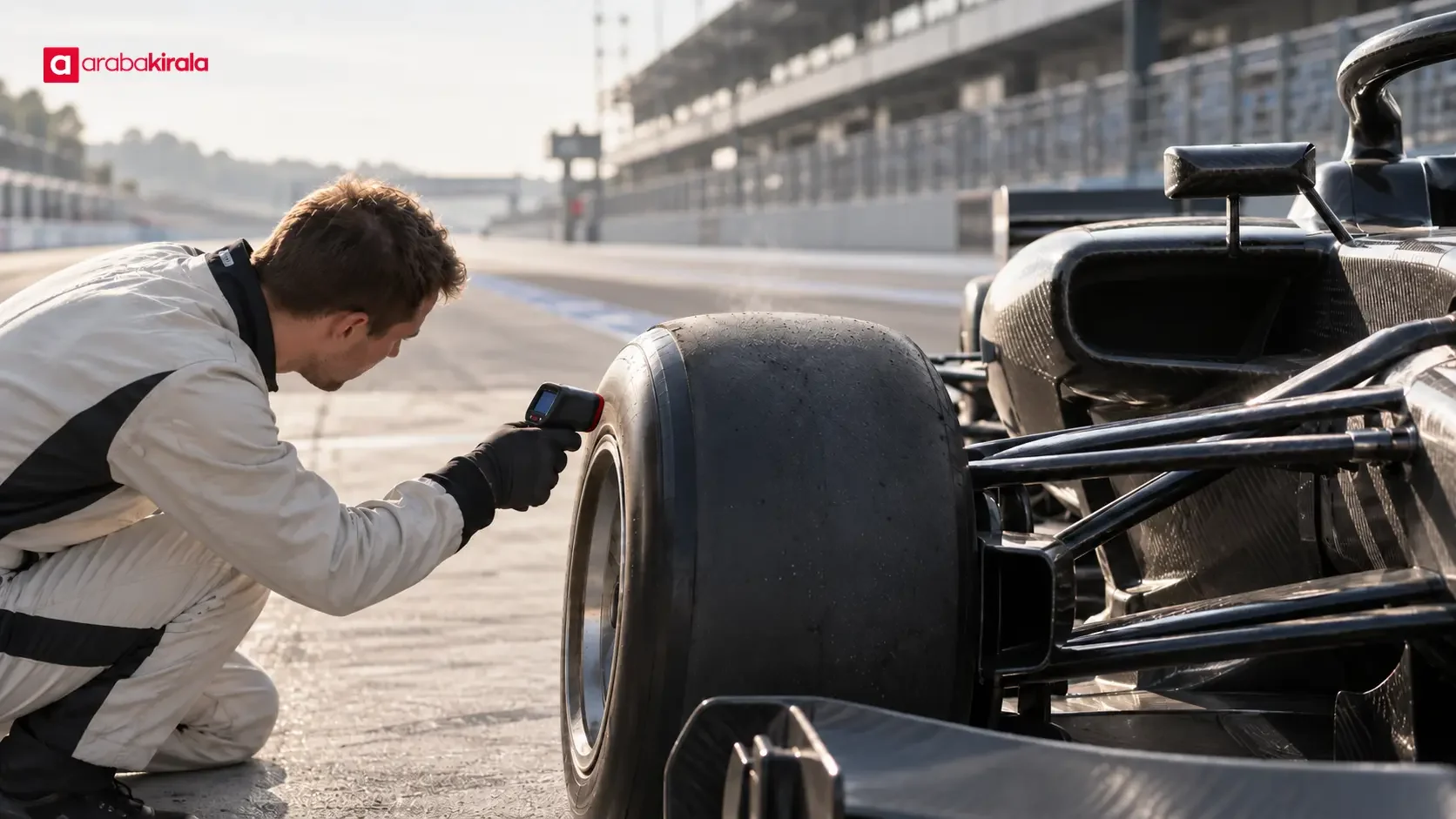
Grip depends on more than the compound. Tyre temperature, surface condition and pressure affect how effectively the rubber works with the track. Warm-up is the process of bringing a tyre towards its useful operating range. A tyre that is too cool can provide less grip under braking and through corners. Excessive heat can also reduce performance or accelerate wear. The target is a balanced operating condition, rather than the highest possible temperature.
Before a qualifying attempt, the out-lap gives the driver a chance to prepare the tyres and brakes. The driver manages speed, braking and cornering loads while also dealing with traffic and the timing of the run. A very gentle lap may not prepare the tyres enough; an overly aggressive one can add unnecessary wear or heat before the timed lap begins. The right approach depends on the compound and conditions. Waiting in traffic can also affect tyre temperature, which is one reason preparation is a carefully managed part of qualifying.
The formation lap before a race serves a different purpose and takes place under its own conditions. Drivers work to manage tyre and brake temperatures while heading to the grid, but that lap does not guarantee that every tyre will be at an ideal temperature. Its pace, the weather, the surface and the chosen compound all influence the result. The grip available for launch and for the first corners can therefore be a strategic concern.
Temperature, the start and the opening laps
At the start, the driver has to balance the launch, power delivery and the rear tyres’ grip. If traction is limited, wheelspin can slow acceleration and put extra stress on the tyre surface. Braking and direction changes in the opening corners also depend on grip. A driver who cannot yet lean on the tyres may need to be cautious, leaving less room to defend or gain positions.
That is why the starting tyre is not selected on theoretical lap time alone. Teams also consider first-lap grip, the expected race pace, how the compound warms and the likely choices of nearby cars. A softer option may give a stronger initial response but could wear more quickly. A harder option may last longer but take time to perform. A medium may offer a different balance depending on the circuit and conditions. None of these choices guarantees a particular result.
Warm-up, wear and graining are different
Wear describes the gradual loss of rubber and performance over use. Warm-up describes the process of bringing a tyre into its operating range. They are related but not interchangeable. A tyre can gain grip as it warms, while excessive sliding or heat can speed up performance loss. If the tyre is too cool, a driver may struggle for grip and slide more, which can also affect the surface.
Graining is a condition in which small pieces of rubber form on the tyre surface and can reduce grip. It is associated with a combination of sliding and temperature conditions. A driver may feel reduced traction in corners until the surface recovers; how quickly that happens varies. Graining does not occur to the same degree at every circuit or in every session. A tyre’s appearance from trackside alone also cannot reliably tell a spectator how much useful life remains.
How tyre behaviour influences pit-stop timing
A pit decision combines the tyre’s performance curve with the car’s position on track. An early stop brings fresh tyres sooner, but the car may rejoin behind traffic. Staying out longer can preserve track position or offer cleaner air, while risking more time loss on an ageing set. Teams consider race distance, pit-lane time, gaps to other cars and changing conditions. No single factor decides every stop.
The first lap on a new set has a strategic cost if the tyre needs time to warm. The theoretical grip advantage may not appear immediately, allowing a rival on older tyres to remain competitive for a short period. On the other hand, if the old set has lost substantial pace, the fresh tyre’s later benefit can outweigh that early delay. Practice data helps teams estimate warm-up and stint performance, but race conditions can still change the calculation.
Choosing tyres in wet conditions
Slick tyres have no tread pattern designed to channel standing water away. When water builds up, grip can fall sharply. Intermediate tyres are intended for damp or changing conditions, while full wets are intended for wetter track conditions. The right choice depends on the amount of water, the racing line and how quickly the weather is changing. As the circuit dries, wet tyres can overheat and wear; fitting slicks while the track remains too wet can make grip and control difficult. Teams respond to conditions on the circuit as well as forecasts.
What to watch during a race
- Read the labels in context: soft, medium and hard rank that weekend’s selected slicks.
- Allow for warm-up: a new set may not deliver its full grip on the first lap.
- Look beyond the stop: traffic, track position and the old tyre’s pace shape the value of a pit call.
- Follow the surface and weather: temperature and water can change which compound is useful.
Frequently asked questions
Is the soft tyre always faster?
It can provide strong grip over a single lap, but wear and temperature management may make it less competitive over a long stint. The circuit and conditions determine the outcome.
Does a warm-up lap bring tyres to their ideal temperature?
Not necessarily. Pace, weather, track surface, compound and car characteristics all affect temperature. Drivers aim for a useful range, since excessive heat can also hurt performance.
Why might a hard tyre be less attractive in qualifying?
It may take longer to deliver its best grip over a single lap. Its longer potential life can still make it valuable in a race strategy.
Is pit-stop timing based only on tyre wear?
No. Tyre pace, pit-lane loss, traffic, track position and weather are also part of the decision.
In summary
Formula 1 tyre compounds offer different balances of grip and durability. Warm-up laps influence when that grip becomes available, while temperature management continues through the start and each stint. Teams plan pit stops by weighing tyre performance against time lost in the pit lane and the position they expect to regain. Watching these factors together explains why no compound is simply the fastest choice in every situation.
Legal Disclaimer: All content, articles and information on the Araba Kirala website are provided solely to inform users. No information shared on this website constitutes definitive advice or guidance. Araba Kirala Teknoloji A.Ş. and its authors cannot be held responsible for any direct or indirect damages arising from the application of information on the website. For all questions and requests regarding car rental, please contact the office from which you will rent your vehicle.