Planning a Visit to Hattusa and Alacahöyük by Car
Visiting Hattusa and Alacahöyük by car
A Çorum Hattusa and Alacahöyük trip by car brings two important places associated with Hittite history into one itinerary. The sites are distinct in scale and character: Hattusa, near Boğazkale, spreads across a large archaeological landscape, while Alacahöyük has an archaeological area and a museum near the modern settlement of the same name. Driving gives you control over the order and pace of your day, but it does not remove the time needed for walking outdoors. This guide explains how to build a practical plan without assuming current opening hours, road conditions or rental-company terms.
What each site offers
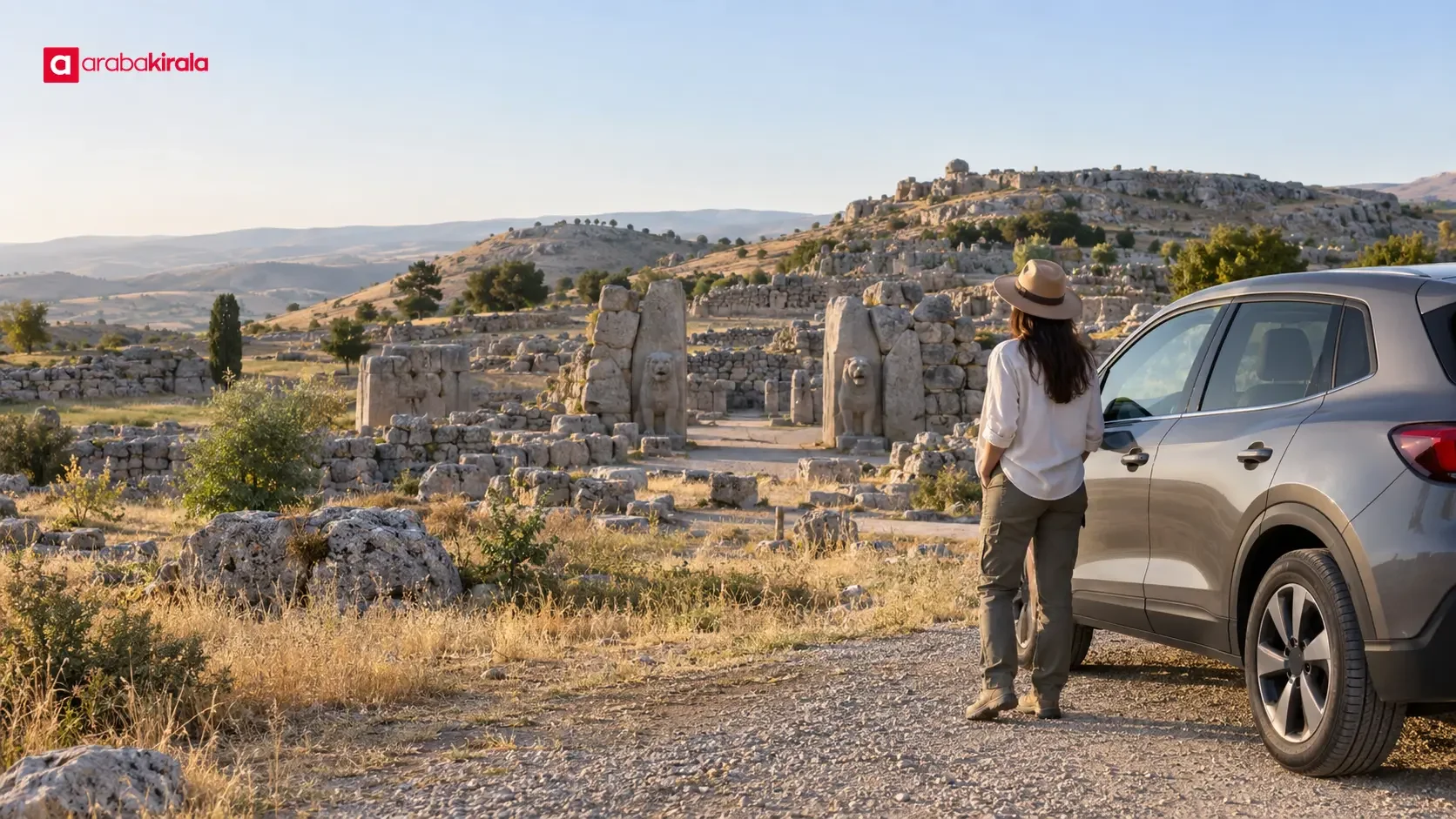
Hattusa is known as a capital of the Hittite Empire. Its remains include sections of fortifications, monumental gates, temple areas and evidence from different periods. The experience involves moving between dispersed points rather than looking at a single building. The terrain and the distance between features matter when deciding how much to see. Alacahöyük offers a different perspective through its archaeological layers, monumental entrance area and museum. The museum helps visitors connect finds and excavation history with the settlement itself. Seeing both places can provide a richer picture of the region’s past, provided you leave enough time to explore each at an unhurried pace.
Approach the sites as archaeological landscapes, not just photo stops. At Hattusa, the placement of a gate or structure makes more sense when viewed in relation to the surrounding terrain and defensive line. At Alacahöyük, successive layers help explain how the site was occupied over time. Read the interpretation panels, allow time for the museum, and pause to take in the setting. If guided interpretation or other visitor services are available, you can use them after confirming current availability rather than assuming they operate every day.
Choosing an itinerary and visit order
Your starting point, overnight plans and total available time should determine the order. A route from central Çorum may call for a different sequence than a trip arriving from elsewhere. Review both sites on a map and check the road connections before setting out. Then verify current opening hours and entry arrangements through official channels. These details can change with the season, special dates or administrative decisions, so an old travel post should not be treated as current confirmation. If official information is unclear, contact the relevant museum or site office before travelling.
Visiting both places in one day may fit some itineraries, but it will not suit every pace. Hattusa’s size and walking distances can make it more than a brief stop. At Alacahöyük, you may want time for both the outdoor area and the museum. Include the time needed after parking to reach the entrance and move through the sites, not just driving time. Choose an order based on how long you want to spend at each place and the return journey. Giving one site a longer visit can be more enjoyable than trying to fit every point into a compressed schedule.
Use map estimates as a guide
Online maps estimate distance and travel time, but actual conditions, traffic, weather and route choices can change the journey. Refresh directions before leaving and consider downloading an offline map if your phone supports it, especially where mobile coverage may vary. Review the return route and nearby settlements as well as the outbound leg. Services in rural areas may be spaced differently from those in town, so plan fuel, water and rest stops ahead of time. This is a general preparation method, not a claim about the condition of a particular road.
Preparing a rental car for the trip
Ask the branch you will rent from about the collection and return locations, reservation times and any terms relevant to your route. Before pickup, ask whether the vehicle has equipment you may rely on, such as navigation or a spare tyre or repair kit; equipment can vary by vehicle. At handover, check the fuel level and visible condition with the staff member, and ask that any discrepancies be recorded. Understand how the odometer reading is used in the pickup and return records, and read the usage terms that apply to your booking. These are general steps for clear handover, not promises about a particular company’s service.
If more than one person will drive, ask in advance how additional drivers must be identified and whether any terms or charges apply. Only a person permitted under the rental agreement should drive. For a long journey, account for fatigue, attention and breaks. If children or special equipment are travelling, plan the appropriate seat or loading arrangement before collecting the vehicle. Choose a vehicle class that suits both passenger numbers and luggage, and do not assume a particular model or feature unless it is confirmed in your booking.
Comfort and care at the archaeological sites
Both sites involve outdoor walking, so wear comfortable shoes with a secure grip. On sunny days, a hat, sun protection and drinking water can help; for cooler or wet weather, consider layers and a rain jacket. Check the forecast for the day of travel and adapt your clothing to it. Uneven, sloping or stony ground can affect walking comfort. Set a manageable pace, take breaks and choose a route that fits your mobility and energy.
Archaeological remains are cultural heritage that need protection. Avoid climbing on stones, moving fragments, marking surfaces or leaving the designated visitor route. Follow signs and instructions from site or museum staff. When taking photographs, respect other visitors and any restricted areas. If you are visiting with children, explain site boundaries and the need to keep away from fragile remains. These simple practices support both visitor safety and the preservation of the historic landscape.
Structuring the day
Divide the day into separate blocks for driving, each visit and the return. Allow time for vehicle pickup or departure preparation, plus any short breaks. Set your arrival at the first site around its confirmed visiting hours. Once inside, choose priorities rather than trying to see everything quickly: at Hattusa, this might mean selected gates and major remains; at Alacahöyük, it could include both the site and museum. Research meal and rest options before leaving, and confirm that a place is open and where it is before relying on it. Leave room for daylight, driving fatigue and the rental return time on the way back.
An overnight stay can make it easier to explore both places at a relaxed pace or add other cultural stops in the area. Consider lodging location, next-day travel and opening times together. For a day trip, a simpler itinerary often works better. You might spend longer at Hattusa and visit Alacahöyük another day, or reverse that choice based on your interests. If seeing both in one day is the goal, give the driving and walking enough realistic time.
Before you leave
- Confirm current visiting hours and entry arrangements for both sites through official channels.
- Review the route from your starting point and back; treat map estimates as estimates.
- Ask your rental branch about pickup, return, driver, route and vehicle-equipment details relevant to your booking.
- Check and record the vehicle’s existing condition and fuel level at handover.
- Prepare footwear, clothing, water and sun protection according to the forecast.
- Follow site instructions and signs that protect archaeological remains.
Frequently asked questions
Can I visit Hattusa and Alacahöyük in one day?
It may work if your route, current visiting hours and preferred pace allow enough time at both sites. Hattusa covers a large area, and both visits can involve walking. Check entry times before travelling and consider moving one stop to another day if the schedule feels rushed.
Which site should I visit first?
There is no single best order. Your starting point, opening times, overnight arrangements and the site you want to explore for longer all matter. Compare both directions on a map and include the return journey in the decision.
Can I drive around all of Hattusa?
Check current rules for vehicle access, parking and visitor routes through official information or on arrival. Even where a vehicle can reach parts of the site, walking may be needed to see particular remains. Prepare for a walk rather than assuming the car will take you to every feature.
How much time should I set aside?
The time depends on your interests, walking pace, whether you visit the museum and how often you rest. A visit to a few main points takes less time than a detailed exploration. Review a map beforehand, choose priorities and leave a buffer for driving and the return.
What rental details should I confirm?
Ask the branch you will rent from about reservation and handover times, return location, how drivers are listed, fuel arrangements, route terms and vehicle equipment relevant to your booking. Conditions can vary, so do not rely on a general assumption; read the documents provided for your reservation and handover.
Plan with room to adjust
A well-paced Çorum Hattusa and Alacahöyük road trip balances the history of both sites with realistic travel and walking time. Treat Hattusa’s dispersed remains and Alacahöyük’s outdoor area and museum as different experiences. Check current visitor information, prepare for driving and outdoor walking, and leave a return-time buffer. That gives you a schedule shaped around what you want to see rather than around a race between stops.
Legal Disclaimer: All content, articles and information on the Araba Kirala website are provided solely to inform users. No information shared on this website constitutes definitive advice or guidance. Araba Kirala Teknoloji A.Ş. and its authors cannot be held responsible for any direct or indirect damages arising from the application of information on the website. For all questions and requests regarding car rental, please contact the office from which you will rent your vehicle.