How to Assess Headlamp Height and Lighting Distance
Published: October 7, 2026 • Reading Time: 5 min • Last Updated: October 7, 2026
Learn how headlamp aim affects night visibility, what the in-car leveling control does, how to spot a possible alignment issue, and when to seek a professional check.
Contents
- How headlamp aim affects lighting distance
- What does the in-car headlamp leveling control do?
- Signs that may point to incorrect headlamp aim
- Observing the beam safely
- When should a professional check the headlamp height?
- Frequently asked questions
- Does headlamp height alone determine lighting distance?
- When should I use the headlamp leveling control?
- Can a wall check confirm the correct aim?
- Is driving more slowly enough if the lights are misaligned?
- Summary and next step
Headlamp height adjustment determines where the dipped-beam light falls on the road. A beam aimed too high can dazzle oncoming drivers, while one aimed too low may leave too little of the road ahead illuminated. This guide explains what the beam pattern can tell you, when an in-car leveling control may be useful, and when a professional check is the sensible next step.

How headlamp aim affects lighting distance
Dipped headlights are designed to illuminate the road and nearby features while limiting glare for other road users. A longer-looking beam is not automatically a correctly aimed beam. The position of the beam relative to the road and the balance between the two lamps both matter. If the beam points upward, drivers approaching from the opposite direction may experience glare. If it points downward, you may have less time to notice features farther along the road.
Headlamp height is only one influence on usable visibility. Dirty or damaged lenses, a failing light source, rain or fog, road gradient, vehicle load, and tyre pressure can all affect what the driver sees. One night-time impression therefore cannot confirm correct alignment. Choose a speed that fits the visibility and road conditions instead of relying on extra light to compensate for driving too fast.
What does the in-car headlamp leveling control do?
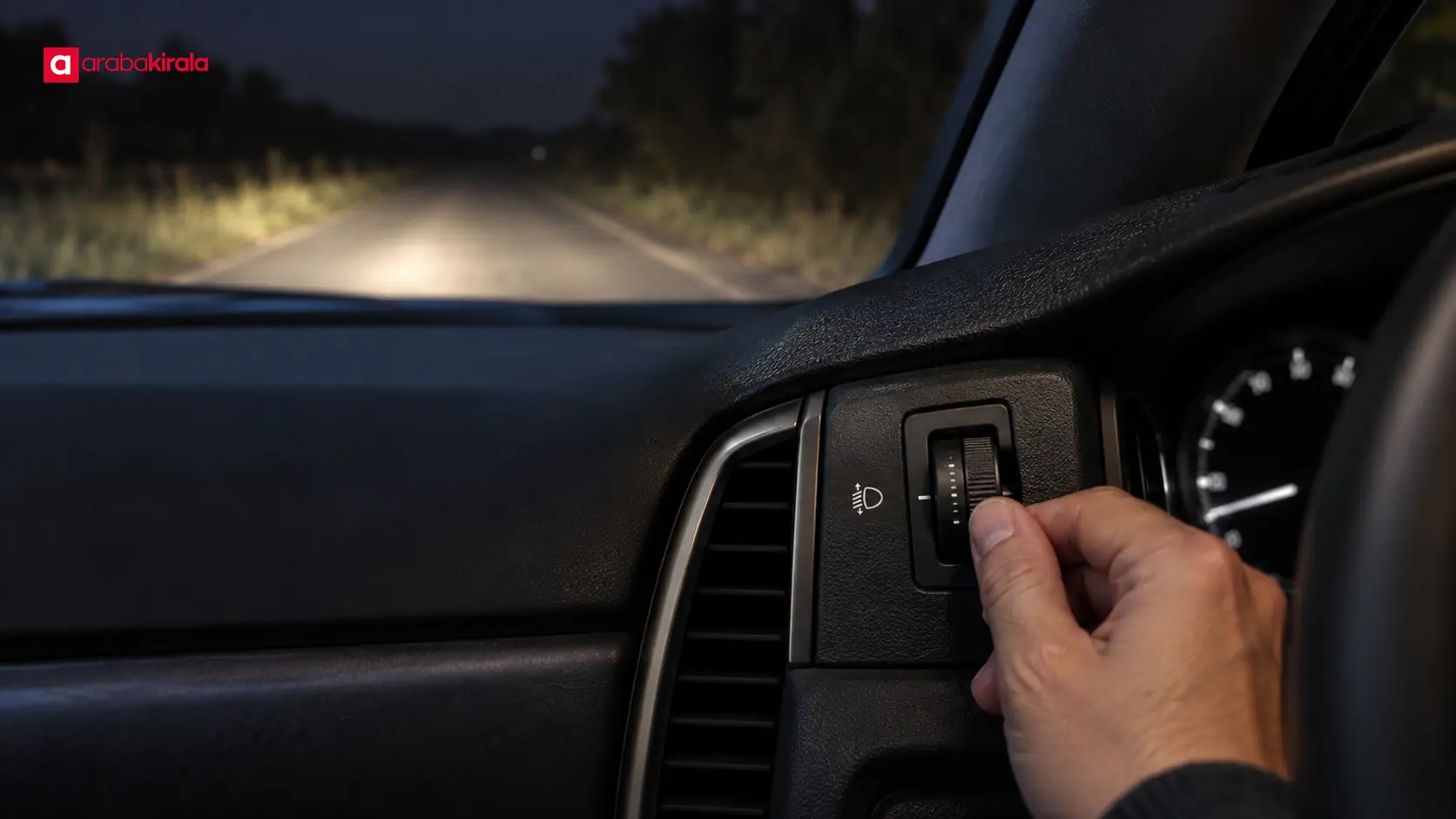
Some cars have a leveling control within reach of the driver. It is intended to compensate for changes in vehicle load that alter the body angle and therefore the direction of the beam. Added weight in the rear can make that end sit lower and shift the headlamps’ aim. The control can help account for that change, but the meaning of its positions and the recommended setting depend on the vehicle.
The control’s range does not repair basic misalignment. If the beam appears conspicuously high or low when the car is unloaded, the two lamps look very different, or moving the control does not correct the change, the underlying aim or lighting equipment may need inspection. The owner’s manual is the best place to check how the control is intended to be used for different load conditions.
Signs that may point to incorrect headlamp aim
- The road is illuminated only close to the car: The dipped beam may be too low, although dirty or hazy lenses and a weak light source can create a similar impression.
- Oncoming drivers repeatedly flash their lights: This is not a diagnosis on its own; hills and reflections from a damaged lens can also affect other drivers. Repeated warnings are a good reason to have the lamps checked.
- The left and right beam areas look very different: A bulb may not be seated correctly, or there may be damage, a mounting issue, or an alignment difference. Have it inspected instead of removing and refitting the light source by guesswork.
- The beam direction changes noticeably with the load: If the vehicle has a leveling control, check its position against the manual. If the control does not work or does not produce the expected change, seek technical help.
- The lighting looks different after a lamp replacement or front-end repair: A removed, replaced, or damaged headlamp may need its aim checked again.
Observing the beam safely
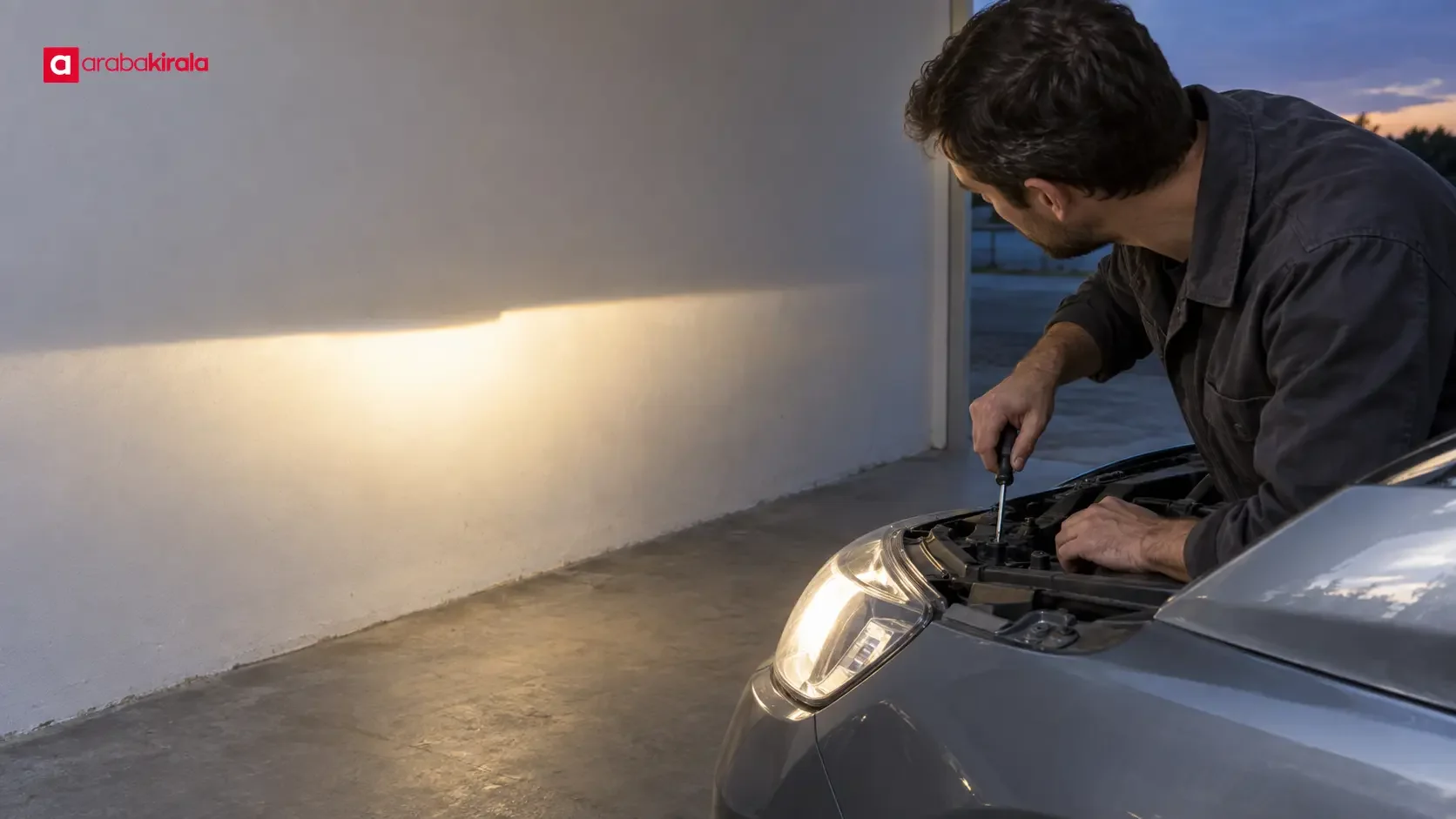
A simple visual check can help reveal an obvious problem, but it cannot replace a proper alignment measurement. With the vehicle on safe, level ground near a wall, you can switch on the dipped beams and compare the general appearance of the two light areas. Vehicle and lamp makers may specify particular preparation conditions, so do not infer a precise angle or setting from this view. A wall check is not a substitute for a test device or technical adjustment.
Before an inspection, clean and intact lenses, suitable tyre pressure, and the vehicle condition described in its manual can make the result easier to interpret. A sloped surface, the load in the car, and suspension position can all change the light pattern. Adding or removing weight or moving the leveling control is not the same as making a lasting adjustment after measurement.
When should a professional check the headlamp height?
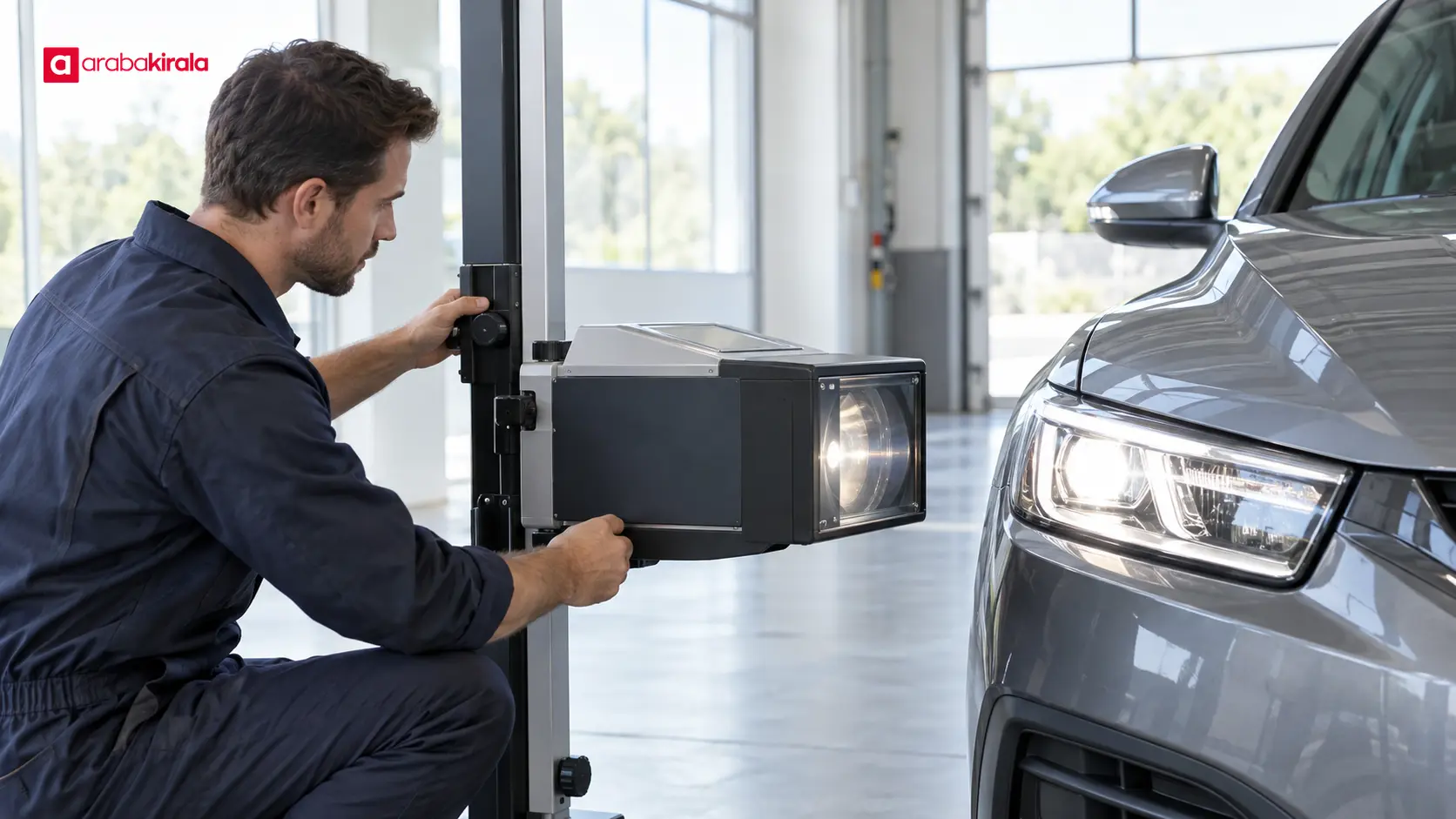
Arrange a technical inspection if a beam is clearly misdirected, one lamp does not work, a lens is cracked or cloudy, a lighting warning appears, or visibility changes after a headlamp has been replaced. Checking alignment may require positioning the vehicle on a level surface and assessing the beam pattern with suitable equipment. Turning an adjustment screw without the right procedure can make the aim worse, and access to a light source can involve hot components or electrical connections.
When collecting a rental car, check before setting off that the dipped and main beams work, the lenses show no obvious damage, and there is no lighting warning on the dashboard. If you notice a problem, tell the branch you are renting from before driving and ask how to proceed. Learn the branch-specific handover process there; do not attempt an adjustment yourself.
Frequently asked questions
Does headlamp height alone determine lighting distance?
No. Aim matters, but lens condition, the light source, weather and road conditions, vehicle load, and suspension can also affect visibility.
When should I use the headlamp leveling control?
If your car has one, follow the owner’s manual for load and setting guidance. Do not assume the numbered positions mean the same thing in every vehicle or use the control to compensate for a basic fault.
Can a wall check confirm the correct aim?
It provides only a rough visual observation. A proper alignment check should follow the vehicle maker’s method and use suitable measuring equipment.
Is driving more slowly enough if the lights are misaligned?
Speed should match visibility and road conditions, but slowing down does not correct a faulty aim. Stop somewhere safe and arrange for the lighting problem to be addressed.
Summary and next step
Correct headlamp height balances seeing the road with avoiding glare for other drivers. A leveling control may help compensate for a change in load, but it does not fix a basic alignment problem. Follow the owner’s manual, note any clear difference safely, and have uncertain alignment checked with appropriate equipment. If you notice a lighting issue in a rental car, tell the branch before you begin your trip.
Legal Disclaimer: All content, articles and information on the Araba Kirala website are provided solely to inform users. No information shared on this website constitutes definitive advice or guidance. Araba Kirala Teknoloji A.Ş. and its authors cannot be held responsible for any direct or indirect damages arising from the application of information on the website. For all questions and requests regarding car rental, please contact the office from which you will rent your vehicle.