How Does an Electronic Parking Brake Work?
Published: October 8, 2026 • Reading Time: 7 min • Last Updated: October 8, 2026
Learn how an electronic parking brake applies force, how it differs from a mechanical handbrake, what Auto Hold does, and what to check in a rental car.
Contents
- What a parking brake does
- How an electronic parking brake works
- Automatic application and release
- How a mechanical handbrake works
- Key differences between electronic and mechanical systems
- Is Auto Hold the same as a parking brake?
- Using the parking brake in a rental car
- What to clarify with the rental branch
- Summary and next step
- Frequently Asked Questions
How does an electronic parking brake work? The small switch in the cabin sends a request to a control unit, which operates the brake mechanism; an instrument-panel indicator reports the system's status. This guide explains that sequence, compares it with a mechanical handbrake, distinguishes Auto Hold from a parking brake, and covers useful checks when collecting a rental car.
What a parking brake does
A parking brake creates holding force at the wheels to help keep a stationary vehicle from moving. The service brakes are primarily used to slow the car while driving; a parking brake is intended to help secure it when parked. Some components may be shared, but the purposes differ.
In an automatic vehicle, selecting P helps lock the transmission output. It should not be treated as a substitute for following the vehicle’s parking procedure. On a slope, use the parking sequence in the owner’s manual and check the parking-brake indicator. In a manual car, selecting a gear can contribute to holding the vehicle, but the parking brake remains an important part of securing it.
How an electronic parking brake works
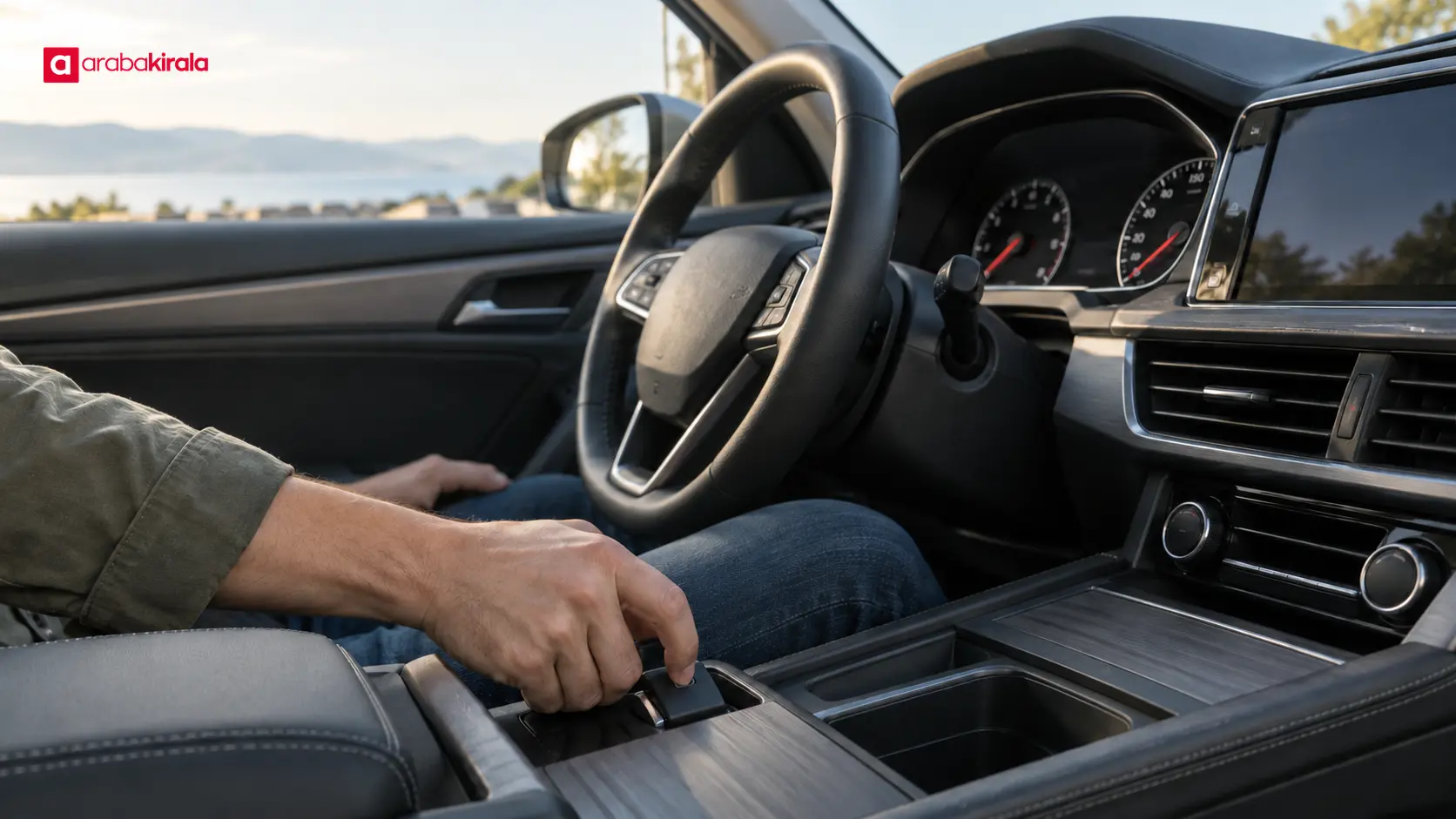
An electronic parking brake (EPB) typically uses a switch instead of a long hand lever. When the driver operates the switch, the control unit checks relevant information from the brake pedal and other vehicle systems, then activates electric actuators to create braking force. In many designs, small motors at the rear brake calipers press the pads against the discs. Other layouts exist, so the precise mechanism depends on the vehicle.
The process can be understood in three stages:
- Command: The driver operates the parking-brake switch. Pulling or pressing it depends on the design.
- Application: The control unit checks operating conditions and commands the electric actuators.
- Feedback: A dashboard symbol or message indicates that the brake has been applied or that the system needs attention.
A brief motor sound or click may accompany application or release. What is normal depends on the vehicle, so use the owner’s manual as a reference. Do not rely on sound alone; check the relevant dashboard indicator.
Automatic application and release
Some vehicles apply or release the parking brake automatically under specific conditions. For example, an EPB may apply when the vehicle is switched off while Auto Hold is active, or release during a permitted pull-away. The behavior is not identical across vehicles. Seat-belt status, door state, gear selection, and settings may affect it. Check the vehicle’s indicators and manual rather than assuming an automatic function has operated.
How a mechanical handbrake works
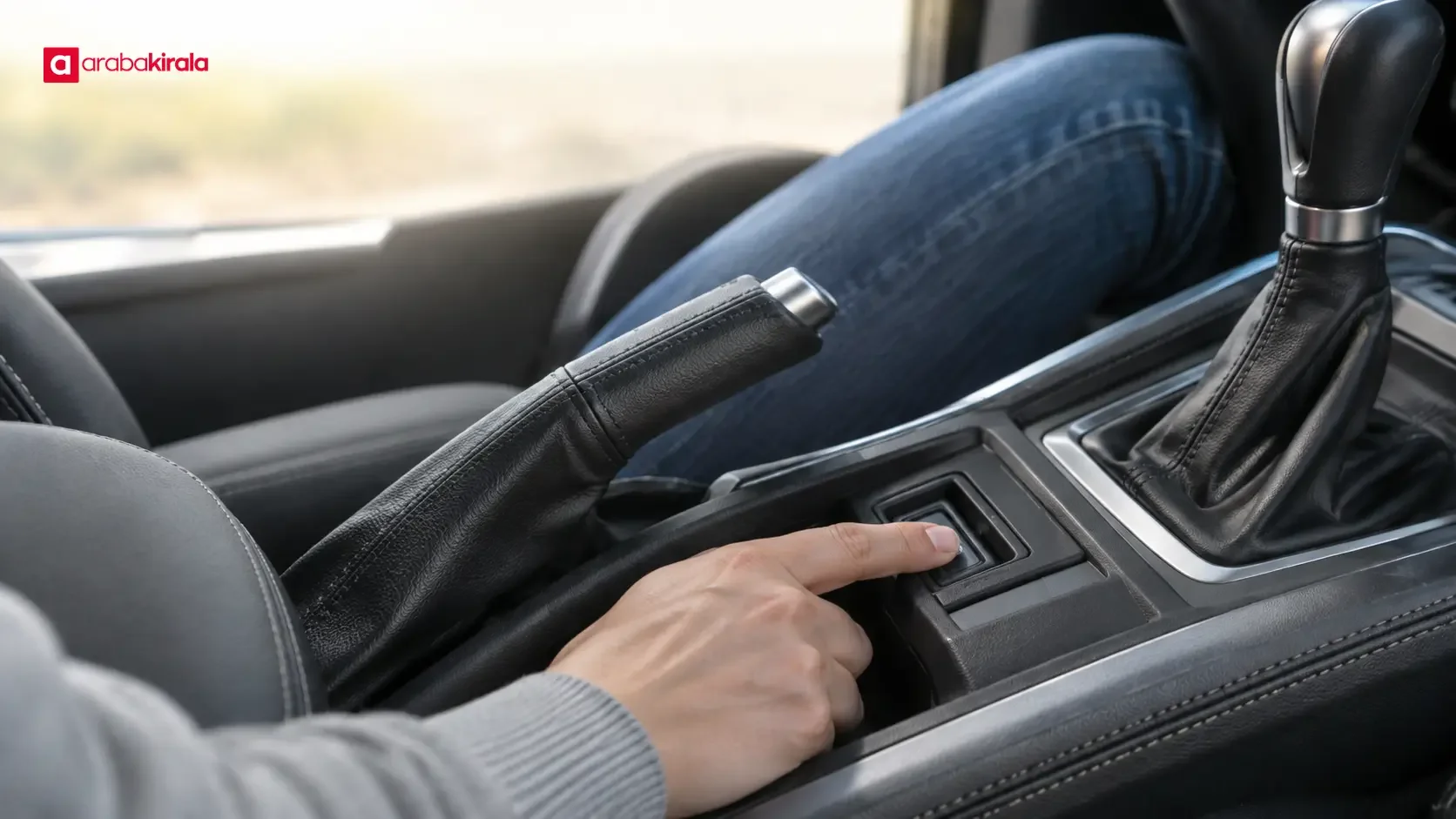
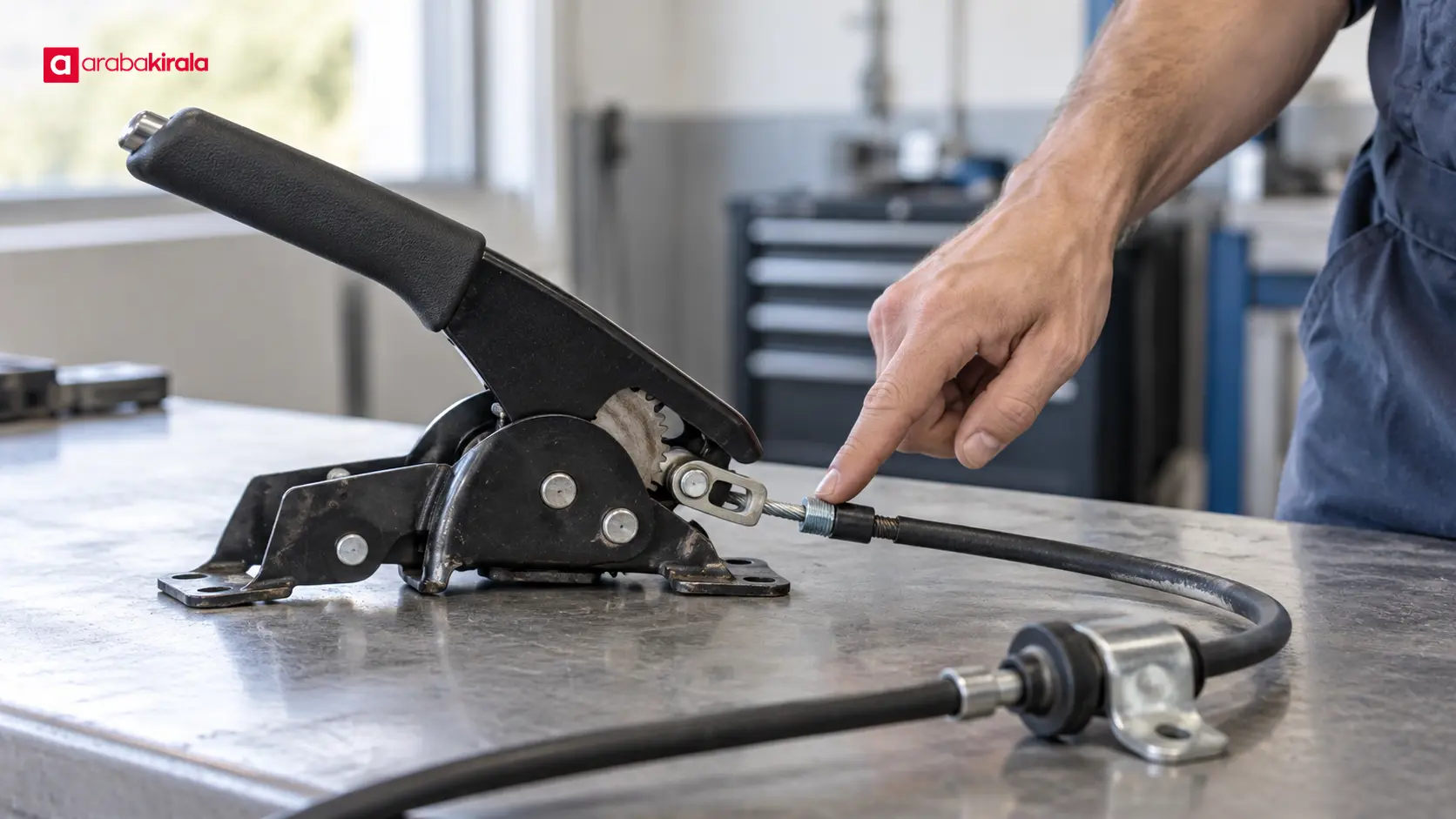
A conventional handbrake uses a cabin lever connected to a linkage and steel cable. Pulling the lever transmits force to a rear-wheel brake mechanism. Depending on the design, this may press shoes against a drum or operate a mechanism within a caliper. The arrangement varies, but the driver’s movement is carried through a physical connection.
The ratchet clicks as the lever moves through its notches. To release it, press the release button and lower the lever. If the lever’s feel changes noticeably, a warning stays on, or the parked car moves, stop using the vehicle and report the issue to the rental branch so it can be assessed.
Key differences between electronic and mechanical systems
- Control: A mechanical system uses a lever and cable; an electronic one uses a switch, control unit, and electric actuators.
- Feedback: With a lever, the driver can feel its movement and resistance. With an EPB, dashboard indicators and messages are especially useful.
- Automatic functions: Depending on the vehicle, an EPB may communicate with Auto Hold or an automatic-release function. A conventional lever does not do this on its own.
- Power: Electronic operation depends on the vehicle’s electrical supply. A battery problem may affect application or release; follow the model-specific manual for the prescribed response.
- Signs of a problem: Either type needs its brake components and connections to work properly. An EPB fault may trigger a warning or message; a mechanical system may show a change in lever feel or holding ability.
An electronic system is not automatically newer in every respect or safer in every situation. Both types need correct use and proper condition. Knowing the controls and responding to warnings is more useful than relying on the system’s name.
Is Auto Hold the same as a parking brake?
No. Auto Hold is a driving feature that can help keep a car stationary during a brief stop, such as at a traffic light, without continuous pressure on the brake pedal. A parking brake is intended to help secure a vehicle while parked. Some cars switch from Auto Hold to the EPB automatically, but the two functions are not the same. An illuminated Auto Hold indicator does not necessarily confirm that the parking brake is applied.
Using the parking brake in a rental car
At collection, identify the parking-brake control, how it operates, and the matching dashboard symbol. An electronic switch may be on the center console or elsewhere; a conventional lever has a release button. The vehicle’s quick guide or owner’s manual is the best source for model-specific instructions.
- Bring the car to a complete stop and keep your foot on the service brake before parking.
- Select the appropriate park position for the vehicle, following the manufacturer’s instructions for a manual transmission.
- Apply the parking brake and confirm the relevant dashboard indicator.
- Before moving off, check that the brake has released and the indicator has gone out.
- If a warning remains, an error message appears, or the brake will not release, do not force the controls. Stay in a safe place and contact the rental branch or the provided roadside assistance channel.
On a slope, use the parking brake and transmission or gear position in the sequence specified in the manual. Do not test the parking brake as an ordinary slowing control while the vehicle is moving. Emergency operation varies by model, so learn the prescribed procedure from the manual.
What to clarify with the rental branch
Controls and automatic features can differ even among cars in the same class. Ask the branch to identify the parking-brake type in the vehicle you are collecting and demonstrate the basic operation. Clarify whom to contact if the vehicle displays a parking-brake fault or battery warning. These questions help you understand the assigned vehicle; they do not replace its operating instructions.
Summary and next step
A mechanical handbrake transfers lever movement to the brakes through a cable. An electronic parking brake converts a switch command into braking force through a control unit and electric actuators. Auto Hold manages brief stops, while a parking brake is intended to secure a parked vehicle. When collecting a rental car, locate the controls, check the status indicator, and follow the vehicle manual. If the exact operation or fault response is unclear, ask the branch you are renting from.

Frequently Asked Questions
How do I apply an electronic parking brake?
The procedure depends on the model. Many cars require the vehicle to be stopped and the service-brake pedal pressed while the driver operates the EPB switch. Confirm the dashboard symbol and follow the vehicle’s manual.
Does an electronic parking brake release automatically when I start driving?
Some vehicles release it when specified conditions for moving off are met, such as selecting a gear or fastening a seat belt. The conditions vary, so check the indicator before moving and use the manual procedure if needed.
What should I do if the parking-brake warning stays on?
Stop in a safe place and read the dashboard message. Confirm whether the brake has released; if the warning remains, do not continue driving. In a rental car, contact the rental branch or the roadside-assistance service provided.
Does selecting P do the same thing as applying the parking brake?
No. P helps lock an automatic transmission, while the parking brake creates holding force at the wheel brakes. Follow the manufacturer’s parking sequence and confirm that the parking brake is applied.
Is a car parked securely when Auto Hold is on?
Auto Hold is generally intended to hold the car during a temporary stop. It is not the same function as a parking brake. Check the vehicle’s manual and indicator to see whether the EPB applies when the car is switched off.
Should I keep trying the EPB switch if it does not work?
If a warning or fault message appears, follow the vehicle manual instead of forcing the switch. Remain in a safe location and contact the rental branch. Do not try to bypass the system or access its mechanism.
Legal Disclaimer: All content, articles and information on the Araba Kirala website are provided solely to inform users. No information shared on this website constitutes definitive advice or guidance. Araba Kirala Teknoloji A.Ş. and its authors cannot be held responsible for any direct or indirect damages arising from the application of information on the website. For all questions and requests regarding car rental, please contact the office from which you will rent your vehicle.