How Does a Formula 1 Race Start Work? Lights, Launch and the First Lap
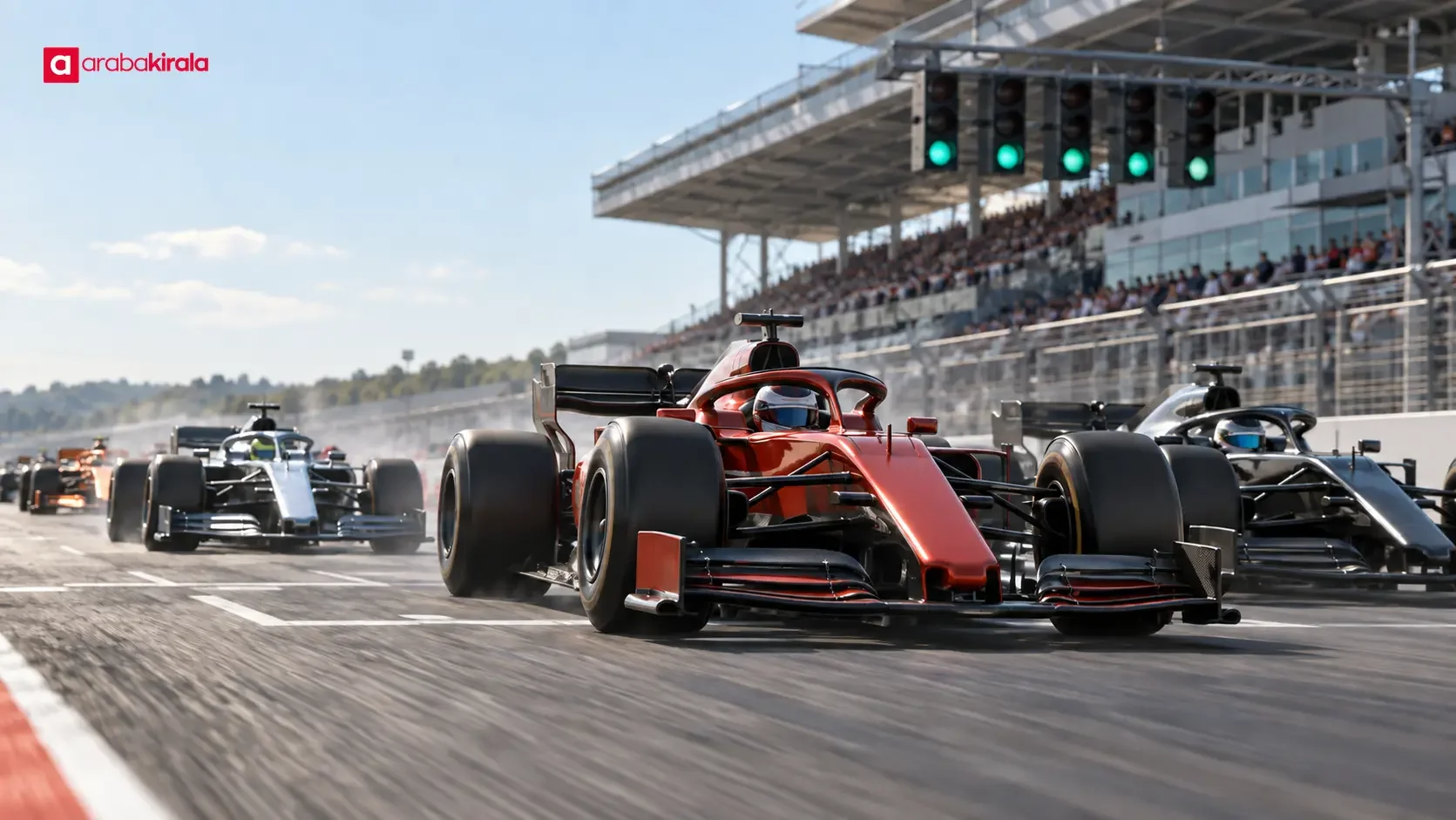
A Formula 1 race start is a sequence that runs from the cars taking their grid positions to the launch at the lights and the completion of the opening lap. The five red lights are among the sport’s most recognizable images, but the start involves preparation, checks and decisions before that moment. This guide explains the main stages, what the lights signal, how drivers manage the launch, and why the first lap is especially demanding.
What happens before the lights?
A Grand Prix start is more than a signal. Cars line up in their assigned grid positions, teams complete final checks, and race control monitors the track and the readiness of the field. The process is designed to bring the cars, officials and crews into an orderly arrangement before racing begins. Conditions such as rain, an obstruction or a safety car situation can affect how the start proceeds.
The grid order usually follows qualifying results, but penalties or other sporting decisions can alter a driver’s starting position. As a result, the line-up may not match the order in which drivers finished the qualifying session. Event format and official pre-race announcements also matter, so the published grid is the useful reference for a particular race.
Drivers typically complete a formation lap before returning to their grid boxes. This is not the first racing lap. It gives drivers an opportunity to assess how the car responds and the state of the circuit while preparing for the start. Teams use the time to get ready, and track personnel must clear the grid in accordance with the procedure. Any warming movements or adjustments must be made with awareness of nearby cars and conditions.
What do the five red lights mean?
Once the cars are stationary on the grid, five red lights illuminate one at a time at short intervals. After all five are on, they go out together. The lights going out signal the start of the race, and drivers may launch. Until that moment, they wait in their grid positions. Drivers do not know in advance the exact moment the lights will go out, so they must be ready without relying on a fixed countdown.
The instant the lights go out, timing matters. A driver manages the clutch and throttle to set the car in motion, while checking the space ahead, the cars alongside and the grip available on the surface. A strong-looking start is not simply about moving away quickly. The car also needs to accelerate without excessive wheelspin, and the driver must approach the first corner with a safe line in mind.
Movement before the lights go out may be judged as a false start. Race control considers the car’s position and movement using monitoring systems and an assessment of the incident. A very small movement can affect a launch, but a brief visual clip by itself may not settle whether a violation occurred. The sporting consequence depends on the rules and the circumstances of the incident, so it is not useful to assume that every case will be treated identically.
What does the driver manage during a launch?
At launch, the driver tries to transfer engine power to the rear wheels while limiting wheelspin. Too much throttle can exceed the tyres’ grip, causing the wheels to spin rather than move the car forward efficiently. Too little throttle can cost ground to nearby cars. The way the clutch is released, engine speed and the tyres’ contact with the surface all contribute to acceleration.
Tyre condition and surface grip shape the launch. A cold or dirty surface can reduce traction. On a wet track, grip can be lower and less consistent than on a dry one; standing water and changes in surface condition also affect how a car behaves. Teams monitor technical factors such as track temperature and tyre preparation, but their influence varies with the circuit, weather and car. There is no single launch setting that describes every start.
In a normal F1 start, drivers control the launch themselves. Steering-wheel controls and team preparation support the car’s systems, but after the lights go out the driver’s reaction and car control become central. The launch is not just a straight-line sprint: drivers have to accelerate while keeping the car manageable and leaving appropriate room as they approach the first corner.
Formation laps and aborted starts
Before a race, drivers commonly complete a formation lap and return to their grid positions. They may use the lap to observe the circuit and prepare the tyres and brakes for the start. It is not part of the race distance in the same way as the racing laps, and the race has not begun merely because the formation lap is under way.
If a car develops a problem on the grid or the start cannot safely proceed, the procedure may be stopped or restarted. Race control can signal an aborted start, after which drivers and teams follow further instructions. The time involved, the next steps and any effect on the race distance depend on the circumstances. Broadcast graphics can help viewers follow what is happening, while official race-control communications provide the relevant explanation.
During an interruption, drivers and teams need to know whether a problem can be addressed and from which stage the process will continue. From the outside, waiting for the lights to come on again can look simple. On track, officials need a clear view of the cars and personnel, teams need to keep the vehicles in a safe state, and race control needs to communicate a clear instruction before the next attempt.
Why is the first lap so busy?
After the launch, the cars are close together. Drivers seek positions while judging braking points, corner entries and the movements of rivals. Cars at the front and cars further back can encounter different gaps and airflow. Several cars may arrive at the first corner at nearly the same time, making line choice and braking important for safety as well as position.
The inside line can be shorter, but taking it requires sufficient space and control. A driver on the outside may find a useful path through the later part of a corner, provided there is room to do so safely. Which line works best depends on the corner’s shape, the cars’ positions and the grip available. There is no one manoeuvre that explains every first corner.
Contact is a possibility in a crowded first lap, not an inevitability. Drivers monitor nearby cars, changing sightlines and stopping distances. If there is a crash or a stopped car ahead, they must respond to hazard signals and race-control instructions. A safety car or another neutralisation changes the pace and the rules for overtaking, so viewers should follow the official live information for the race.
How to follow a start on television or at the circuit
A broadcast may show the lights, the grid order, onboard footage, time gaps and replays. Different camera angles can make the same move look different, so one image is rarely enough to reach a firm conclusion about a false start, contact or an infringement. Race-control reviews and official notices are more reliable references for understanding the sporting decision.
At the circuit, what a spectator can see depends on the grandstand and sightlines. A screen can show the lights if the start line is outside the direct view; screens elsewhere around the venue may help explain the first corner and the running order. Spectators should follow the event’s safety instructions, stay out of vehicle operating areas and follow directions from officials.
To watch the sequence closely, first note how the cars are arranged on the grid. Then follow the lights, the way the tyres grip in the first metres and the space drivers leave as they approach the first corner. Replays after a few laps can clarify changes in position. This makes it easier to understand not only who gained places, but also why a launch appeared clean or difficult.
Frequently asked questions
At what point is the race considered to have started?
For a normal standing start, the race starts when the five red lights go out. Taking a grid position or completing the formation lap does not itself start the race.
Why do drivers complete a formation lap?
The lap brings drivers back to their starting positions and gives them a chance to assess the car and circuit before the start. It is distinct from the racing laps.
How is a false start assessed?
Movement before the lights go out is assessed with reference to the car’s position and movement data. A small motion in a broadcast clip may not be enough on its own to determine the outcome; race control reviews the incident.
Why can a wet start be different?
Rain and water affect how well tyres grip the track, which can raise the risk of wheelspin or loss of control. Race control assesses whether and how a safe start can proceed in the prevailing conditions.
What happens after an aborted start?
Drivers wait for further instructions, and some parts of the preparation may be repeated. The next steps and any effect on race distance depend on the incident and race control’s decision.
In brief
A Formula 1 start brings together grid preparation, a formation lap, five red lights and a launch when the lights go out. Drivers have to manage clutch, throttle, grip and nearby traffic at once. Position battles intensify on the first lap, while track conditions and race-control instructions remain central to safe running. For details about a particular incident, official race communications offer a stronger basis than a conclusion drawn from a single camera angle.
Legal Disclaimer: All content, articles and information on the Araba Kirala website are provided solely to inform users. No information shared on this website constitutes definitive advice or guidance. Araba Kirala Teknoloji A.Ş. and its authors cannot be held responsible for any direct or indirect damages arising from the application of information on the website. For all questions and requests regarding car rental, please contact the office from which you will rent your vehicle.