How to Measure Car Boot Space and Match It to Your Trip
Car boot space is often described by a volume figure in litres, but that number alone cannot tell you whether your luggage will fit. Two cars with similar stated capacity may have very different boot shapes, openings and floor lengths. To choose a vehicle for a trip, treat the published figure as a useful comparison point, then check the physical dimensions and the items you plan to carry. That approach makes it easier to account for passengers, luggage and safe visibility together.
What does boot volume mean?
Boot volume describes the load compartment’s capacity and is usually stated in litres. It helps compare vehicles at a broad level, provided the figures were measured in comparable ways and refer to the same seat arrangement. The figure does not describe the shape of the space. A long, low boot and a shorter, taller one can have a similar volume but suit different luggage. A long suitcase may fit more readily in the first, while a bulky upright bag may be easier to place in the second.
Check whether a published figure applies with the rear seats in their normal position or folded down. Those are different configurations and answer different questions. A measurement with the seats folded can describe an extended load area, but it cannot represent the space available when those seats are occupied by passengers. Some technical specifications also distinguish between the main compartment and smaller underfloor areas. Read the accompanying notes instead of assuming that every figure includes the same spaces.
How is car boot volume measured?
Manufacturers report capacity using a defined method. One commonly used approach in Europe is the VDA method, which estimates capacity by counting how many standard-sized blocks fit into the compartment. This can be more useful for an irregular space than simply multiplying its maximum length, width and height. Still, a block-based volume does not establish whether a particular suitcase will pass through the opening, fit around the wheel arches or sit below a parcel shelf. When a specification names its method, compare it with figures measured using the same or a compatible method.
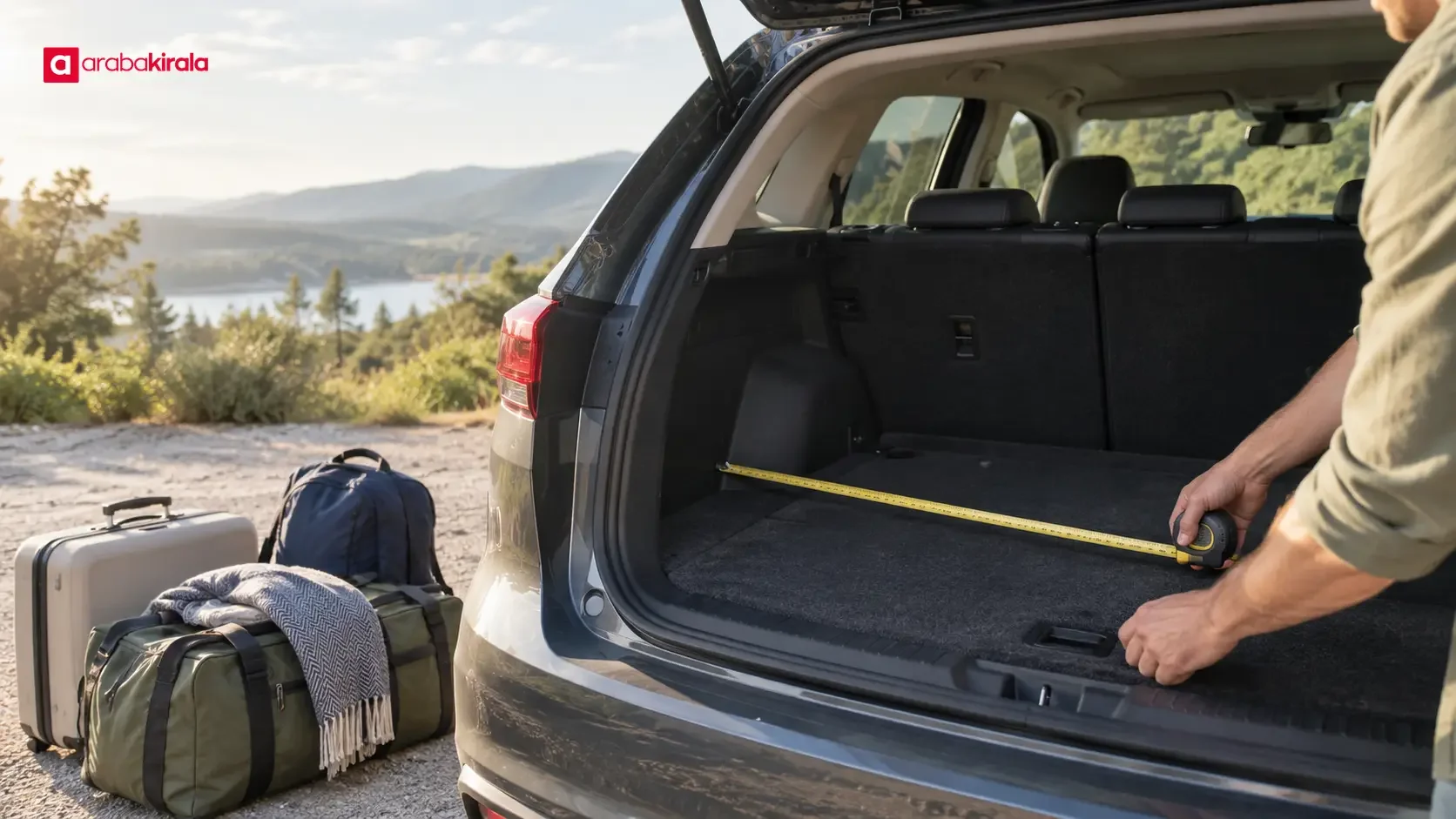
You can take practical measurements by recording the usable floor length, the narrowest width and the height below the parcel shelf or closed tailgate. These measurements help test whether specific items are likely to fit; multiplying them does not produce an exact real-world capacity because a boot is rarely a perfect box. Sloping seatbacks, wheel arches, trim, compartments and a closing tailgate all reduce or shape the usable space. Measure the opening as well as the inside: a suitcase that fits the compartment may still be awkward or impossible to load through a narrow aperture.
Details that affect usable space
Boot opening and loading lip
The opening determines whether a large item can enter in the orientation you need. Check its width and height, and consider whether there is room to angle or rotate the item. A high loading lip means a heavy suitcase must be lifted farther. These details matter especially for rigid luggage, folded pushchairs and equipment with fixed dimensions. The widest point inside the boot is not enough to judge access.
Shape, wheel arches and covers
Wheel arches and sidewall trim may narrow the floor, while an angled seatback can reduce depth near the top. A parcel shelf or boot cover sets a practical height limit if it needs to remain in place. Folding rear seats may extend the load area, but doing so removes seating positions. Plan around the number of passengers who need to travel, and do not count occupied seats as luggage space.
Closing the tailgate and keeping a clear view
Pack so the tailgate can close fully without crushing the contents or preventing the latch from engaging. Do not stack luggage where it blocks the driver’s rear view. If you need the parcel shelf in place, treat its underside as the height limit. Before setting off, check that the tailgate is securely closed and that items cannot shift into the passenger area during normal driving.
Match luggage to the trip
Start with a list of passengers and items rather than a guessed suitcase count. Include suitcases, hand luggage, a folded pushchair, sports equipment, mobility aids, work cases or other bulky items as relevant. Note each item’s approximate length, width and height. External dimensions are more useful than a bag’s stated capacity because they show the space it occupies. A hard-shell case keeps a fixed shape; a soft bag may fit into gaps but can be compressed or difficult to stack securely.
Think about how the items will sit together. One large case can leave unusable gaps, while several smaller bags may make better use of an irregular shape. Long equipment can constrain where other pieces go even if its own volume seems modest. If you are taking an item such as a pushchair, use its folded dimensions. Avoid counting the same space twice when a smaller bag will be carried inside a larger item. A simple layout on the floor at home can help you see the combined footprint and stacking height.
Keep heavy items low and close to the rear seatbacks, and place lighter bags above them. This can reduce movement and keeps the load from being concentrated high up. Fragile items should be protected from pressure and kept from sliding. Do not put luggage where it blocks seat belts, passenger space or the driver’s view. If the load does not fit safely, remove nonessential items or consider a vehicle with a more suitable compartment rather than piling bags above the safe sightline.
What to compare when choosing a vehicle
Use several details together when reviewing vehicle specifications:
- Whether the stated capacity is measured with the rear seats upright or folded;
- Whether the measurement method is identified and comparable across the figures you are reviewing;
- The opening dimensions and whether your largest items can pass through;
- The floor length, narrowest width and height available with the tailgate closed;
- Whether the seating layout still works for everyone travelling;
- How wheel arches, a parcel shelf and fixed compartments affect the space you can actually use.
A rental vehicle’s exact model or trim may not be known until later. Do not treat a specification for one model as a guarantee of the dimensions of the car you will collect. If boot size is important to your trip, ask the branch you plan to rent from which models may be supplied in the vehicle group and whether it can confirm relevant dimensions or seating arrangements. Sharing the measurements of your largest items can make the question clearer. Even then, check the actual load arrangement and keep the view and passenger area clear.
Load the car safely
Place heavy, large items on the boot floor first, as close to the seatbacks as practical. Add medium-sized pieces to fill gaps and keep lighter bags on top. Secure fragile items so they are not crushed or displaced. If the vehicle has load securing points, consult its owner’s manual about their intended use and suitable restraints; their design and capacity vary by vehicle. Do not assume that a hook or tie-down point can support any load.
Keep luggage from obstructing the driver’s view or becoming a hazard in the passenger compartment. If the rear seats are folded, prevent long items from sliding forward. Check the vehicle’s stated load capacity in its manual or vehicle label, since limits vary by model and equipment. A heavily loaded car handles differently, and the manufacturer’s guidance on load-related checks, including tyre pressure where applicable, should be followed. Recheck that doors and the tailgate are closed and that bags remain stable before driving.
Frequently asked questions
Can I work out how many suitcases fit from a litre figure?
No exact suitcase count follows from the volume alone. The figure does not account for each case’s dimensions, the boot opening, wheel arches or the gaps created when items are arranged. Measure the cases and compare their dimensions with the usable floor and opening.
Will two cars with the same boot volume carry the same items?
Not necessarily. Their floor length, width, height, opening and interior obstructions can differ. Those differences often matter more for long or bulky items than the headline volume.
Does the capacity with the seats folded apply when passengers are in the back?
No. A folded-seat figure describes a different load configuration. Use the capacity and layout available with the seats needed by your passengers in position.
What should I do if the luggage does not fit?
Review the list, remove items you do not need and arrange the remaining luggage without blocking visibility or passenger space. Then look for a vehicle group with dimensions that suit the load. Since models within a group can differ, confirm the likely vehicle and any important measurements with the branch you plan to rent from.
A useful boot-space decision combines the stated volume with the compartment’s shape, opening and your luggage dimensions. Checking those factors before travel helps you plan a practical load and choose a vehicle that suits the people and items on the trip.
Legal Disclaimer: All content, articles and information on the Araba Kirala website are provided solely to inform users. No information shared on this website constitutes definitive advice or guidance. Araba Kirala Teknoloji A.Ş. and its authors cannot be held responsible for any direct or indirect damages arising from the application of information on the website. For all questions and requests regarding car rental, please contact the office from which you will rent your vehicle.