How Are WRC Pace Notes Prepared and Used on Stage?
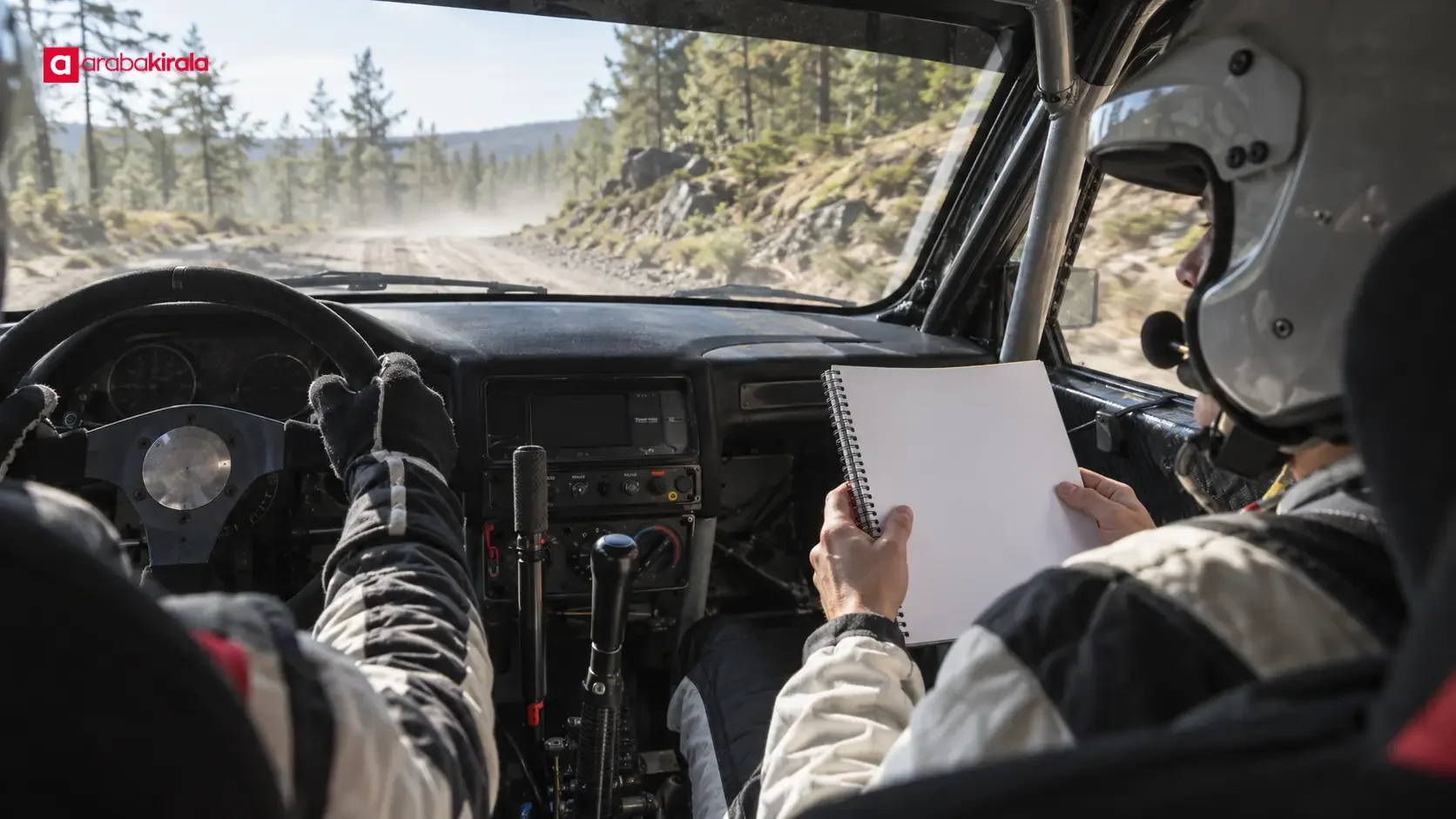
WRC pace notes are a team’s shorthand for describing upcoming corners, road shape and hazards so a driver can anticipate the route. A rally stage is not a uniform circuit: bends, gradients, surface and visibility vary, and a driver cannot memorize every detail of a long road. The co-driver’s calls help establish a rhythm and give the driver a mental picture of what is coming. Pace notes are not a universal code that every crew reads in exactly the same way. Each crew develops a shared system that fits the driver’s expectations and the co-driver’s delivery.
What does a pace note describe?
A pace note condenses information that matters for driving into short, ordered cues. Depending on the crew’s system, a note may describe a corner’s direction and relative character, the distance to the next feature, a change in road width, a crest or dip that affects sight lines, or a point that needs particular attention. The purpose is to help the driver connect one section to the next. Instead of treating each bend as an isolated object, the notes communicate how a sequence of road features is likely to flow.
Many crews classify bends with numbers or grades, but a number does not have a universal meaning. It may indicate relative severity within that crew’s scale; it is not automatically a speed in kilometres per hour. A note sheet from another crew can therefore be misleading without knowing its conventions. What matters is that the driver understands what each cue means and that the language stays consistent between reconnaissance and the event.
How are notes prepared during reconnaissance?
Reconnaissance, often called recce, is the pre-event process of learning the stage and recording useful road information under the event’s procedures. It is not a high-speed practice run in the competition car. The driver and co-driver observe the route and create the raw material for their pace-note system. FIA event coverage describes crews refining notes during recce, correcting them, and facing the challenge of learning stages that are new to them. On a new or visually repetitive road, precise descriptions can help distinguish sections that might otherwise look alike.
The driver pays attention to how the road approaches and leaves a corner, its width, gradient and sight line. The co-driver records or dictates those observations in the crew’s agreed vocabulary. Some crews capture the information while moving and edit it later; the exact workflow is a team choice. The goal is not to write the longest possible description. It is to produce information that can be understood and read at the right time on stage. Too much detail can overload the call, while a vague or incomplete note can create the wrong expectation.
Editing and checking the notes
After recce, the crew reviews the notes to make sure similar cues have consistent meanings. Directions, distances and hazard emphasis should be clear to the driver. The co-driver’s pace also matters: a call delivered too late may leave little time to prepare, while a call delivered too early or too quickly can lose its connection to the road. Crews can work on the rhythm in practice or during a shakedown, where permitted by the event. Writing a note once does not make it automatically correct or permanent.
A repeated stage may not remain as it appeared during the first reconnaissance pass. Traffic can disturb loose surfaces or expose stones and mud; weather, light and visibility also affect what the driver sees. FIA’s rally safety material emphasizes that rally routes pass through a changing environment and that conditions can vary even within a stage. Pace notes describe the route as understood by the crew; they cannot guarantee what the surface or visibility will be at every later pass.
How do the driver and co-driver use notes on stage?
During a stage, the co-driver reads each call with timing that gives the driver a chance to prepare. The driver combines the description with the visible road and the car’s response. A co-driver does more than read words from a page: they keep the sequence, maintain the flow of information and help the crew stay oriented within the notes. The driver manages steering, braking, acceleration and the car’s line while forming a mental model of the road ahead. Their coordination grows through shared terminology and repeated work.
Timing is part of the information. Closely linked bends may be called in a compact sequence; a feature farther ahead can be mentioned early enough to prepare for it. There is no reason to assume that a particular word always means the same distance or timing across every crew. FIA WRC press-conference records include competitors discussing note accuracy, the quality of reconnaissance and adapting to a co-driver’s system, illustrating how much coordination the process requires.
How do pace notes support safety?
Notes give the driver advance information about a section that may be hidden or difficult to see. A well-recorded description of a crest, a narrowing road or a surface change can help the driver make a more informed decision. FIA states that rally stages pass through living environments, with spectators present, and that safety matters for everyone involved. Pace notes are not a safety guarantee: visibility, the actual condition of the road, the car and the event’s safety arrangements also matter. Following a call mechanically should not mean ignoring an unexpected condition.
Pace notes are not instructions for ordinary road driving. WRC cars compete on closed stages within specific event and safety arrangements. Trying similar speeds or lines on public roads is dangerous. Spectators should follow marshals’ instructions and stay in designated viewing areas; FIA’s rally safety guidance stresses the importance of safe spectator positions.
What newcomers should know
- There is no single universal dictionary: Corner grades, abbreviations and warnings can mean different things in different crew systems.
- Notes come from reconnaissance: The route is observed, useful features are selected and the information is translated into the crew’s shared vocabulary.
- Reading and listening work together: The co-driver’s timing helps the driver match a call to the right part of the road.
- Conditions can change: Notes do not promise the same surface or visibility on every pass.
- Notes do not replace the road: They support the driver’s attention and judgment; they cannot take their place.
Frequently asked questions
Who prepares WRC pace notes?
The driver and co-driver work together during reconnaissance. The driver assesses road features that matter for driving; the co-driver records and organizes them using the crew’s shared system. The division of work varies with the team’s process.
Are the numbers in pace notes speed limits?
No. In many systems, numbers classify a bend’s relative severity or character. They should not be read as fixed kilometres-per-hour values. Their meaning depends on the scale defined by the crew.
Can another driver use a crew’s stage notes?
Notes may offer another crew some information about a route, but the vocabulary, detail and description style can differ. They should not be assumed ready for direct use: the driver needs to understand the system and find it suitable.
Do notes change when a stage is repeated?
The road’s basic geometry may remain, but the surface, visibility and loose material can change. Crews consider whether their notes still match what they encounter on a later pass. A note sheet cannot lock conditions in place.
In summary
WRC pace notes turn observations from reconnaissance into a concise, timed language shared by driver and co-driver. Preparation involves studying the road, organizing details in the crew’s vocabulary and working on the rhythm of delivery. On stage, the calls help the driver picture what is ahead. Their usefulness depends on careful reconnaissance, clear communication and awareness of changing conditions. Sources: FIA Rally Safety (fia.com/rally-safety); FIA WRC press-conference records for Safari Rally Kenya and Rally Italia Sardegna (fia.com).
Legal Disclaimer: All content, articles and information on the Araba Kirala website are provided solely to inform users. No information shared on this website constitutes definitive advice or guidance. Araba Kirala Teknoloji A.Ş. and its authors cannot be held responsible for any direct or indirect damages arising from the application of information on the website. For all questions and requests regarding car rental, please contact the office from which you will rent your vehicle.