Planning Fuel Stops on a Daily Route When Renting a Car in Istanbul
Published: October 8, 2026 • Reading Time: 6 min • Last Updated: October 8, 2026
Istanbul traffic and changing plans can affect fuel decisions. Learn how to check a rental car’s fuel type and gauge, choose practical stops along your route, and adapt safely when the day changes.
Contents
- Why fuel planning belongs in your route
- What to check when you collect the car
- Confirm the fuel or energy type
- Record the gauge and handover condition
- Clarify branch-specific fuel arrangements
- How to choose a fuel stop on an Istanbul route
- Map the shape of the day
- Allow for congestion and delays
- Practical steps for a daily fuel plan
- Make fuel stops safer and more useful
- Final check: update the plan to match the route
- Frequently Asked Questions
When renting a car in Istanbul, planning fuel stops along a daily route can make the day more predictable, especially with heavy traffic, several appointments, or a trip that continues beyond the city. This guide explains how to check the car’s fuel type and gauge at pickup, choose useful refuelling options on a map, and adjust your plan when traffic or your schedule changes.
Why fuel planning belongs in your route
A fuel plan is more than choosing a place to fill up. The order of your stops, traffic, road gradients, vehicle load, and driving style can all affect consumption. Two trips of similar distance in Istanbul may take different amounts of time because congestion and waiting conditions vary. Treat the distance shown by a navigation app as route information, not as an exact fuel calculation.
Marking one or more possible fuel stops in advance reduces the pressure to make a rushed decision when the gauge falls. A planned option does not require you to stop there; it gives you a choice based on the conditions at the time. This is especially helpful when airport travel, meetings, visits, and a drive out of the city are all part of one day.
What to check when you collect the car
Confirm the fuel or energy type
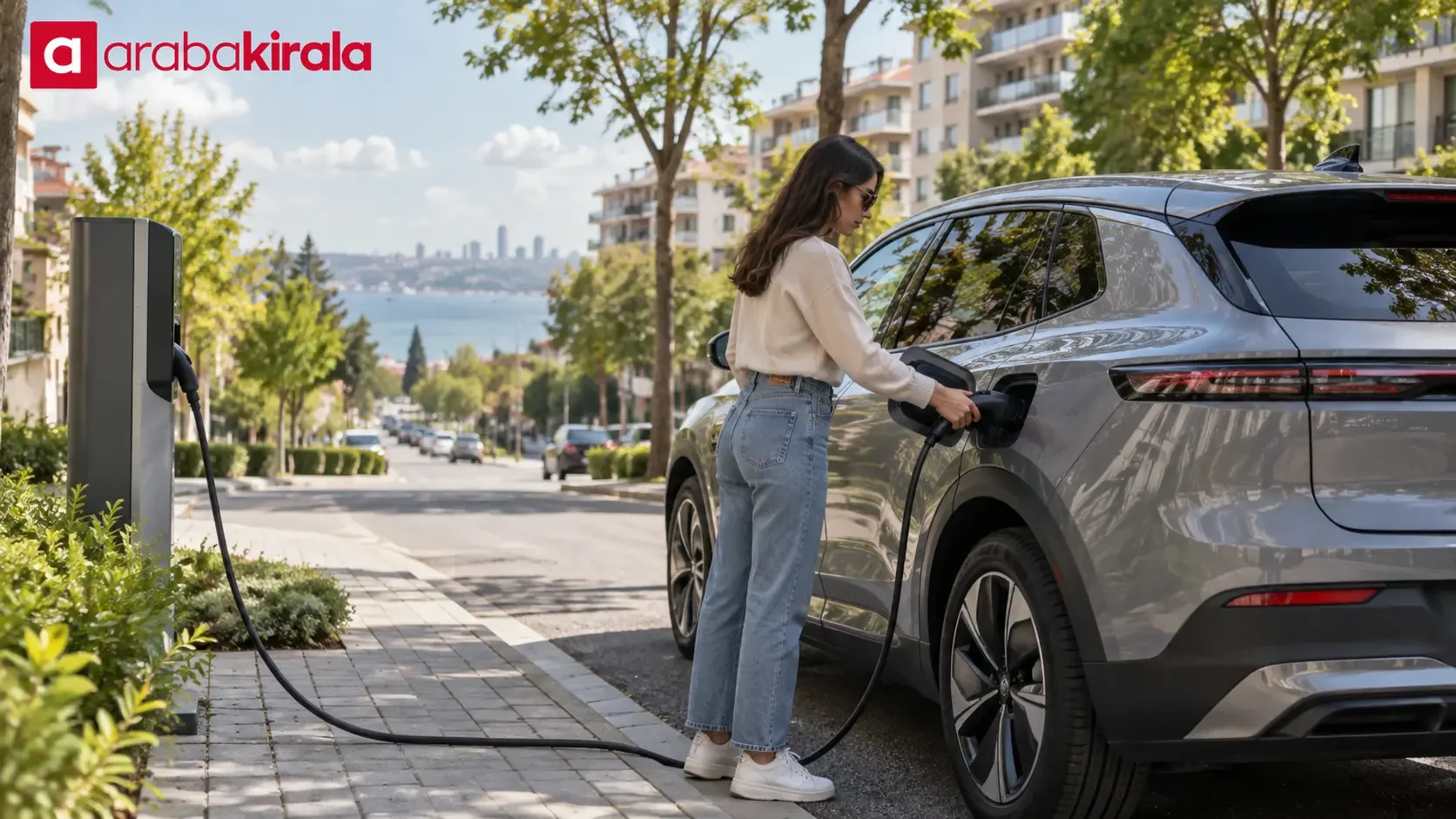
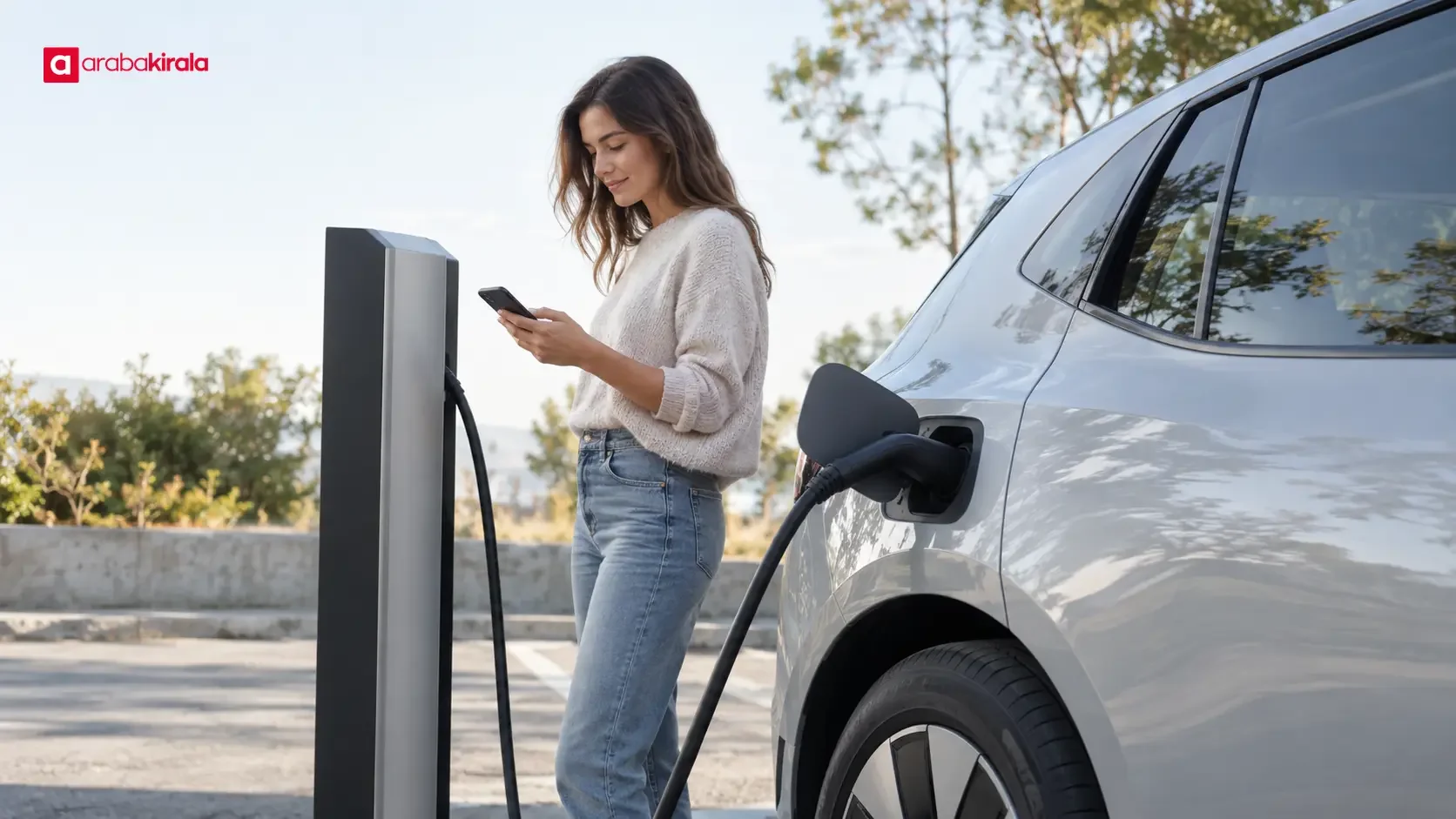
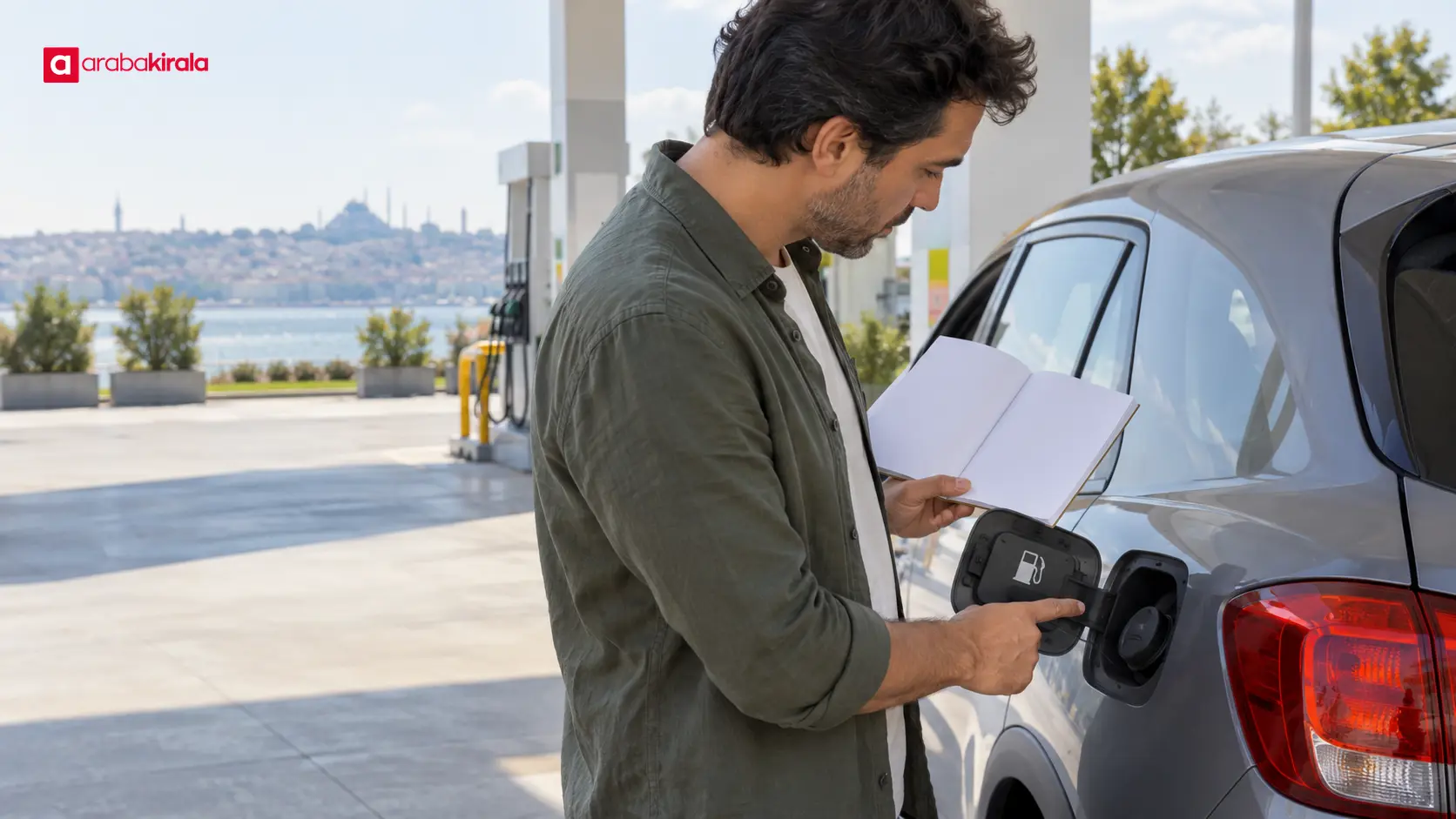
Whether the car is petrol, diesel, hybrid, or electric changes the plan. A hybrid may use liquid fuel and a battery in ways that depend on its design, while an electric car requires you to consider compatible charging locations and charging time. Check the markings by the fuel flap and the owner’s manual. If you are unsure, ask the staff member handing over the car. Choosing the wrong fuel or charging equipment can cause serious problems.
Record the gauge and handover condition
Before driving away, note the fuel gauge, any estimated range, and the odometer reading. Compare these with the handover record. A photo of the dashboard can help you remember the starting condition; take it without compromising anyone’s privacy or your own safety.
The range shown on the dashboard is an estimate of how far the remaining fuel may take the car, not a guarantee. Traffic, air conditioning, speed, load, and driving conditions can change that estimate. Consider both the gauge and the range display, and do not postpone refuelling solely because the screen still shows a certain distance.
Clarify branch-specific fuel arrangements
How the fuel level is recorded at pickup and return, and what is expected at return, may depend on your booking or the branch. Read your reservation details and ask the branch where you will collect the car about anything unclear. Do not assume that one arrangement is a universal rental rule.
How to choose a fuel stop on an Istanbul route
Map the shape of the day
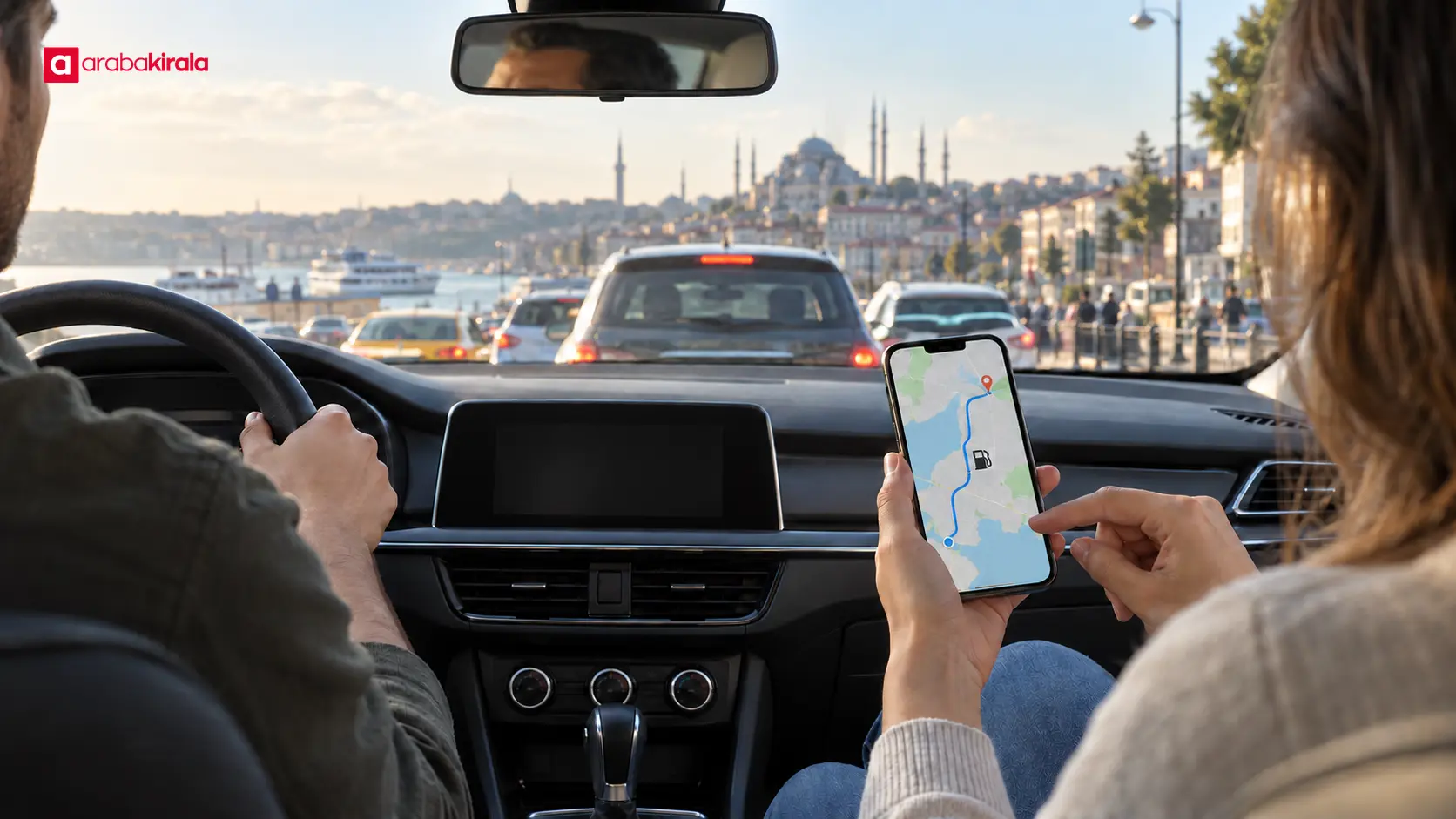
View your starting point, destination, intermediate stops, and return journey together. A bridge, motorway, major urban road, and coastal route can differ in traffic and access. Even when a map shows a station nearby, check how far you must leave your route, which direction provides access, and how long it may take to rejoin the road.
Do not rely only on a station beside your final destination. If the schedule is tight at the last stop, marking another option along the return route or near a suitable midpoint gives you flexibility. If a map app lists opening hours or services, check them before setting off; app data may be out of date and available services can change.
Allow for congestion and delays
Traffic in Istanbul changes with the time, route, and incidents. Navigation estimates reflect current conditions, and a trip can take longer than expected. Avoid building the fuel plan around one ideal travel time. If the gauge is already getting low, refuelling at a suitable safe location before a traffic delay may be more comfortable.
Never stop on the roadside or in an unsuitable part of a motorway to refuel. Reach a safe station or a signed rest area. If a breakdown or emergency occurs on a motorway, follow the vehicle manual and official roadside safety instructions. A fuel plan should not treat emergency stopping areas as ordinary places for a break.
Practical steps for a daily fuel plan
- Record the starting condition: Check the fuel type, gauge, and odometer at handover.
- Map the stops: View the day’s key visits, return direction, and likely traffic corridors on one route.
- Choose two options: Mark a primary stop and a reasonable alternative. Consider access direction and current service information, not just map distance.
- Reassess when conditions change: After a long delay, added stop, or detour beyond the city, check the range estimate and remaining route again.
- Confirm the fuel type again before using a pump: Match the vehicle marking and manual to the pump information.
- Review the return record: Compare the gauge and odometer with the pickup notes, and ask the branch if the return procedure is unclear.
Make fuel stops safer and more useful
A fuel stop can also be a chance to rest, but that does not mean rushing the refuelling process. Park where instructed at the station and operate the engine and vehicle systems according to the manufacturer’s guidance for refuelling. Set navigation and handle phone tasks before moving again.
Habits that can help reduce consumption include avoiding abrupt acceleration and hard braking, anticipating traffic flow, and keeping the tyres in suitable condition. These do not guarantee a particular fuel economy or saving; results vary by vehicle, road, and weather. If a warning light appears or something seems unusual, stop in a safe place, consult the manual, and contact the rental branch for guidance.
Final check: update the plan to match the route
Before setting off, confirm the correct fuel type and record the starting level. Mark at least one accessible fuel option along the route. If traffic or your schedule changes during the day, reassess the gauge and prioritise a safe stop. Clarify booking-specific return fuel arrangements with the branch where you will rent the car. This lets you adapt an Istanbul day to actual road conditions without leaving fuel decisions to the last minute.

Frequently Asked Questions
How can I tell what fuel a rental car uses?
Check the marking by the fuel flap and the owner’s manual, then confirm with the staff member at pickup. If you are not certain, do not guess before refuelling.
Is the range estimate on the dashboard exact?
No. It is an estimate that changes with the car’s recent consumption and current conditions. Traffic, load, air conditioning, and driving style can affect it, so do not base a refuelling decision on that number alone.
When should I plan a fuel stop in Istanbul?
Map your daily stops and return journey in advance. If the fuel level is already low, consider a suitable stop before the busiest part of the trip or the tightest part of your schedule. Keeping an alternative in mind is useful.
How does the plan change for an electric rental car?
Add compatible charging locations, access information, and the time needed to charge to your route. Follow the car manual and the vehicle-specific information provided by the branch.
How should I check the fuel level before returning the car?
Before return, compare the gauge with the note you made at pickup. The expected return level and recording process can depend on the booking or branch, so ask the office where you are renting the car in advance.
Legal Disclaimer: All content, articles and information on the Araba Kirala website are provided solely to inform users. No information shared on this website constitutes definitive advice or guidance. Araba Kirala Teknoloji A.Ş. and its authors cannot be held responsible for any direct or indirect damages arising from the application of information on the website. For all questions and requests regarding car rental, please contact the office from which you will rent your vehicle.