How to Record Rental Car Body Damage with Photos and Notes
Published: October 5, 2026 • Reading Time: 5 min • Last Updated: October 5, 2026
Learn how to inspect a rental car at pickup, document existing body damage with clear photos and notes, and compare your observations with the handover record.
Contents
- Why a handover record matters
- Prepare for the inspection
- How to document damage with photos
- Take a wide view and then a detail
- Keep the original images
- Complete the note and form entry
- Details that are easy to overlook
- If you notice a mark after leaving
- Frequently asked questions
- Are phone photos enough?
- Does every scratch need its own photo?
- Should I classify how serious the damage is?
- Final check and next step
Recording existing body damage at rental-car pickup makes the vehicle’s visible condition easier to understand later. This guide explains how to inspect scratches and dents in a consistent order, take photos that show both location and detail, write neutral notes, and compare the observations with the handover record. The aim is to document what is visible at pickup, not to judge the cause or repair cost.
Why a handover record matters
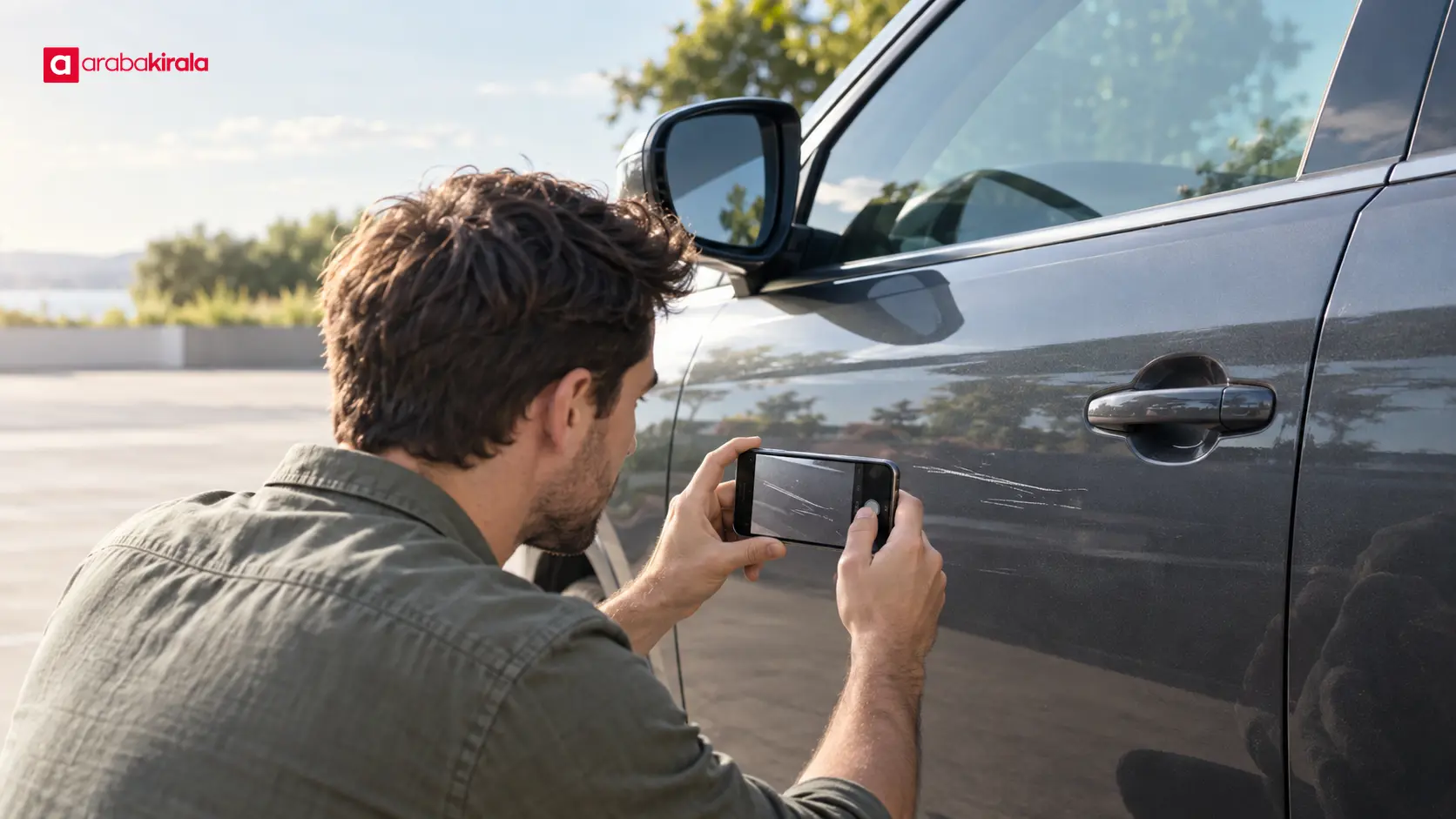
A handover record is a practical way to note a vehicle’s visible condition at a particular time. A photo alone may lack context: a close shot can show a scratch clearly but not identify the panel. A written note supplies the location but cannot show the mark’s appearance. Together, a wide view, a detail image, a location description, and the relevant form entry make a clearer record.
This record can preserve useful context about when and where a mark was observed. It does not, by itself, decide responsibility or charges; those questions depend on the rental agreement and the circumstances. Careful documentation helps keep the discussion grounded in observable details.
Prepare for the inspection
Inspect the vehicle in a well-lit place if possible. Shadows, water, dirt, and reflected light can hide fine marks. Clean the phone camera lens and leave enough space around the vehicle to take wider images. Keep the keys and handover paperwork accessible so you can complete the walk-around without rushing.
Move around the vehicle in a consistent order. Check the front bumper and hood, both sides, doors, fenders, rear bumper, and trunk or tailgate. Then look at mirror covers, wheel areas, and door edges. This is not a technical damage assessment; it is a simple method for checking visible surfaces without skipping sections.
How to document damage with photos
Take a wide view and then a detail
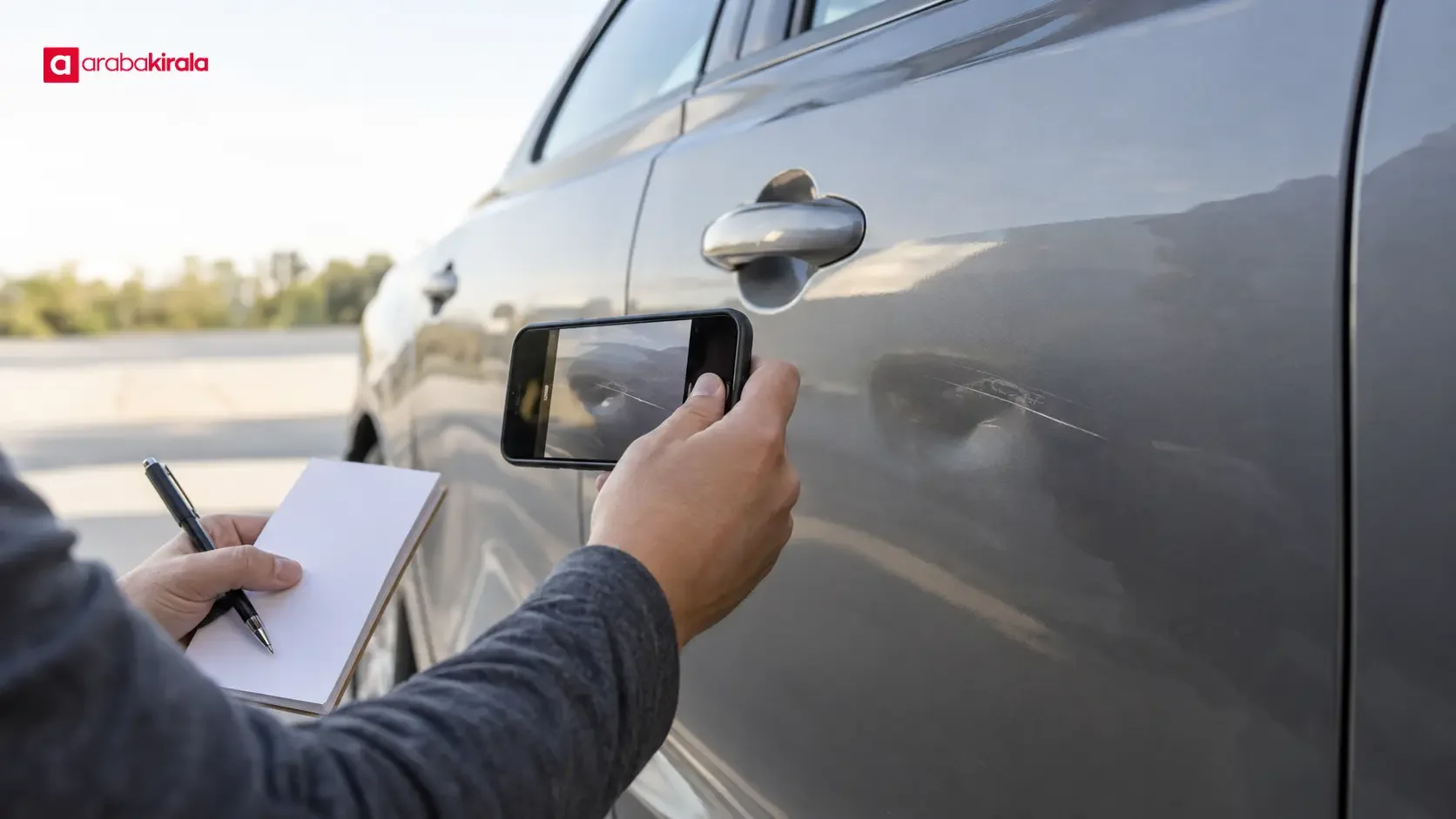
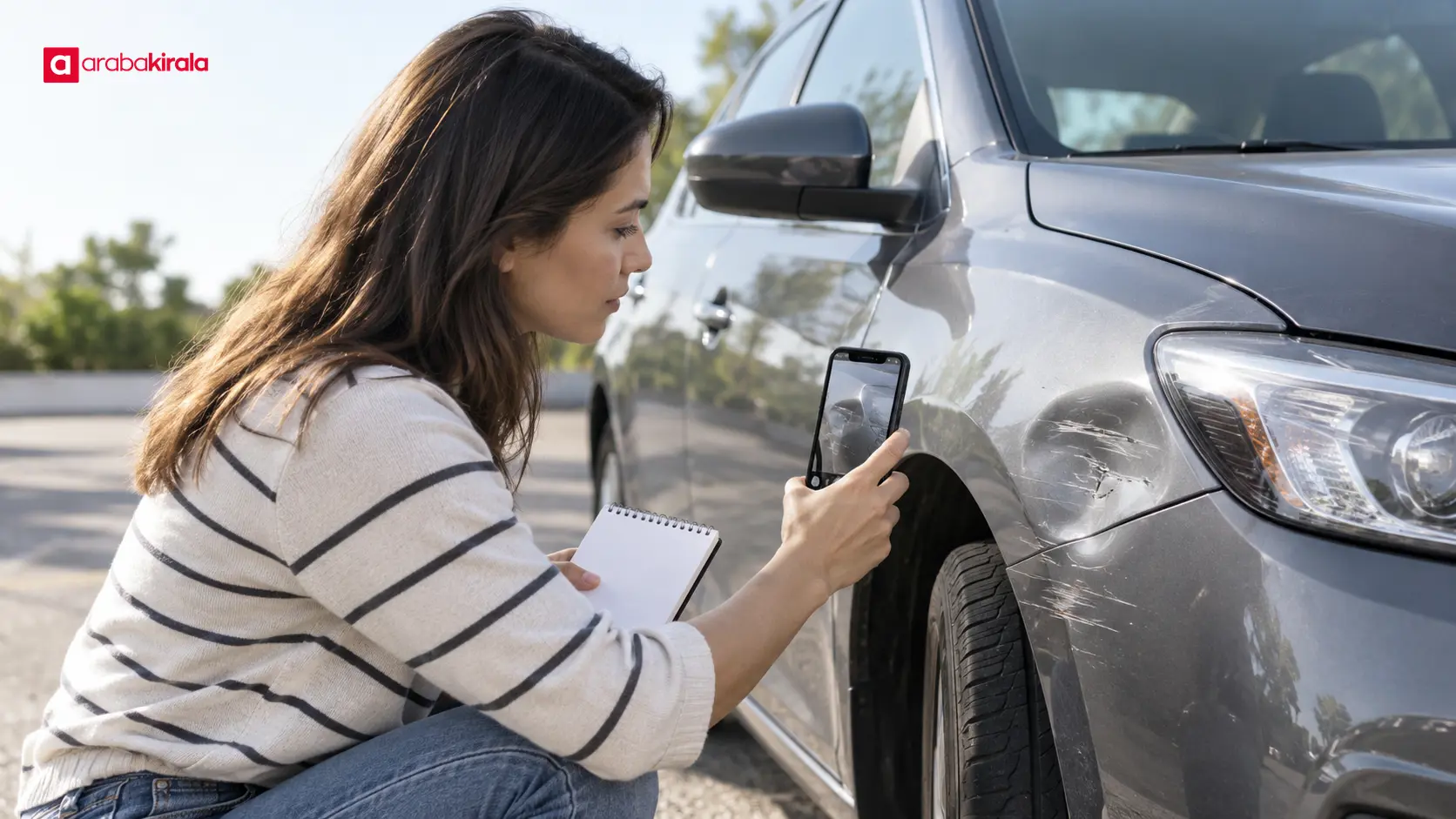
For each mark, take one photo that shows which side of the vehicle it is on, then a closer image of the scratch, dent, paint transfer, or other visible mark. The wider image establishes location; the close-up shows appearance. If the mark is near an edge, include nearby features so its position is easy to recognize.
Photograph the surface straight on and from a slight angle when useful. Make sure the mark is visible; shift position if glare or shadow obscures it. A single distant image can make a small mark hard to see, while an extreme close-up can make the panel impossible to identify. Using both views addresses these limitations.
Keep the original images
Save the photos without filters, annotations, or cropping. If you make an edited copy, retain the original file as well. A phone’s date and time information can help keep images in order, but it is not a substitute for the handover process or a confirmation from the rental office. Show the images to the staff member handling pickup and clarify how the office wants them shared or attached to the record.
Keep each group of images linked to the mark it shows. Use a concrete note such as “fine scratch on left rear door” instead of “damage here,” which depends on someone guessing what the image points to. If the mark is difficult to see, note that and take another image from better light.
Complete the note and form entry
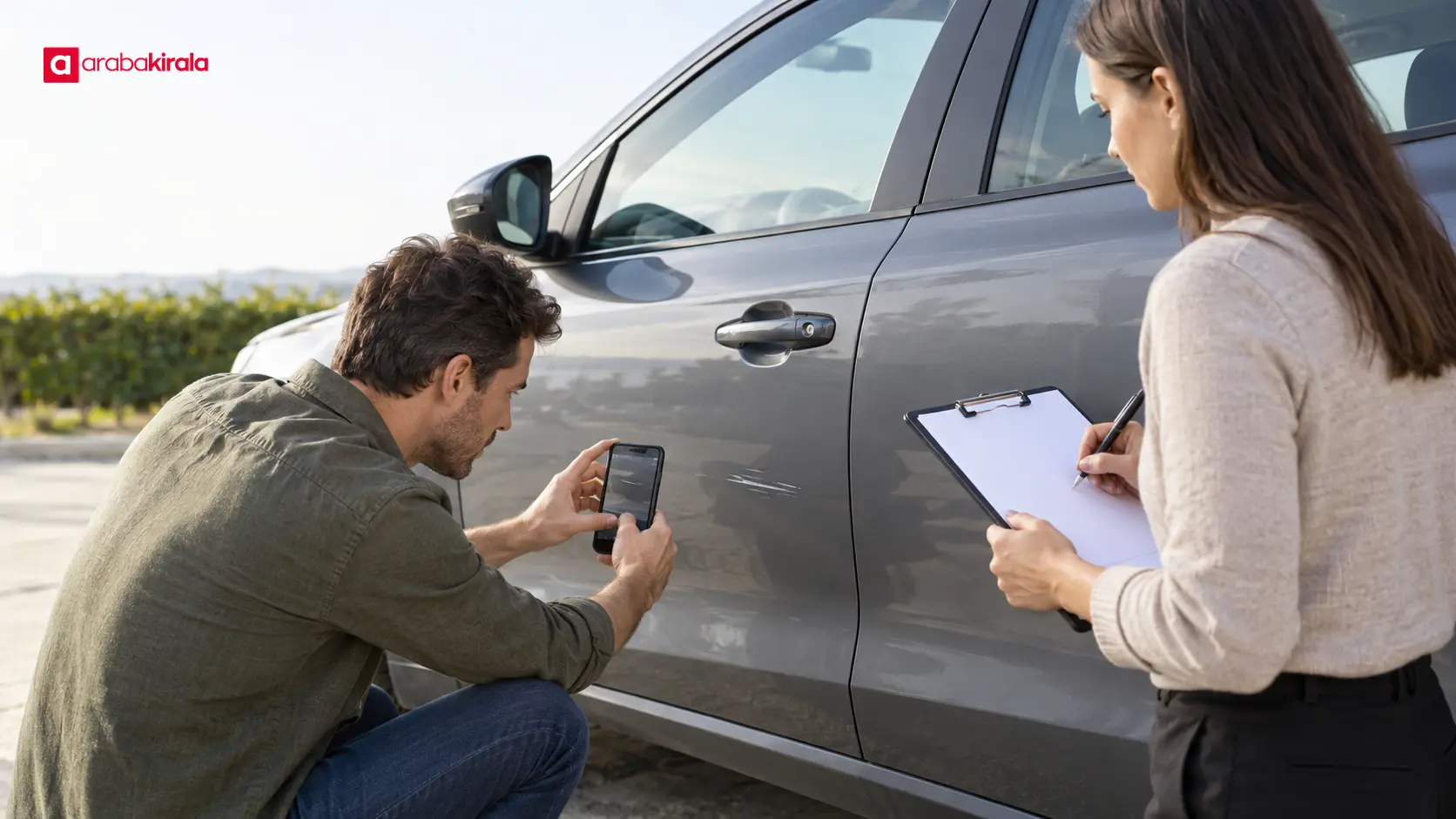
Describe location using the vehicle’s front and rear and its left or right side, along with the relevant panel. If known, name the part, such as “right front fender.” Use neutral words for what is visible: scratch, dent, paint scuff, or crack. Avoid confidently estimating size when you cannot measure it. If an approximate length is useful, say explicitly that it is approximate.
Review the vehicle diagram or description field on the handover form. Check that the marked location corresponds to the actual mark and that each visible item has been noted. If there is no space for another entry, ask staff how to add an explanation. Keep a copy or reference for the completed record when available. Ask the rental office you are using which method it accepts for documenting the inspection and sharing photos, so the information reaches the right place.
Details that are easy to overlook
- Checking only one side of the vehicle; inspect both bumpers, door edges, and the rear as well.
- Failing to change angle when reflections make a mark hard to see.
- Taking a photo without noting which panel it shows.
- Accepting a pre-marked form without matching its indicated location to the visible mark.
- Assuming the handover record is complete before unclear entries are explained; ask the staff member while you are still at pickup.
If you notice a mark after leaving
If you spot a mark after leaving the pickup location, contact the rental office promptly. Explain where the vehicle is, when you noticed the mark, and which panel is involved. Save wide and close photos if you can take them safely. Document the existing appearance instead of wiping, covering, or otherwise altering it. Follow the office’s instructions for adding information to the record, and keep a note of the communication.
If damage occurs during the trip, stop somewhere safe and assess the surroundings and vehicle. If you suspect the damage could affect safe driving, do not continue driving; contact the rental office for guidance. This general safety advice does not determine the cause of damage or responsibility for it.
Frequently asked questions
Are phone photos enough?
Photos provide a visual record, but location, timing, and the matching handover entry also matter. Pair wide and close views with a note and form entry, then confirm with the rental office how it wants images submitted.
Does every scratch need its own photo?
One image can show several marks if each one and its location are clear. When marks are on different panels or overlap visually, separate photo groups are easier to interpret.
Should I classify how serious the damage is?
Describe what you can see, but do not infer repair needs or charges. If a form entry is unclear, ask the staff member to explain how it should be recorded or corrected.
Final check and next step
Before leaving, walk around the whole vehicle, photograph each mark in context and detail, write a neutral location note, match it to the form, and find out how the record will be kept. Then confirm the inspection and photo process with the rental office you will use. This orderly approach makes the vehicle’s condition at pickup easier to review later.
Legal Disclaimer: All content, articles and information on the Araba Kirala website are provided solely to inform users. No information shared on this website constitutes definitive advice or guidance. Araba Kirala Teknoloji A.Ş. and its authors cannot be held responsible for any direct or indirect damages arising from the application of information on the website. For all questions and requests regarding car rental, please contact the office from which you will rent your vehicle.