How to Use a Cargo Cover and Tie-Down Points in a Rental Car
Published: October 9, 2026 • Reading Time: 6 min • Last Updated: October 9, 2026
Learn what a cargo cover does, how cargo tie-down points work, and how to arrange luggage safely before driving a rental car.
Contents
- What does a cargo cover do?
- Identify the cargo tie-down points
- Arrange luggage for a safer, tidier trunk
- 1. Group items by weight
- 2. Reduce gaps and movement
- 3. Keep the cabin and sightlines clear
- A short check when collecting the car
- During the trip and before returning the car
- In brief: the cover hides cargo; anchors help control it
- Frequently Asked Questions
This guide explains rental car cargo load securing: what the cargo cover is for, how tie-down points can help control movement, and how to arrange luggage before setting off. Trunk equipment varies by vehicle, so ask for a brief explanation of the cover, hooks, and anchors when you collect the car. Heavy or hard items placed loosely can shift and obstruct the driver’s view.
What does a cargo cover do?
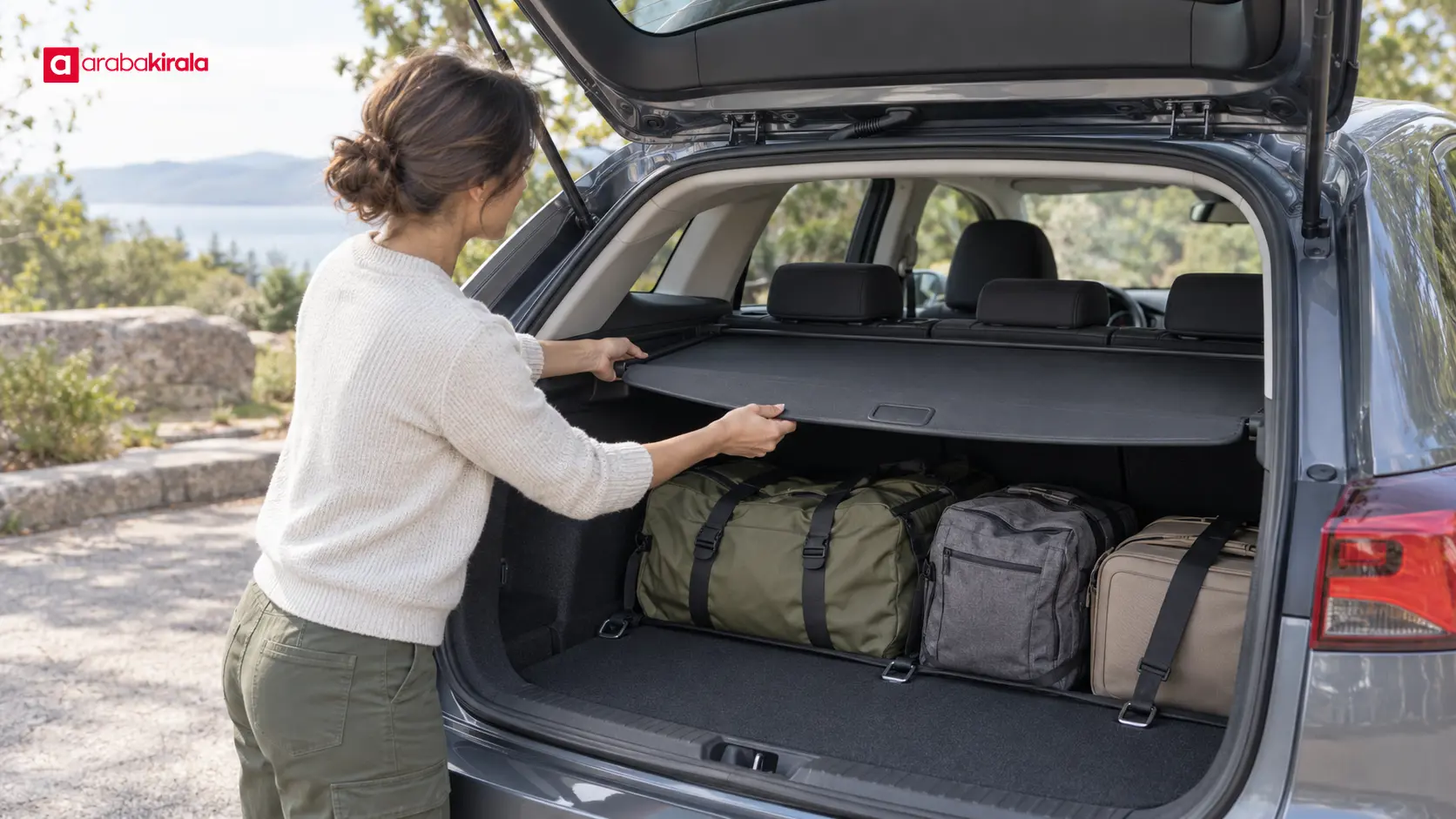
A cargo cover is a panel or retractable screen fitted above the luggage area, usually behind the rear seats. Its main purpose is to conceal luggage from outside and create a visual boundary between the passenger cabin and trunk. Some covers lift out of their slots, while others roll into a housing. A cover does not secure cargo: it is not designed to hold bags in place or stop heavy items from moving forward.
Do not place luggage on top of the cover. It may not be load-bearing, and objects can slide during a turn or braking, or block rear visibility. Fit the cover edges into their intended slots without forcing the mechanism. If it is missing or will not fit, arrange the trunk so the driver’s view remains clear and let the rental branch know. If you need to remove the cover, store it where it will not be lost or damaged.
Identify the cargo tie-down points
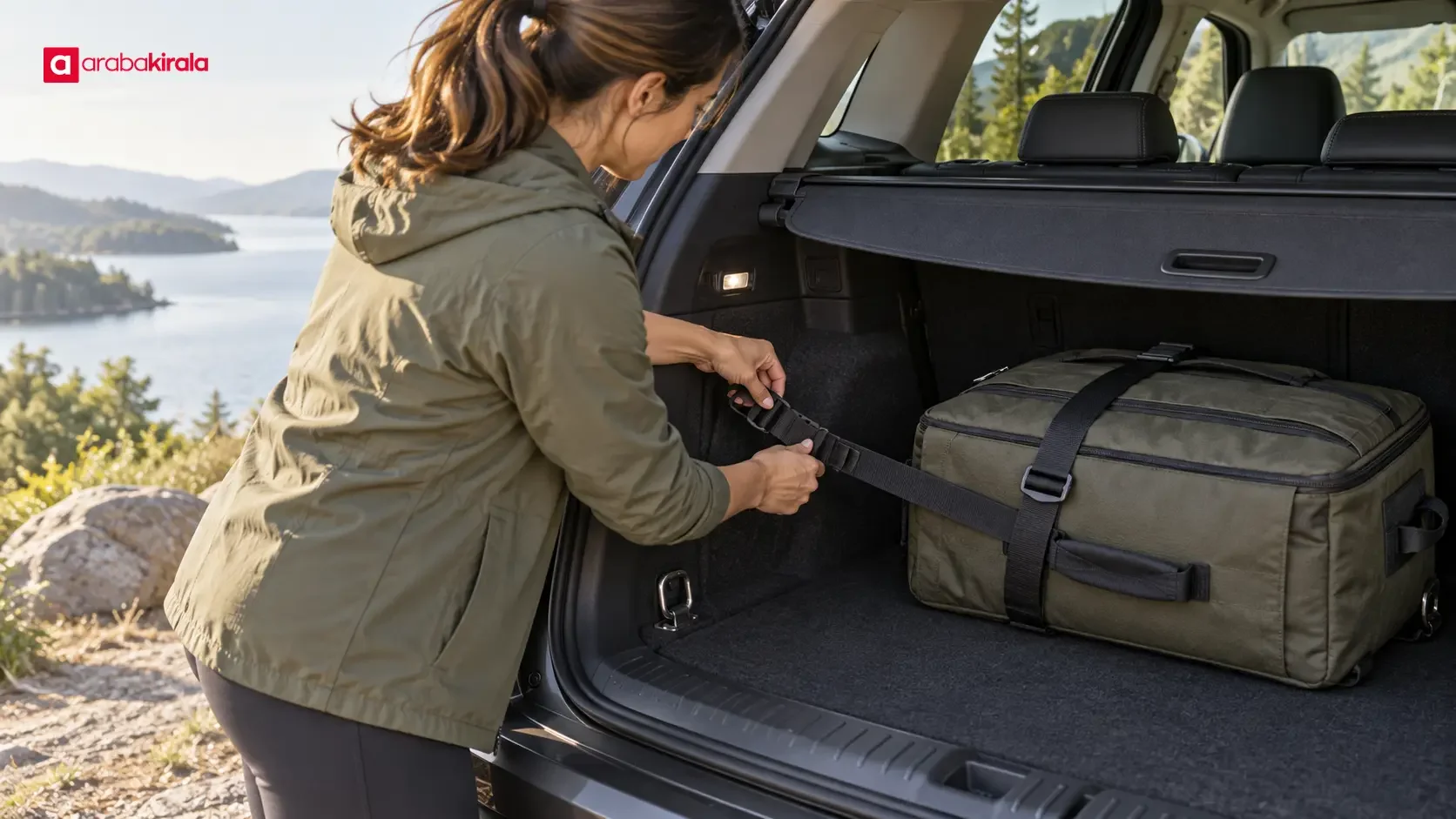
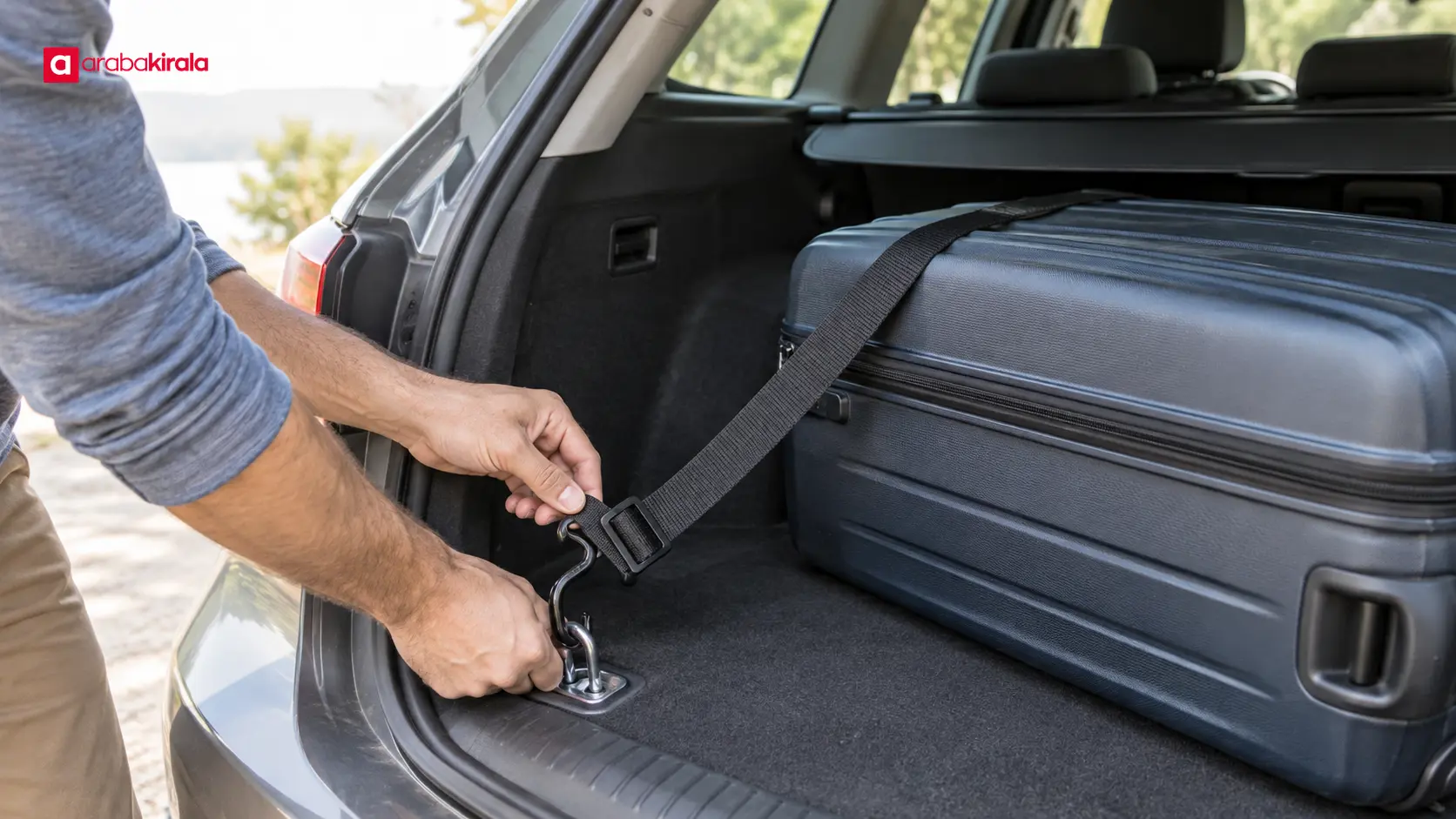
Metal loops or anchor sockets along the trunk floor or side panels may be provided for compatible straps. A vehicle may also have small hooks, net attachment points, or dividers that help keep items from moving. These fittings are not interchangeable: a small hook intended for a shopping bag does not necessarily serve as an anchor for a heavy suitcase. Check the owner’s manual or ask the person handing over the car to explain each fitting’s intended use.
Make sure a strap fits the vehicle’s anchor point. Do not attach it to a headrest, plastic trim, the cargo cover, or an unfamiliar fitting. Those parts may not be designed to restrain luggage. A strap should be taut without crushing the item, and loose ends should be secured so they cannot flap around. If an anchor moves, looks damaged, or does not hold the strap properly, do not use it; ask the rental branch for guidance.
Arrange luggage for a safer, tidier trunk
1. Group items by weight
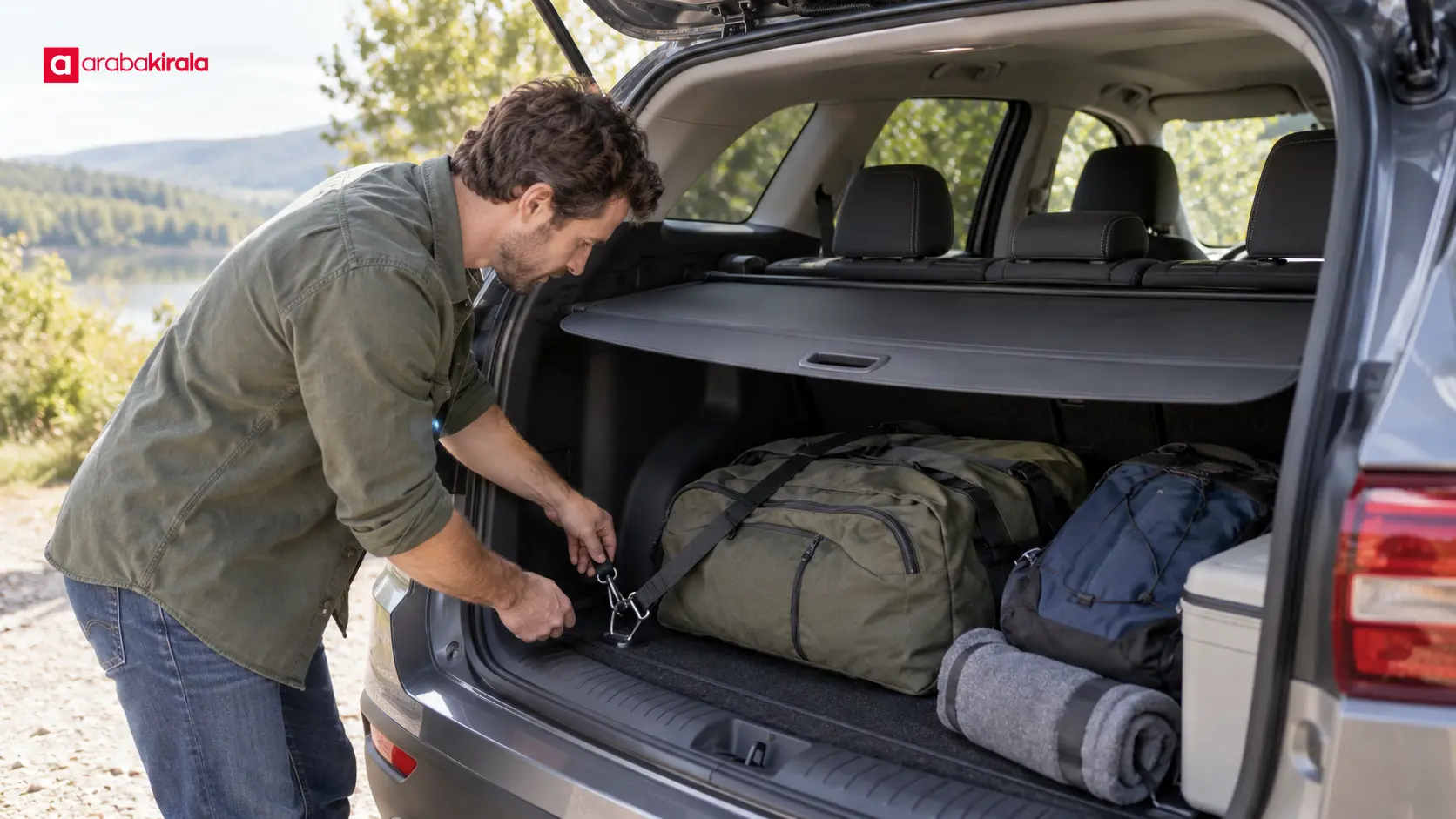
Start by sorting the items that need to fit. Place heavy, rigid items low on the trunk floor and as close to the rear seatback as practical. This avoids a tall pile and reduces the distance items can travel forward. Use lighter bags to fill gaps around heavier pieces. Position fragile or easily crushed items where they will not be trapped underneath. Keep the load within the vehicle’s stated carrying limits, which can be found in vehicle documentation or manufacturer information.
2. Reduce gaps and movement
Open spaces give luggage room to slide during braking or cornering. Place bags close together and evenly, and use a divider or cargo net if one is provided and suitable for the load. Where tie-down points are available, use compatible straps to limit movement of large or hard items. Consider the direction in which each strap restrains the load: a strap that prevents movement one way may not stop it in another. Secure separate items individually rather than assuming one strap will hold everything.
3. Keep the cabin and sightlines clear
Keep the rear window as clear as possible. Do not stack luggage above the seatbacks in a way that blocks the rear view; an obstructed window makes it harder to see traffic and surroundings. If you must carry an item in the cabin, do not leave it loose on a seat or in the footwell. If the vehicle has a load barrier between the trunk and passenger area, check that it is fitted correctly and secure. A cargo cover should not be treated as a barrier.
A short check when collecting the car
- Check that the cargo cover is present, intact, and opens or retracts as intended.
- Locate the anchor loops and hooks using the owner’s manual or the handover explanation.
- Look for loose fittings, damage, or a slippery trunk floor.
- Check the rear view from the driver’s seat and adjust the mirrors.
- Confirm that any strap, net, or organizer you plan to use fits the car and actually restrains the load.
- Tell the rental branch before departure if the cover or securing equipment is missing or damaged.
Trunk capacity and equipment differ between vehicles. If you are carrying large suitcases, sports equipment, or a stroller, ask the branch you are renting from about the trunk opening, seat-folding layout, and available securing equipment during booking or collection. A trunk lid that closes does not by itself mean that the load is positioned safely.
During the trip and before returning the car
Check the arrangement before you drive. At a safe stop, make sure items have not shifted, straps have not loosened, and the cover remains in place. If you hear an item moving or it presses against the trunk lid, stop somewhere safe and rearrange it. Do not turn around while driving to inspect the luggage; pull over safely if visibility or load restraint needs attention.
Before returning the vehicle, remove your own straps and organizers from the trunk. Put the cover and any removed vehicle parts back where they belong. Report any damage or missing equipment to the staff during handover so the vehicle’s condition can be noted clearly. You can ask the branch what equipment it checks as part of collection and return.
In brief: the cover hides cargo; anchors help control it
A cargo cover conceals luggage and gives the trunk a tidy appearance. Tie-down points, used with compatible equipment, help limit movement. They serve different purposes. Place heavy items low and near the seatback, use suitable anchors and straps, and keep the rear window clear. Check the car’s trunk equipment and carrying limits before departure, and ask the rental branch to explain any fitting you are unsure about.
Frequently Asked Questions
Can I put a bag on top of the cargo cover?
No. A cargo cover is generally not made to carry luggage. An item on it may slide, damage the cover, or obstruct rear visibility. Place luggage on the trunk floor instead.
Does every rental car have cargo tie-down loops?
Equipment varies by vehicle model and body style. The number, location, and intended use of anchors can differ. At collection, ask where the anchors are and how they should be used in your car.
Can I use a seat belt to secure a suitcase?
Seat belts are designed to restrain passengers, not to serve as luggage tie-down equipment. Use a strap that attaches to a suitable cargo anchor, or a cargo net designed for the vehicle and load.
Is it safe to load the trunk above the rear seatbacks?
If luggage blocks the rear window, it can make driving more difficult. Arrange the load lower or ask the branch whether a larger vehicle is appropriate. The load must also remain within the vehicle’s carrying capacity.
What should I do if the cargo cover is missing?
Tell the branch that handed over the car before you leave and ask how to arrange the trunk. A missing cover does not mean another vehicle fitting can be used to secure luggage.
Should I recheck strapped luggage during the trip?
Yes. At a safe stop, check that straps remain secure and items have not shifted. Stop safely before inspecting the trunk; do not reach back while driving.
Legal Disclaimer: All content, articles and information on the Araba Kirala website are provided solely to inform users. No information shared on this website constitutes definitive advice or guidance. Araba Kirala Teknoloji A.Ş. and its authors cannot be held responsible for any direct or indirect damages arising from the application of information on the website. For all questions and requests regarding car rental, please contact the office from which you will rent your vehicle.