How to Check a Rental Car’s Cabin and Trunk Before Pickup
A careful rental car interior check helps you understand the vehicle’s condition before you accept it and begin your trip. Look beyond visible marks: check the seats and cabin surfaces, confirm that seat belts appear usable, assess whether your luggage can be carried securely, and ask about equipment whose operation is unfamiliar. Take the walk-through with the person handing over the car. If you find a concern, point it out before completing the handover and clarify how it will be recorded.
Why inspect the cabin and trunk before leaving?
Interior wear and damage can be easy to miss from outside. A tear in upholstery, a cracked trim panel, a stain or a loose part may already be present at pickup. Identifying visible conditions together and recording them clearly helps establish what you noticed at the start of the rental. A record does not, by itself, determine a charge or responsibility; how the handover record is made and used depends on the rental arrangements.
The walk-through is also a practical safety check. You need to be able to sit in a suitable driving position, use the seat belt, see through the windows and mirrors, and keep luggage from moving into the passenger area. Interior layouts and controls vary by vehicle. If you are unsure what a switch, latch or piece of equipment does, ask the handover staff to explain it instead of guessing.
Inspect the cabin from front to back
Seats, trim and adjustment
Start with the driver and front passenger seats, then check the rear seating area and door panels. Look for tears, holes, burns, deep creases, conspicuous stains, cracked trim and parts that appear loose or detached. Check the visible seat adjustment controls and head restraints. If the rear seats fold, ask how their release and locking mechanism works. Do not force a lever or hinge that is unfamiliar or resistant.
Set the driver’s seat to a position that lets you reach the pedals comfortably, hold the steering wheel with control and see the road and mirrors. Check that the seat stays in position and that the head restraint can be set appropriately. If the seat will not lock, an adjustment control is stuck, or a part feels unusually loose, tell the staff member before moving the car.
Seat belts and dashboard messages
Visually examine the webbing at each seating position for cuts, fraying, twists or other visible damage. In normal use, check that the buckle accepts the belt and that the belt retracts. Do not pull aggressively, dismantle the belt or try to repair it. If it appears damaged, will not latch, or does not behave normally, tell the handover staff and do not use that seat until the issue is resolved.
Some dashboard indicators illuminate briefly when the ignition is switched on. Their normal behavior differs among vehicles, so consult the owner information or ask staff if an indicator remains on or a message is unclear. Do not dismiss a warning that may relate to safety. If one appears while driving, stop somewhere safe and contact the branch from which you rented the car for instructions.
Check trunk space and its visible fittings
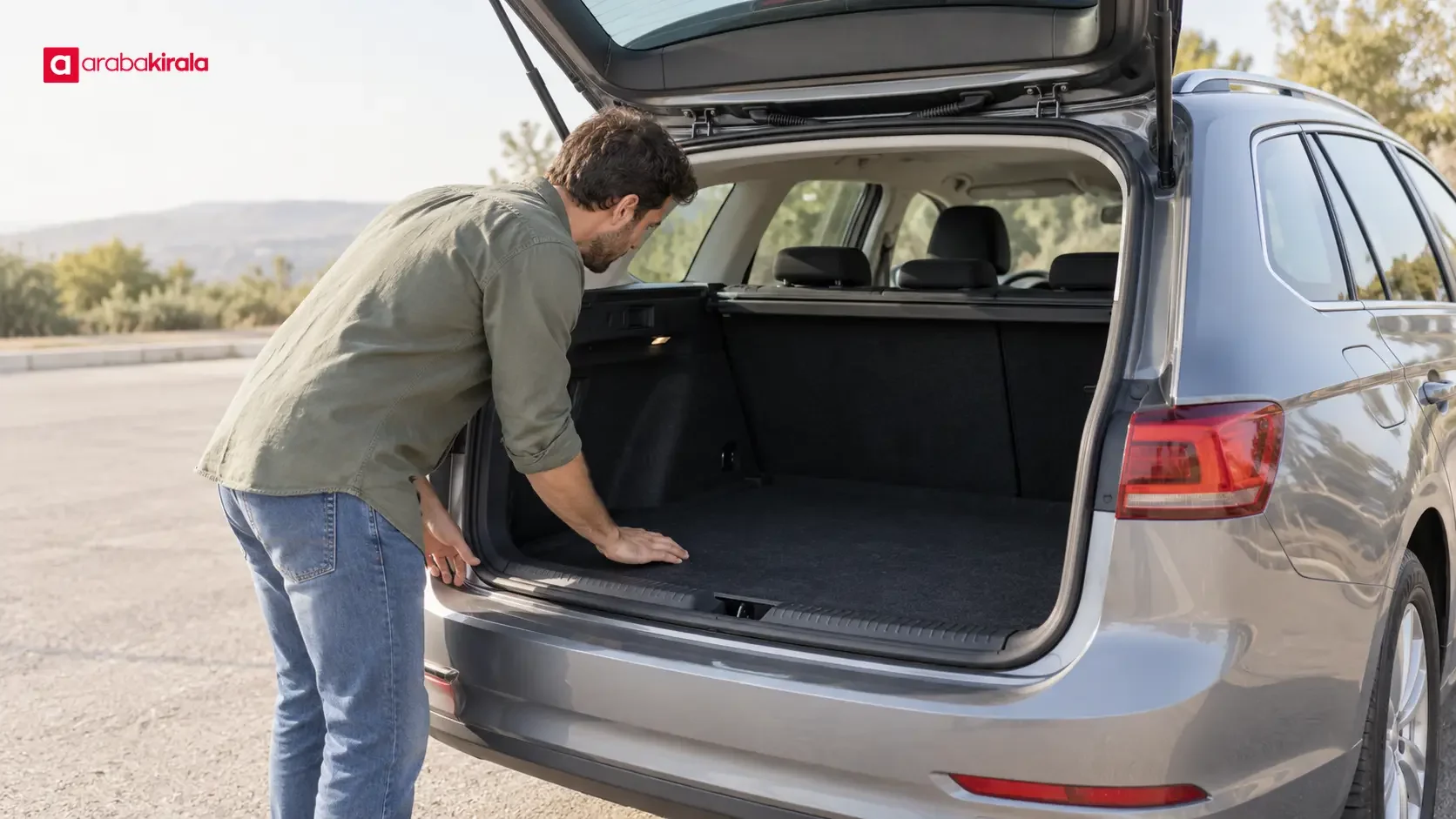
Open the trunk and look over the floor, side lining and accessible compartments. Note tears, cracks, moisture, heavy dirt or loose pieces. If the vehicle has a cargo cover, shelf, net, tie-down points or hooks, check whether they are present and appear intact. Equipment differs by vehicle, so do not assume a particular fitting is included. Ask how to use anything you do not recognize.
Consider the number, size and weight of your bags. Trunk capacity is not just floor area: the opening width and available height under the closed lid also matter. Pack so that luggage does not block the driver’s rear view. Heavy or hard items should not be left free to fly forward during sudden braking. If rear seats fold to make more room, make sure they lock in the intended position and do not use a passenger seat as cargo space while someone is travelling there. If your luggage will not fit safely, discuss a suitable vehicle or another arrangement with the branch before setting off.
Close the lid and secure the load
Check that the trunk lid opens and closes without catching and sits shut when closed. Keep your hands clear of pinch points. If the car has a powered lid, follow the staff demonstration and avoid forcing the mechanism. A lid that will not latch, visible damage to the lock, or an open-lid warning should be raised before departure.
Place heavier bags low and toward the front of the cargo area where practical; contain small loose items in a closed bag or suitable compartment. Keep windows and mirrors clear of the load. Ask whether a spare wheel, tyre repair kit, jack or other item is supplied with this particular vehicle and where it is kept. Their presence and location are not the same in every car. If you do not know how to use an item, do not attempt an unfamiliar roadside repair; ask the branch how to obtain assistance.
Check cleanliness and remove personal belongings
Look at the floor mats, seat gaps, door pockets and trunk for spills, strong odors, heavy dirt, broken glass or belongings left by a previous user. Show any concern to the staff member before the handover is complete and ask how it should be noted. Do not remove trim or dismantle a compartment to investigate an odor or hidden object.
Before leaving, check that you have your phone, wallet, glasses, charging cable, child-related items and every bag you brought. A quick look through seat pockets and the trunk before completing pickup can prevent belongings from being mixed up. If you find something that is not yours, give it to the staff member rather than searching inside the vehicle’s panels.
How to record a condition you notice
Show visible damage, missing fittings, stains or a non-working control to the handover staff before you confirm receipt. Ask for the condition to be included in the appropriate handover record and read the wording to make sure it describes the location and issue clearly. A note such as “rear seat problem” is less useful than one identifying which seat and what is visible. A photo can help you remember or explain a mark; show it to staff and do not assume it replaces the rental record.
If the record is unclear or you disagree with its description, ask for an explanation before signing or completing the process. Find out which document will carry the note and how you can keep a copy. If you cannot resolve a safety concern or a significant discrepancy, raise it with the responsible staff member before taking the car. These are practical record-keeping steps, not a prediction about the outcome of a later dispute.
A final check before driving
- Are there visible tears, cracks, stains or loose parts on the seats and trim?
- Do the seat belts look usable, and do their buckles work normally?
- Are the driver’s seat, head restraint and mirrors set for a clear view and comfortable control?
- Does the trunk close properly, and is the luggage arranged so that it cannot obstruct your view or move freely?
- Have you shown visible concerns to staff and clarified any unexplained dashboard message?
- Do you understand any vehicle-specific trunk latch, control or supplied equipment you need to use?
Do not set off with an unresolved seat-belt fault, a serious cabin defect or an unexplained safety warning. Ask the handover staff for clear guidance first. A few minutes spent checking the cabin and trunk can make the trip more comfortable and give both sides a clearer account of the vehicle’s visible condition at pickup.
Frequently asked questions
How long should an interior check take?
There is no fixed duration. Allow enough time to inspect the seats, belts, trunk and visible fittings without rushing. If you find an issue, wait until it has been explained and the record is clear before completing the handover.
Is a photo enough to document an existing mark?
A photo may help you remember or show what you observed, but do not assume it replaces the rental handover record. Show it to staff and ask how the condition should be recorded and how you can retain a copy.
What equipment should be in the trunk?
Equipment varies by vehicle. Ask the branch handing over your car whether it includes items such as a spare wheel, repair kit, jack, cargo cover or tie-down fittings, and where they are stored. Do not assume every vehicle has the same items.
What should I do if a belt or trunk lid seems faulty?
Tell the handover staff before moving the car and wait for a clear, safe solution. Do not use a seat with a belt that appears defective. If the lid will not close or the dashboard reports that it is open, ask the branch for instructions before driving.
Should I check the interior again when returning the car?
Yes. Looking through the cabin and trunk at return helps you retrieve your belongings and clarify the visible condition with staff. Return location, timing and procedure can be specific to the branch, so confirm those details with the place where you rented the car.
Legal Disclaimer: All content, articles and information on the Araba Kirala website are provided solely to inform users. No information shared on this website constitutes definitive advice or guidance. Araba Kirala Teknoloji A.Ş. and its authors cannot be held responsible for any direct or indirect damages arising from the application of information on the website. For all questions and requests regarding car rental, please contact the office from which you will rent your vehicle.