Rental Car Load Capacity: How to Check Tires After Loading
Published: October 8, 2026 • Reading Time: 6 min • Last Updated: October 8, 2026
Assess rental car load capacity by considering passengers, luggage, weight distribution, vehicle limits, and tire guidance together—not trunk volume alone.
Contents
Rental car load capacity is not the same as the amount of luggage that fits in the trunk. Passengers, belongings, and any roof equipment all contribute to the load carried by a vehicle. This guide explains how load capacity differs from cargo volume, where to find vehicle limits, how to arrange and secure items, and what to check on the tires after loading. Exact values vary by model and configuration, so use the vehicle’s manual and manufacturer information, and ask the rental branch about details specific to the car you will collect.
What load capacity means
Load capacity concerns the weight a vehicle can carry with its occupants and cargo. Cargo volume describes how much space is available, often expressed in litres. A large but light item may take up substantial space while adding little weight; a compact heavy item can use little room but add significantly to the total. A trunk that still has empty space therefore does not prove that the vehicle is within its weight limits.
When assessing the load, account for everyone travelling in the car as well as their belongings. Accessories or carrying equipment may also matter under the vehicle’s instructions. Manufacturer limits can differ by model, body style, and equipment. Do not apply a figure from a similar-looking car to the vehicle you have rented.
Vehicle limits and tire markings
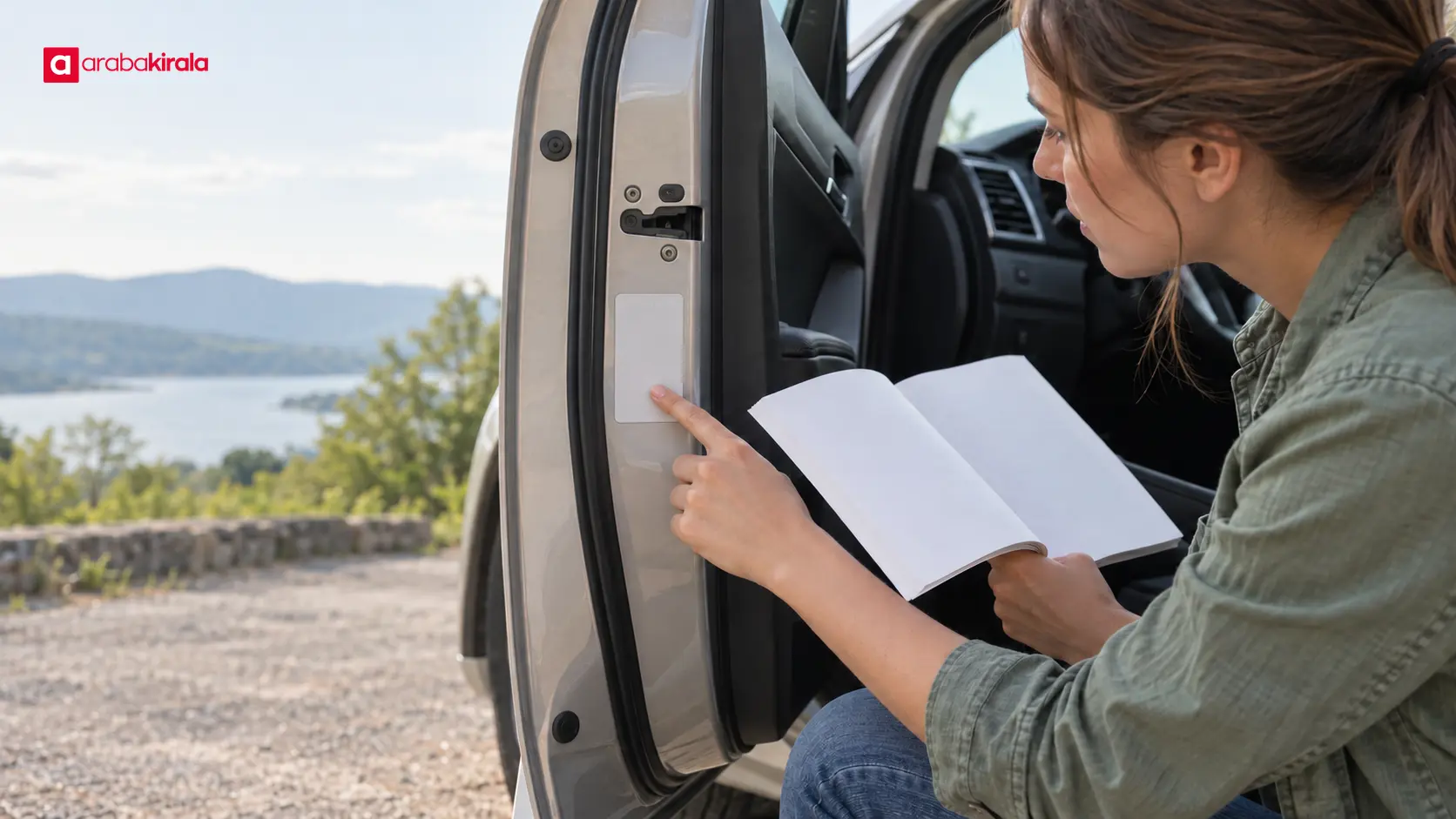
The owner’s manual or a vehicle information label may list limits such as permitted total mass and axle loads. The total limit concerns the vehicle as a whole. Axle limits also make the distribution between the front and rear wheels relevant. Staying below the total limit does not make it appropriate to concentrate too much weight at the rear.
The load index on a tire sidewall is a coded indication of the load that tire can carry under specified conditions. It does not, by itself, state the permitted total load of the vehicle or tell you what pressure to use. For inflation pressure, follow the vehicle maker’s recommendation shown in the manual or on the vehicle label. Do not treat the maximum pressure printed on a tire sidewall as the normal target for the car.
Arrange and secure the load
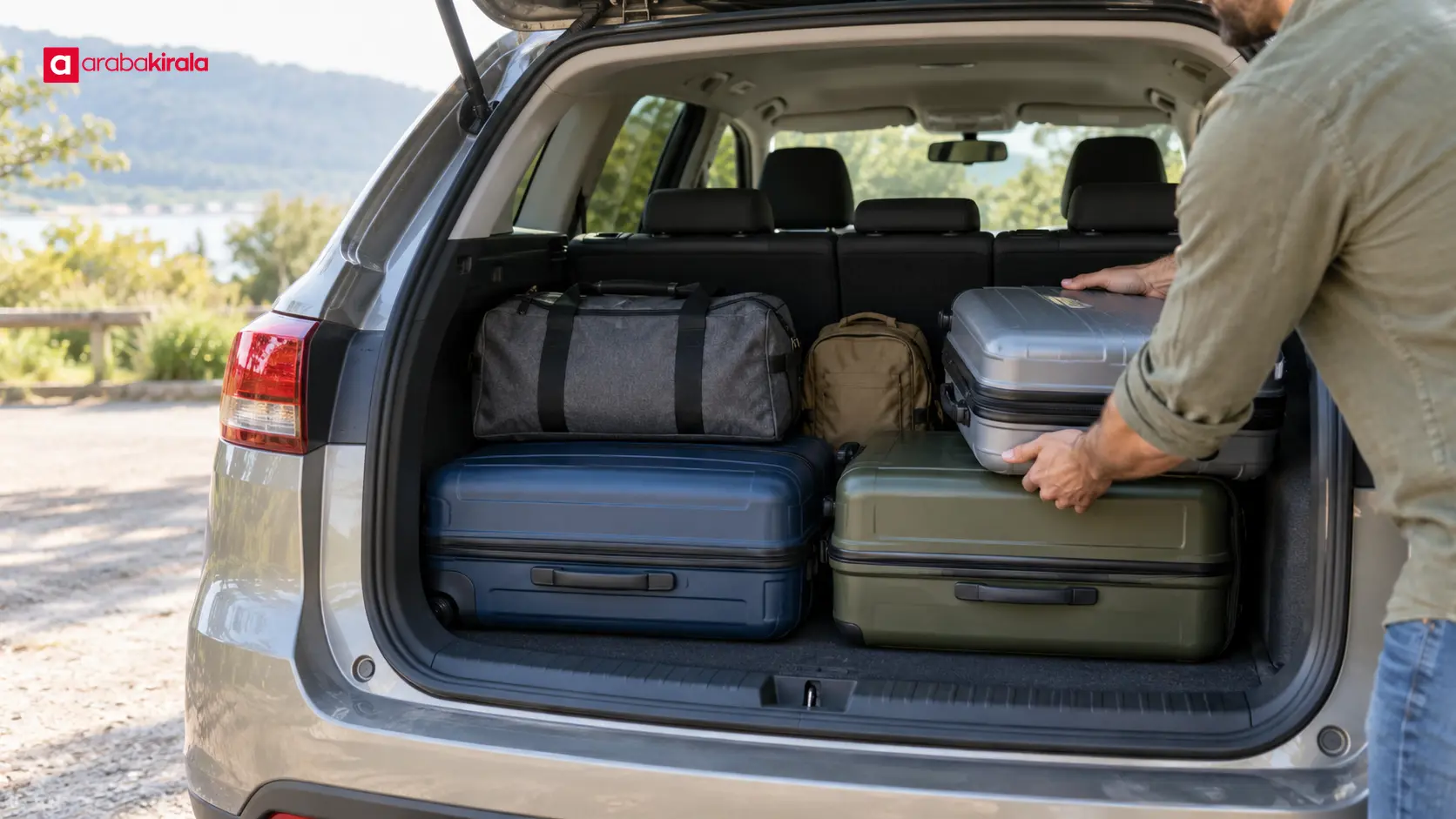
Place heavy items low on the trunk floor and distribute them evenly. Piling weight on one side or toward the rear overhang can affect balance and steering response. Secure lighter objects as well: an item that moves inside the cabin during hard braking or a sudden change of direction can cause injury or damage.
- Keep the load balanced from side to side.
- Do not stack luggage so high that it blocks the view through the rear window.
- Secure small items in the cabin; a loose bottle or hard object can move forward when braking.
- Do not tie items casually to the roof or above seat backs unless the vehicle instructions permit it.
- If using a roof carrier, check both the carrier’s limits and the vehicle’s own limits.
Checking tires and the car after loading
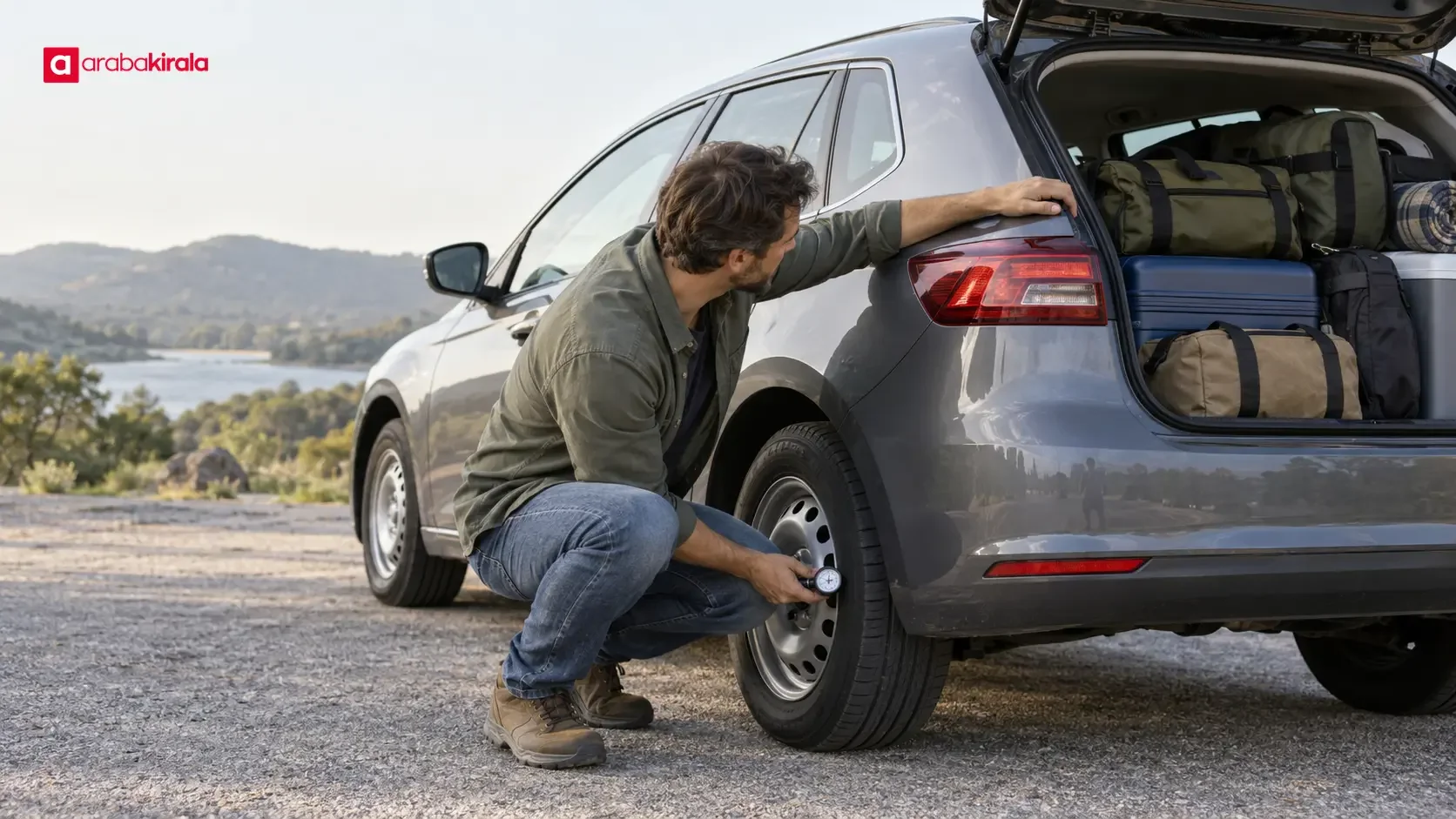
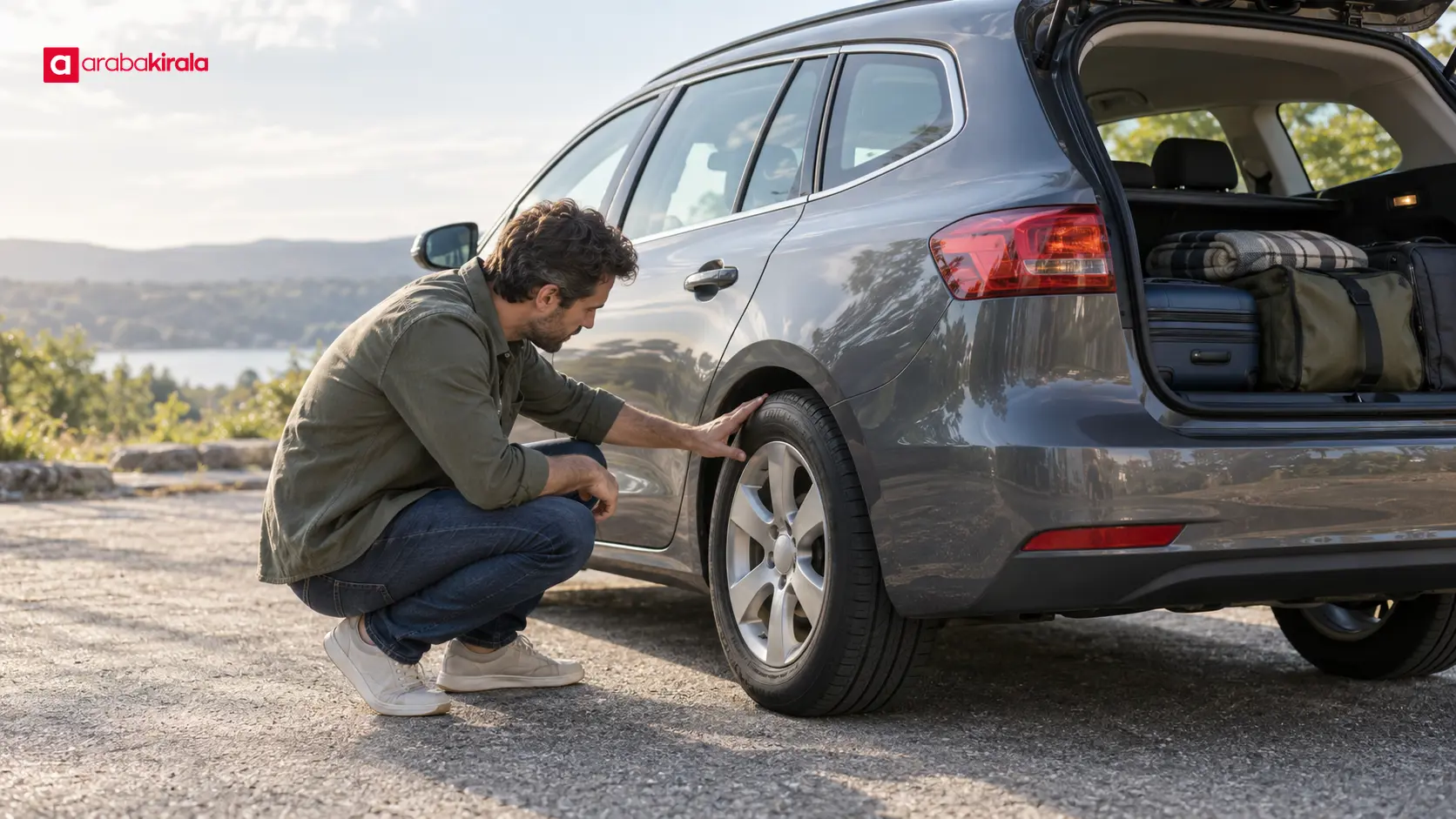
Once the vehicle is loaded, visually inspect the tires while parked on safe, level ground. Look for a cut, bulge, obvious deformation, foreign object, or other unusual appearance. If something looks wrong, contact the rental branch before setting off. A visual check cannot diagnose a tire fault, so avoid attempting technical repairs yourself.
If pressure needs to be checked, follow the vehicle maker’s method and conditions. Confirm in the manual or on the label whether a different pressure recommendation applies when carrying a load. Do not add or release air by guesswork simply because the car is heavier. If a tire pressure warning appears, or the car’s handling changes noticeably, stop in a safe place, avoid stressing the vehicle, and ask the branch for guidance.
A loaded car may respond differently: acceleration, braking, and changes of direction can require more distance. Before moving, check that the trunk and doors are closed, the load is secure, and your mirrors and windows provide a clear view. During the first part of the drive, use smooth inputs. If you notice unusual noise, pulling, or vibration, stop somewhere safe and assess the situation.
What to clarify at rental pickup
Exact weight limits and loading guidance depend on the particular vehicle. At pickup, ask where to find the manual, where the manufacturer’s load information is displayed, and how to contact the branch if a tire warning appears. If you plan to carry bulky family luggage, sports equipment, or use a roof carrier, confirm with the branch during reservation or pickup that the selected vehicle suits that use.
If you notice existing damage or an unusual tire condition, show it to the staff before driving and ask how the vehicle’s condition is recorded. This helps you understand the car as handed over and know whom to contact if support is needed; it is not a guide to diagnosing or repairing a fault yourself.
A quick pre-drive checklist
- Compare the combined weight of passengers and cargo with the vehicle’s manufacturer limits.
- Place the load low, evenly, and where it cannot move.
- Check the vehicle’s tire pressure guidance for the load condition in the manual or on the label.
- Inspect the tires visually and contact the branch if you suspect damage.
- Check visibility, mirrors, the trunk lid, and loose items inside the cabin.
- With a loaded car, accelerate and brake smoothly and leave a safe following distance.
In short, rental car load capacity involves more than trunk size: total weight, distribution across axles, secure placement, and the manufacturer’s tire guidance all matter. Your next step is to locate the manual and load information when collecting the car, then confirm the vehicle-specific limits before arranging your luggage.
Frequently Asked Questions
Where can I find a rental car’s load capacity?
Start with the owner’s manual and manufacturer information labels. Since values vary by model and equipment, use the information for the specific car you have collected. If you cannot find or interpret it, ask the rental branch.
Does the tire load index tell me the car’s carrying capacity?
No. The load index is coded information about a tire, not the vehicle’s total or axle weight limit. Check the vehicle manual or information label for the car’s limits.
Can a car be overloaded even if the trunk is not full?
Yes. Empty trunk space does not prove that the combined weight is within limits. Consider passengers and luggage together; volume and weight measure different things.
Should I increase tire pressure after loading the car?
Do not change pressure by estimate. Follow any load-specific value or checking method provided by the vehicle maker. If you cannot find the information, contact the rental branch.
What should I do if a tire pressure warning appears after loading?
Stop in a safe place and observe the vehicle and tires; do not ignore the warning and push on. Avoid working on the tire yourself and contact the rental branch for guidance.
Can I put luggage on a roof carrier?
That depends on the technical limits of both the vehicle and carrier, proper installation, and secure loading. Confirm with the branch before pickup that the vehicle can be used with that equipment and ask about its relevant limits.
Legal Disclaimer: All content, articles and information on the Araba Kirala website are provided solely to inform users. No information shared on this website constitutes definitive advice or guidance. Araba Kirala Teknoloji A.Ş. and its authors cannot be held responsible for any direct or indirect damages arising from the application of information on the website. For all questions and requests regarding car rental, please contact the office from which you will rent your vehicle.