How to Arrange Luggage in a Rental Car Without Blocking Your View
Published: October 6, 2026 • Reading Time: 6 min • Last Updated: October 6, 2026
Learn how to arrange luggage and cabin items in a rental car while keeping the windshield, side windows, rear window and mirrors useful. Practical loading, securing and pre-drive checks help preserve a clear view.
Contents
- Why visibility is part of loading
- Arrange the trunk without blocking the rear view
- Keep heavy items low and toward the front of the trunk
- Use the rear window as a sightline to check
- Keep luggage from shifting
- Store small items safely in the cabin
- Plan for the vehicle and the trip
- A quick check before you set off
- Frequently asked questions
- Are the side mirrors enough if the rear window is blocked?
- Can luggage rise above the back seat?
- Does a reversing camera make luggage height irrelevant?
- Summary and next step
Arranging luggage in a rental car is about more than fitting everything into the trunk. The windshield, side windows, rear window and mirrors each help the driver monitor a different part of the road. Items that block them can make it harder to notice traffic, judge a maneuver or reverse safely. This guide explains how to load the trunk, store small cabin items and check your view before setting off.
Why visibility is part of loading
Drivers gather information from several directions. The rearview mirror reflects what can be seen through the rear window, while the side mirrors help monitor traffic beside and behind the car. If luggage rises into the rear window area, it can reduce the mirror’s useful view. Objects on the dashboard, items hanging from a mirror or loose belongings near the driver can also distract or obstruct sightlines.
Mirrors and cameras are useful aids, but they do not replace a clear view of the surroundings. Mirrors cannot show every blind spot, and a reversing camera displays only the area covered by its lens. Keep the load low enough to preserve the available view, and use mirrors and direct observation together when maneuvering.
Arrange the trunk without blocking the rear view
Keep heavy items low and toward the front of the trunk
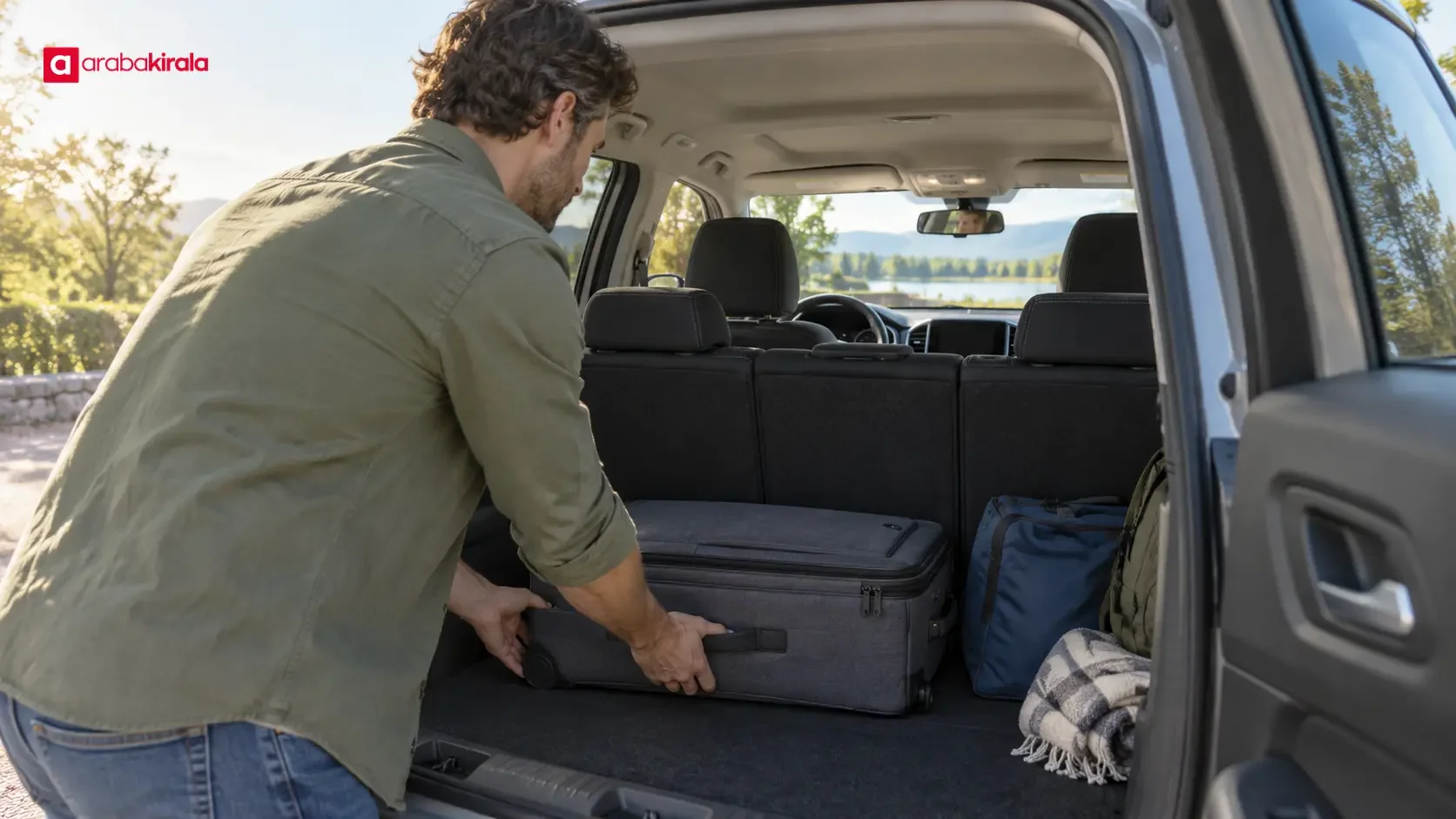
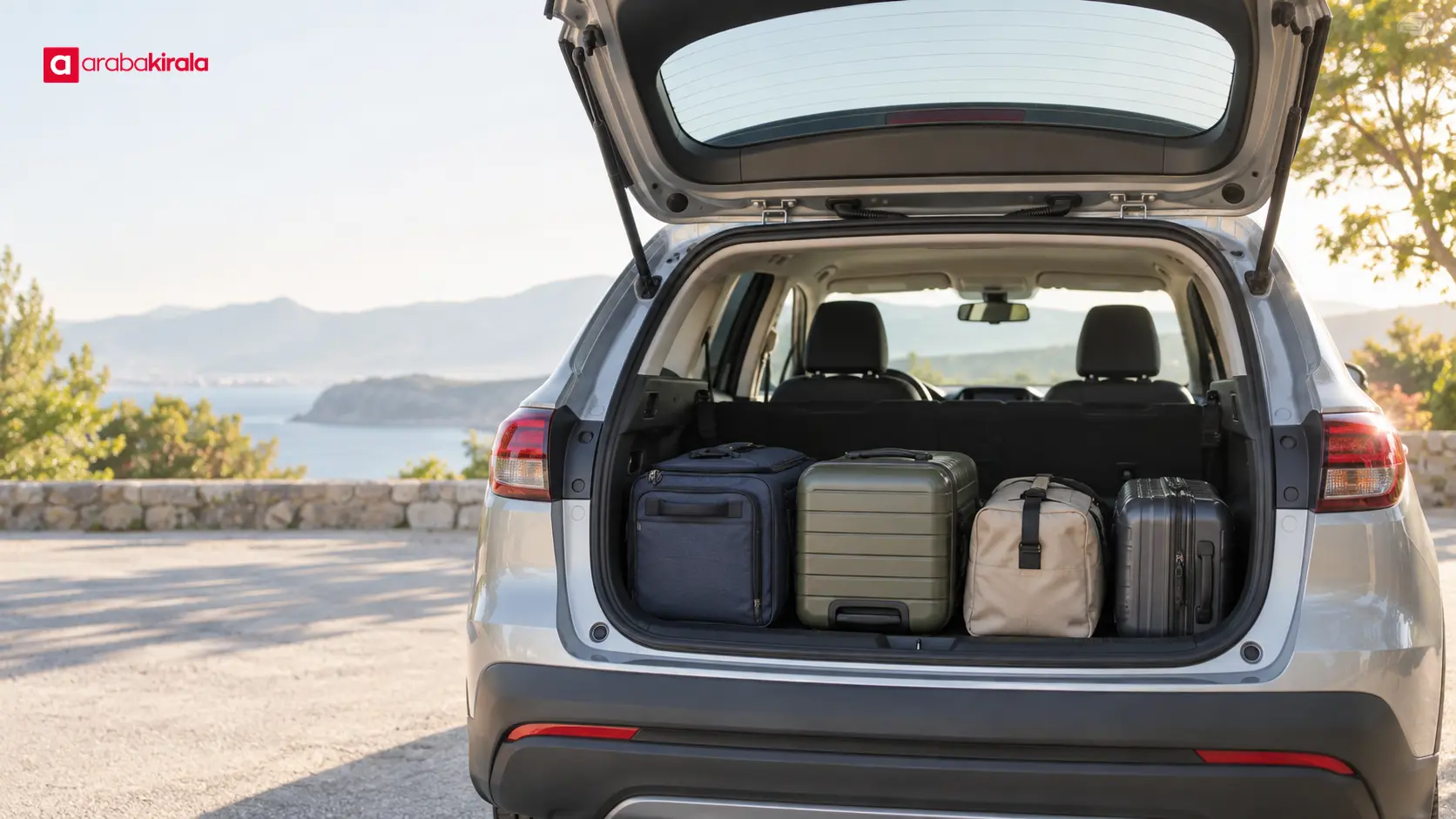
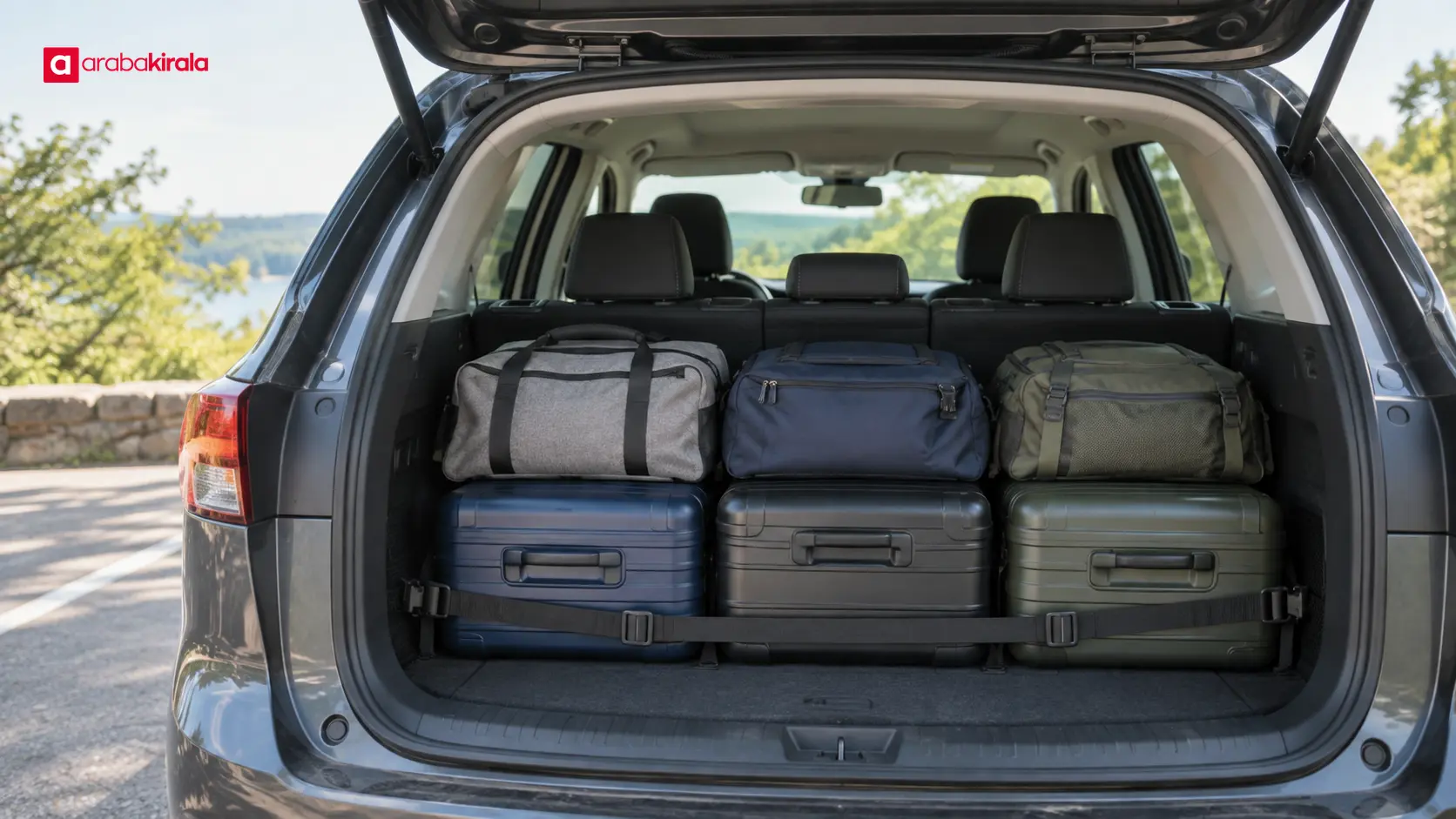
Place suitcases, full bags and equipment on the trunk floor. Keep heavier pieces low and toward the front of the cargo area, then distribute the load evenly. A high stack can cover the rear window; a loose stack can shift during braking or cornering. If items must be stacked, put larger, heavier pieces below lighter ones and make sure the lower items can support the stack without tipping.
Use the rear window as a sightline to check
After loading, sit in the driver’s seat and look through the rearview mirror. If luggage rises above the seatback and covers a useful part of the rear window, rearrange it. Some vehicles have headrests or bodywork that already limit the view, so avoid making that view more restricted. A load may leave part of the glass visible while still interfering with the reflected image.
Keep luggage from shifting
Unsecured objects can move forward during sudden braking. Pack items closely and evenly, and use the vehicle’s designated cargo hooks or tie-down points if they are present and you know how to use them. Do not attach a strap to an unfamiliar fitting or assume a hook is designed for heavy loads. If there is no suitable way to secure a loose, heavy or fragile item, reconsider the arrangement before driving.
Store small items safely in the cabin
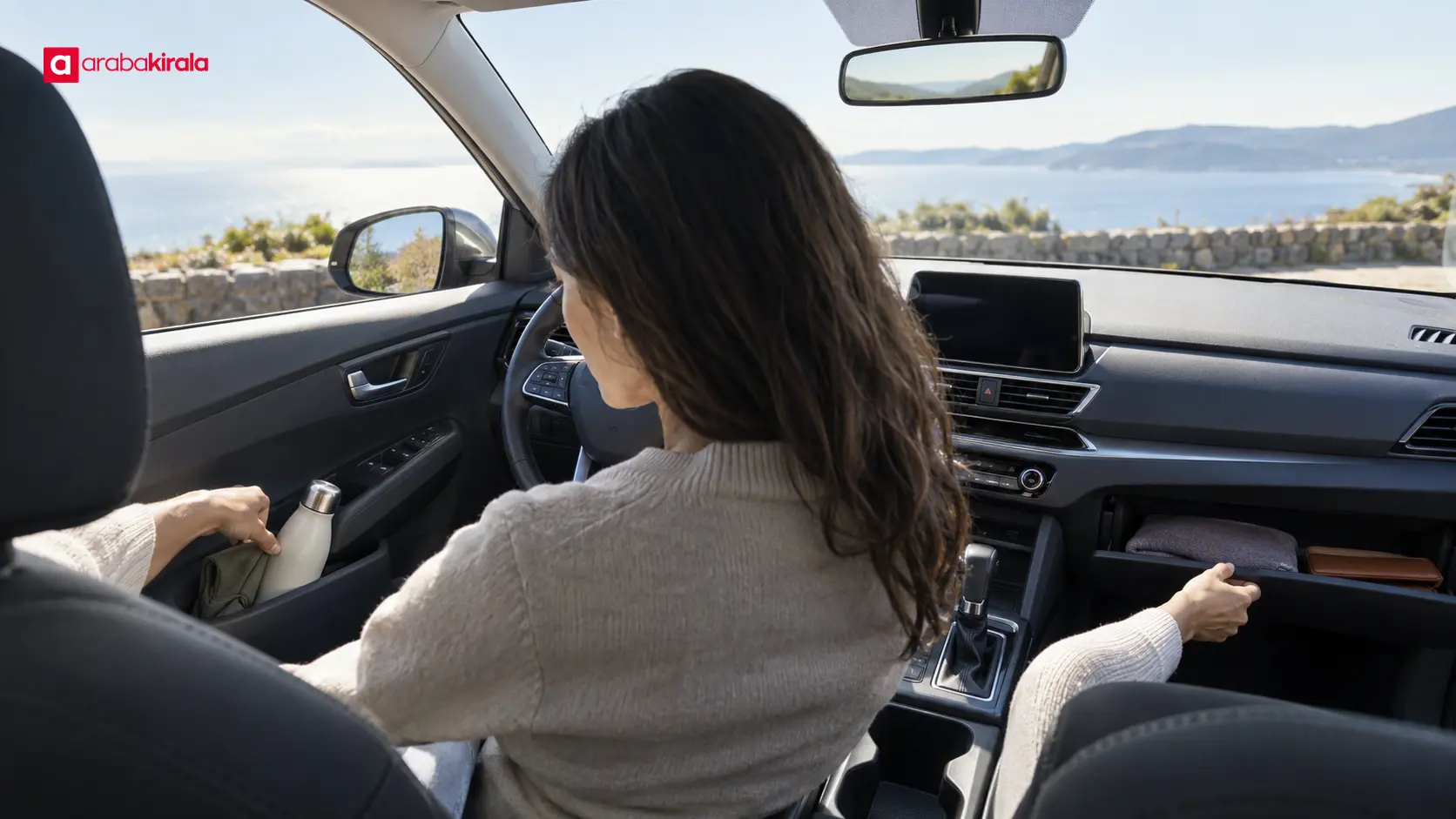
Phones, bottles, glasses, toys and charging cables are easy to leave within reach. Avoid placing them on top of the dashboard, near the pedals or between the driver’s seat and controls. An item can slide under a pedal, interfere with steering or draw attention away from the road. Put belongings in a closed glove compartment, door pocket or other storage area, provided they do not obstruct a control or prevent a compartment from closing.
A dangling ornament or cable on the rearview mirror can create visual movement in the driver’s field of view. Keep the windshield and the driver’s side window clear. If you use a phone mount, position it before moving, keep it out of the driver’s main sightline and avoid handling the screen while driving. Set the route and audio in advance.
Plan for the vehicle and the trip
Trunk shape and rear visibility differ between hatchbacks, sedans, SUVs and other body styles. When you collect the car, look at the cargo space and seat arrangement before loading. If the amount of luggage would require stacking above the rear window line, reduce or rearrange the load. The vehicle’s manual may explain the cargo area and any designated securing points. A stated luggage capacity does not by itself mean that the view will remain clear or that a load is secured.
Plan space for child seats, strollers, sports equipment and fragile items. Follow the instructions for both the child seat and the vehicle, and keep belts and attachment points accessible. If you are unsure how a cargo hook or other fitted feature works, ask the rental office before departure. For details that depend on the vehicle or the branch, confirm them with the branch where you will collect the car.
A quick check before you set off
- Sit in the driving position and check the view through the windshield and both side windows.
- Check the rear window through the rearview mirror, then adjust the exterior mirrors for your position.
- Confirm that heavy items are low and that the rest of the load cannot slide or topple.
- Store loose cabin belongings and keep the pedal area and the driver’s view clear.
- Make sure seats, belts, doors and the trunk close properly without being pressed or obstructed by luggage.
Repeat the check after rearranging the trunk or taking items in and out. If something shifts during a trip, pull over somewhere safe before fixing it. Do not reach into the rear seat or trunk while driving.
Frequently asked questions
Are the side mirrors enough if the rear window is blocked?
Exterior mirrors provide useful information, but relying on them does not remove every blind spot. Blocking the rear window also limits what the rearview mirror can show. Lowering or rearranging the load helps preserve the available view. If you are unsure how to set the mirrors in the vehicle you collected, ask the rental branch for guidance.
Can luggage rise above the back seat?
The key points are whether the load blocks a useful view and whether it can remain securely in place. Luggage above the seatback may cover the rear window or move forward under braking. Reduce the stack and choose a low, balanced arrangement whenever possible.
Does a reversing camera make luggage height irrelevant?
No. A camera shows only the area captured by its lens and may not display every obstacle around the car. Use its image alongside the mirrors and a direct check of the surroundings. Do not block the rear window on the assumption that the camera replaces other visibility checks.
Summary and next step
Keep luggage low, balanced and secure, and preserve the driver’s view through the windshield, side windows and rear window. Before driving, check the mirrors from your normal seat position and put loose cabin items away. Repeat the check if the load changes. For questions about a specific vehicle’s cargo area or a branch-specific collection detail, contact the rental office you plan to use.
Legal Disclaimer: All content, articles and information on the Araba Kirala website are provided solely to inform users. No information shared on this website constitutes definitive advice or guidance. Araba Kirala Teknoloji A.Ş. and its authors cannot be held responsible for any direct or indirect damages arising from the application of information on the website. For all questions and requests regarding car rental, please contact the office from which you will rent your vehicle.