How to Plan the Route and Timing for a Rental Car Pickup

Published: October 5, 2026 • Reading Time: 7 min • Last Updated: October 5, 2026
Learn how to find a rental car pickup point, choose a route, and leave realistic time for travel and handover steps, whether you are arriving at an airport or traveling across town.
Contents
- Where is the pickup point?
- Choosing how to get there
- For travelers arriving by air
- For city travel and public transit
- How to set a realistic time buffer
- Reservation details and contacting the branch
- Getting ready at the pickup point
- Quick planning checklist
- Frequently asked questions
- How long after landing should I plan to reach the pickup point?
- What should I do if the map pin and reservation address differ?
- Is public transit a reasonable way to reach the pickup point?
- Should I leave time for the handover itself?
- Your next step
A rental car pickup location may not be right outside the terminal doors. The rental desk, vehicle collection area, and airport exit can be in different places, and some locations require a walk or another connection. This guide explains how to confirm the exact meeting point, choose a suitable way to get there, and allow time for both travel and the handover. The aim is to arrive ready to collect the car instead of spending your pickup window searching for directions.
Where is the pickup point?
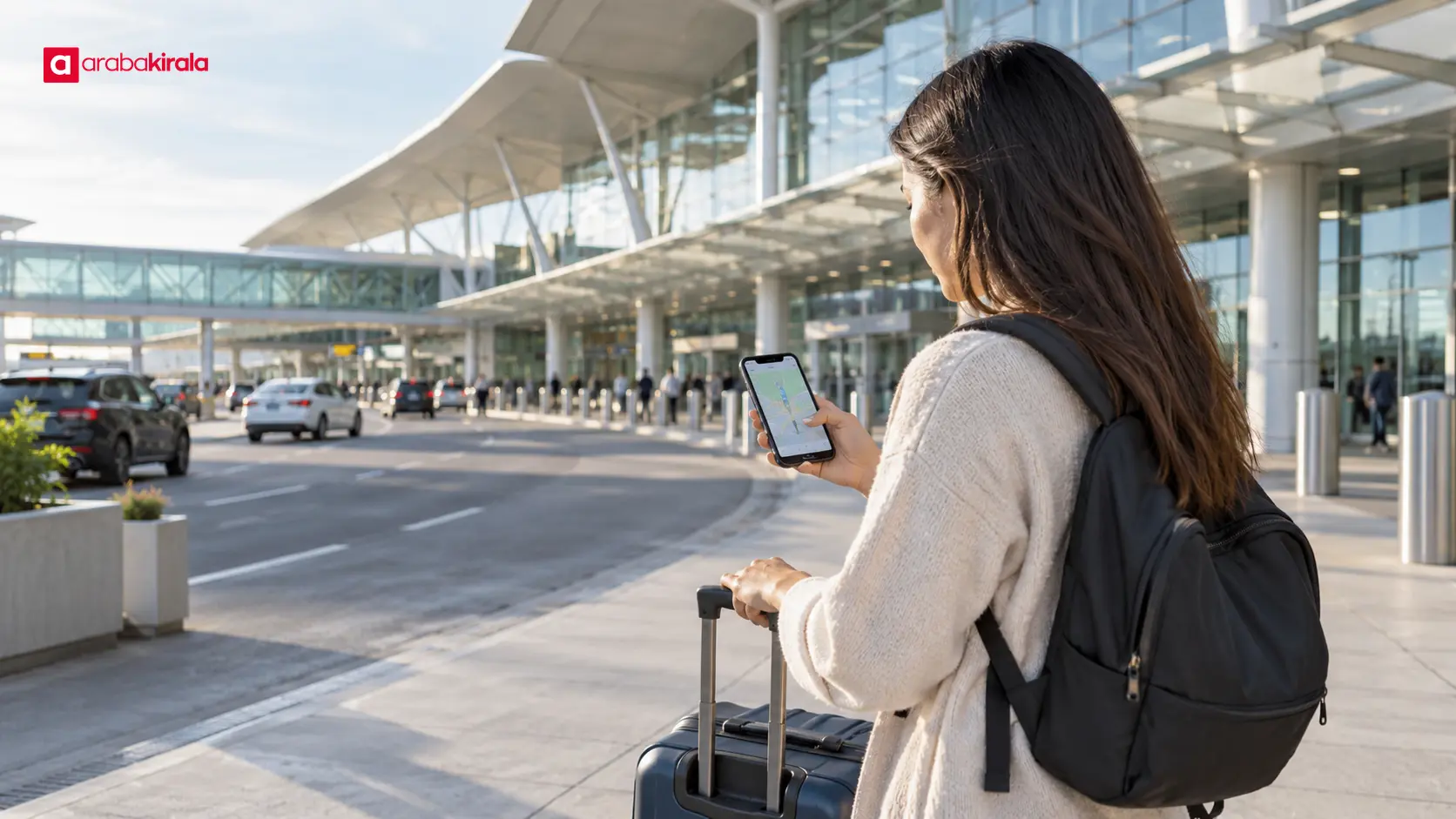
A reservation described as an airport pickup does not necessarily mean the car will be waiting at the terminal curb. The office may be inside or near the terminal, while the vehicle handover area may be in a parking facility or another designated spot. Depending on the location, the final leg might involve walking, a shuttle connection, or another form of transport. These arrangements vary by location.
Open the location details in your reservation and check the map pin. Confirm that it marks the actual office or meeting point rather than a general airport area. Note your arrival terminal and floor as well. Airports can have separate terminals with considerable travel time between them. For a pickup in a hotel, station, or city center, check which entrance or street is relevant and how to reach the vehicle area from there.
If the map and reservation details appear inconsistent, contact the branch before setting out. The branch can confirm location-specific directions, such as which exit to use, whether there is a designated meeting point, and whether the final section is on foot. This helps you plan without assuming that every location follows the same procedure.
Choosing how to get there
For travelers arriving by air
Do not calculate your transfer using flight time alone. After landing, passengers may need to wait for the aircraft to reach the gate, leave the terminal, collect checked bags, complete any airport formalities, and find the correct exit. The time required varies with the flight, airport, luggage, and crowd levels. A scheduled landing time is therefore not the same as an arrival time at the rental desk.
Use the airport's official map, if available, to inspect the route between your terminal and the pickup area. Walking distance, level changes, elevators, and shuttle connections matter more when traveling with luggage. Flight delays add another uncertainty. Ask the branch how a delayed arrival is handled and confirm the final leg of the route. Do not assume that a greeting service or waiting arrangement is automatically available.
For city travel and public transit
With public transport, count more than the time spent on the train or bus. The full trip can include the walk to the stop, waiting, transfers, platform changes, and the walk from the final stop to the pickup point. Check the service schedule again on the day of travel, especially for early mornings, evenings, and weekends when frequency may differ. Use a map estimate as a starting point, then leave additional room for transfers and walking.
A taxi or private car does not make arrival time certain. Traffic, road works, busy drop-off areas, and congestion near terminals can change the journey. Avoid relying on a single optimistic navigation estimate. If several people are traveling together, agree in advance on who handles the luggage and where to meet; this reduces unnecessary detours.
How to set a realistic time buffer
Break the plan into four parts: finding the pickup point, traveling there, completing the handover steps, and allowing for unexpected delay. The first two depend on the route and location; the third depends on the branch's process. There is no single number of minutes that fits every traveler. Ask the branch about the usual sequence and how much time to allow. Plan around the gap between your arrival and any flight, appointment, or onward journey rather than treating an estimate as a guarantee.
Put both your pickup time and your intended arrival time on your schedule. Consider the map journey separately from getting through the terminal and finding the correct area. Account for possible delays to the flight, train, or earlier appointment. If you have a later commitment, leave additional room for the handover and for getting onto the road.
Factors that can increase the time needed include:
- Moving between separate terminals or a distant parking facility.
- Rush-hour traffic, weekend congestion, or public transit transfers.
- Extra walking time for luggage, children, or mobility needs.
- Steps at pickup such as reservation and driver-detail checks, payment, or vehicle inspection.
- A delay to a flight, train, or appointment before the pickup.
Estimate each part separately. Combining several uncertain steps into one best-case travel time makes it harder to spot when the plan is running late.

Reservation details and contacting the branch
Before leaving, reread the reservation date, pickup time, and selected location. If the address, terminal, or time conflicts with another detail, contact the branch before you travel. Useful location-specific questions include which terminal or entrance to use, where the last transit stop or walking route ends, how to report a late arrival, and what documents are needed for handover. Confirm document requirements for your reservation with the branch.
If a delay becomes likely, contact the branch as early as possible. Ask how they handle details such as sharing a flight number or changing the expected arrival time; do not assume these updates happen automatically. Keep your phone charged and save the address, map, reservation confirmation, and branch contact details where you can access them offline. That preparation helps if mobile service or navigation is unreliable.
Getting ready at the pickup point
Arriving on time is only the first part of collecting the car. Keep your reservation confirmation and requested identity or driver documents easy to reach, and confirm in advance which documents are accepted. The driver information should match the reservation. Payment or security arrangements can vary by company and location, so ask the branch to explain the details before pickup.
Once the car is presented, take time to inspect it before driving away. Look over the exterior, note visible marks, and check the fuel or charge indicator and odometer. Have any observations recorded in the handover documentation and confirm that the record reflects the vehicle's condition. The odometer and fuel or charge level help compare pickup and return records; they do not, by themselves, define a mileage limit or fee. Limits and return procedures depend on the reservation and branch, so confirm those details before collecting the vehicle.
Adjust the seat, mirrors, lights, and basic controls while parked. If a warning light, damage record, or feature is unclear, ask a staff member before moving. Complete settings that could distract you while driving before you set off. It is safer to resolve a safety-related question at the pickup point than to make assumptions on the road.
Quick planning checklist
- Confirm the location, date, and pickup time in your reservation.
- Open the map pin and check the terminal, entrance, or meeting point.
- Include walking, transfers, baggage collection, and traffic in the route plan.
- Ask the branch about directions, late-arrival contact, and required documents.
- Keep the address, reservation confirmation, and branch contact details accessible offline.
- Check the vehicle condition and recorded indicators at handover.
Frequently asked questions
How long after landing should I plan to reach the pickup point?
There is no interval that suits every airport or traveler. Allow separately for leaving the aircraft, baggage, airport formalities, the transfer to the location, and the handover. Confirm your terminal and pickup point, then ask the branch what buffer fits your plan.
What should I do if the map pin and reservation address differ?
Contact the branch before setting out. Confirm which detail is current and exactly which entrance or meeting point you should use.
Is public transit a reasonable way to reach the pickup point?
It can be, depending on the distance, service frequency, transfers, luggage, and the walking conditions on the final leg. Check the schedule on the day and allow extra time for delays.
Should I leave time for the handover itself?
Yes. Reservation and document checks, vehicle inspection, and reviewing the handover record take time apart from the journey. Ask the branch about its process and leave a comfortable gap before any later appointment.

Your next step
Open your reservation, locate the pickup point on a map, and plan each part of the journey separately. Then confirm the location, late-arrival contact method, and document requirements with the branch you will use. This preparation helps you reach the pickup with more control and leaves room to inspect the vehicle before setting off.
Legal Disclaimer: All content, articles and information on the Araba Kirala website are provided solely to inform users. No information shared on this website constitutes definitive advice or guidance. Araba Kirala Teknoloji A.Ş. and its authors cannot be held responsible for any direct or indirect damages arising from the application of information on the website. For all questions and requests regarding car rental, please contact the office from which you will rent your vehicle.