Rental Car Tire Warning or Damage: Safe First Steps
Published: October 7, 2026 • Reading Time: 7 min • Last Updated: October 7, 2026
Learn how to stop safely, check a tire without tampering with it, and tell the rental office what it needs to know when a warning or damage appears.
Contents
- What does a tire pressure warning mean?
- Stop in a safe place first
- Look at the tire without working on it
- A dashboard warning and visible damage are different clues
- What to tell the rental office
- Avoid repairs you are not equipped to make
- Keep a record at pickup and return
- Frequently asked questions
- The warning is on, but the tire looks normal. Can I keep driving?
- Can I check the pressure myself?
- Should I remove an object stuck in the tire?
- If the warning goes away, is the issue resolved?
- Summary: stop safely, observe, and report
A rental car tire warning means the monitoring system has detected a possible pressure change; it does not by itself show how serious the condition is. This guide explains how to stop safely, distinguish a dashboard warning from visible damage, make a basic observation, and give the rental office useful information. A warning should be taken seriously even when the tire looks normal.
What does a tire pressure warning mean?
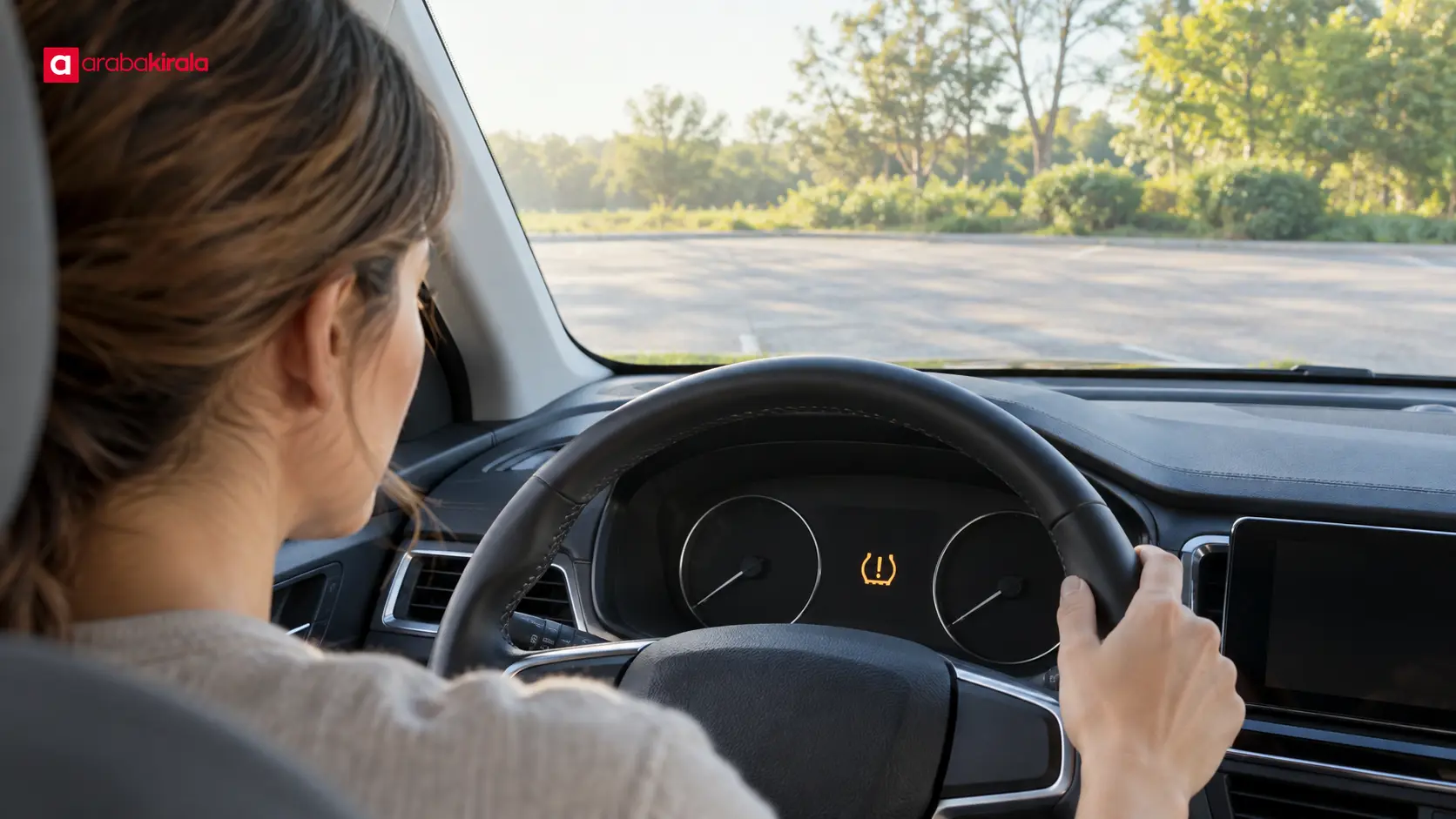
A tire pressure monitoring system can alert the driver when it detects a change in tire pressure. The symbol and message can vary by vehicle, so the owner’s manual is the best place to check what a particular alert means. When pressure falls below the vehicle maker’s recommended level, handling and the tire’s operating conditions can be affected. A puncture, a valve issue, or another condition may be involved; the dashboard alone cannot identify the cause.
The indicator may stay on, flash, or appear alongside a message, depending on the vehicle’s system. A light that goes out does not prove that the tire is sound. If the warning returns, the car pulls to one side, or you feel vibration or hear an unusual sound, find a safe place to stop and assess the situation.
Stop in a safe place first
If you notice the warning while moving, avoid sudden braking or a sharp steering movement. Reduce speed gradually and look for a suitable parking area or safe stopping point, taking traffic and visibility into account. A narrow shoulder, a bend, a tunnel entrance, or a place with limited sightlines is a poor location for inspecting the car. Until you can stop, keep steering and braking smooth and controlled.
If the car is shaking noticeably, the tire appears to be losing air quickly, or the vehicle is difficult to control, do not continue driving. Move to the safest available location. Before getting out near a road, consider traffic and whether the area around the vehicle is safe. Use warning equipment only if you can do so without stepping into moving traffic. If anyone is injured or in immediate danger, contact local emergency services.
Look at the tire without working on it
Once the car is safely parked, make a careful visual check from a safe position. Look for a tire that appears visibly low, a cut or tear, an object lodged in the tread, or obvious impact marks around the wheel. Do not reach under the vehicle, pull out an embedded object, or try to lift the car with a jack. The absence of visible damage does not confirm that pressure is correct.
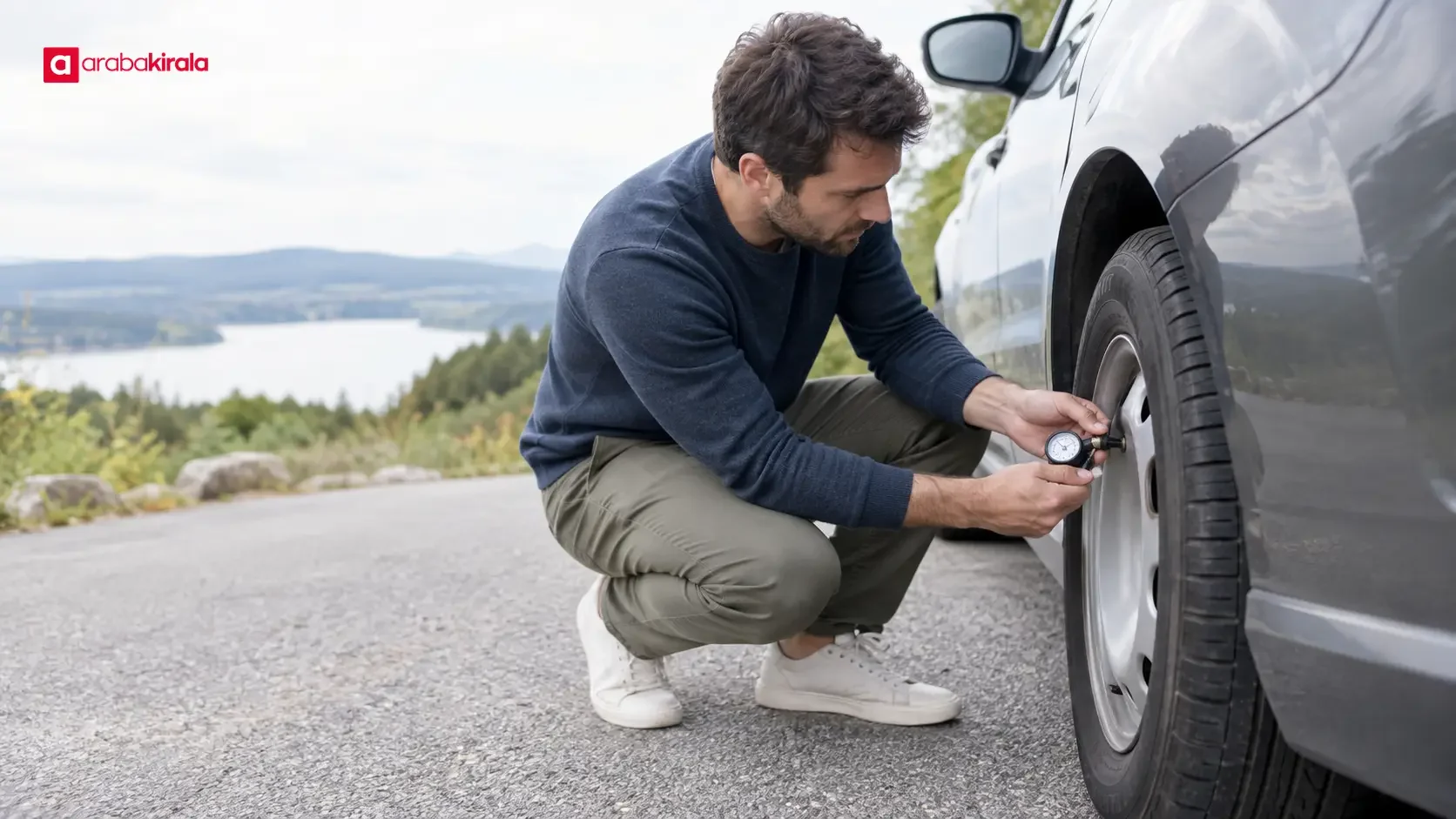
A pressure reading is useful only when taken with suitable equipment in a safe place. Compare it with the vehicle maker’s recommended figure in the manual or on the vehicle’s tire information label. The maximum pressure printed on the tire sidewall is not the normal target for everyday use. Measurements can also vary when tires are warm. If checking would put you beside traffic or leave you in an unsafe position, stop and ask for help instead.
A dashboard warning and visible damage are different clues
A pressure warning tells you that the system has detected a pressure-related condition. Visible damage may appear as a cut, bulge, puncture, or impact mark. Sometimes a warning appears without obvious damage; sometimes an object in the tire is noticed before the warning light comes on. Neither ignoring the indicator nor relying only on a visual check is a sound basis for deciding to keep driving.
A bulge in the tire sidewall, a deep cut, rapid air loss, smoke, a burning smell, or repeated thumping can signal a serious problem. Do not decide on your own to add air and carry on. Contact the rental office to ask whether the vehicle should be moved and how to get assistance. The vehicle manual may also help explain the dashboard message.

What to tell the rental office
When you are in a safe place, call the rental office or the support channel provided with your reservation. Clearly share the vehicle’s location, when the warning began, the dashboard message, and how the car behaved. Describe any visible tire damage. If you were able to take a photo safely, offer to share it. Mention whether the warning is constant or intermittent and whether you have stopped driving.
Ask whether it is appropriate to move the vehicle and what steps to follow for a tire inspection or roadside assistance. The available process can depend on the vehicle and its location. Before arranging a repair, tire change, spare tire, or replacement vehicle yourself, follow the office’s guidance. A clear report helps get the issue to the right person and makes the next step easier to understand.
Avoid repairs you are not equipped to make
Pulling an object out of a tire can increase air loss. Inflating a damaged tire, lifting the vehicle, or changing a wheel requires suitable equipment and a safe work area. Having a spare tire or repair kit in the car does not mean that it should be used for every type of damage. Do not work on a tire unless you understand the vehicle’s instructions and can make the area safe.
If the office advises you to check or add pressure, follow the vehicle maker’s recommended figures and instructions. Resetting the pressure warning does not replace a pressure check or repair. If the warning comes back, pressure falls again, or you find damage, stop driving and update the office.
Keep a record at pickup and return
At pickup, look for obvious cuts, dents, bulges, or uneven wear before setting off. Report anything you notice to the staff and ask for it to be recorded; take a photo when appropriate. If a tire warning is already displayed, ask what it means and what steps to follow before driving away. This helps distinguish a condition present at pickup from a problem that develops later.
If a warning appears during your trip, tell the staff when returning the car. A note of when it appeared, what you did, and what guidance you received can make the conversation clearer. Keep relevant photos and communication details. Follow the rental office’s explanation of any assessment or next steps; practices may vary by vehicle and location.
Frequently asked questions
The warning is on, but the tire looks normal. Can I keep driving?
A normal appearance does not confirm correct pressure or rule out damage. Check the warning in the vehicle manual and contact the rental office after stopping safely. If the car pulls, vibrates, makes an unusual sound, or appears to be losing air, do not continue driving.
Can I check the pressure myself?
You can take a reading if you have a suitable gauge and are in a safe location. Use the vehicle maker’s recommended pressure. Do not attempt a check if you would have to work beside traffic or remain somewhere unsafe. Contact the office if the reading does not resolve the warning.
Should I remove an object stuck in the tire?
No. Removing it can increase air loss. Leave the tire untouched, stop in a safe location, and ask the rental office what to do next.
If the warning goes away, is the issue resolved?
Not necessarily. A warning disappearing does not prove the tire is safe. Pay attention to whether it returns, how the vehicle behaves, and what you can see. If you are unsure, contact the office before driving on.

Summary: stop safely, observe, and report
When a rental car shows a tire warning or damage, slow down smoothly and stop somewhere safe. Observe the tire without touching it, and note the warning message, the car’s behavior, and your location. If the warning persists or you see damage, ask the rental office for guidance before deciding to continue. Checking the tires and dashboard at pickup, then documenting anything that happens during the trip, helps make the next steps clear.
Legal Disclaimer: All content, articles and information on the Araba Kirala website are provided solely to inform users. No information shared on this website constitutes definitive advice or guidance. Araba Kirala Teknoloji A.Ş. and its authors cannot be held responsible for any direct or indirect damages arising from the application of information on the website. For all questions and requests regarding car rental, please contact the office from which you will rent your vehicle.