When Do Traction Control and Electronic Stability Control Activate?
Traction control and electronic stability control are driver assistance systems that can help a vehicle maintain its intended direction when grip changes or a manoeuvre challenges its balance. They are related, but they do different jobs. Traction control focuses mainly on limiting wheelspin at the driven wheels during acceleration. Electronic stability control monitors whether the vehicle’s movement matches the driver’s steering input and may intervene when the vehicle starts to deviate. Knowing when these systems can activate, how to read their indicators, and where their limits lie helps drivers respond calmly and choose safer speeds.
What is traction control?
Traction control helps detect when one or more driven wheels spin faster than expected because the tyres have lost grip. The system uses information from wheel speed sensors and, depending on the vehicle, other sensors. If wheelspin passes a threshold set by the manufacturer, the system may reduce engine torque or apply braking to an individual wheel. This can give the tyre a better chance to regain contact and traction.
The assistance can be useful on wet pavement, snow, ice, gravel, mud, or other surfaces where acceleration is more likely to cause wheelspin. The system does not create grip, however. It cannot make a slippery surface safe or replace smooth throttle use. Its precise operation, thresholds, dashboard symbol, and available driver settings vary by vehicle, so the owner’s manual is the best guide to a specific car.
What does electronic stability control do?
Electronic stability control, often abbreviated ESC, is designed to help the driver maintain directional control. It compares information such as steering angle and individual wheel speeds with the vehicle’s rotational movement. If the vehicle’s actual path or rotation differs from what the steering input suggests, the system may apply braking to selected wheels and reduce engine torque.
This may happen when the vehicle begins to push wide through a bend or when the rear starts to move outward. These descriptions are general examples, not a promise that the system will correct every slide. The intervention depends on factors such as speed, road surface, tyres, vehicle load, and the system’s design. ESC is not self-driving and does not steer the car independently along a safe line. The driver remains responsible for steering, speed, and attention to road conditions.
How are the two systems different?
Traction control and ESC may share sensors and braking hardware, and traction control is often integrated with broader stability control. Their main purposes are still distinct. Traction control addresses driven-wheel spin, especially under acceleration. ESC responds to a mismatch between the driver’s steering direction and the vehicle’s movement or rotation.
Reducing wheelspin does not mean the tyres will retain grip in every bend. Likewise, an ESC intervention cannot remove the physical limits of tyre contact with the road. Both systems work best as a supplement to a suitable speed, adequate following distance, smooth steering, and gradual acceleration. If an indicator flashes or the vehicle feels unstable, easing off the accelerator and making measured steering inputs is generally more useful than trying to overpower the intervention.
When might the systems activate?
When a driven wheel spins during acceleration
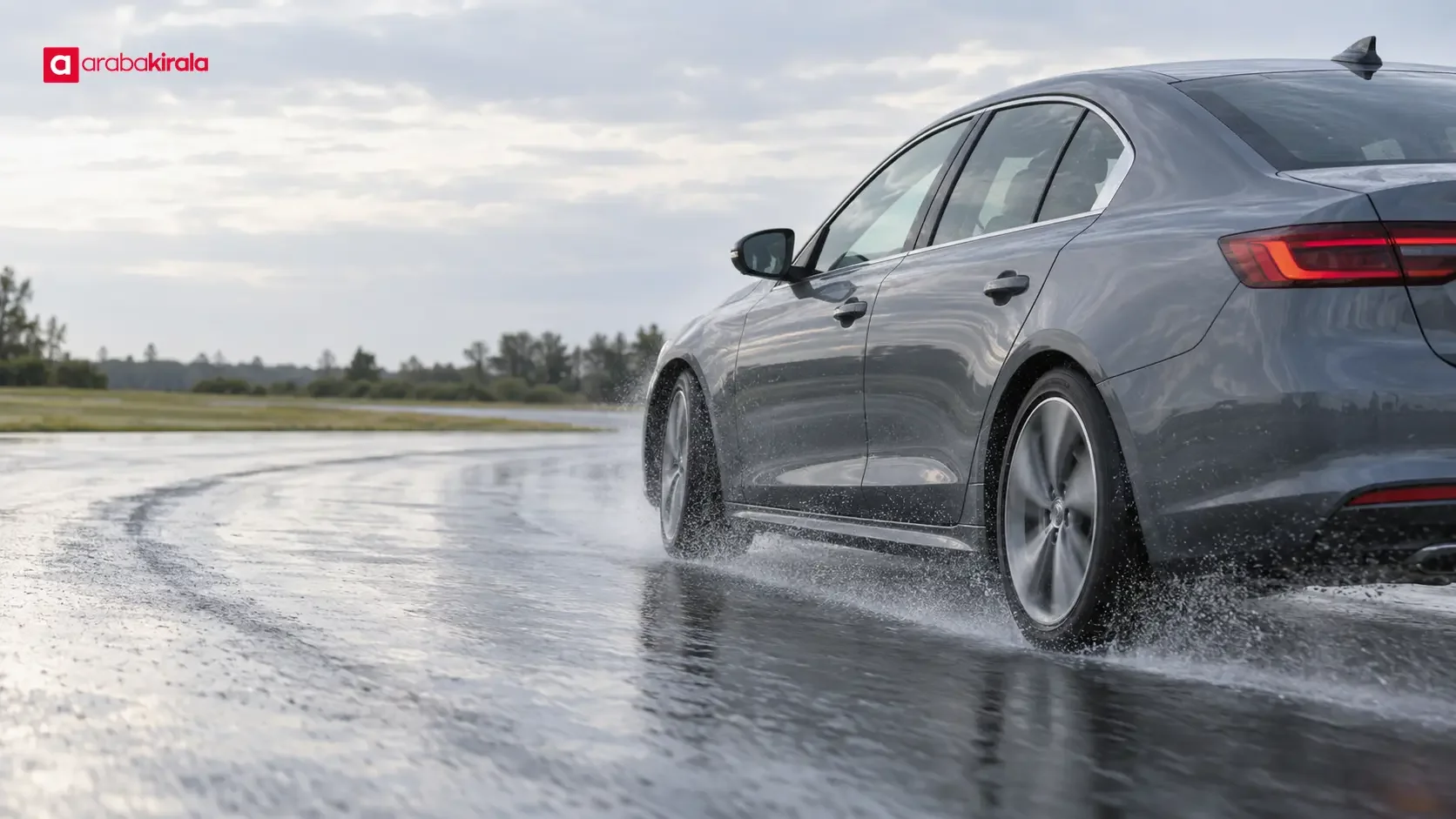
Applying too much throttle on a wet, icy, snowy, muddy, or loose surface can cause a driven wheel to spin. Traction control may detect the difference in wheel speeds and respond by reducing engine output or braking a wheel. The driver may notice a brief reduction in acceleration, a light braking sound, or a flashing traction symbol. The exact signals and sensations vary, so consult the vehicle manual rather than assuming every model behaves alike.
When the vehicle starts to deviate in a turn
Entering a bend too quickly for the conditions, making an abrupt steering change, or crossing a surface with uneven grip can challenge the vehicle’s balance. If ESC detects that the vehicle is not turning as the steering input indicates, it may briefly brake selected wheels and adjust torque. A flashing stability symbol can indicate that the system is intervening. It is a cue to reduce speed and keep steering inputs smooth, not an invitation to accelerate and rely on the electronics to finish the turn.
When grip changes suddenly
Water, ice, snow, sand, or debris can make tyre grip vary across the road or between wheels. That difference can affect wheel speed and the vehicle’s direction, particularly while accelerating or changing direction. The systems may detect the change and try to limit the resulting loss of control. They do not remove water or debris, improve the road surface, or guarantee that the tyres will remain in contact with it. Lower speed and greater space remain important.
What do the dashboard lights mean?
On many vehicles, a skidding-car or traction symbol flashes while a system is actively intervening. This may indicate that a wheel is nearing its grip limit or that assistance is operating. A light that stays on may indicate that the system has been switched off, limited, or has a fault. The meaning differs across manufacturers and models, and some vehicles display a separate message. Check the owner’s manual for the exact symbol and message on the vehicle you are driving.
If the warning stays on during ordinary driving, appears with another fault message, or the vehicle behaves unexpectedly, stop in a safe place and consult the manual. If the warning persists, arrange appropriate technical assistance. Do not try to clear a warning while driving or ignore a suspected fault simply because the car still moves.
Should a driver switch the systems off?
Some vehicles let the driver limit traction control or part of the stability system; others provide fewer choices. The button may change only one function, and the system may reactivate under conditions described by the manufacturer. Read the manual to understand what the control actually does. On ordinary roads, switching off assistance does not provide extra tyre grip and can remove help that limits wheelspin or directional deviation.
A manufacturer may describe a temporary setting for a specific situation, such as a vehicle stuck in deep snow or loose ground. This is not a universal procedure. If the vehicle manual does not recommend a particular setting, do not experiment with disabling systems as a recovery method. Use a safe, vehicle-appropriate recovery option and check when the assistance returns to its normal state.
Practical driving guidance
- Reduce speed in rain, snow, ice, or on loose surfaces. Use the accelerator and steering smoothly.
- Leave more space to the vehicle ahead. These systems do not guarantee shorter stopping distances.
- Maintain tyres according to the vehicle maker’s guidance. Worn, damaged, or unsuitable tyres limit the benefit of electronic assistance.
- If a traction indicator flashes, avoid sudden throttle inputs. Ease off gradually and keep steering movements controlled.
- Learn the dashboard symbols, controls, and driving mode options from the owner’s manual.
- Before driving an unfamiliar or rental car, identify the basic controls and warning indicators. Ask the rental branch for vehicle-specific explanations when needed.
What should you check in a rental car?
Dashboard symbols, menus, and settings for traction control and stability assistance can differ between vehicles. Before setting off, review the relevant part of the manual and identify any controls that affect these systems. If a fault warning is present or a control’s function is unclear, ask the branch where you collected the vehicle for an explanation before driving. The presence of these systems should not be treated as a guarantee of safe handling in every road or weather condition.
Frequently asked questions
Are traction control and electronic stability control the same thing?
No. Traction control mainly helps limit driven-wheel spin during acceleration. ESC monitors whether the vehicle’s movement is consistent with the driver’s steering input and may help reduce a loss of directional control. The systems may share components, but their main functions differ.
Does a flashing indicator mean there is a fault?
Not necessarily. On many vehicles, a flashing symbol signals that assistance is intervening. A steady light or a light accompanied by a message may indicate another status. Use the manual for the specific vehicle to interpret it.
Can these systems prevent every skid?
No. They can help manage wheelspin or a developing loss of directional control, but they cannot change road conditions, restore worn tyres, or overcome the limits of tyre grip. Safe speed and attentive driving remain essential.
Should ESC remain on during normal driving?
Follow the vehicle manufacturer’s instructions for normal use and learn what any switch changes before operating it. Use a reduced or disabled setting only where the manual describes it. Do not assume all vehicles provide the same setting or recommend the same use.
Legal Disclaimer: All content, articles and information on the Araba Kirala website are provided solely to inform users. No information shared on this website constitutes definitive advice or guidance. Araba Kirala Teknoloji A.Ş. and its authors cannot be held responsible for any direct or indirect damages arising from the application of information on the website. For all questions and requests regarding car rental, please contact the office from which you will rent your vehicle.