How WRC Four-Wheel Drive Works on Loose Surfaces
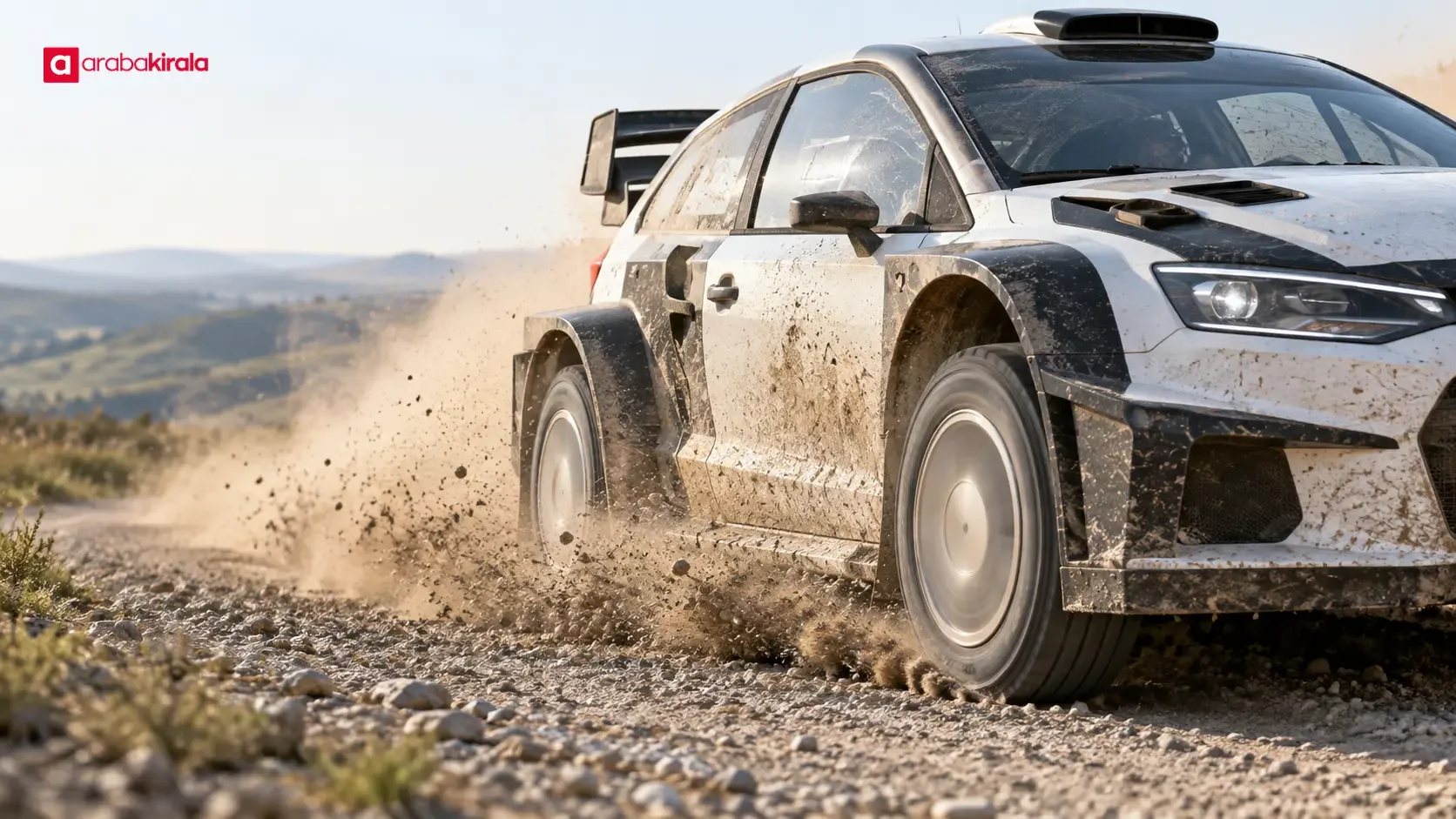
The WRC four-wheel-drive system sends engine torque to both axles, helping a rally car make progress on gravel, dirt and other loose surfaces. Driving all four wheels does not mean the car cannot slide or that it will turn through a corner by itself. Tire grip remains limited, and acceleration, braking and steering all make demands on the same contact patches. Understanding the system means looking at how torque reaches the axles, how differentials manage wheel speeds, and how tires interact with changing ground.
What four-wheel drive does
In a two-wheel-drive car, engine torque is delivered to either the front or the rear wheels. In a four-wheel-drive rally car, the driveline can deliver torque to both the front and rear axles. That gives more driven tires a chance to contribute to acceleration. On gravel, snow or dirt, the grip available at each wheel can vary. If one driven tire reaches a low-grip patch, the other driven wheels may still help move the car forward.
This does not create unlimited traction. The tire, surface, load on each wheel and driver inputs all matter. Four-wheel drive offers more ways to use the grip that is available; it does not remove the physical limits of that grip. Applying too much throttle can spin all four tires. Steering also asks the tires to generate lateral force, so the balance between turning and accelerating matters.
Center differential and power between axles
During a corner, the front and rear axles do not travel exactly the same path. Their wheels may also rotate at different speeds, depending on the corner, tire size and surface. A center differential, or another part of the driveline arrangement, helps accommodate differences in speed between the axles while transmitting torque to both.
Rally drivetrains can differ according to the car's class and technical regulations. Electronically controlled differentials or different locking characteristics can change how torque moves between the axles. The way a setup feels on corner entry, through the middle and on exit depends on mechanical settings, tires, the surface and driver preference. It is therefore inaccurate to describe every WRC car as having one fixed torque split or identical differential settings.
What the front and rear differentials do
Each axle's differential allows its left and right wheels to rotate at different speeds in a corner. A differential with a locking function can limit that speed difference and change how torque is delivered. On loose ground, this may help one wheel contribute to forward motion when its partner has less grip. The degree and timing of locking also affect how the car responds to steering.
The front differential's behavior can influence how much the nose tends to run wide under power. The rear differential's character can affect whether the rear axle follows the line or rotates more under throttle. These effects do not act alone: center driveline behavior, suspension, tires, weight distribution and the driver's coordination of throttle and steering also shape the result. A differential does not turn the car through a corner on its own; it influences how torque is shared between wheels.
Why grip changes on loose ground
Compared with asphalt, gravel or dirt can move more easily beneath a tire. As the tire grips, it can compact, push aside or slide over small particles. Grip therefore varies from one part of the road to another. A hard-packed wheel track may feel different from a loose shoulder, just as dry dirt differs from damp gravel. Tire tread and pressure affect how the car meets the surface, and rally teams choose them for the conditions.
Four-wheel drive helps most visibly during acceleration because more driven wheels can contribute. In a corner, however, the tires must also generate sideways force to change the car's direction. If they are asked for too much torque and too much steering force at once, they may slide. The driver manages that demand by modulating throttle, steering appropriately and matching speed to the surface. Four-wheel drive does not guarantee a shorter braking distance either; braking remains limited by tire grip and road conditions.
Throttle, steering and weight transfer
Under acceleration, the load on the car tends to shift rearward; under braking, it tends to shift forward. This load transfer affects how firmly each tire presses on the ground and the grip it can use. A rally driver applies throttle progressively to let the tires find purchase. Braking before a corner, steering through it and accelerating on exit are connected stages. Their timing and intensity depend on the surface and the car's setup.
Controlled sliding can be part of rally driving, but a slide is not automatically fast or safe. Too much angle or wheelspin can cost speed and disrupt the line. Four-wheel drive lets a driver use throttle to influence the car and draw on traction as the car exits a corner, but it does not remove the need to choose a suitable speed and path. Techniques used on a rally stage are not advice for use on public roads.
How the system affects different parts of a corner
Approaching the corner
Before a corner, braking is chiefly about managing the car's speed and balance. Powering all four wheels does not change the basic job of the brakes: the driver can brake only within the grip the surface allows. Ruts, loose material and changing grip can affect stability, so speed and line selection matter.
At the middle of the corner
Steering asks the car to change direction while the driven tires may also be asked to deliver torque. The way power reaches the front and rear axles can influence the car's tendency to turn. The driver senses whether the front is following the line and how much the rear is moving, then adjusts inputs. The response changes with surface, speed and differential setup.
Exiting the corner
As the car points toward the exit, the driver can add throttle. Four-wheel drive sends torque to both axles, allowing more than one pair of wheels to contribute to acceleration. Early or excessive throttle can still cause wheelspin; having four driven tires does not guarantee that the car will hold its line. The aim is to accelerate without using up the available grip.
Why this is useful when renting a car
A WRC car's four-wheel-drive system does not mean that an everyday rental car has the same drivetrain or behaves like a competition car. The drive layout, tires and electronic driving aids in a road car vary by model. When choosing a vehicle, consider your route, intended use and weather rather than relying on the words “four-wheel drive” alone. For snowy, muddy or rough roads, ask the branch where you will rent whether the vehicle is suitable for that use and what equipment it has.
Before taking the car, read the owner's manual section on the drivetrain and driving modes. Confirm from the model's technical information whether its four-wheel-drive description means continuous drive or a system that engages when needed. Tire suitability for the season and route matters as much as the drivetrain. Learn an unfamiliar driving mode before setting off instead of experimenting while moving. If a warning light appears, stop somewhere safe and contact the branch you rented from.
Frequently asked questions
Why can a four-wheel-drive rally car accelerate better on loose ground?
Because engine torque can reach both axles, more driven tires can contribute to acceleration. That benefit exists only within the grip the tires and surface can provide. If all the tires spin, the force moving the car forward falls.
Does four-wheel drive prevent a car from sliding?
No. The system helps deliver traction to the wheels, but it cannot eliminate sliding. Cornering speed, steering and throttle inputs, tires and available surface grip all affect the car's balance.
Does a locked differential always increase traction?
Locking can limit the speed difference between wheels and help torque delivery in some conditions. Its effect depends on the setup and surface, and it can change the car's turning response. No single setting is best for every corner and surface.
Does a four-wheel-drive car stop in a shorter distance?
Four-wheel-drive propulsion does not by itself shorten stopping distance. Braking depends on the tires, road, speed and condition of the braking system. A four-wheel-drive car still needs to be driven at a speed suited to the conditions.
Legal Disclaimer: All content, articles and information on the Araba Kirala website are provided solely to inform users. No information shared on this website constitutes definitive advice or guidance. Araba Kirala Teknoloji A.Ş. and its authors cannot be held responsible for any direct or indirect damages arising from the application of information on the website. For all questions and requests regarding car rental, please contact the office from which you will rent your vehicle.