
What Does Underbody Protection Do on a WRC Rally Car?
Published: October 10, 2026 • Reading Time: 7 min • Last Updated: October 10, 2026
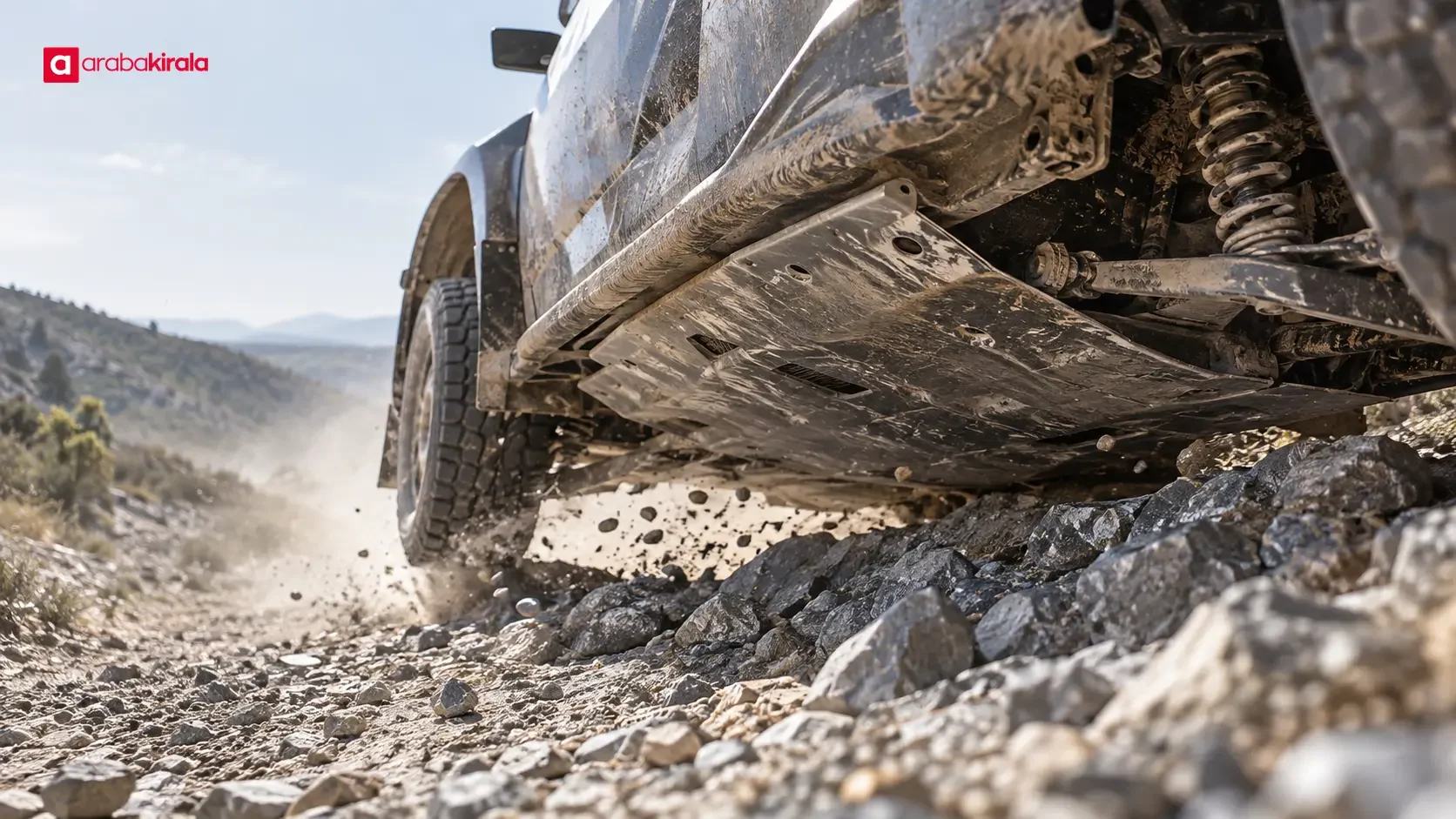
Underbody protection on WRC rally cars helps reduce the risk of stones and rough ground damaging components beneath the car. This guide explains what the panels do, their limits, and how rally equipment differs from a road car’s undertray.
Contents
- What is underbody protection?
- How does it help on rough, stony ground?
- It keeps impacts away from vulnerable components
- It forms a barrier against flying stones
- It helps manage contact with the ground
- Which parts may be protected?
- Limits and the role of technical rules
- How rally protection differs from a road car undertray
- Practical guidance when using a rental car
- Summary and next step
- Frequently Asked Questions
WRC rally car underbody protection helps shield low-mounted mechanical parts from impacts on rocky, uneven stages. This guide explains how protective panels work, which components they may cover, where their limits lie, and why a rally car’s equipment should not be assumed to match a rental road car.
What is underbody protection?
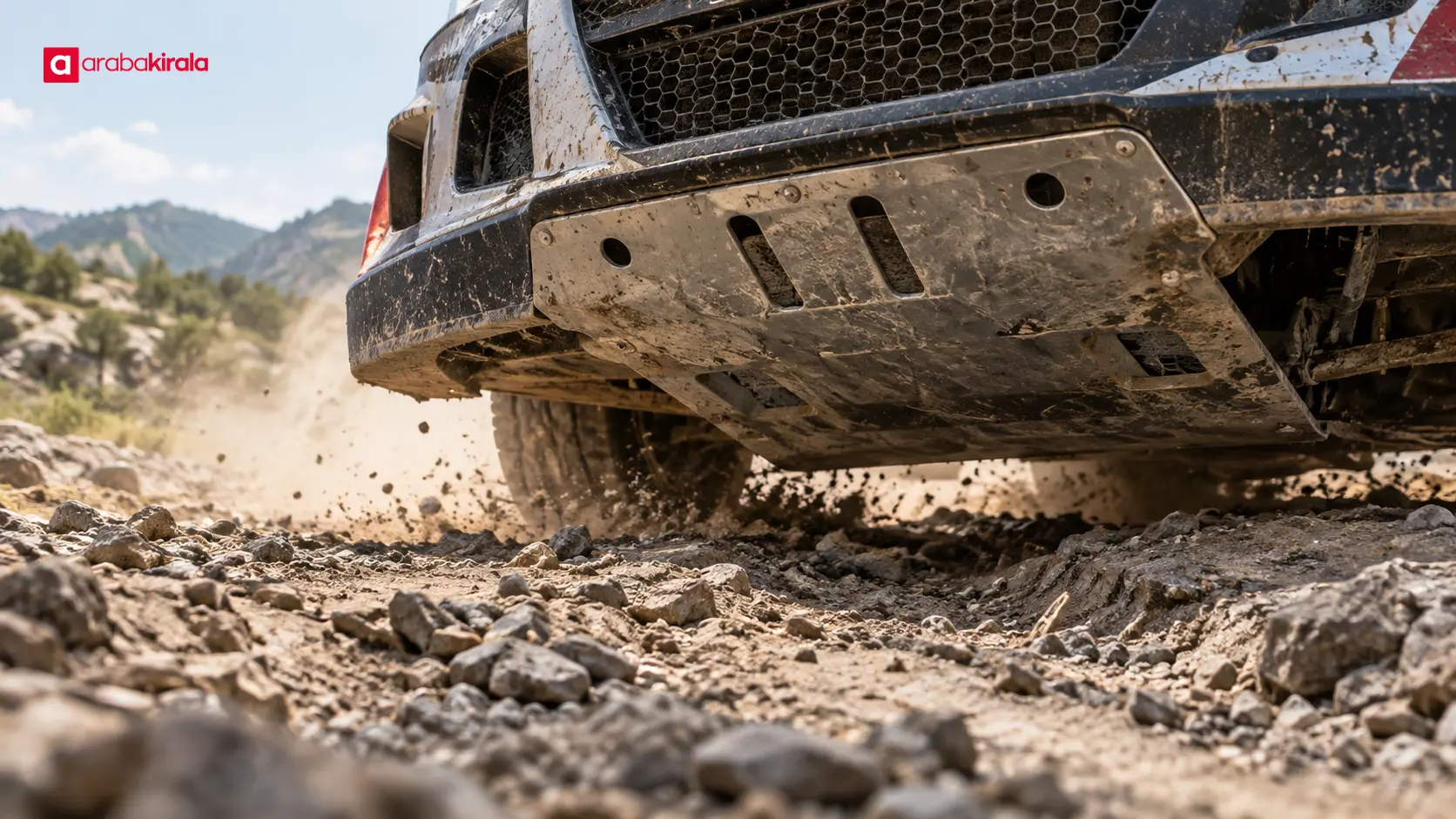
Underbody protection is a general term for durable panels or guards fitted below or in front of vulnerable parts beneath a vehicle. In a rally car, these components are intended to reduce direct contact between stones or the ground and the mechanical systems underneath. There is no single universal plate: its shape and coverage depend on the car’s design, the parts to be protected, and the technical rules that apply.
The FIA’s 2026 R-GT technical regulations provide a concrete example of the components that may be covered by rally underbody protection: the engine, radiator, suspension, gearbox, fuel tank, transmission, steering, exhaust and extinguisher bottles. That document does not describe every technical feature of a WRC Rally1 car, but it shows how broad the protection task can be. Different categories and vehicles may follow different rules, so one regulation should not be treated as a complete specification for all WRC cars.
How does it help on rough, stony ground?
It keeps impacts away from vulnerable components
When a rock strikes the underside, a guard sits between the obstacle and the mechanical part behind it. The panel is meant to manage the contact and reduce the chance that the impact reaches a sump, gearbox casing or another component directly. It does not erase the force of the impact. A sufficiently hard hit can bend the guard, stress its mounting points or transfer force elsewhere, so underbody protection cannot guarantee that a car will emerge from every rut or rock unharmed.
It forms a barrier against flying stones
Loose stones thrown up by tyres can reach the underside of a rally car. Protective elements help reduce the chance of a direct strike on exposed or low-mounted components. Coverage matters: areas left open, wheel surrounds and attachment points may not receive the same protection as the panel itself.
It helps manage contact with the ground
Ruts, crests, wheel tracks and uneven transitions can bring the underside close to the surface. A guard may become the part that slides or scrapes first, helping prevent a component from catching directly on the ground. This depends on ground clearance, suspension movement, vehicle design, the route and the line taken through it. A panel does not make ground contact irrelevant.
Which parts may be protected?
The underside of a rally car includes more than the engine area. The FIA R-GT regulation lists components such as the engine, radiator, suspension, gearbox, fuel tank, transmission, steering system and exhaust. That illustrates the range of systems under consideration, but the layout of a particular car depends on its category and homologation. It would be inaccurate to claim that every WRC car carries the same plate or protects every part in the same way.
Panel design also has to work with maintenance and cooling needs. A larger panel is not automatically a better solution: access for servicing, weight, mounting points, ground clearance and airflow all matter. That is why copying a component from a rally car or adding an improvised sheet beneath an ordinary car is not a sound conclusion to draw from motorsport equipment.
Limits and the role of technical rules
Underbody protection is only one part of a rally car’s safety and engineering package. It does not replace the safety cell, seats, roll cage or other structures that address different risks to the crew. FIA material on rally safety discusses occupant protection separately. The purpose of an underbody guard is to help protect mechanical components from contact with the ground; it should not be described as complete occupant protection in a crash.
Technical regulations also define how protection may be used. For example, the 2026 FIA R-GT text requires relevant underbody guards to be removable and to respect ground clearance. This is a reminder that rules are category-specific. An older rule, a different class or a single car example should not be presented as a definitive current requirement for every WRC vehicle.
How rally protection differs from a road car undertray
A production road car may have an engine undertray that helps protect against dirt, splashes and small stones; on some models it also contributes to the underbody’s aerodynamic design. Materials and construction vary by vehicle. Rally protection is designed around the competition car’s structure and regulations, with the aim of managing impacts and ground contact during stages. The two should not be treated as equivalent simply because both are panels underneath a car.
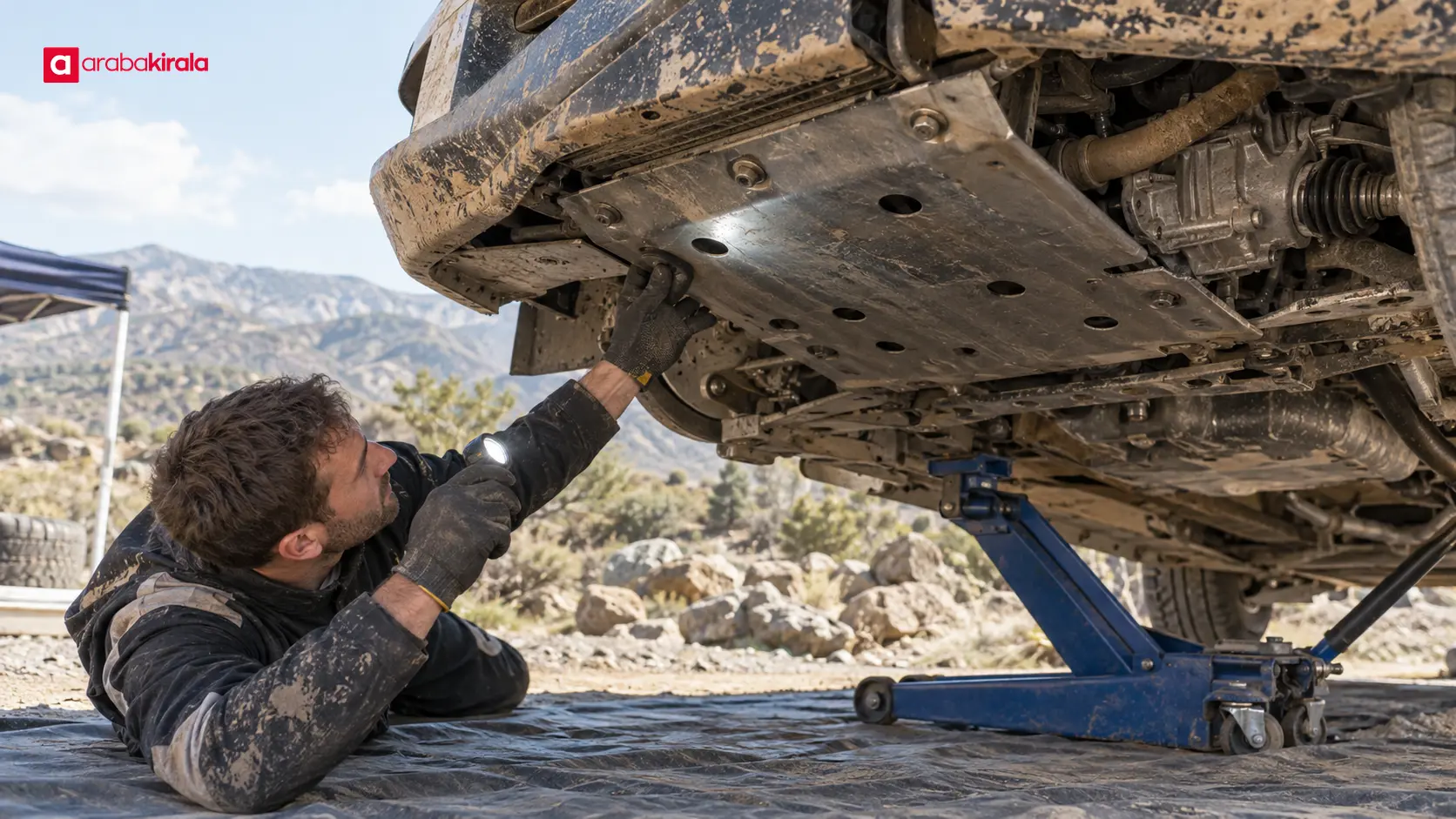
If a road car’s undertray is damaged, loose or hanging down, it may scrape the ground or interfere with other parts. Rather than getting underneath the vehicle to inspect it, stop somewhere safe and follow the owner’s manual or seek a service inspection. Securing a damaged panel with an unsuitable fastener can create additional problems while driving.
Practical guidance when using a rental car
A WRC car and a rental road car are designed for different use. A rally car’s underbody protection is part of equipment developed for demanding stages; it does not mean a rental car has comparable protection or is suitable for rough tracks. Avoid taking a vehicle onto surfaces it is not designed for, consider the route and road conditions, and follow the vehicle’s manual.
- If you notice visible damage to the lower body when collecting the car, point it out before departure and ask for it to be recorded.
- After a hard impact, scraping noise, fluid leak or dashboard warning, stop in a safe place. Do not crawl beneath the car; contact the branch from which you rented it for guidance.
- If you are unsure whether the vehicle is suitable for a particular route or surface, ask the branch handling your reservation or handover for information specific to that car.
- Report any impact or symptom you notice before returning the vehicle. Clear handover and return records help establish what was observed and when.
Summary and next step
WRC rally car underbody protection is a barrier between the ground and mechanical parts, helping manage stone strikes, scraping and impacts from below. It can reduce the risk of damage to components such as the engine or gearbox, but it cannot prevent every impact, cover every area or be assumed to work like a road car’s undertray. When planning a trip in a rental vehicle, avoid surfaces outside its intended use and ask the branch handling the car for vehicle-specific guidance.

Frequently Asked Questions
Which parts does WRC rally car underbody protection cover?
It depends on the car’s category and design. The FIA R-GT regulation lists parts such as the engine, radiator, suspension, gearbox, fuel tank, transmission, steering and exhaust. This does not mean every WRC car uses an identical layout.
Does underbody protection prevent damage on rocky stages?
No. It helps reduce the chance of stones or ground contact directly damaging mechanical parts, but a severe impact can damage the panel or its mounts. It is not a guarantee that the car will remain undamaged.
Is a rally car’s underbody guard the same as a normal car’s engine undertray?
The purposes can overlap, but their design goals differ. Rally guards are designed around a competition car and its applicable rules, while a road car undertray is designed for a particular production model.
Can underbody protection affect ground clearance?
Fitting a panel can affect the geometry beneath a vehicle, so it is considered as part of the overall design. The FIA R-GT text includes a ground-clearance condition for relevant guards. A rule for one category should not be applied to a different vehicle without checking its own specifications.
Can I take a rental car onto a rocky or rough road?
That depends on the vehicle, the road and the rental arrangement. If you are uncertain, ask the branch handling the handover for information about that vehicle and route. Do not assume a rental road car has the equipment fitted to a WRC car.
What should I do if I hear a bang underneath the car?
Stop somewhere safe and look from a safe position for a leak, warning light or change in how the car drives. Do not get underneath it. Contact the rental branch and follow its guidance.
Legal Disclaimer: All content, articles and information on the Araba Kirala website are provided solely to inform users. No information shared on this website constitutes definitive advice or guidance. Araba Kirala Teknoloji A.Ş. and its authors cannot be held responsible for any direct or indirect damages arising from the application of information on the website. For all questions and requests regarding car rental, please contact the office from which you will rent your vehicle.