How WRC Rally Stages, Service Parks and Pace Notes Work Together
WRC rally stages, service parks and pace notes are distinct parts of an event, yet each helps shape how the competition unfolds. Special stages are closed-road sections where crews are timed. A service park is a scheduled place for teams to inspect and work on their cars. Pace notes are concise descriptions that help a driver anticipate the road ahead. Seeing how these pieces connect makes it easier to understand why a rally involves much more than driving quickly on a single stretch of road.
The detailed programme varies from one rally to another. Stage count, surface, weather, service arrangements and spectator access depend on the event. This guide describes the general structure; for a specific rally, use the organiser’s current itinerary and spectator information. The explanations follow the general descriptions published in FIA and WRC information materials.
What is a special stage?
A special stage is a section of route closed to normal traffic for competition and timed for each crew. Teams complete a series of stages, and the overall classification reflects their accumulated results across the rally, together with any applicable controls or penalties under the event rules. A fast time on one stage matters, but consistency and completing the whole programme matter too.
Between stages, crews travel along route sections set out by the organiser. These links are not timed special stages and often use roads that remain open to normal traffic. Crews must follow the applicable traffic rules and event instructions while travelling between competition sections. Keeping the stage and road section concepts separate helps make sense of the timetable, live coverage and results.
Stage, road section and time control
- Special stage: A closed-route competition section where elapsed time is recorded.
- Road section: A route connecting stages, service points and other event locations.
- Time control: An organiser’s point where a crew’s arrival time is recorded according to the schedule.
After reaching a stage finish, a crew does not simply leave the rally programme. It continues to the next control, stage or service point by following the route. The official itinerary sets out the order and scheduled timings for these movements. WRC’s general definition of an itinerary describes it as the official schedule showing where and when stages, service halts and other key activities take place.
How do pace notes help the driver?
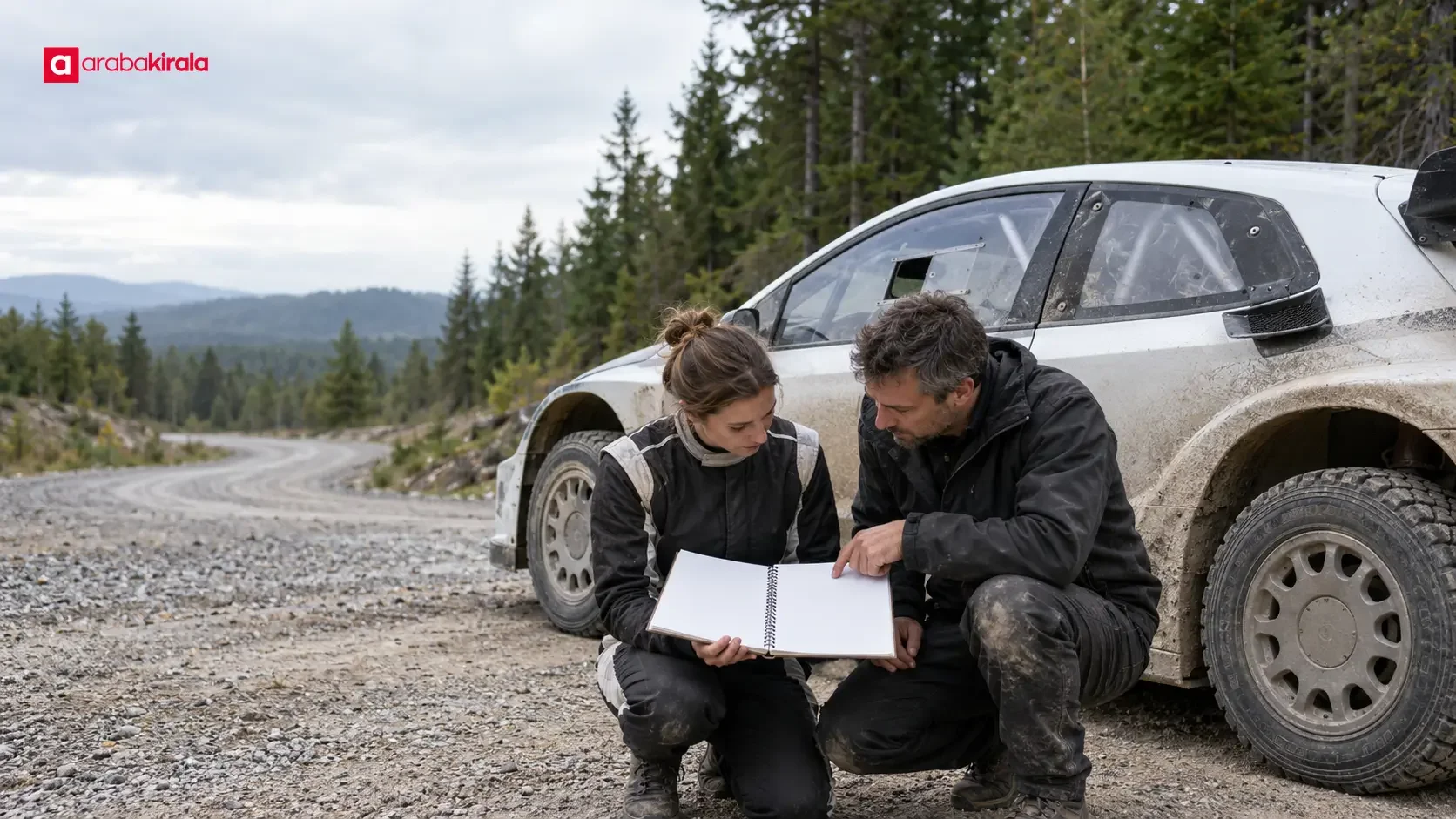
Pace notes are a concise system of descriptions for the road ahead, using phrases and symbols understood by the driver and co-driver. The co-driver reads them while the car is moving, giving the driver advance information about the direction and severity of bends, how the road flows, and hazards identified in the notes. That advance information allows the driver to prepare for what is coming instead of reacting only when a feature appears in view.
There is no requirement that every crew’s notes look or sound identical. What matters is that the two people in the car interpret their shared system consistently. A crew may use numbers for corner severity, abbreviations for direction and additional warnings. The meaning of a particular call can differ by system, so a phrase heard in a broadcast should not be treated as a universal speed instruction. Notes describe and warn about the route; they do not guarantee what speed is safe in the conditions.
WRC’s general description says crews inspect the route in reconnaissance before competition and use those passes to create or refine their pace notes. Reconnaissance is not a full-speed competitive run. It gives a crew an opportunity to learn the road and make its descriptions clear and usable. That preparation supports the co-driver’s delivery of information in time and in a form the driver understands.
What can pace notes describe?
A note system can describe corner direction and severity, the distance or connection between bends, changes in road width, crests and visibility, or features of the surface and roadside that require attention. Not every event or crew note should be assumed to cover the same details. The aim is not to narrate every feature of the surroundings like a road atlas; it is to communicate useful route information briefly while the driver is managing the car.
The usefulness of notes depends on how accurately and consistently a crew applies them. Road conditions can change between passes, and rain, loose material or marks left by earlier cars can affect how a section feels. Pace notes are one part of a team’s understanding of the route, not a tool that predicts every condition perfectly. Drivers and co-drivers use them within the event’s rules and safety framework.
The role of the service park
A service park is a designated area where team technicians inspect, maintain and repair rally cars during scheduled intervals permitted by the event programme. Stages are where the timed competition takes place; the service park is a planned place for technical work and preparation. Service visits appear in the itinerary, and the work teams may do is governed by the relevant sporting regulations and event procedures.
During service, the team can inspect problems noticed on the car and carry out work that is allowed. Choices about preparation and setup can also take account of the road surface, weather and the demands of upcoming stages. The presence of a service visit does not mean that every fault can be fixed or that the car will necessarily continue in an identical condition. Its technical state, the damage, the time available and the rules all matter.
The service park is not an extension of a timed stage: crews do not compete against the clock on a special stage there. Still, work carried out at service can affect whether the car is ready for the next sections, which makes it an important part of performance over the whole rally. Teams decide what to inspect, which work has priority and how to prepare the car for the next part of the route. For spectators, the service park offers a view of the mechanical and teamwork side of rallying; access arrangements depend on the event’s local plan.
How stages, notes and service fit together
A typical sequence can be understood this way: the crew follows the scheduled road section to a stage start, completes the timed special stage, then travels towards the next stage or service point. During the stage, the co-driver’s pace notes describe the route ahead. At a scheduled service visit, the team checks the car and carries out permitted technical work. The crew then sets off for the next part of the itinerary. This sequence connects stage performance with car preparation and route planning.
Each element has a different job. A stage produces a timed result. Pace notes provide information about the road. Service creates a planned opportunity to attend to the car. Looking at only one of these elements does not explain the whole event. A quick stage time does not remove the need to travel through the rest of the programme or address the car’s condition. Accurate notes do not make the surface or weather constant.
What to watch when following a WRC rally
- Check the official itinerary: Use the organiser’s current schedule for stage order, planned start times and service visits. Do not assume a page from an earlier edition reflects the current event.
- Separate stage times from overall standings: A stage result shows performance on that section; the overall classification reflects the accumulated rally result.
- Remember the road sections: Cars travel on public roads between stages, and that movement is part of the event’s route. Live timing and the itinerary may show different kinds of information.
- Hear pace notes in context: Calls belong to a crew’s shared descriptive system. One corner description alone cannot establish an exact speed, difficulty or safety outcome.
- See service as the technical part of the competition: Team work is subject to rules and scheduled work periods, and the outcome of a repair cannot be assumed in advance.
- Put spectator safety first: Watch only from areas designated by the organiser. Stay behind barriers, follow marshal instructions and keep clear of the cars’ route. Use the event’s official spectator guide for stage and service access information.
Frequently asked questions
Is every road section in a WRC rally a timed stage?
No. Special stages are closed and timed for competition. Road sections connect stages and other locations; normal traffic arrangements and event instructions apply there. Some scheduled control points may separately record a crew’s arrival time.
Are pace notes the same as a road book?
No. Pace notes are the crew’s concise descriptions of the stage road for the driver. A road book is a separate organiser document that sets out the route to be followed and provides route instructions. They serve different purposes: one supports communication during a stage, and the other describes the event route.
Can teams do any work they want in the service park?
No. The time and scope of work are governed by the event’s sporting rules. What maintenance or repair is permitted depends on those rules, the condition of the car and the scheduled work period. One general explanation cannot cover the detailed procedures of every event.
Does the fastest stage time alone decide who wins?
The fastest time on a stage is a strong result for that section, but the overall winner is determined by the classification across the rally. Results from multiple stages and any calculations required by the event rules are considered together. Following both the stage result and overall standings gives a clearer picture.
Can spectators enter every stage or service park?
Access arrangements can vary by event, location and safety plan. Follow the rally’s official spectator notices for designated viewing areas, open entrances and travel instructions. Do not enter roads closed for safety and follow directions from event officials.
In summary
WRC special stages are closed-road sections run against the clock; road sections connect the route; pace notes tell the driver about the stage ahead; and the service park is a scheduled place for technical preparation and repair. Reading the itinerary, stage results and overall classification together shows how these parts fit into the rally. Spectators planning to attend should rely on the current route and safety information published for that event.
Legal Disclaimer: All content, articles and information on the Araba Kirala website are provided solely to inform users. No information shared on this website constitutes definitive advice or guidance. Araba Kirala Teknoloji A.Ş. and its authors cannot be held responsible for any direct or indirect damages arising from the application of information on the website. For all questions and requests regarding car rental, please contact the office from which you will rent your vehicle.