How Weather and Surface Changes Alter a WRC Stage
Published: October 8, 2026 • Reading Time: 8 min • Last Updated: October 8, 2026
Learn how rain, temperature, gravel, mud, snow and dust affect grip, visibility, driving lines and tire decisions on a WRC stage.
Contents
- What does a stage’s character mean?
- How weather changes the surface
- Rain, standing water and mud
- Snow, ice and freezing conditions
- Heat, drying and dust
- How different surfaces affect driving
- How changing conditions affect driving decisions
- Grip, braking and cornering
- Visibility and variation within a stage
- Signals that help you read a changing stage
- Common mistakes when reading WRC stage surface conditions
- Summary and what to watch next
- Frequently Asked Questions
WRC stage surface conditions affect how much grip a car can find, how a driver approaches a corner and how far ahead the road can be seen. This guide explains how rain, mud, loose gravel, snow and temperature change a stage, and why those changes matter for tires, braking, visibility and pace notes.
What does a stage’s character mean?
A rally stage is not defined only by whether it is asphalt, gravel or snow. Surface firmness, slope, corner shape, road width, sightlines and the day’s weather combine to shape the driving conditions. The same road may become slippery after rain, gain grip as it dries, or change as cars move loose material into new places.
That makes a stage description more than a fixed label. Weather and surface alter the contact between the car and the road. When reading WRC stage surface conditions, it helps to ask where a change begins, how far it extends and what driving behavior it can produce rather than describing the whole route simply as “wet” or “dry.”
How weather changes the surface
Rain, standing water and mud
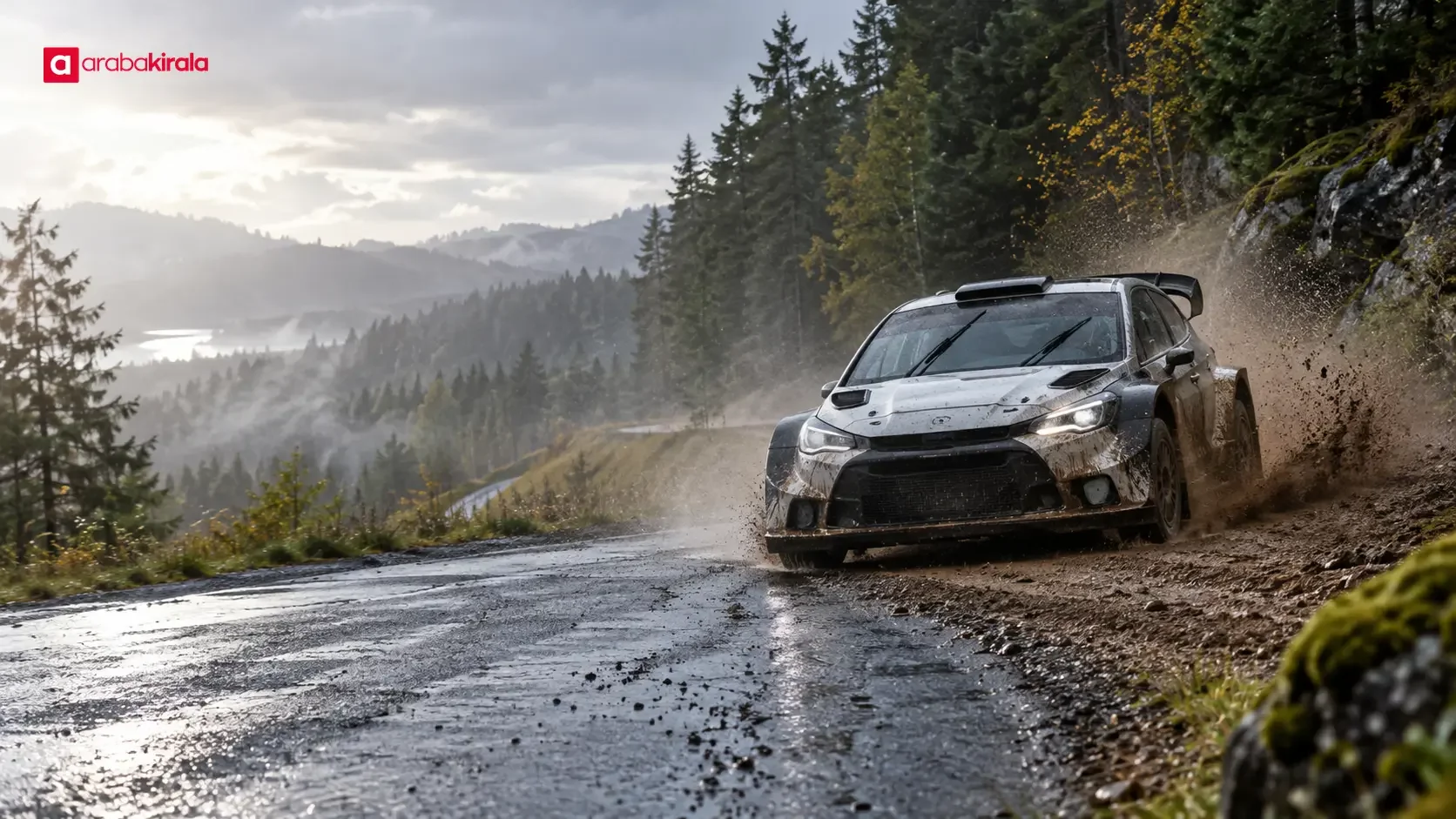
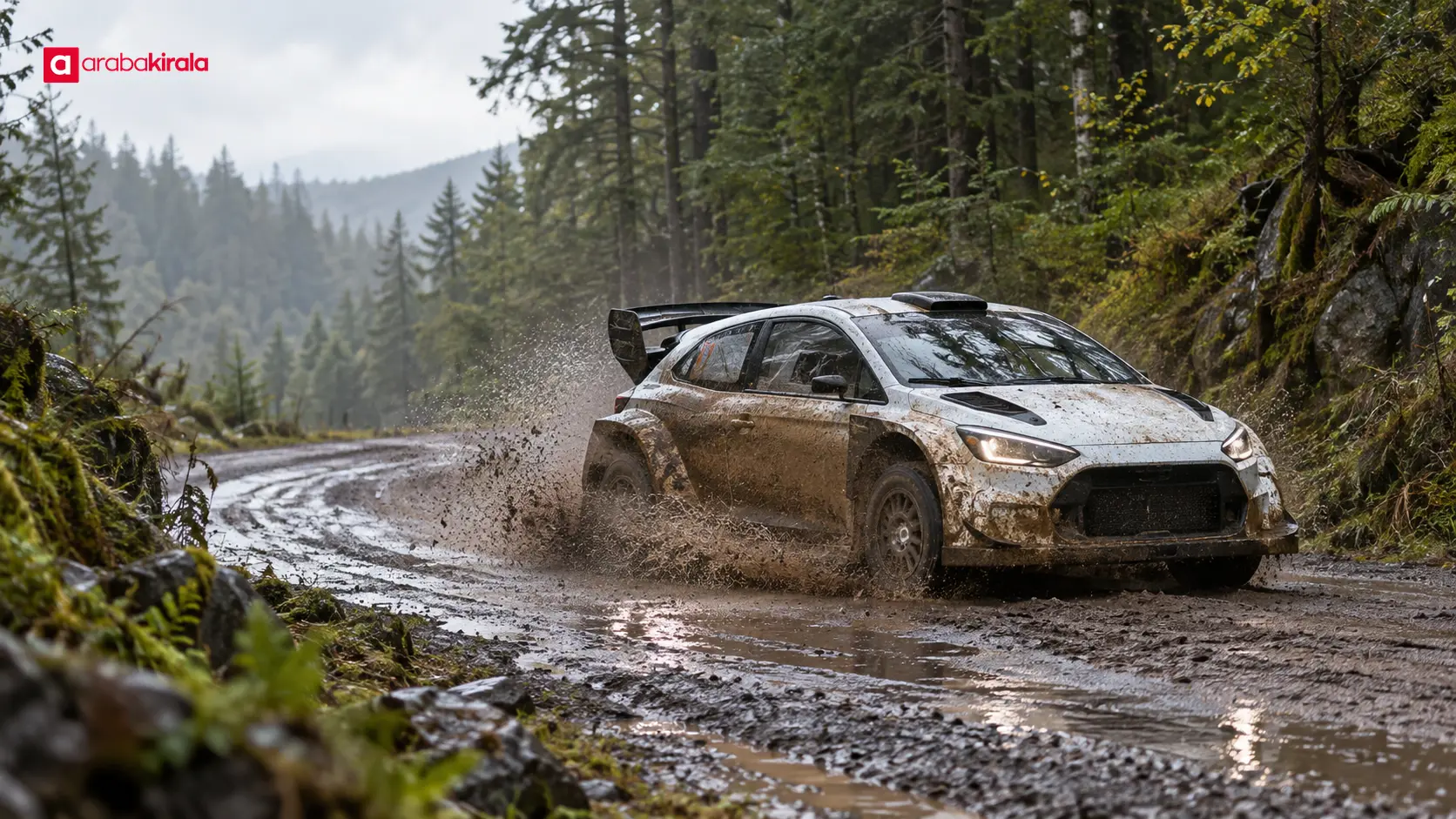
Rain has different effects depending on the soil and drainage. On a firm surface, water may leave a thin film; on soft ground, it can turn the road into mud that moves under the tires. Puddles also vary in depth and in what lies beneath them, so a shiny patch alone does not reliably show how much grip is available.
On a wet surface, the tire may have less contact with the road’s texture. The car can feel slower to respond or more prone to sliding during braking and direction changes. Mud carried by passing cars can spread into later parts of the stage and affect sections that were initially drier. Pace notes and recce observations therefore help distinguish wet patches, muddy areas and surface changes near a corner exit.
Snow, ice and freezing conditions
Loose snow, compacted snow and ice offer different levels of grip. Loose snow can be displaced by tire tracks, while compacted snow may look more uniform and still be slippery. Ice can be difficult to spot, especially in shaded areas, sheltered sections or places where water has refrozen.
If temperatures rise and fall during the day, one stage can include snow that is melting, wet and then refreezing. The contrast between sunlit slopes and shaded forest sections can make these transitions more pronounced. A general forecast is useful, but it should not be treated as proof that every point on the road has the same surface.
Heat, drying and dust
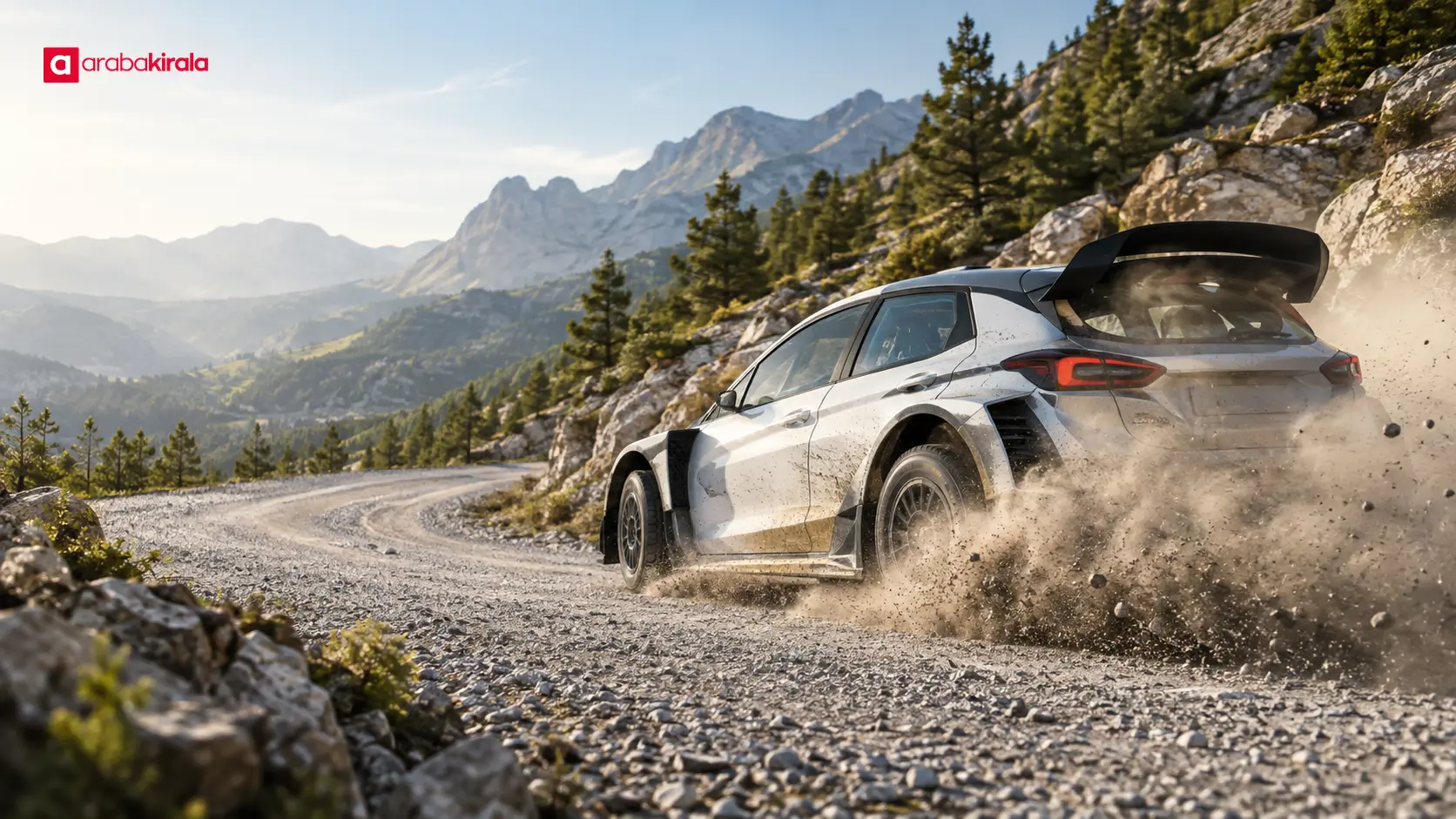
Sun and wind can dry a road after rain, but the rate depends on shade, exposure, ground type and drainage. On dry, loose gravel, passing cars raise dust. Dust can reduce the following driver’s visibility and loose material can be brought back onto the driving line.
Temperature also affects tire operating conditions and the driver’s workload in the cockpit. Warm weather alone does not mean more grip everywhere: moisture may remain in shade, gravel may stay loose, and soft ground may lie beneath the surface. Conditions are assessed by considering the weather together with what the road is actually doing.
How different surfaces affect driving
On asphalt, the tire’s contact surface may be relatively even, but rain, leaves, mud or dirt can disrupt it. On gravel and dirt, the tire moves over loose particles. Those particles may gather on the outside of a corner or shift with wheel tracks. On snow and ice, grip can change over a short distance depending on how compacted or wet the surface is and how cold it is.
These differences influence the choice of line. The inside of a corner may be cleaner and firmer while the outside carries loose material; elsewhere, a used track may offer more grip. There is no line that can be declared safer or faster for every stage. The driver considers the corner shape, visibility, braking area and surface together.
How changing conditions affect driving decisions
Grip, braking and cornering
Grip is the tires’ ability to transfer acceleration, braking and turning forces to the road. When it is limited, the driver has to manage braking and steering demands more carefully. Abrupt inputs on a slippery surface can unsettle the car; controlled, planned inputs help the driver read how it is responding.
Braking points, corner approach and acceleration on exit are adjusted to the surface. A braking point that is predictable on dry ground may change after rain. Pace notes communicate features such as a corner direction or crest, while recce observations about loose ground, slipperiness or visibility are also part of preparation.
Visibility and variation within a stage
Rain drops, spray, dust and mist can affect how far the driver can see. With less visibility, there is less time to assess a bend and the edge of the road. Dust depends partly on cars that have passed earlier, so the same road can look different at different starting positions. This is distinct from surface grip: even if the road itself has not changed, the driver may have more difficulty reading it.
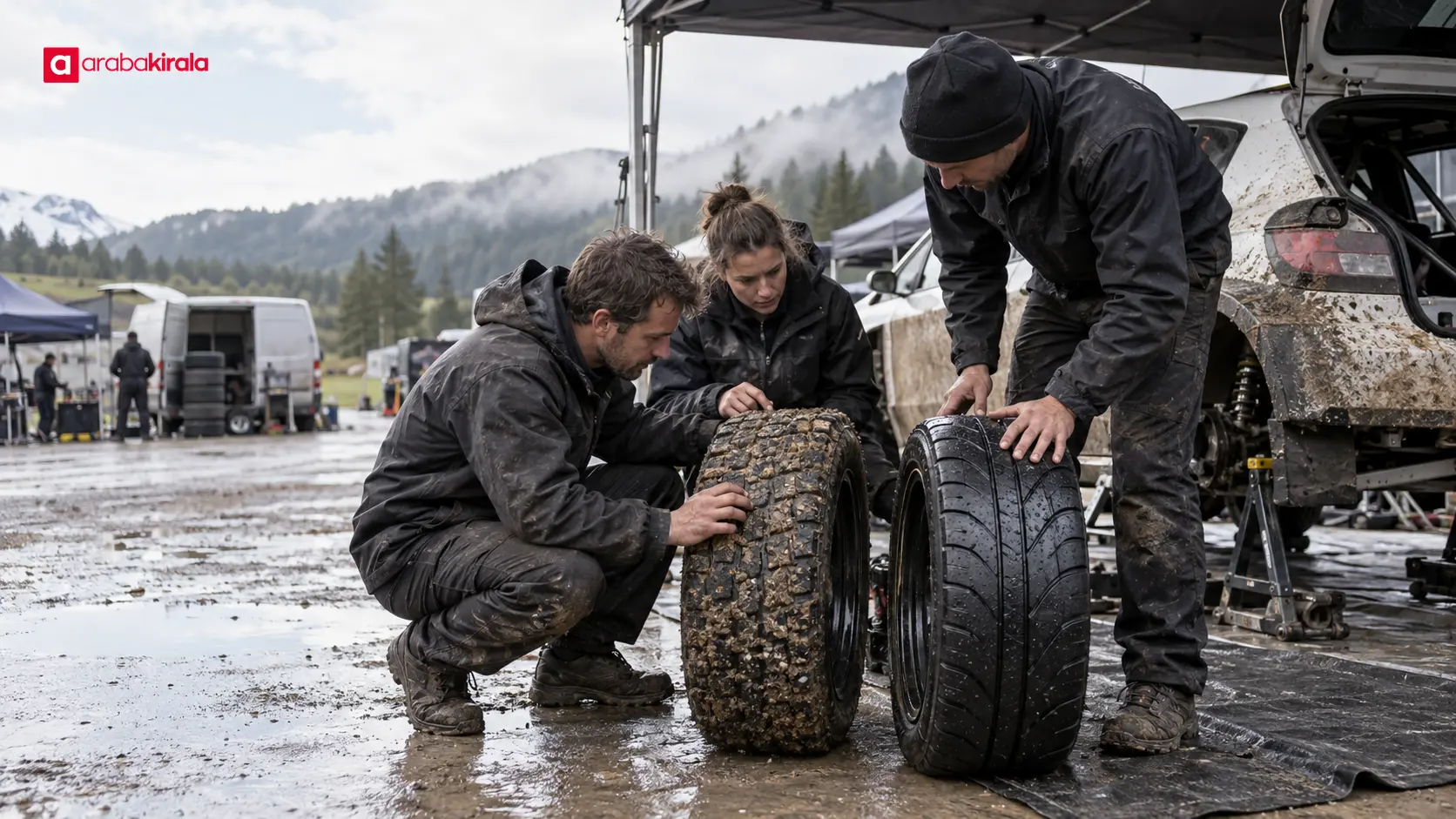
Variation through a stage also means that one tire choice or setup will not have the same result in every section. Teams assess route information, forecasts and road observations alongside the applicable technical regulations. Specific choices depend on the event and the information available to each team; there is no universal recipe from outside the rally.
Signals that help you read a changing stage
- Timing of rain: Whether rain falls before the stage or during runs can affect how saturated the road becomes.
- Shaded and exposed sections: Sunlit areas may dry faster, while moisture, snow or ice may persist in shade.
- Surface texture: Loose stones, mud, puddles and wheel tracks can produce different grip responses.
- Visibility: Dust, spray and mist can shorten decision time independently of the road surface.
- Changes along the route: Start, middle and finish conditions may differ; one weather reading should not be generalized to the entire stage.
These observations make stage coverage and commentary easier to understand. A driver who appears cautious may be responding to visibility, a changing surface or the car’s behavior, not just choosing a slower pace. Likewise, a fast section does not prove that the entire stage offers the same grip.
Common mistakes when reading WRC stage surface conditions
One mistake is treating the stage type as enough information. “Gravel stage” does not say whether the surface is firm or loose, or how rain has changed it. Another is assuming one weather condition applies to an entire route. Shade, elevation, slope and drainage can create differences over a short distance.
Another misconception is interpreting every slide as a driver error. Controlled sliding can be part of rally cornering technique, while an unexpected surface change can also affect the car’s movement. A video alone cannot establish a driver’s intention or the exact level of tire grip. Stage information, weather and visible surface conditions need to be considered together.
Summary and what to watch next
Weather changes the surface, and the surface changes grip and visibility. Rain can create mud, drying can bring dust and loose gravel, and snow or ice can vary with shade and temperature. These effects influence braking, corner lines, tire choices and how drivers judge risk throughout a stage.
When you watch the next WRC stage, note the surface type first, then the weather, shaded sections, dust or water and differences along the route. Reading these clues alongside the driver’s line and the car’s response helps explain why a stage’s character changes.
Frequently Asked Questions
Does rain always make a rally stage more slippery?
Not always to the same extent. The soil, drainage and duration of rain all matter. Rain may create mud or puddles in some sections while leaving others firmer, so describing an entire stage with one condition can be misleading.
Is starting first on a gravel stage an advantage?
Starting order can affect the surface, but not in the same direction under every condition. Earlier cars may move loose material, while rain or drying can also change the road. The effect of position depends on the stage, weather and surface.
How does dust affect a driver’s visibility?
Dust raised by a car ahead can hang in the air and make it harder for a following driver to see the road, corners and surface details. Wind and how open the road is affect how quickly it clears. Dust can therefore reduce decision time independently of mechanical grip.
How can you tell snow and ice apart on a stage?
Appearance is not always enough. Compacted snow can look smooth or shiny, and ice may be present without being obvious in shaded sections or where water has frozen. Teams combine recce observations with stage information; a photo or broadcast image alone cannot confirm the condition everywhere.
Does a weather forecast tell you exactly what the stage surface will be like?
No. A forecast provides preparation information about precipitation and temperature, but it does not directly measure every part of the road. Elevation, shade, drainage and cars passing through can all alter the actual surface. Forecasts are interpreted alongside road observations.
Does a change in stage surface change tire selection?
Changes in grip and temperature are important inputs in tire decisions. Teams consider stage surfaces, expected weather and the event’s conditions. The right choice depends on rally-specific information and regulations; one tire recommendation does not suit every stage.
Legal Disclaimer: All content, articles and information on the Araba Kirala website are provided solely to inform users. No information shared on this website constitutes definitive advice or guidance. Araba Kirala Teknoloji A.Ş. and its authors cannot be held responsible for any direct or indirect damages arising from the application of information on the website. For all questions and requests regarding car rental, please contact the office from which you will rent your vehicle.