Formula 1 Damaged Car Safety: Returning to the Pits
Published: November 14, 2026 • Reading Time: 7 min • Last Updated: November 14, 2026 • Author: Merve B.
Contents
- Assessing damage as it happens
- Return to the pits or stop safely?
- Signs that a pit return may be manageable
- Marshals and track safety
- Stopping the car and protecting the driver
- Inspection in the pits: damage, continuation, and communication
- What spectators can take away
- Summary: how to read a safety decision
- Frequently Asked Questions
- Related Articles
This guide explains Formula 1 damaged car safety from the first sign of damage through the choice to return to the pits or stop safely, the role of marshals, and the initial inspection in the garage. Not every damaged car calls for the same response: the decision depends on whether the car remains controllable and what hazards surround it.
Assessing damage as it happens
Contact, running off track, a loose component, or a mechanical warning tells the driver to reassess the car. Visible bodywork damage alone does not establish whether the car is safe. Problems with a wheel, suspension, steering, brakes, or drivetrain may look limited from outside yet affect direction, grip, or stopping ability.
The driver monitors cockpit indicators and how the car responds, and may receive observations and guidance over team radio. Radio communication cannot replace conditions on track. If the car pulls unexpectedly, braking changes, vibration increases, or fluid is visible, continuing becomes more risky. The priority is to keep the car under control and avoid creating danger for other competitors.
Return to the pits or stop safely?
A pit return may be considered when the car can still be steered and slowed predictably and a safe route to pit entry is available. The fact that a damaged race car can move slowly is not enough by itself. Traffic, corners, visibility, loose parts, and the risk of reaching the pit lane all matter.
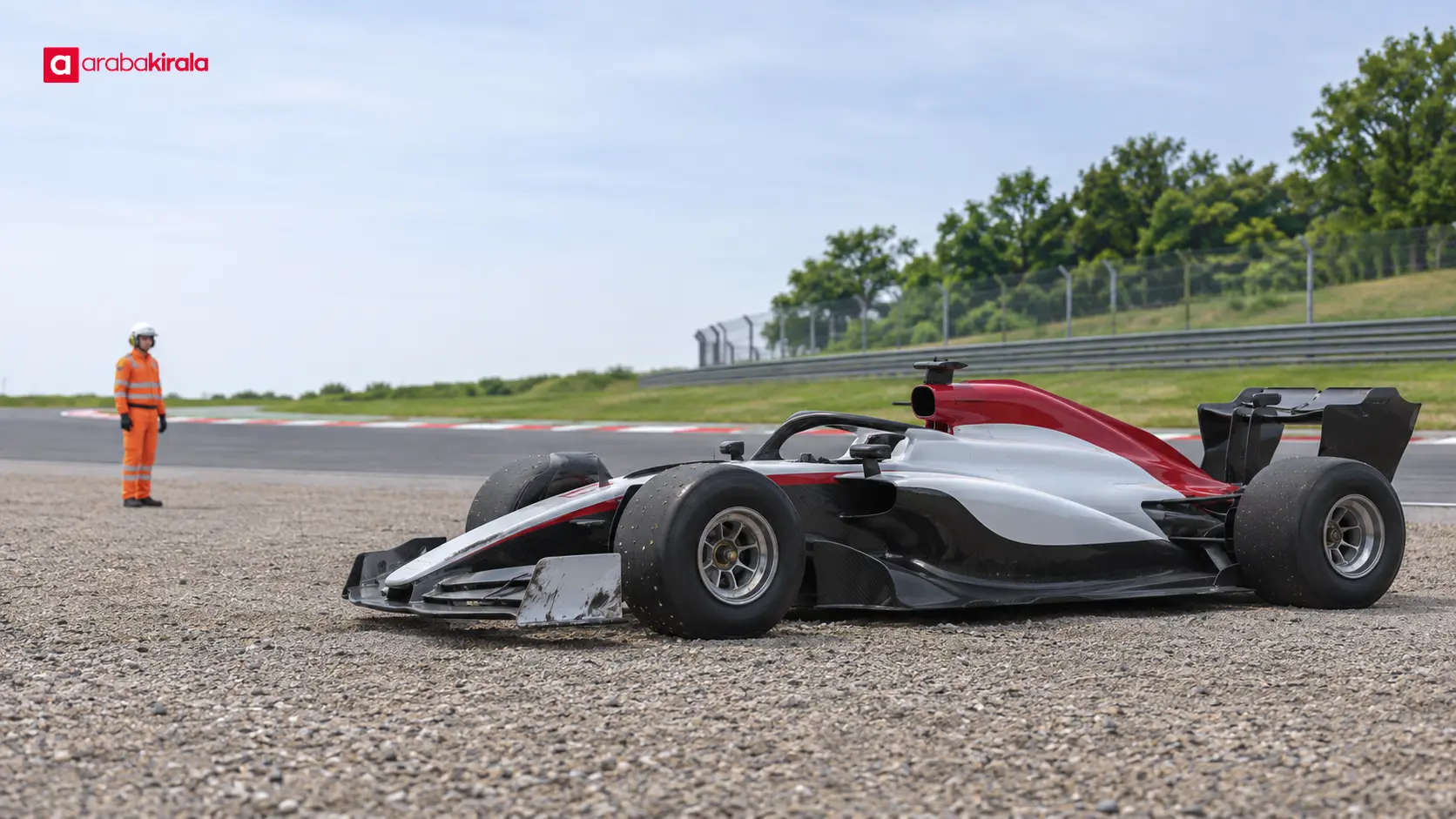
If control is clearly impaired or continuing would put others at risk, stopping in a safe location may be the better option. A “safe location” does not mean the same place at every circuit. Run-off areas, barrier positions, marshal access, and passing traffic all affect the choice. The driver aims, as far as possible, to leave the racing line and the path of other cars.
Signs that a pit return may be manageable
- Steering and braking still let the driver guide the car predictably.
- Tires or bodywork are not dragging around the car and creating another hazard.
- A safe route to pit entry is available and marshal instructions allow it.
These signs are not permission to continue on their own. A problem that first appears minor can change as new symptoms emerge. Race safety requires weighing the risks at that moment rather than applying one decision to every car.
Marshals and track safety
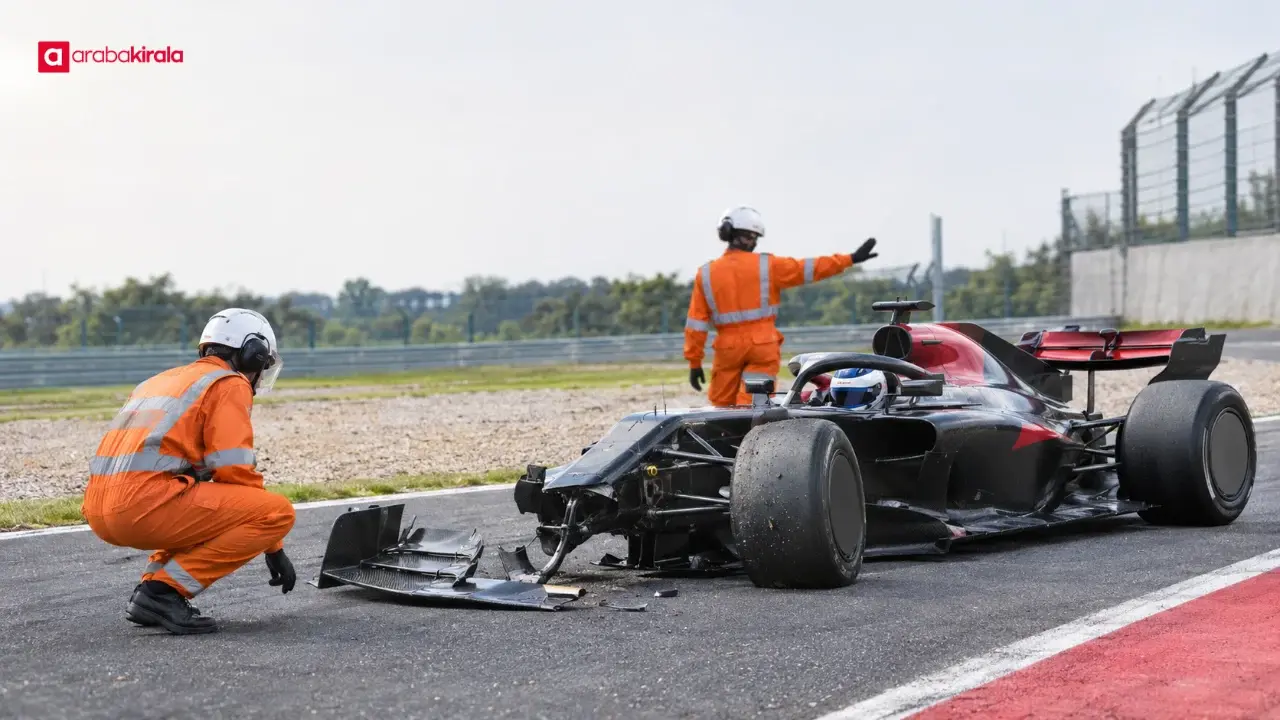
Marshals observe the area around a crash or stopped car and coordinate with race control according to the level of danger. The response may involve approaching the scene, helping the driver leave the car safely, or warning other cars; the conditions determine what is appropriate. Driver signals and race control instructions are part of the safety process while marshals are working on track.
Warnings such as a yellow flag alert drivers to a hazard in a sector; the required response depends on the rules in force and official instructions. It is not possible to state from a distance what warning will be shown or when a car will be recovered in every incident. Drivers should approach the area cautiously and give marshals' working space.
Stopping the car and protecting the driver
After stopping safely, the driver continues to assess the surroundings and the car. Smoke, fire, fuel or other fluid leaks, electrical hazards, or the car's position may create an immediate threat. In those circumstances, the driver follows marshal instructions and protects their own safety. How and when to leave the car depends on the situation, so a universal instruction would be inappropriate.
Marshals manage traffic and the safety zone while choosing an appropriate approach. The driver should not return to a dangerous area to collect equipment or parts. Moving or recovering the car is also handled under the control of authorized personnel. These steps are intended to reduce exposure for both the driver and the people responding.
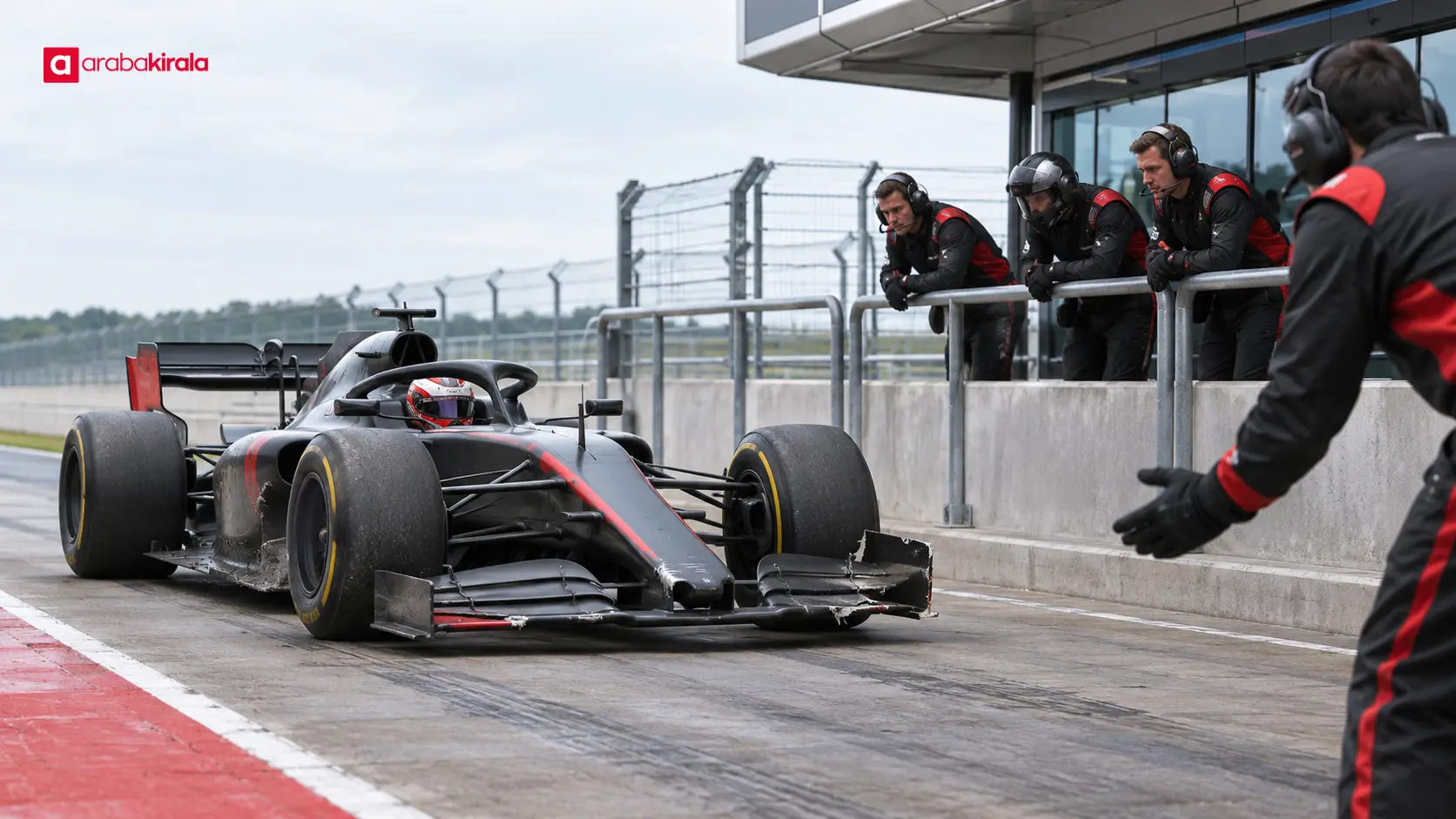
Inspection in the pits: damage, continuation, and communication
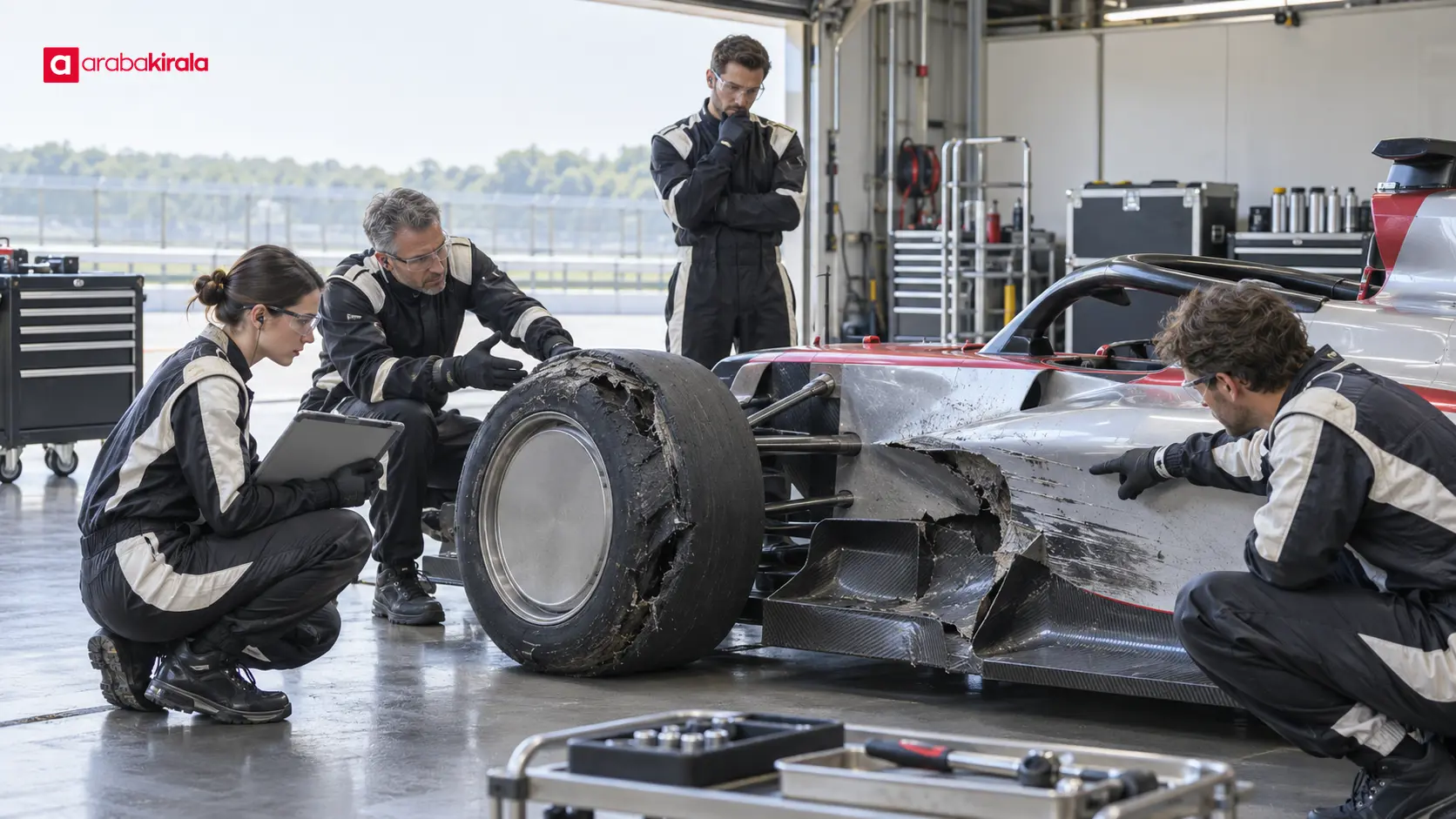
If the car reaches the pit area, the crew first ensures it is stationary and suitable for work. They may then look at visible bodywork and wing damage, wheels, tires, the area around the suspension, and signs of leaks. This is an initial safety assessment rather than a full technical diagnosis. What can be checked and how much time is available may be limited during a race.
Replacing or repairing a part depends on the source of the problem and whether the car can operate safely. Fixing an outer panel does not establish that an underlying mechanical issue has been resolved. The crew compares the driver's reported symptoms with what they find on the car and assesses whether a safe return to racing is possible. Sporting consequences should not take precedence over that safety assessment.
Clear communication between the driver and engineers helps the inspection. A precise account of where a change occurred, how the steering felt, or when a warning appeared can help identify the problem. The driver should not be expected to give a definitive diagnosis of a component they cannot see. Their observations and the technical inspection work together.
What spectators can take away
- A damaged car cannot be declared safe or unsafe from appearance alone; control and mechanical condition matter.
- Returning to the pits is not always the safest choice; stopping in a safe area can sometimes reduce risk.
- Marshal instructions help protect the working area around an incident.
- An initial look in the pits does not by itself prove that the car can continue; technical assessment is needed.
These principles help explain why decisions may differ from one race incident to another. A car moving slowly is not necessarily dealing with a minor problem, and a stopped car does not by itself prove that the driver made the wrong choice. Visibility, traffic, damage, and marshal warnings are assessed in context.
Summary: how to read a safety decision
Formula 1 damaged car safety involves more than one maneuver. The driver assesses control and symptoms, returns to the pit lane only if conditions allow, and stops in a safe place if the risk rises. Marshals manage the area, and the pit crew inspects the car once it is stationary. Each stage aims to protect the driver, competitors, and track workers.
When reviewing an incident, first consider whether the car appears controllable, then its position and any track warnings. Next, follow the pit crew's inspection and race control's decisions. This order helps avoid treating technical or safety conclusions that cannot be seen in a broadcast image as certain.
Frequently Asked Questions
Must every damaged Formula 1 car return to the pits?
No. The decision considers whether the car remains controllable, whether reaching the pit lane is safe, the traffic, and marshal instructions. If a return would create another hazard, stopping in a safe place may be more appropriate.
How does a driver assess whether the car is safe?
The driver monitors steering and braking response, vibration, cockpit indicators, and visible damage, and can use team communication. These observations are not a definitive technical diagnosis. Loss of control or a clear failure warning calls for a safety-first response.
What do marshals do beside a stopped car?
They assess the scene, protect the area, and coordinate an appropriate response with race control. Factors such as helping the driver, the car's position, and passing traffic shape the steps they take.
Is the pit crew's initial check enough to send the car back out?
An initial inspection can identify visible damage and safety signs, but it does not replace a full technical assessment. If symptoms persist, a critical component may be affected, or safe operation cannot be confirmed, the car should not be treated as ready to continue.
Does a car entering the pit lane slowly prove the damage is minor?
No. Moving slowly does not mean every system is safe. Steering, brakes, wheels, or suspension may be affected even when exterior damage looks small, so an inspection in the pits is needed.