
How F1 Post-Race Technical Scrutineering Works
Published: November 3, 2026 • Reading Time: 7 min • Last Updated: November 3, 2026 • Author: Merve B.
Learn how FIA post-race scrutineering checks Formula 1 car compliance, what measurements can show, and how to read technical reports.
Contents
- What does technical scrutineering check?
- Who carries out the checks?
- What happens after the race?
- 1. Selecting cars and components
- 2. Access and initial inspection
- 3. Measurement and recording
- 4. Reporting the findings
- Why can race conditions matter to measurements?
- How to read FIA scrutineering reports
- Technical checks versus sporting investigations
- A practical checklist for readers
- Summary: what does an inspection result tell you?
- Frequently Asked Questions
- Related Articles
- Sources
F1 post-race technical scrutineering is the process used to check whether cars remained compliant with the technical rules during a Grand Prix. This guide explains who oversees the checks, why inspection is not limited to one part, how measurements are interpreted, and what FIA reports can and cannot tell you.
What does technical scrutineering check?
Formula 1 cars are built and operated under detailed technical regulations. Scrutineering checks compliance with those requirements. It does not judge whether a car was fast or slow; it checks measurable features and components against the rules that apply to the competition.
The process forms part of a broader compliance system that begins before cars run. The FIA Sporting Regulations make the FIA-appointed Technical Delegate responsible for scrutineering and allow compliance checks up to the end of a Competition. The chequered flag therefore does not automatically mark the end of technical oversight.
Who carries out the checks?
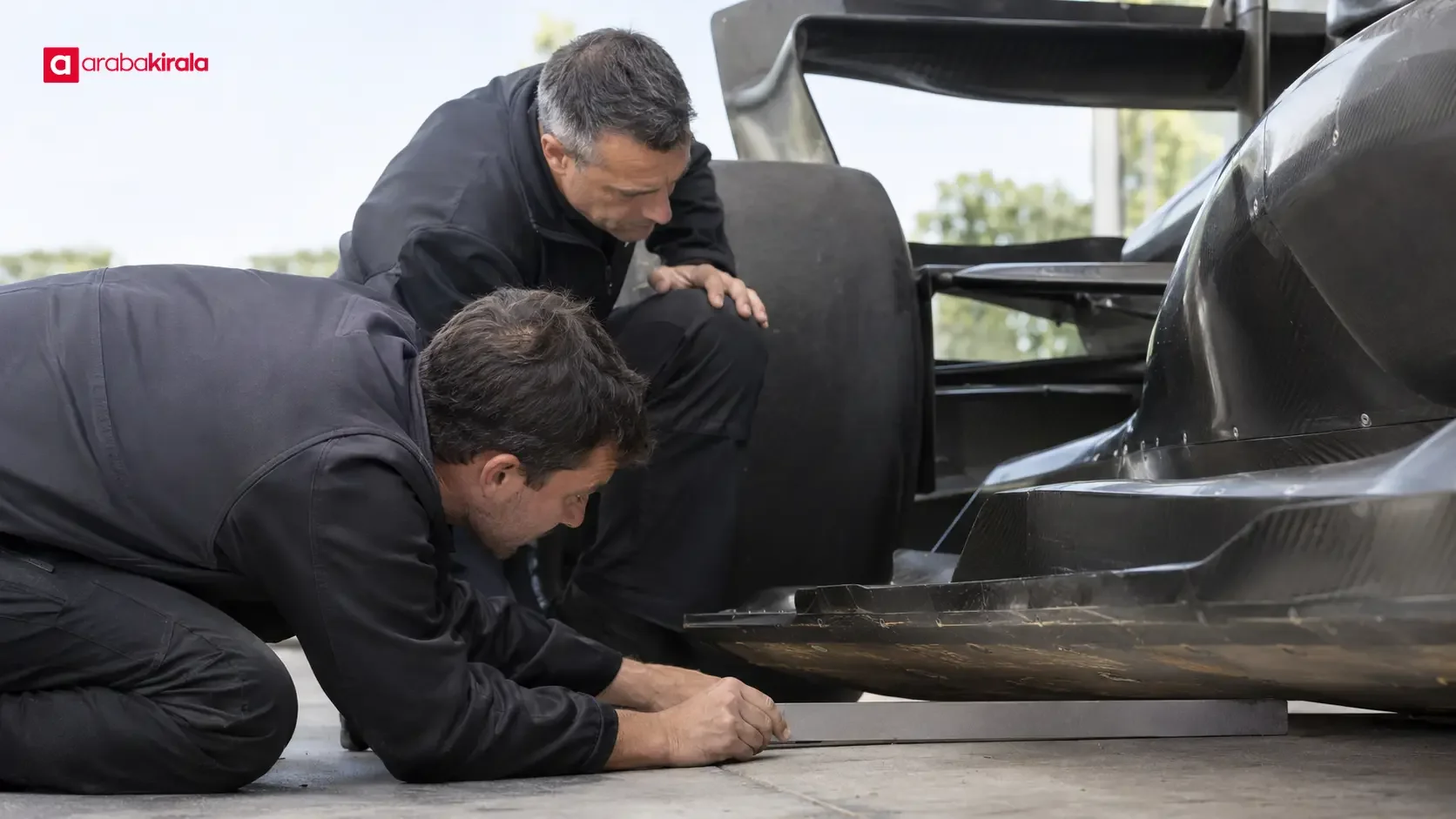
The FIA-appointed Technical Delegate is responsible for the scrutineering process. The delegate may perform checks directly or have scrutineers carry them out. Officials may take measurements, inspect components, and record observations. The scope and selection of checks depend on the regulations and the event.
This technical role is distinct from the decision-making role of the stewards. Technical officials document what they inspect and observe. If a suspected non-compliance or a matter requiring a sporting decision arises, it is handled through the relevant official process. The existence of a technical report alone does not mean a penalty has been imposed.
What happens after the race?
1. Selecting cars and components
Post-race scrutineering is not necessarily an identical set of tests applied to every car. The Technical Delegate can choose checks considered appropriate. An event report may identify particular cars or components examined. That record does not establish that no other checks took place, nor that precisely the same sampling will be used at every Grand Prix.
2. Access and initial inspection
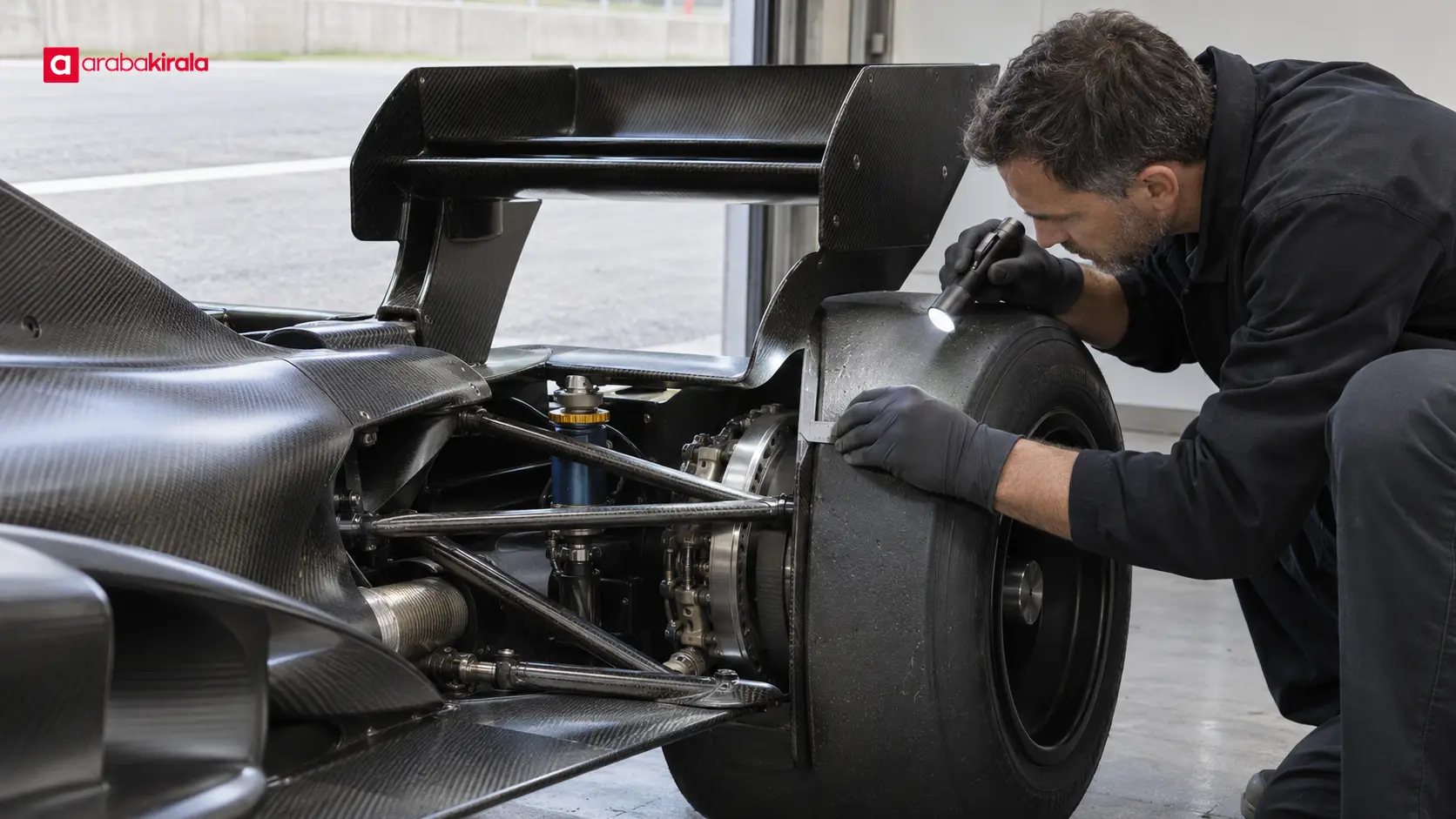
Officials gain access to the relevant areas and prepare components for examination. A visual check can help assess placement, condition, or how a part should be measured. Appearance alone does not always settle compliance. Technical provisions are often read together with specified measurement points and methods.
3. Measurement and recording
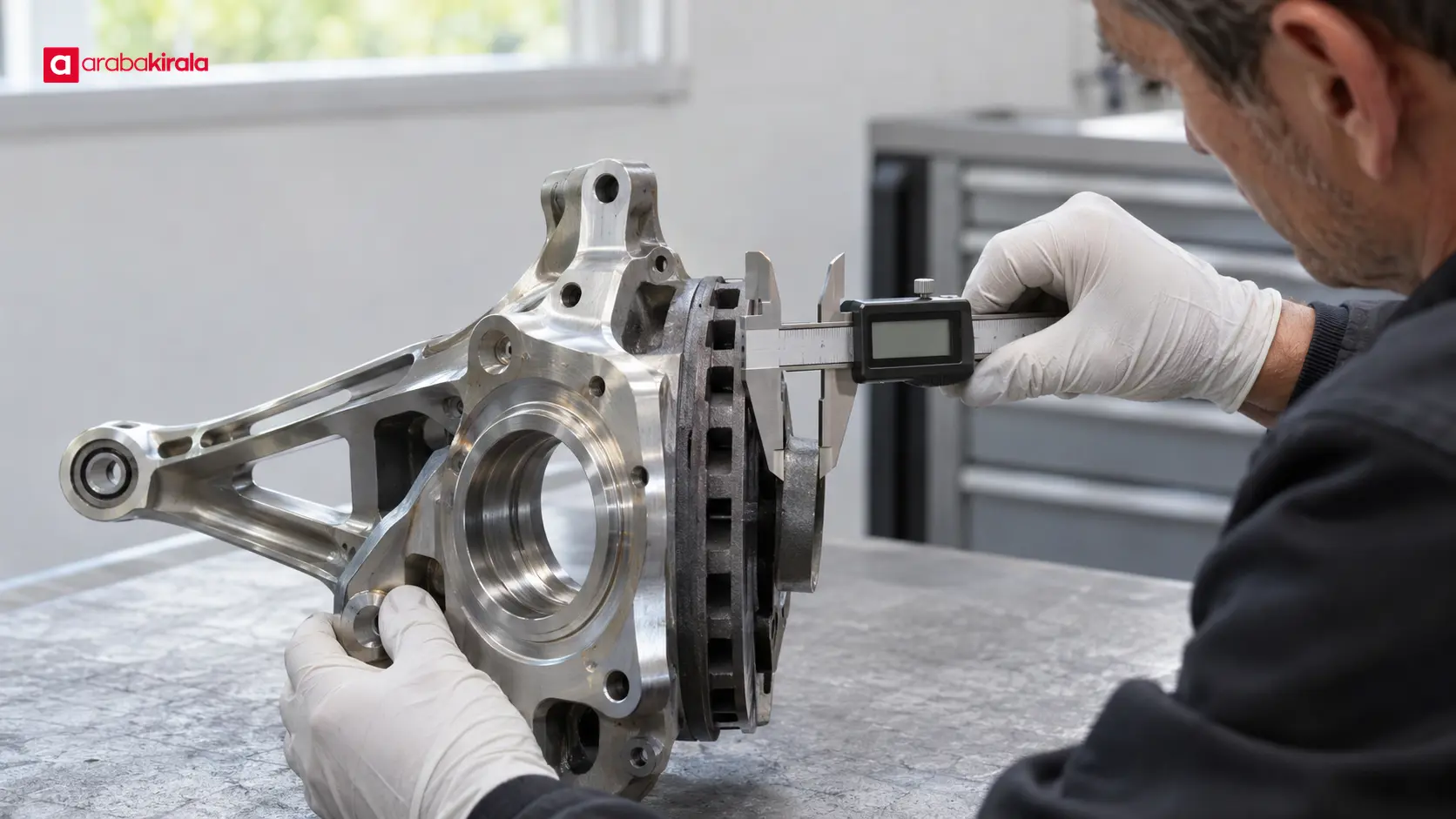
Where a technical rule defines a dimension, geometry, or wear limit, officials use the method and instrument prescribed for that check. They compare the result with the applicable requirement and record it. A measurement is meaningful in context: the location, preparation of the component, and relevant regulation can matter as much as the number.
4. Reporting the findings
Event documents titled “Race Scrutineering” can summarize technical checks. They show the inspections and findings stated in that report. If the document describes selected checks, it should not be treated as a complete inventory of every inspection on every car or every technical requirement.
Why can race conditions matter to measurements?
A Formula 1 car operates under high speed, braking forces, cornering loads, vibration, and changing track surfaces. Those conditions can affect temperature, position, or wear in some components. Post-race inspection therefore evaluates the car under the conditions and measurement procedures defined by the technical rules, rather than treating it as a static display object.
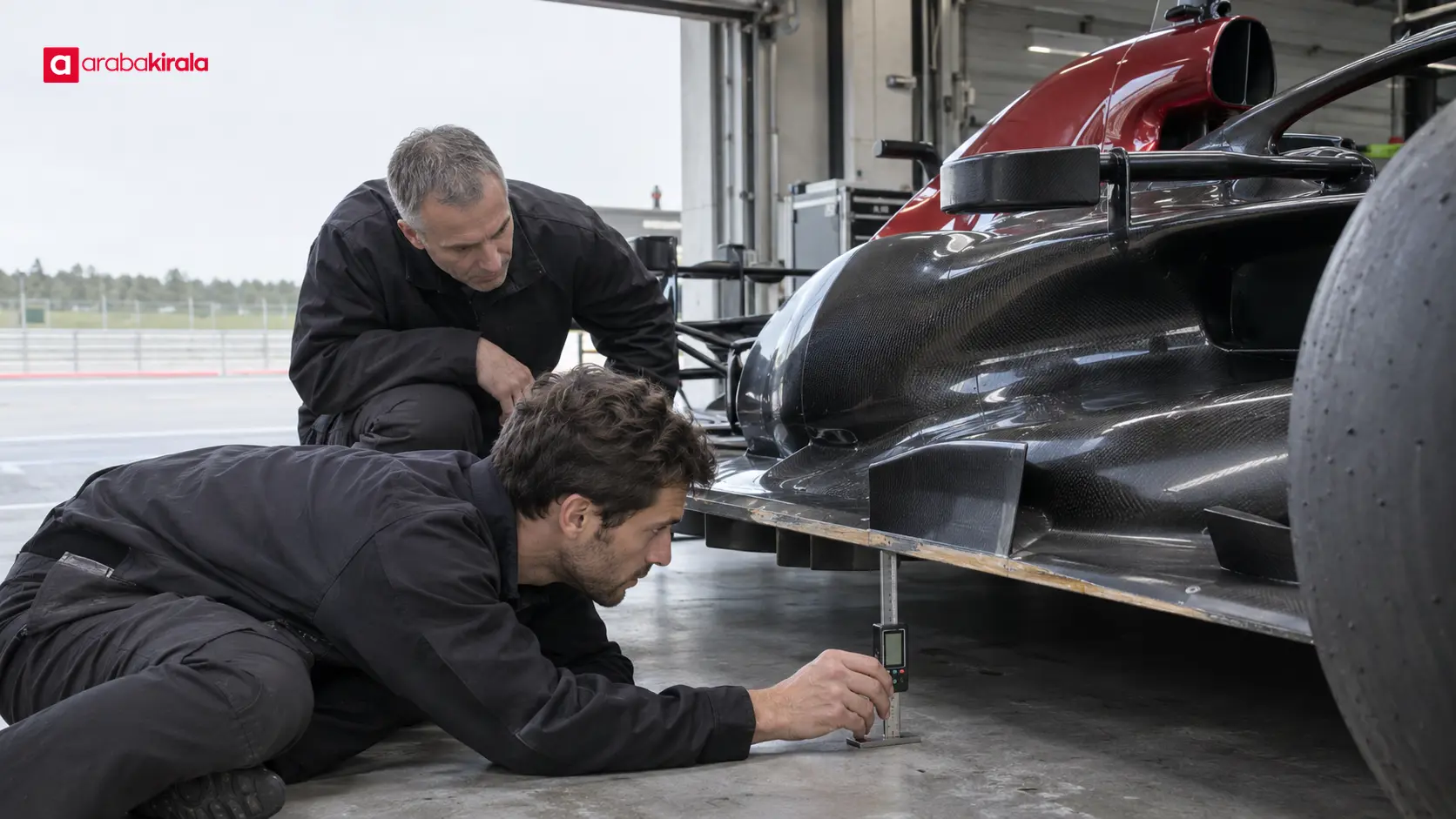
For example, the 2026 FIA Technical Regulations include geometry and wear provisions for the plank and skids. They describe evaluating skid wear by physically measuring the skid after it has been removed from the car. This example does not mean that a particular car had a problem with those components at a particular race. It illustrates how a technical check can rely on a defined measurement rather than visual guesswork.
Likewise, a report showing that one component was measured does not establish that it is checked for the same reason at every event. Regulations can change, so readers seeking technical detail should consult the official documents for the relevant season and competition.
How to read FIA scrutineering reports
- Check the document title and date. The event and session establish the context for the finding.
- Identify the scope. A record about a selected car, part, or test may not mean every area received a full inspection.
- Separate inspection reports from decisions. A technical report can record checks or observations; a formal decision may appear in a separate document.
- Read technical terms in context. If a measurement point, tolerance, or method is stated, interpret the result alongside the relevant rule.
- Avoid broad conclusions from one event. One event’s sample or check does not prove that an identical procedure applies throughout the season.
This approach helps readers interpret headlines such as “the car passed inspection” or “technical checks were completed.” A check being reported does not mean every component was measured in every possible way. Conversely, a procedure absent from a brief report is not proof that it did not happen.
Technical checks versus sporting investigations
Technical compliance concerns whether the car meets technical requirements. Sporting investigations can concern race conduct, session procedures, or other competition rules. Both may arise during the same Grand Prix weekend, but they have different purposes and may rely on different records.
A car receiving a technical inspection does not mean every on-track incident involving it was reviewed. Similarly, a decision about a sporting incident does not show that every technical feature of the car was measured. The document type is a useful first clue to the question being addressed.
A practical checklist for readers
- Check whether the reported finding is supported by an FIA event document.
- Confirm the event, date, and session stated in the document.
- Do not treat “inspected,” “found compliant,” and “decision issued” as interchangeable.
- If a measurement method is stated, interpret the result within that method’s scope.
- Do not extend a finding about one car or component to every team or the entire season.
This keeps technical terminology from turning into a broader claim than the evidence supports. FIA regulations establish the framework; event scrutineering records provide the information published for that competition.
Summary: what does an inspection result tell you?
F1 post-race technical scrutineering is a compliance check overseen by the Technical Delegate and supported by observations, measurements, and records. Its scope can vary. Reports may cover selected checks, and technical reports and formal decisions serve different purposes.
When you read the next race report, find the relevant FIA event document first. Check its date and scope, then interpret the finding alongside the applicable technical regulation. This helps you understand what was actually verified without drawing a wider conclusion from a single measurement or sentence.
Frequently Asked Questions
Does every Formula 1 car undergo the same tests after a race?
It is not accurate to assume that the same parts are measured in the same way on every car at every event. The Technical Delegate can determine appropriate checks. Interpret a report within the scope of the cars and procedures it explicitly names.
Does the Technical Delegate have the same role as the stewards?
No. The FIA Technical Delegate is responsible for scrutineering and compliance checks. The stewards handle formal decision-making. Technical findings may be referred for consideration, but a record of a check is not itself a final decision.
Does a scrutineering report prove that a car complied with every rule?
A report shows the checks and results it states. Inspection of a selected component does not mean every feature of the car underwent every possible test. Read the finding within the document’s stated scope.
Why can plank or skid wear be measured?
Technical regulations can define the properties and wear assessment method for these components. The 2026 FIA technical text gives an example by describing physical measurement of a removed skid. Specific requirements should be checked in the rules for the relevant season.
Does a technical report mean a penalty was issued?
No. A technical report can record inspections and findings. To establish whether an official decision or sanction followed, consult the relevant decision or stewards’ document as well. The report title alone does not establish an outcome.
Related Articles
- WRC Technical Checks: How Cars Are Inspected in the Rally Park
- What Do Pre- and Post-Race Technical Checks Cover in WRC Rally Cars?
- F1 Sprint Qualifying format: Sessions and the Grand Prix start
Sources
- 2026 Formula 1 Sporting Regulations, Section B
- 2026 Formula 1 Technical Regulations, Section C
- FIA Formula One technical report: Race Scrutineering
Legal Disclaimer: All content, articles and information on the Araba Kirala website are provided solely to inform users. No information shared on this website constitutes definitive advice or guidance. Araba Kirala Teknoloji A.Ş. and its authors cannot be held responsible for any direct or indirect damages arising from the application of information on the website. For all questions and requests regarding car rental, please contact the office from which you will rent your vehicle.
 Add ArabaKirala as a preferred source on Google












