A Guide to Renting an Electric Car in Istanbul
Published: November 1, 2026 • Reading Time: 8 min • Last Updated: November 1, 2026 • Author: Merve B.
Learn how to plan range, charging stops, pickup checks, and rental-specific questions when hiring an electric car in Istanbul.
Contents
- Who might find an electric car rental useful?
- How to assess battery range and your route
- What affects charging time?
- Preparing for booking and pickup
- Pickup checklist
- Planning charging stops in Istanbul
- Using an electric rental car safely and efficiently
- Return checks and records
- A short plan for electric car rental
- Frequently Asked Questions
This guide explains how to match an electric car rental in Istanbul to your route, charging access, and schedule. It covers range planning, charging basics, vehicle pickup checks, and the rental-specific details to confirm with the branch handling your booking. A battery electric car stores energy in a traction battery and uses an electric motor; unlike a petrol car, its trip plan also needs to account for charging stops.
Who might find an electric car rental useful?
Renting an electric car can suit drivers who can plan their city routes, have access to compatible charging along the way or where they park, and want to experience quiet electric driving. Suitability depends on more than the vehicle’s published range. Daily distance, traffic, weather, road gradients, passenger and luggage load, heating or air conditioning, and driving style can all affect energy use.
Drivers crossing several districts, continuing out of the city, or following a tight schedule with little time for charging should check route and charging access carefully. A charging stop can require more time than a brief fuel stop, depending on the car, its battery state, and the charging equipment. There is no single charging-time estimate that applies to every vehicle and station.
How to assess battery range and your route
Range is the estimated distance a vehicle can travel with its available battery energy. The estimate shown on the dashboard can change as you drive, so avoid planning solely around the number displayed at the start. Higher motorway speeds, repeated acceleration, extensive climate control, and uphill roads can increase energy use. Regenerative braking can return some energy to the battery while slowing down, but it does not eliminate consumption.
Before booking, note your route, approximate total distance, parking time, and how much time you can set aside for charging. Check charging points along the route and identify a suitable alternative. Availability, connector compatibility, payment or access method, and whether a unit is working can change; check current information before setting out.
What affects charging time?
Charging time depends on battery capacity and state of charge, battery temperature, the vehicle’s charging capability, and the power available from the unit. With AC charging, the car’s onboard equipment converts incoming power for the battery. With DC fast charging, the station supplies direct current. Two stations with similar advertised power may not provide the same charging rate to different vehicles. Some cars also reduce charging power as the battery fills.
When planning a trip, ask more than whether a charger appears on the map. Check whether it is compatible with the vehicle, how much time you may need, and where you could go if the first option is busy or unavailable. Confirm the connector type, included cable or access equipment, and charging instructions for the specific vehicle with the rental branch. Follow the manufacturer’s instructions and do not force a connector or cable.
Preparing for booking and pickup
State clearly that you want an electric vehicle and confirm whether the vehicle offered is fully electric or a plug-in hybrid. These are different vehicle types. A fully electric car uses battery power to drive; a plug-in hybrid can also use an engine powered by fuel. Choose with your route and charging access in mind.
Ask the branch where you will collect the car about vehicle class or model, battery level at handover, charging equipment, how charging costs are handled, and any expected battery level at return. These are booking and vehicle-specific details and may vary. Confirm commercial conditions such as mileage limits, additional drivers, deposit, age and licence requirements, pickup and return times, or after-hours procedures with that branch before booking. Do not assume that one company’s terms are an industry-wide rule.
Pickup checklist
- Inspect the bodywork, windows, and wheels with the staff member and record existing marks.
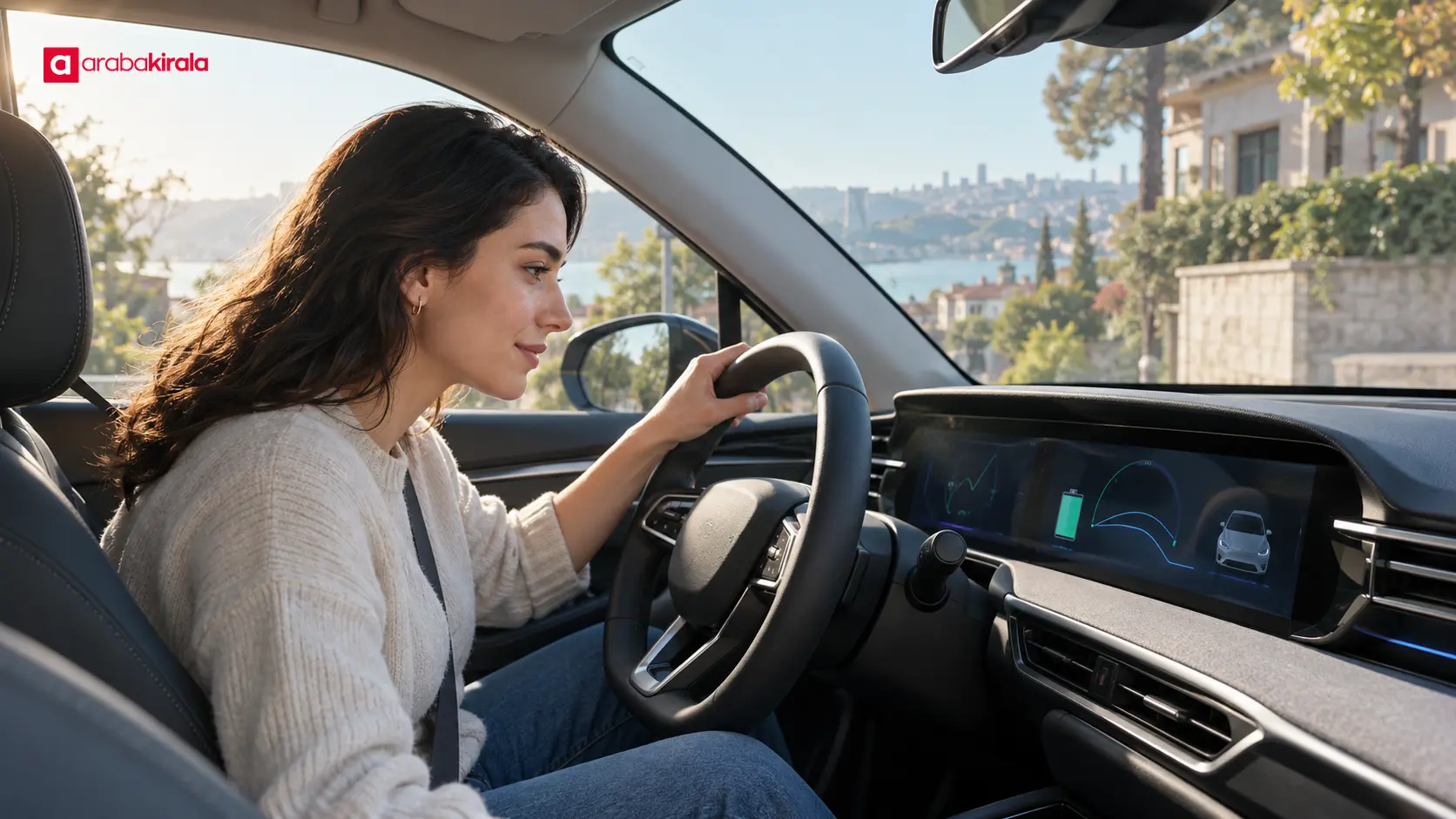
- Note the battery percentage and estimated range. This gives you a starting point for comparing the return record.
- Check the odometer and dashboard warnings. Ask about any warning you do not understand before driving away.
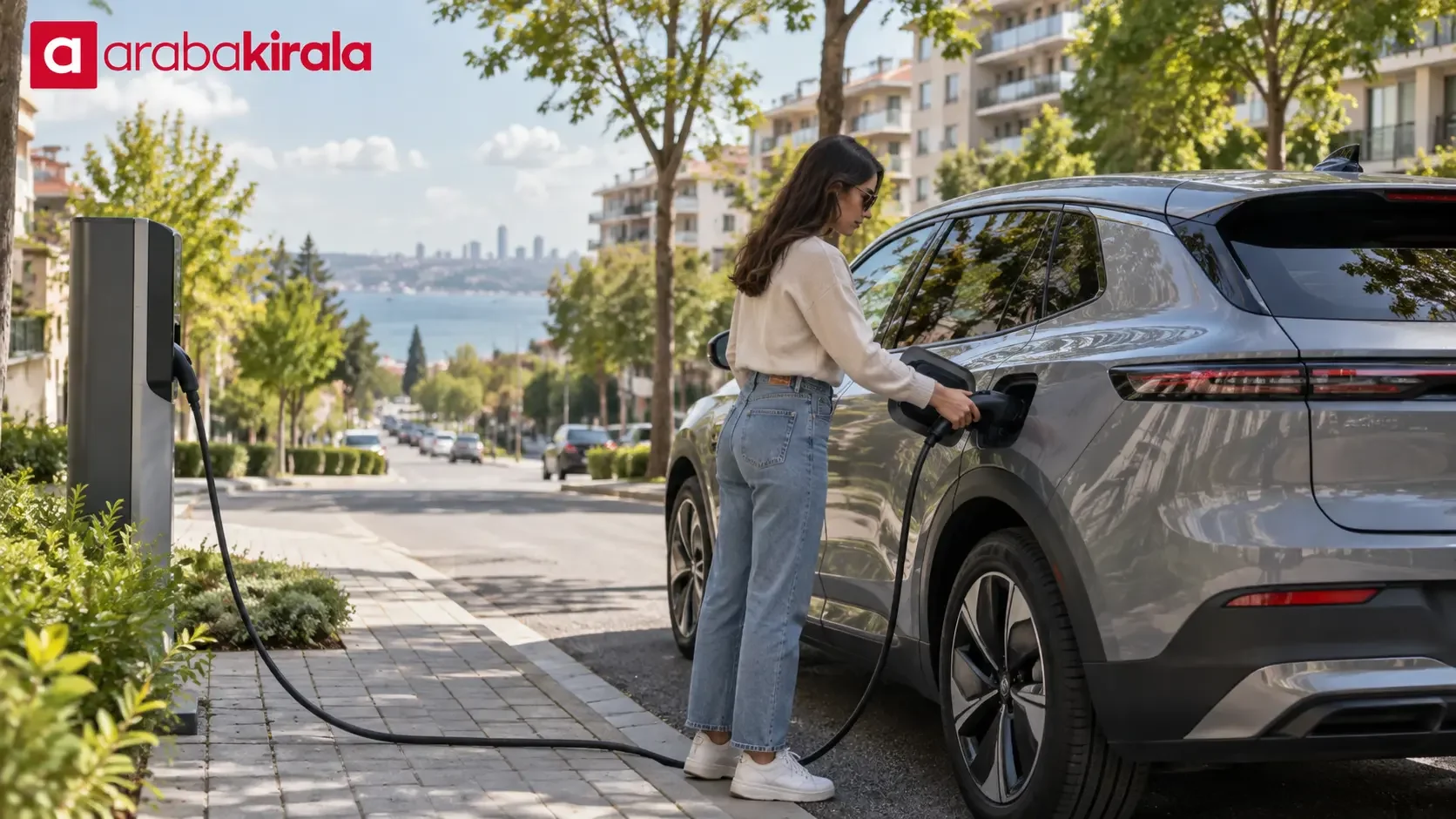
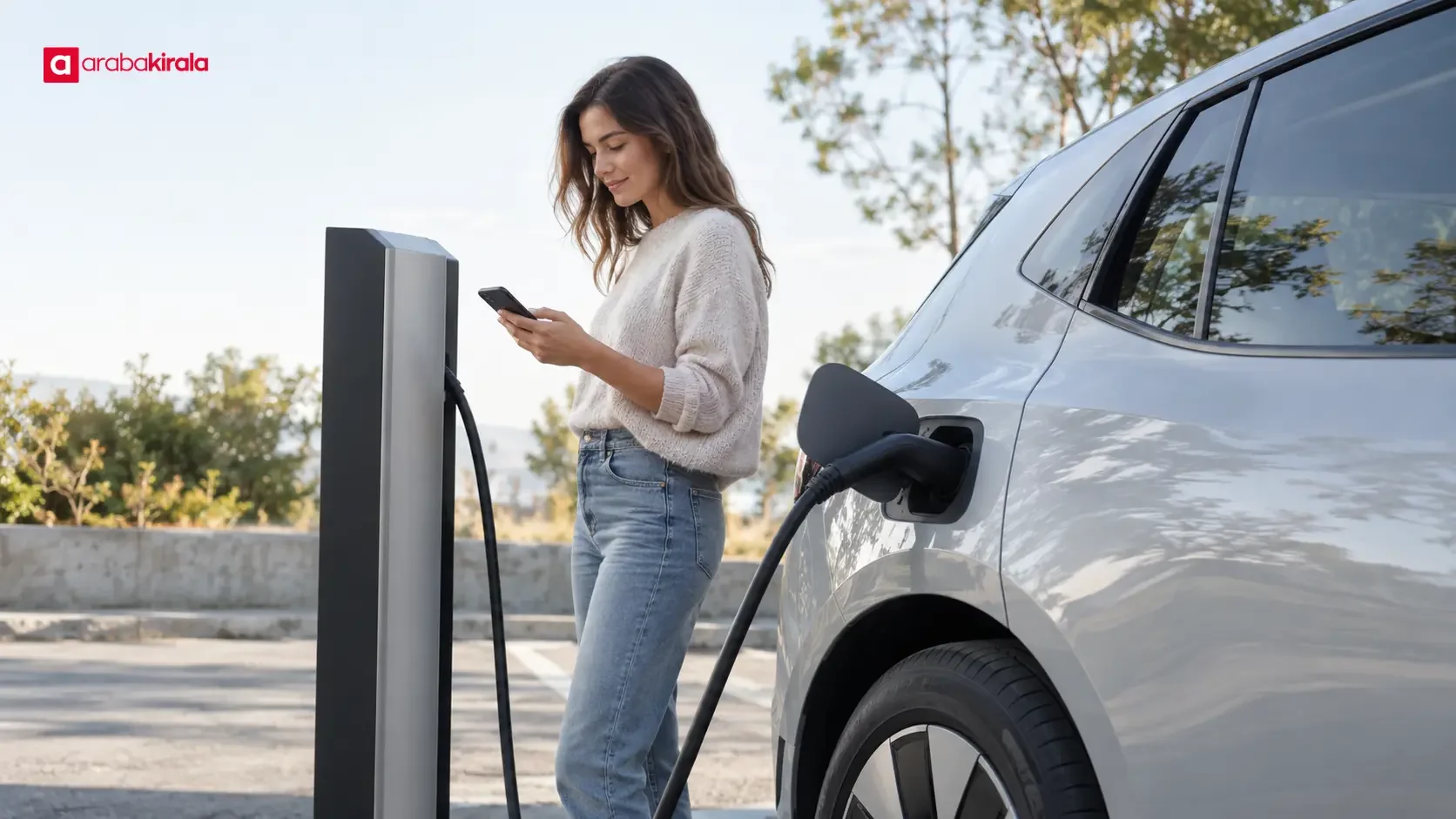
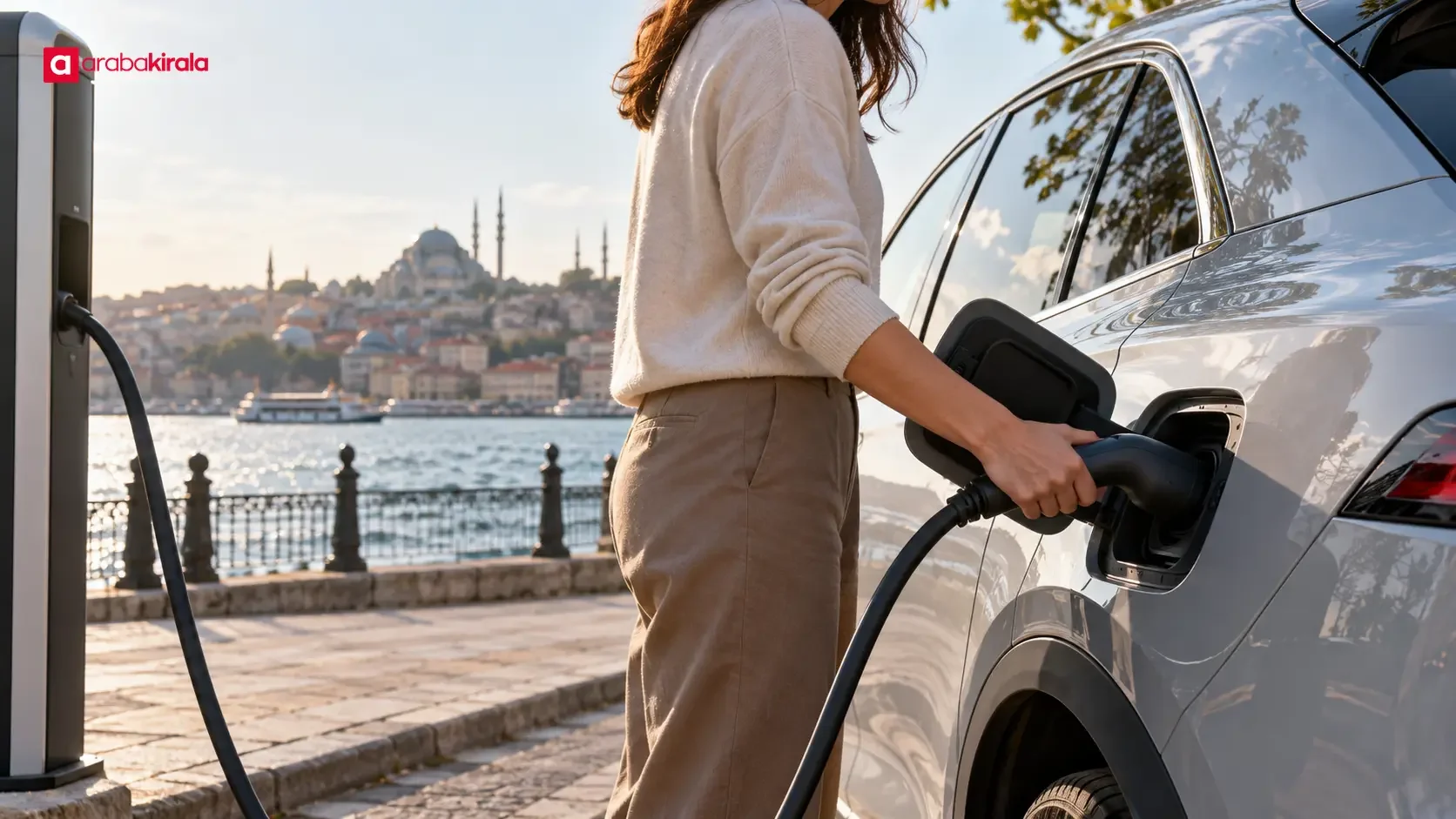
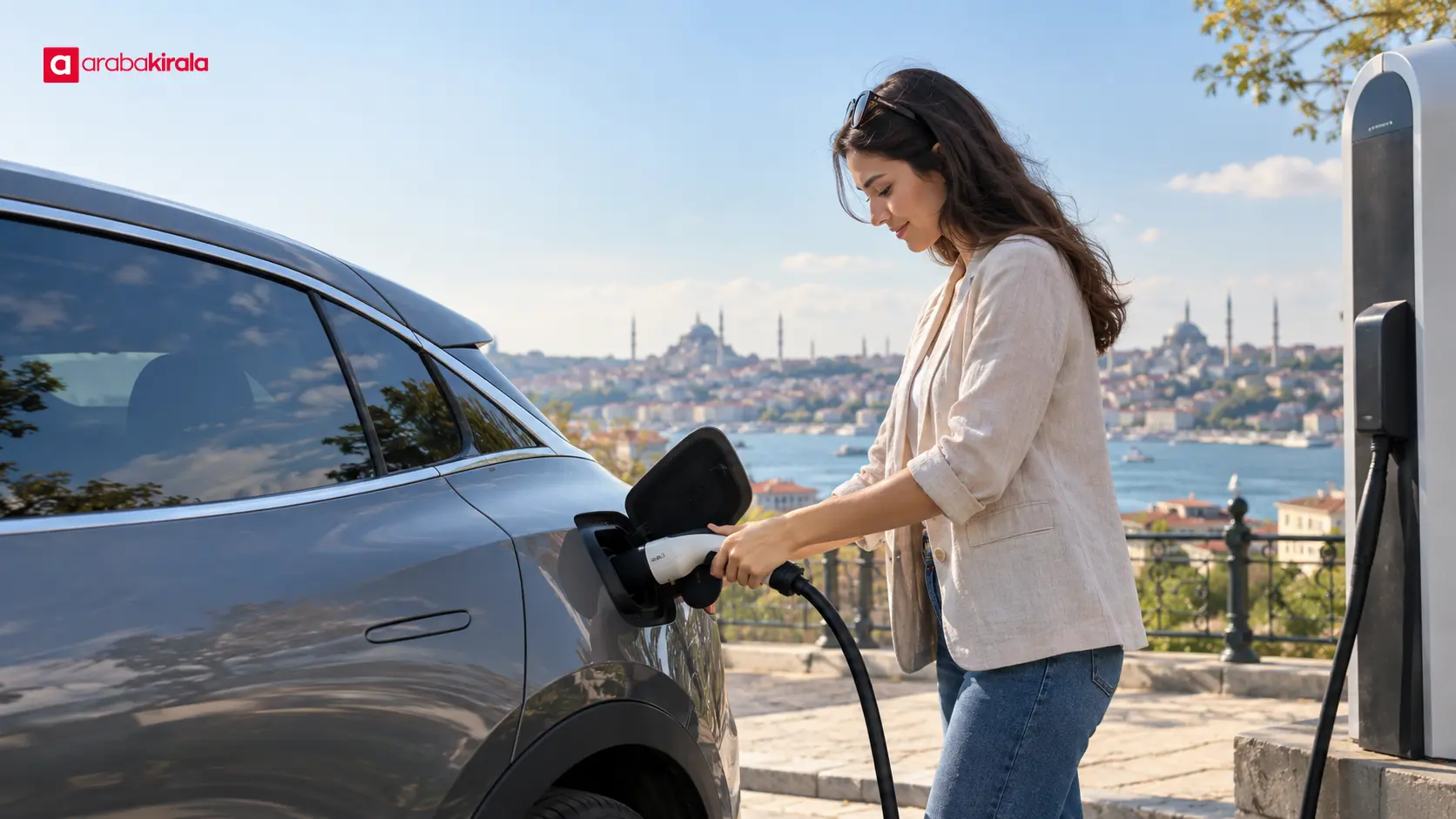
- Learn how the charging port opens and how to connect the plug, cable, or accessories supplied with the car.
- Get instructions for starting a charge, payment, and any app or card access needed for that vehicle. Do not assume a particular network or method is required.
- Review the driving and charging guidance, roadside assistance process, and how pickup and return records are handled.
Planning charging stops in Istanbul
Treat charging as one of the trip’s planned stops rather than an urgent task that appears unexpectedly. If charging is available where you will park, check access and parking conditions. Otherwise, review public charging locations along your route, including the direction of travel, ease of entry and exit, nearby waiting options, and an alternative station. A location shown on a map is not necessarily free or working when you arrive.
In Istanbul, travel time and energy use do not always change in the same way. Slow traffic may reduce consumption in some conditions, while climate control, repeated stopping, or a longer route may affect the battery plan. If you are leaving the city, check options for both directions and along the route. Keep reasonable flexibility in your plan instead of making it depend on using the battery down to a very low level.
Using an electric rental car safely and efficiently
At the start of the drive, take time to get used to the accelerator response, regenerative braking, and gear selection. Electric motors can be quiet at low speeds, so do not assume pedestrians can hear you. Take care at junctions, in car parks, and near crossings. Set up navigation before driving or after parking safely.
While charging, keep the cable clear of walkways and use plugs and sockets only as instructed. If a cable is damaged, a connection is loose, or a warning appears, stop using the equipment and report the issue according to the vehicle guidance. Learn how to end a charge and disconnect the plug from the manual or staff demonstration. Pulling the cable itself can damage the equipment.
Return checks and records
Before returning the car, review the battery level, odometer, and vehicle condition. The expected charge level at return and how charging costs are handled are booking-specific details; confirm them with the branch in advance. At handover, compare the final battery and mileage information with the pickup record, report any new damage or warning, and keep a copy of the return record.
Leaving a car connected to a charger or completing a charge at a particular time may not be possible at every return location. Clarify the office hours, return time, and any charging-area procedure during booking. Do not assume that after-hours returns or key drop-off are available; ask the rental office whether those options are offered and how the handover is recorded.
A short plan for electric car rental
- Set your city or out-of-city route and approximate distance.
- Confirm whether the vehicle is fully electric or a plug-in hybrid.
- Check connector compatibility, cable availability, and access method for that vehicle.
- Choose a suitable charging option along the route and keep an alternative in mind.
- Record battery level, mileage, vehicle condition, accessories, and return expectations at handover.
- Ask the branch handling your rental about booking-specific fees and usage conditions.
In short, an electric car rental in Istanbul is easier to manage when range, daily route, and charging access are considered together. Start by mapping your trip and the time you can reserve for charging, then ask the branch about the vehicle type, charging equipment, and pickup and return details. This preparation can make an electric car hire more predictable and comfortable.
Frequently Asked Questions
What should I plan first before renting an electric car in Istanbul?
Start with your daily route, approximate distance, and parking time. Then check compatible charging locations and one alternative stop. Ask the branch where you will rent about the vehicle’s battery level at pickup, cable, and charging access.
Is the range shown by an electric car a guaranteed distance?
No. It is an estimate based on current conditions. Speed, traffic, weather, gradients, load, and climate control can affect actual energy use. Keep a suitable charging option in your plan instead of relying on one dashboard estimate.
What is the difference between AC charging and DC fast charging?
With AC charging, equipment inside the car converts incoming alternating current for the battery. With DC fast charging, conversion happens at the station and direct current is supplied to the battery. The rate still depends on the vehicle, battery, and station.
Will a rental electric car include a charging cable or membership card?
Equipment and access methods may vary by vehicle and booking. Before pickup, ask the relevant branch whether a cable is supplied, how to access charging points, and what payment method may be needed.
Does the battery need to be full when I return the car?
The expected battery level and treatment of charging costs can depend on the vehicle and booking terms. Confirm the requirement with the branch rather than assuming a general rule, and compare the final level with the pickup record.
Can I take an electric rental car on a longer trip?
That depends on the vehicle’s range, compatible and accessible chargers on the route, and time available for stops. Check stations in both directions and confirm the specific vehicle and charging information with the rental office.
Legal Disclaimer: All content, articles and information on the Araba Kirala website are provided solely to inform users. No information shared on this website constitutes definitive advice or guidance. Araba Kirala Teknoloji A.Ş. and its authors cannot be held responsible for any direct or indirect damages arising from the application of information on the website. For all questions and requests regarding car rental, please contact the office from which you will rent your vehicle.