Rental Car Pre-Drive Visibility and Access Check
Published: November 4, 2026 • Reading Time: 6 min • Last Updated: November 4, 2026 • Author: Merve B.
Learn how to check your seat, mirrors, controls, and entry space before moving a rental car, with your own visibility and access needs in mind.
Contents
- Why visibility and access belong in the same check
- Set the seat before moving off
- Find a stable, comfortable sitting position
- Check the steering wheel, belt, and head restraint
- Adjust mirrors and assess your view around the car
- Set the mirrors from your normal driving position
- Do not confuse the mirror view with a complete view
- Reach to controls and ease of getting in and out
- A short check sequence before setting off
- Summary and next step
- Frequently Asked Questions
- Related Articles
A rental car pre-drive visibility check means assessing what you can see from the driver’s seat and whether you can comfortably reach the steering wheel, pedals, and key controls before the vehicle moves. This guide covers seat position, mirror adjustment, entry and exit, and a practical check sequence. Make adjustments while the car is safely parked; do not change your seating or mirror position while driving.
Why visibility and access belong in the same check
A suitable driving position supports both comfort and control. You need a clear view through the windscreen and mirrors, a useful view of the instrument panel, and a posture that lets you operate the steering wheel and pedals without straining. A seat set too far back can make pedal access awkward, while a poor backrest position may encourage you to lean forward.
Your view depends on the car’s shape, window areas, seat adjustment, and your own height and posture. Do not assume that the previous driver’s settings will suit you. Mirrors help you monitor surrounding traffic, but they do not show every area beside the car and cannot replace a safe direct observation before a manoeuvre.
Set the seat before moving off
Find a stable, comfortable sitting position
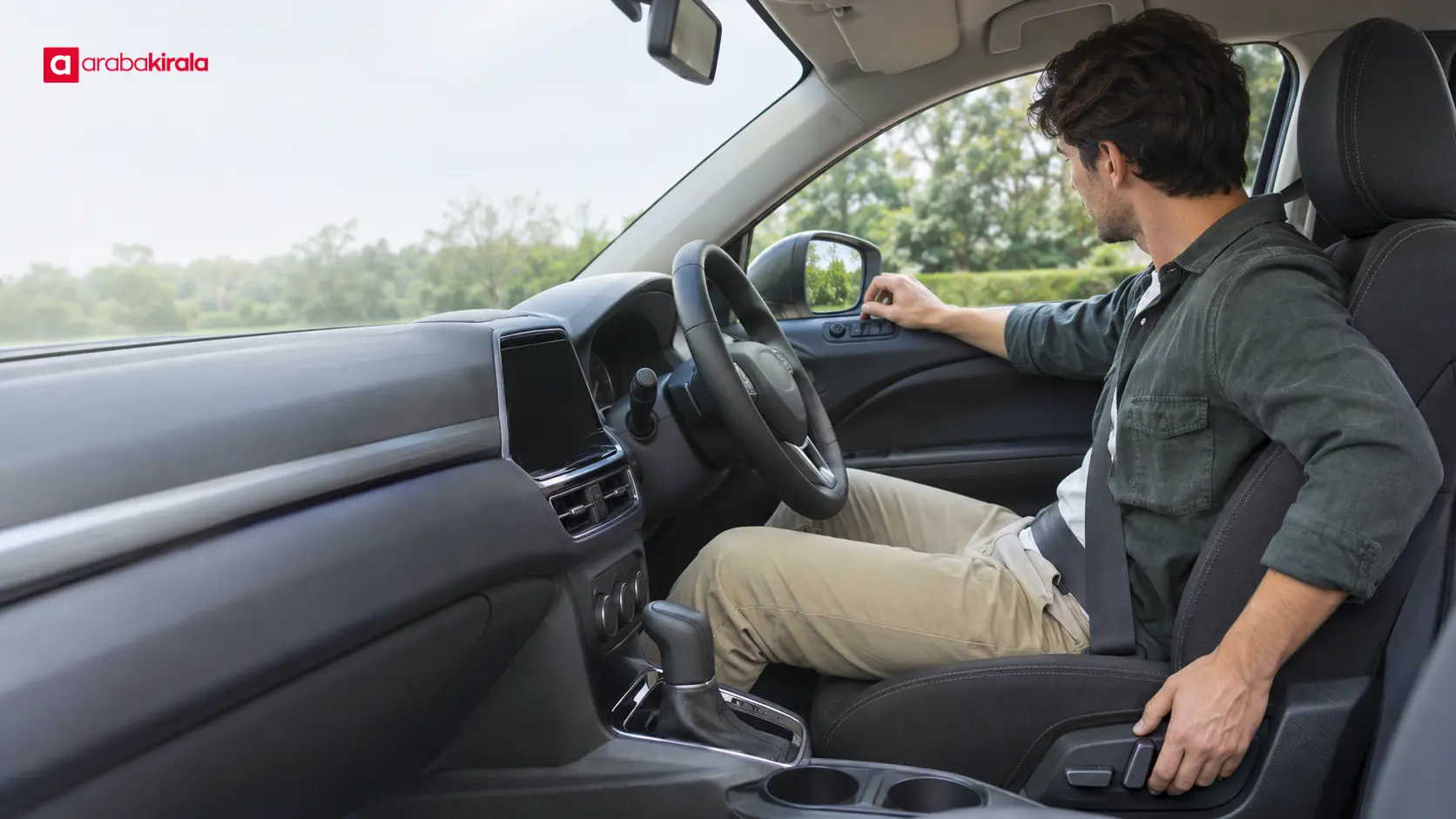
With the car safely stationary, sit back in the seat and place your hips against the backrest. Adjust the seat forward or back so you can operate the pedals with controlled leg movement and without locking your knees. Pedal layouts can vary, so check that you can reach each pedal comfortably before starting to move.
Set the backrest so you can steer while keeping your shoulders close to it. If you have to lean forward or slide toward the edge of the seat to reach the wheel, reconsider the seat position. If the seat height adjusts, choose a position that gives you a useful view of the road and instruments without the wheel or head restraint blocking your sightline.
Check the steering wheel, belt, and head restraint
Being able to reach the steering wheel matters, as does having room to move your arms naturally. Check that you can hold and turn the wheel without lifting your shoulders away from the backrest, while keeping a clear view ahead. If the steering column adjusts, make sure it locks securely afterward. Ask for help at the handover point if you cannot identify its adjustment mechanism.
Fasten the seat belt before setting off and check that it sits properly on your body. If the head restraint is adjustable, place it appropriately behind your head. If a seat or belt component appears damaged or cannot be positioned correctly, tell the rental office before driving.
Adjust mirrors and assess your view around the car
Set the mirrors from your normal driving position
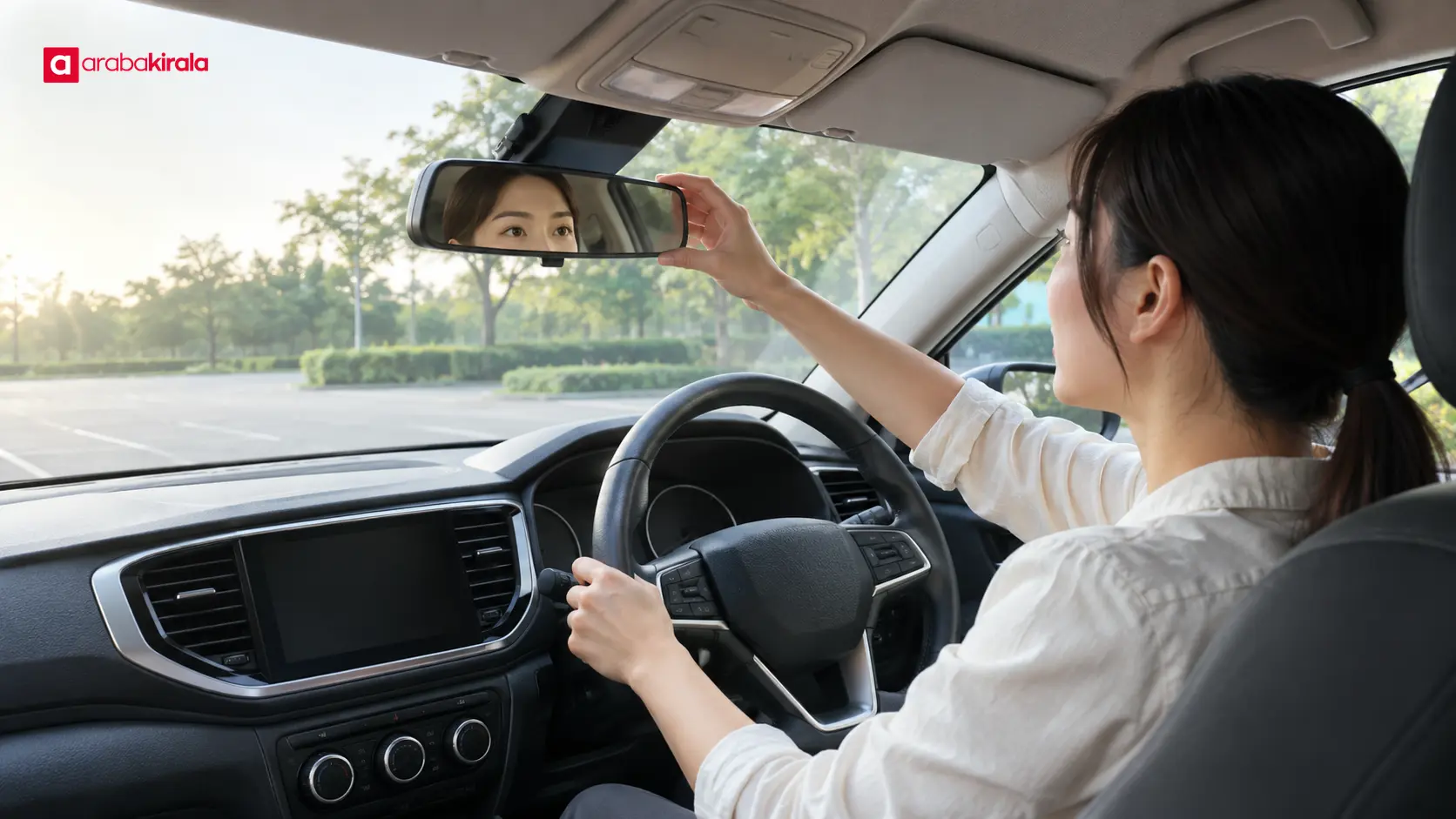
Start with the rear-view mirror and confirm that you can see through the rear window. Then adjust the left and right side mirrors while remaining in your usual seated position. The aim is a useful view of traffic around the vehicle. How much of the car’s own body appears in a mirror can vary with its design and shape.
Adjust mirrors before moving off. Searching for a mirror control or changing an angle while driving can take attention away from the road. Check for dirt, condensation, or anything else that reduces the view. Rain, darkness, and low light can make it harder to judge what you see, so match your driving to visibility conditions.
Do not confuse the mirror view with a complete view
Mirrors help you see behind and beside the vehicle, but some areas next to it may not appear in them. Before changing lanes or manoeuvring, use the mirrors and then make a brief direct observation when it is safe to do so. A glance over your shoulder complements mirror use; it does not make mirror adjustment unnecessary.
When parking or leaving a confined space, do not rely on just one mirror. Use the windows and mirrors, and look directly around the car to judge the space between it, pedestrians, and fixed obstacles. Arrange luggage and cabin items so they do not block your view.
Reach to controls and ease of getting in and out
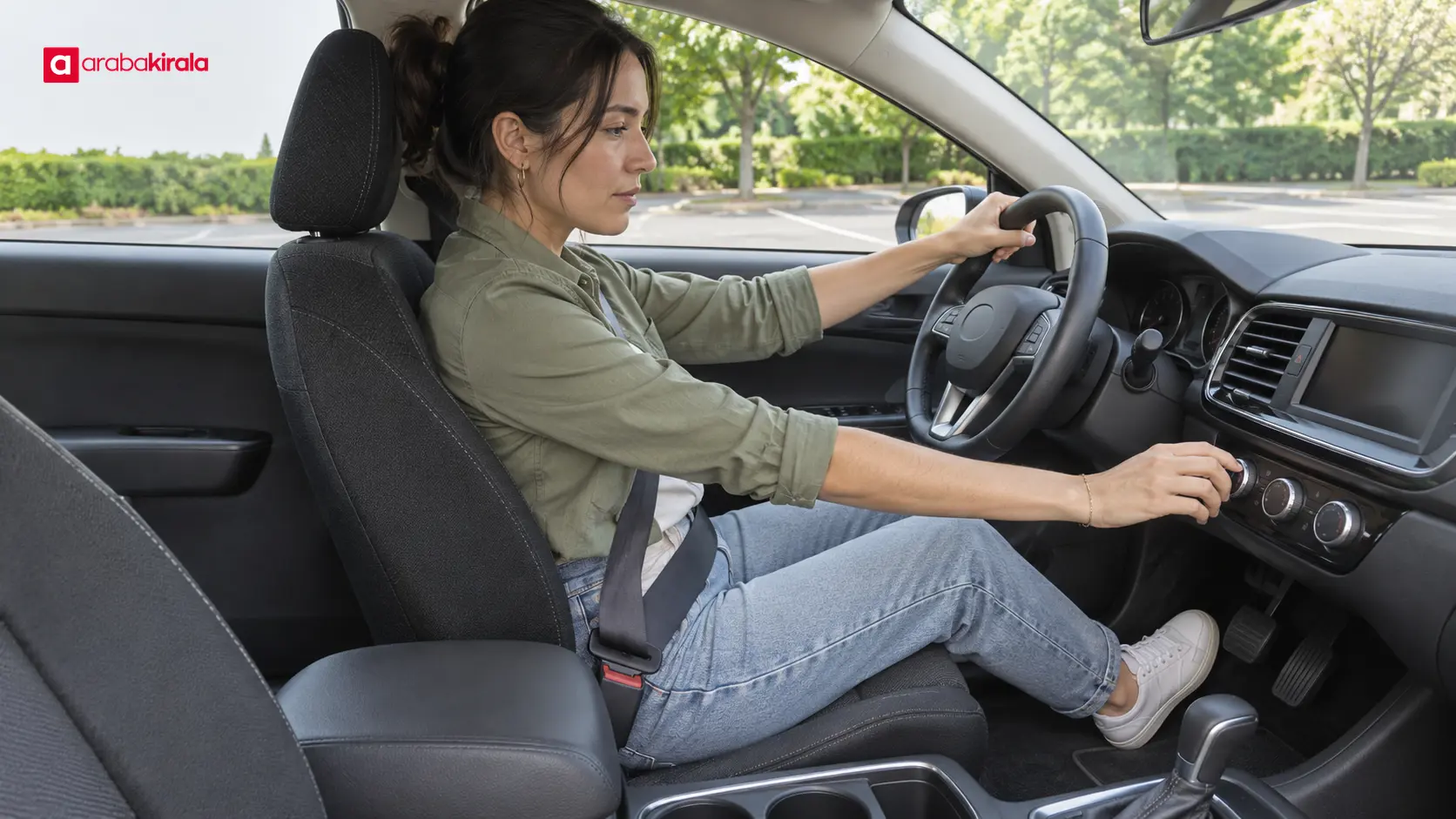
Before moving, locate the gear selector, indicators, lights, wipers, hazard warning control, and parking brake. Control layouts differ between vehicles. Learn which control operates each function while parked. Avoid exploring menus or unfamiliar screen functions while the car is moving.
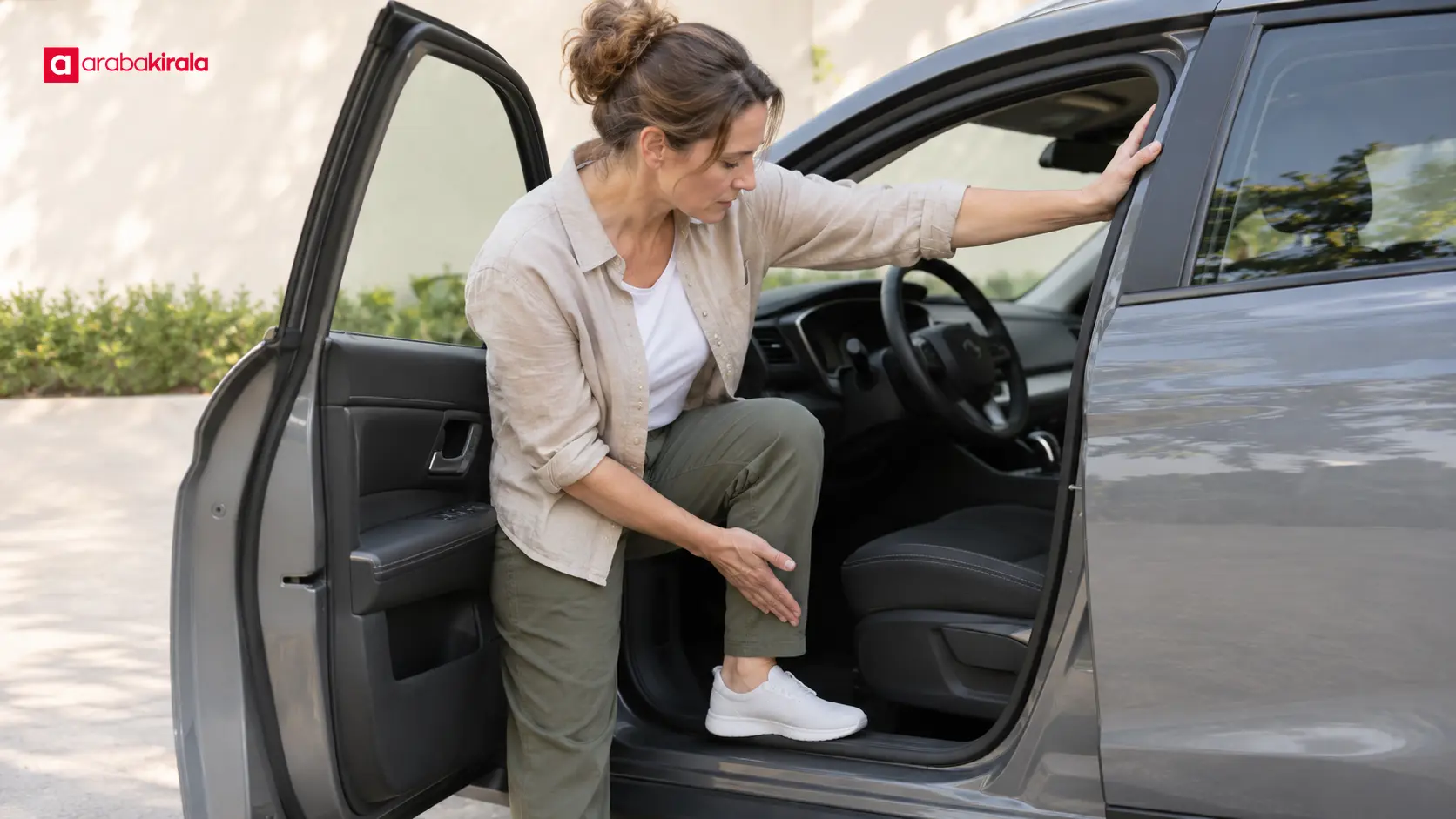
Check whether the door opening, seat height, and sill allow you to get in and out comfortably. If you have a mobility, pain, or balance related access need, assessing it before collection can help you ask more precise questions about vehicle suitability and handover arrangements. Do not assume that a car is physically accessible based only on its model name.
Vehicle types, seat adjustment, control layouts, and access features vary. If you have a specific requirement, ask the branch you plan to rent from about the relevant features before booking or collection. Where useful, inspect the actual vehicle and confirm the door opening, seating position, and reach to essential controls.
A short check sequence before setting off
- Park safely and set the seat to suit your height and posture.
- Check that you can reach the steering wheel, pedals, and gear selector comfortably.
- Adjust the rear-view and side mirrors from the driver’s seat and look for anything obstructing your view.
- Fasten your seat belt and check the backrest and head restraint.
- Locate the indicator, lighting, wiper, and parking brake controls.
- Assess whether entering and leaving the vehicle works for your needs.
- If a visibility or control access issue remains, speak with the branch before moving the car.
After completing the checks, look around again and make the first manoeuvre carefully. Do not assume that the seat and mirror positions left by another driver are right for you. When drivers change, each person should check and adjust the position before setting off.
Summary and next step
A rental car pre-drive visibility check is more than a quick mirror adjustment. It considers the seat, steering wheel, pedals, belt, mirrors, and controls together. Complete the checks while stationary, tailor them to your own posture, and continue using direct observation as part of safe manoeuvring.
If you have a particular access or seating requirement, tell the branch you plan to rent from and ask about the relevant vehicle features. Once you see the car, ask for assistance before driving if the visibility or control access does not meet your needs. This helps you begin the trip with a clearer understanding of the vehicle.
Frequently Asked Questions
Should I adjust the mirrors before driving?
Yes. Settle into your normal driving position while the car is safely parked, then adjust the mirrors. Looking for controls or changing mirror angles on the move can distract you from the road.
Do correctly adjusted mirrors remove all blind spots?
No. Mirrors show important areas around the car, but they do not cover every space beside it. Before a manoeuvre or lane change, combine mirror checks with a safe direct observation.
What should I do if I cannot adjust the seat in my rental car?
Do not move the car or force the adjustment mechanism. Ask the rental branch to explain how it works. If the seat cannot meet your driving position needs, raise the issue before setting off.
What should I check when choosing a car for a mobility need?
Consider the door opening, sill height, space to transfer into the seat, and access to driving controls. Share your requirement with the branch before booking and confirm whether the specific vehicle and collection arrangements will work for you.
Should I readjust the car when another person takes over driving?
Yes. Drivers differ in height, posture, and visibility needs. Each driver should check the seat, steering wheel, and mirrors for themselves before moving the car.
Related Articles
- How to Spot Driver Fatigue and Plan Breaks When Renting a Car
- Car Rental Reservation Confirmation and Travel Documents: A Pre-Trip Guide
- Information Needed to Rent a Car: Pickup Preparation
Legal Disclaimer: All content, articles and information on the Araba Kirala website are provided solely to inform users. No information shared on this website constitutes definitive advice or guidance. Araba Kirala Teknoloji A.Ş. and its authors cannot be held responsible for any direct or indirect damages arising from the application of information on the website. For all questions and requests regarding car rental, please contact the office from which you will rent your vehicle.
 Add ArabaKirala as a preferred source on Google