
What Do Pre- and Post-Race Technical Checks Cover in WRC Rally Cars?
Published: November 3, 2026 • Reading Time: 7 min • Last Updated: November 3, 2026 • Author: Merve B.
A guide to the purpose of WRC technical checks before a rally, during competition and after the finish, including safety, identification, compliance and parc fermé inspections.
Contents
- What does scrutineering verify?
- What can be checked before the rally?
- Why identification marks, documents and seals matter
- How do additional checks work during a rally?
- Parc fermé and final inspection after the finish
- Key terms for understanding the process
- Why technical checks are part of the rally result
- Summary and where to check the details
- Frequently Asked Questions
WRC technical checks are inspections of a rally car’s compliance with the applicable technical rules and safety requirements at different stages of an event. This guide explains the purpose of pre-event scrutineering, why further checks can take place during a rally, and how parc fermé and selected inspections work after the finish. Scrutineering is not a one-time acceptance step: the car is expected to remain compliant throughout the competition.
What does scrutineering verify?
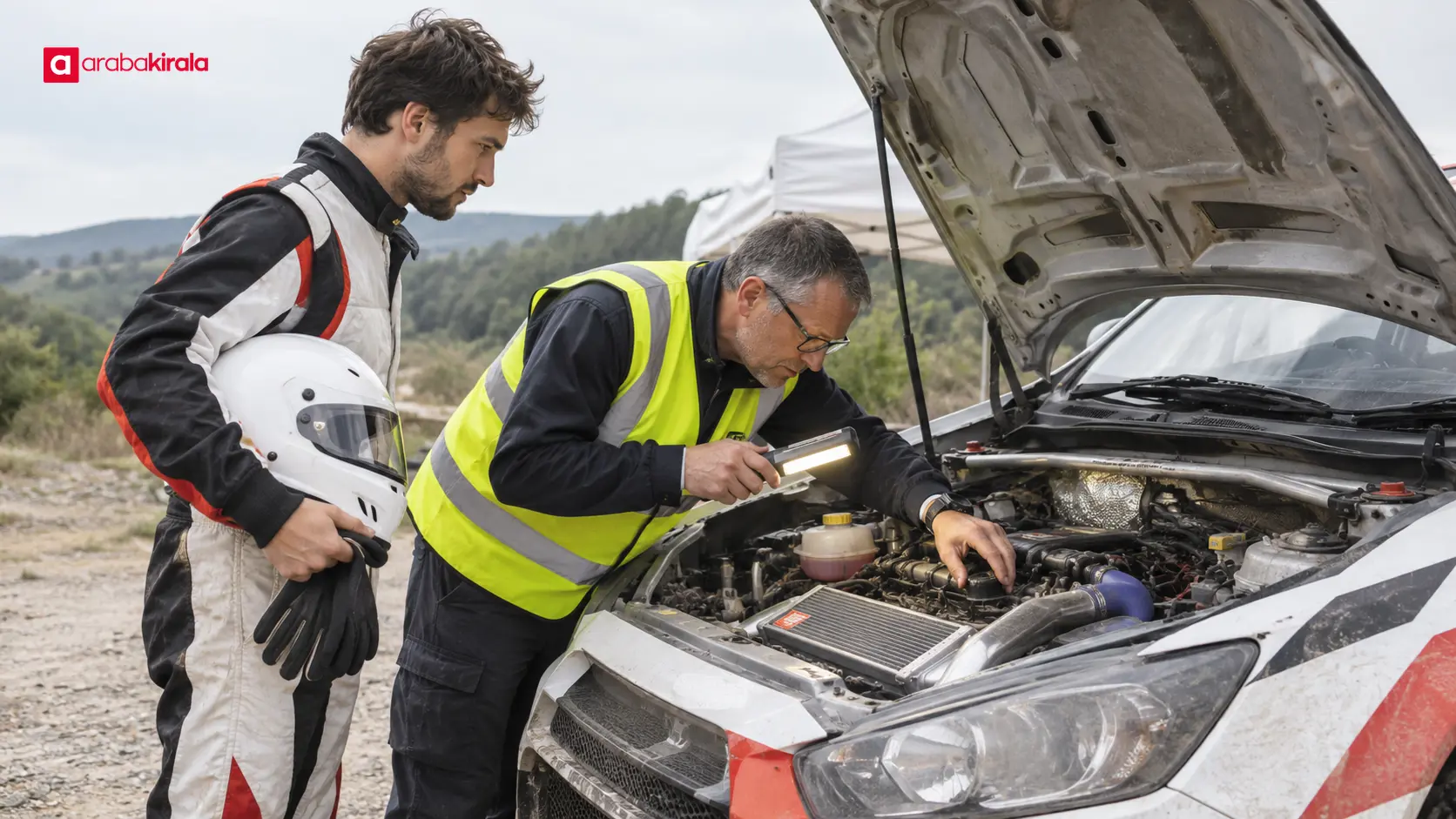
Rally cars are prepared for defined classes and technical regulations. Scrutineering assesses whether a car matches the category it is entered in and the rules that apply to it. It differs from an ordinary service inspection: the purpose is not simply to find a faulty part, but to check technical eligibility and relevant safety features against the rules for competition.
The scope depends on the event regulations, the car’s class and what the technical officials need to verify. It would therefore be inaccurate to say that every WRC car is checked for the same parts, in the same order or to the same depth. The current FIA WRC Sporting Regulations allow technical officials to inspect a car in detail before, during and after a rally. The technical provisions for each car class define the requirements used to assess its compliance.
What can be checked before the rally?
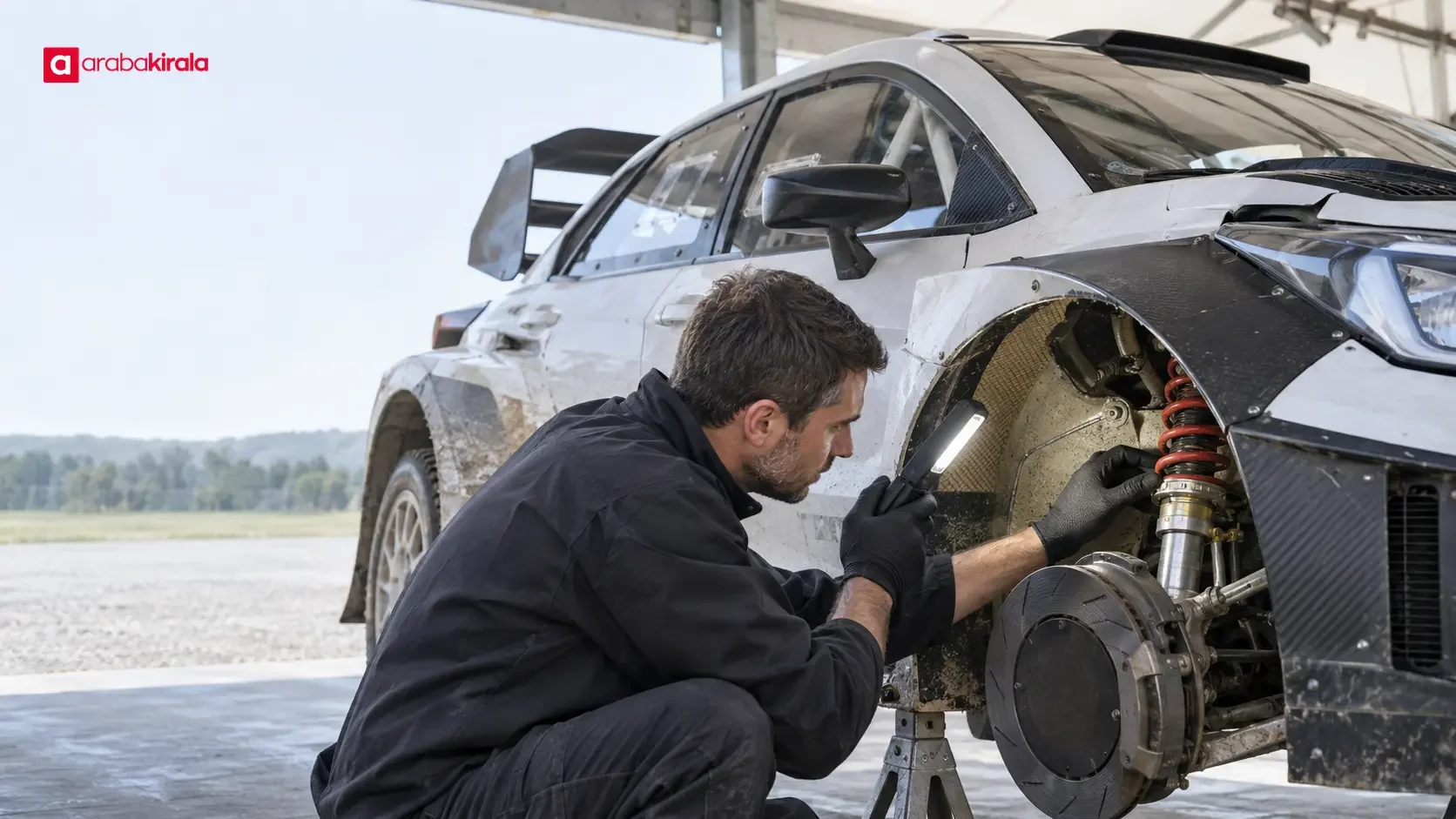
Pre-event scrutineering records the car’s initial technical condition and identity, creating a reference for later checks. Officials may use identification marks or seals on the car. These help identify particular components and track them after inspection. Preserving marked or sealed components helps officials assess whether the car’s condition has changed since the initial check.
The inspection may cover compliance with the car’s technical definition as well as safety-related requirements. The protective equipment intended for the driver and co-driver can also be checked under the applicable event rules. Officials may need to handle a component to gain access or make a measurement. The competitor is responsible for ensuring that anything handled during a check is correctly reinstalled.
Why identification marks, documents and seals matter
Identification marks help officials trace a car or particular components. Seals help preserve the defined state of inspected parts. They are not a label that proves the whole car complies; they are part of the inspection and record-keeping process. FIA regulations may require relevant technical documents to be available for checks and identification marks to remain intact until the rules permit otherwise.
If a mark is damaged or a component needs to be removed, the team should follow the applicable event procedure and the technical officials’ direction. It should not assume that the change is automatically acceptable. This makes it possible to explain the reason and scope of an intervention during a later inspection.
How do additional checks work during a rally?
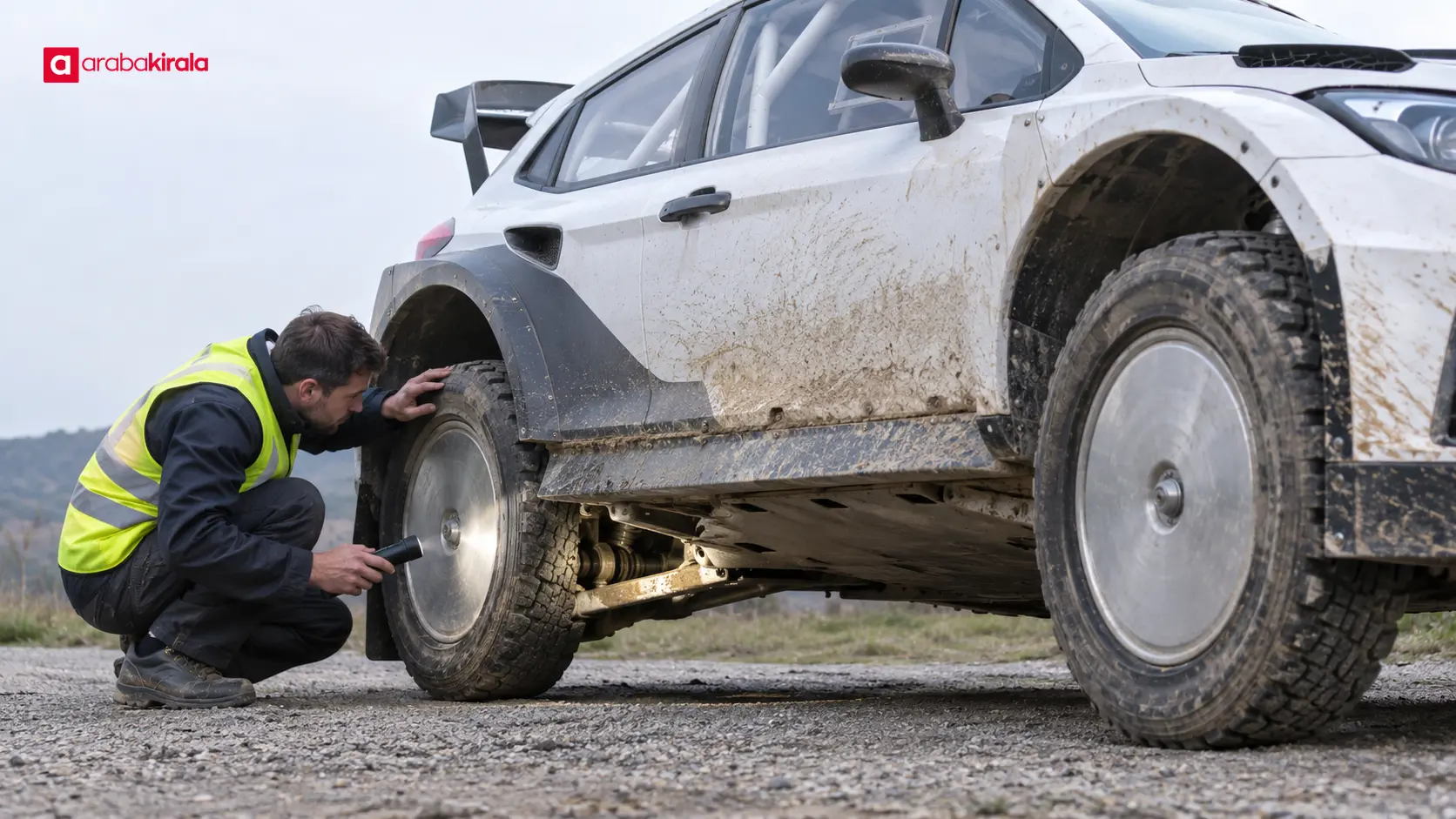
Passing the initial inspection does not mean the car will not be checked again. Under the Sporting Regulations, FIA technical officials may carry out further inspections of a car or safety equipment during the rally. These checks help assess whether compliance continues and whether the rules are being followed at different stages of the event.
Stage surfaces, speed, vibration and contact can place significant loads on mechanical components. An intermediate inspection may therefore identify a condition that was not apparent earlier or verify the status of a regulated part. This does not mean that a particular check takes place after every stage; the timing and scope depend on the event rules and the technical officials’ assessment.
If a component is handled during a check, the team must ensure it is properly refitted. Preserving identification marks and seals also matters when they are present. A service-area repair and an official compliance check are different tasks: a repair addresses a fault, while scrutineering evaluates compliance with the relevant rules. A component working properly does not, on its own, show that it meets the technical regulations.
Parc fermé and final inspection after the finish
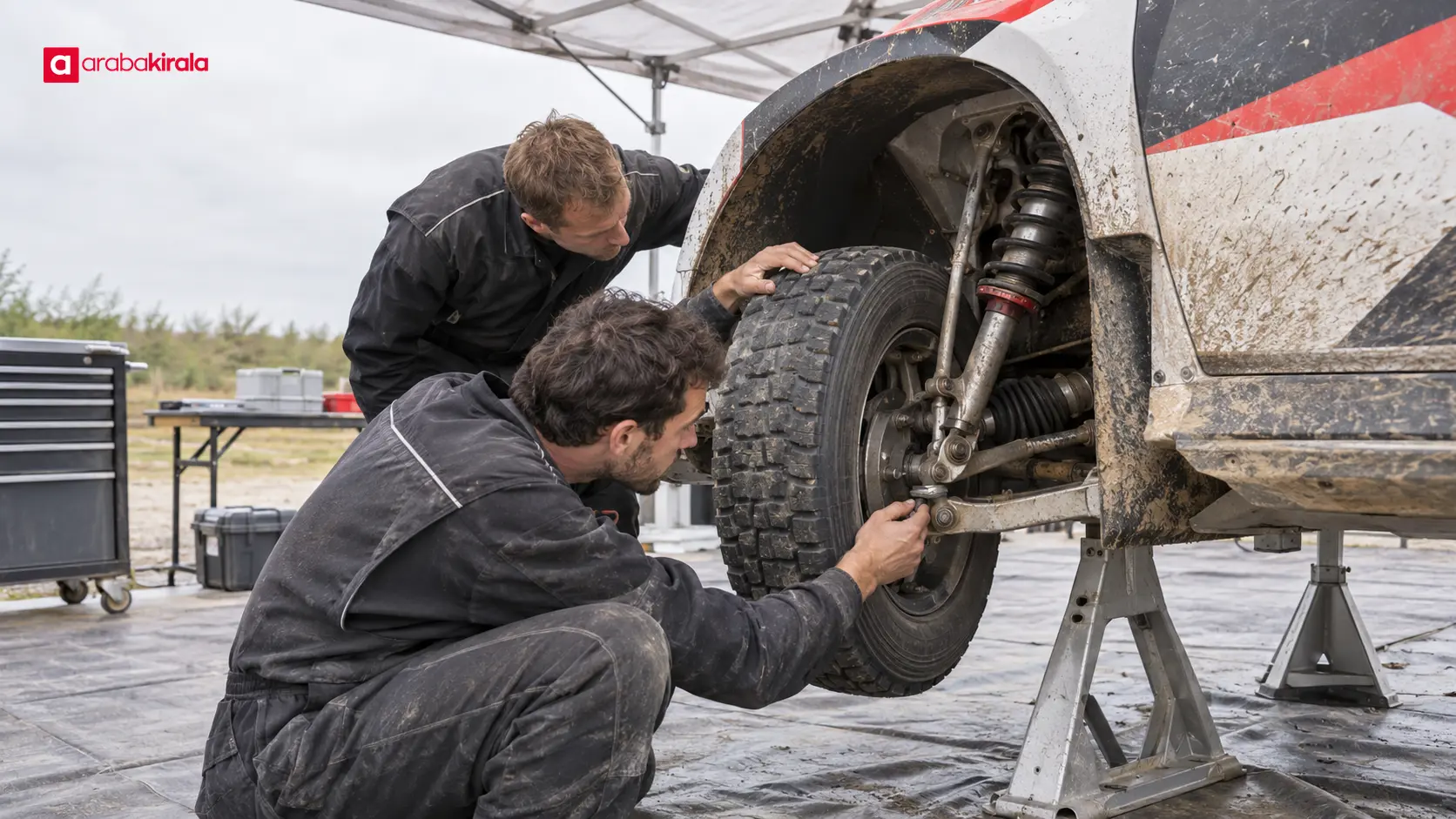
After finish formalities, cars may be placed in parc fermé. This is a designated area where cars are held under specified conditions until the inspection and release process is complete. The arrangement keeps the car available for examination and helps prevent unauthorised changes. Parc fermé does not mean that every car will be completely dismantled.
The FIA WRC Sporting Regulations allow selected cars to undergo final technical inspection, including checks that involve removing components. Selection may follow the procedures in the regulations, such as an officials’ decision, a protest or a technical delegate’s recommendation. A dismantling inspection makes it possible to assess particular components in greater detail against measurements or technical definitions. The findings are handled under the applicable event procedures.
The publication of a provisional classification and the end of technical checks do not always happen at the same time. If final checks are still under way, the car remains subject to technical evaluation. For spectators, the key distinction is that crossing the finish completes the sporting stage; the final technical assessment becomes clear once the relevant inspection procedures have concluded.
Key terms for understanding the process
- Scrutineering: Inspection of the car and, where required, its equipment against technical regulations.
- Compliance: Conformity with the car’s competition class and applicable technical provisions; it does not simply mean that the car runs without faults.
- Identification mark and seal: Markings that help identify a car or particular components during later checks.
- Additional check: A further compliance or safety inspection that may take place during a rally after pre-event scrutineering.
- Parc fermé: A designated holding area for cars during post-finish checks and the release process.
- Final dismantling inspection: A more detailed technical examination of a selected car that may involve removing parts.
Why technical checks are part of the rally result
Rally performance is not determined by stage times alone. A car must comply with the technical definition permitted for its class, meet safety requirements and remain compliant throughout the event. Checks help teams compete within the same technical framework and allow officials to compare the car presented before the rally with its condition at the finish.
Technical oversight is also part of the event’s safety approach. A possible issue with a car or its equipment may require assessment by the officials and application of the relevant procedure. It is not appropriate to assume a particular outcome or penalty without knowing the circumstances; the matter is dealt with under the event’s official rules.
Summary and where to check the details
WRC technical checks can include pre-event scrutineering, additional inspections during the rally, and parc fermé and final checks after the finish. The initial inspection establishes a reference for the car and equipment; checks during competition monitor continuing compliance; final inspections allow selected cars to receive closer scrutiny. The scope varies with the class and event regulations.
To verify a particular procedure for a rally, consult that season’s FIA WRC Sporting and Technical Regulations together with the event’s supplementary regulations. These official documents define the relevant checks and procedures.
Frequently Asked Questions
Are WRC technical checks carried out only before the rally?
No. Pre-event scrutineering is the initial inspection, but FIA technical officials may carry out additional checks during the rally, and selected cars may be examined after the finish. The scope at each stage depends on the event rules and the officials’ assessment.
Is every rally car dismantled after the finish?
No. A final inspection involving dismantling may apply to selected cars. FIA regulations provide for this type of check through specified procedures, such as an officials’ decision, a protest or a technical recommendation; it is not automatically performed on every car.
What does parc fermé mean?
Parc fermé is a designated area where cars are held under specified conditions during post-finish checks and before release. Its purpose is to keep a car in a condition suitable for examination. The event regulations govern how the area is managed.
Why are seals or identification marks used?
They help identify a car or particular components and track them in later checks. Their presence alone does not establish that the whole car complies; they support the technical inspection process. Preserving them and following the correct procedure if intervention is needed are important.
Is a pre-event inspection the same as a service-area repair?
No. A repair aims to fix a fault or restore the car’s operation. A technical inspection assesses whether the car complies with technical and safety regulations. A part functioning correctly does not by itself prove that it is eligible under the competition rules.
Where can I find the detailed inspection rules for an event?
Consult the FIA WRC Sporting and Technical Regulations for the relevant season and the supplementary regulations for the rally. These official documents explain event-specific details such as inspection procedures, timing and required documentation.
Legal Disclaimer: All content, articles and information on the Araba Kirala website are provided solely to inform users. No information shared on this website constitutes definitive advice or guidance. Araba Kirala Teknoloji A.Ş. and its authors cannot be held responsible for any direct or indirect damages arising from the application of information on the website. For all questions and requests regarding car rental, please contact the office from which you will rent your vehicle.












