How Car Maintenance and Teamwork Work in a WRC Service Park
Published: November 2, 2026 • Reading Time: 7 min • Last Updated: November 2, 2026 • Author: Merve B.
Learn how rally cars are checked between stages, how crews divide service tasks, and what spectators should know in a WRC service park.
Contents
- What does a WRC service park do?
- Why is service time important?
- What checks may teams perform?
- Wheels, tyres, and suspension
- Engine bay, fluids, and connections
- Bodywork, doors, and safety equipment
- How is teamwork organized?
- What are the usual stages of a service visit?
- What should spectators keep in mind?
- How can you follow reliable service park information?
- Summary and next step
- Frequently Asked Questions
A WRC service park is where rally cars are inspected and maintained between stages, while crew members work together within an allocated service window. This guide explains what the service park does, which parts of a car may be checked, how teams divide their work, and how a service visit generally progresses. It will help you follow the activity around a rally car when watching an event.
What does a WRC service park do?
Rally is not one continuous race on a closed circuit. Crews compete against the clock on special stages, then travel between stages on road sections and through designated service areas. The service park is the central place where a car’s technical condition can be addressed during the time allowed by the event. The aim is to prepare the car safely and keep it functioning for the next part of the rally.
A service park should not be thought of as a workshop where a car can always be rebuilt from end to end. The available work depends on the car’s condition, damage found, parts on hand, time window, and applicable competition regulations. A crew cannot resolve every issue at once, so checks and repairs are prioritized. Findings that affect safety or the car’s operation receive close attention.
Why is service time important?
A service window is a planned, limited period in which the crew can work on the car. It makes advance task allocation and preparation of tools and parts important. Time management does not simply mean working faster. Finding the right part, carrying out work in the correct order, and checking completed work all contribute to an effective service visit.
The number and duration of service visits in a rally are set by that event’s regulations and schedule. Details can vary between events and seasons, so the official event programme and FIA notices are the right sources for a current service timetable. For spectators, the key point is that activity in the service park follows the stage programme and the permitted work period.
What checks may teams perform?
The service crew considers feedback from the driver and co-driver alongside what they can observe on the car. After a stage, they may report a new sound, vibration, steering feel, braking behavior, or a change in how the engine runs. These notes do not by themselves establish a diagnosis; they help technicians decide where to inspect.
Wheels, tyres, and suspension
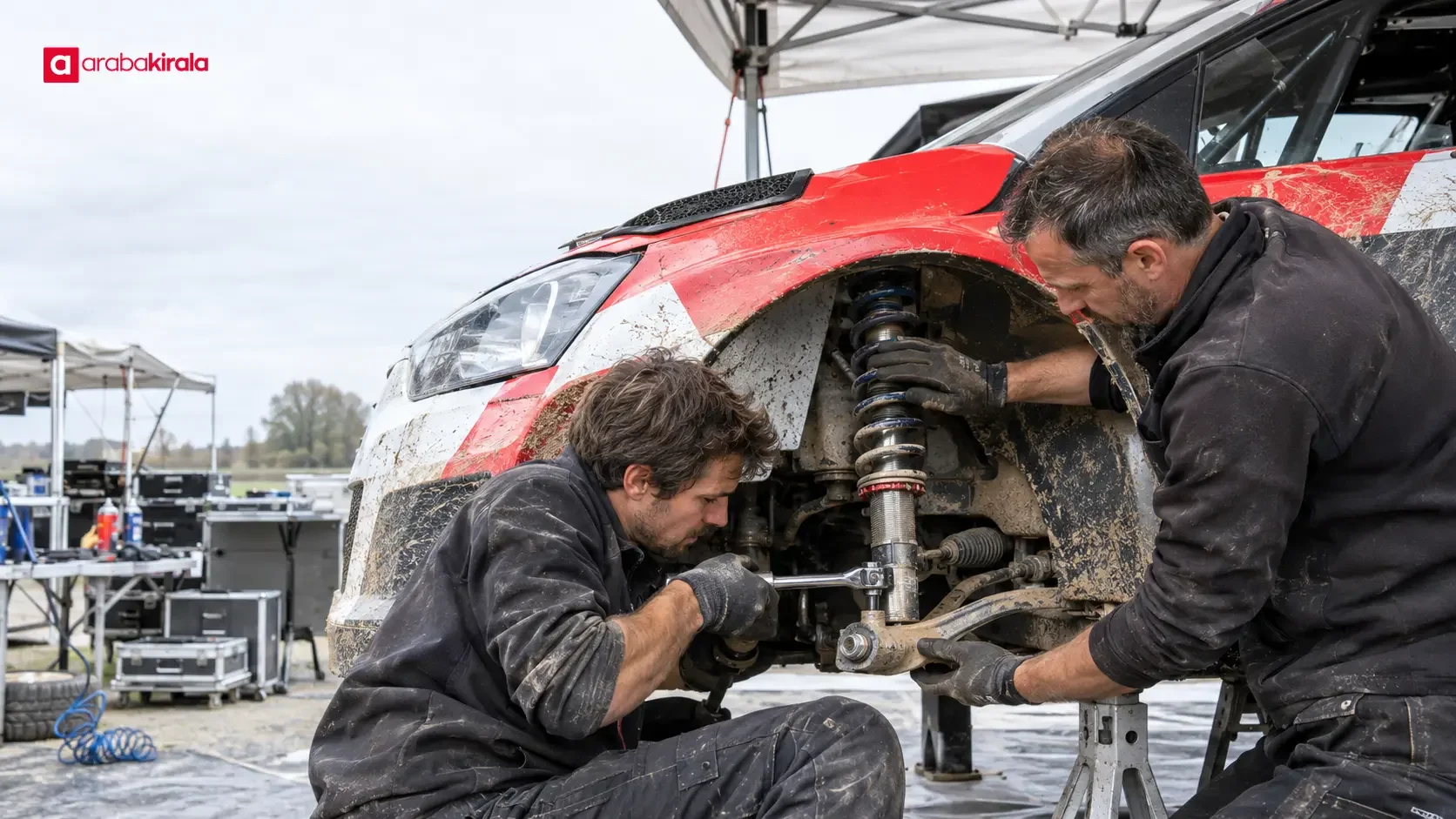
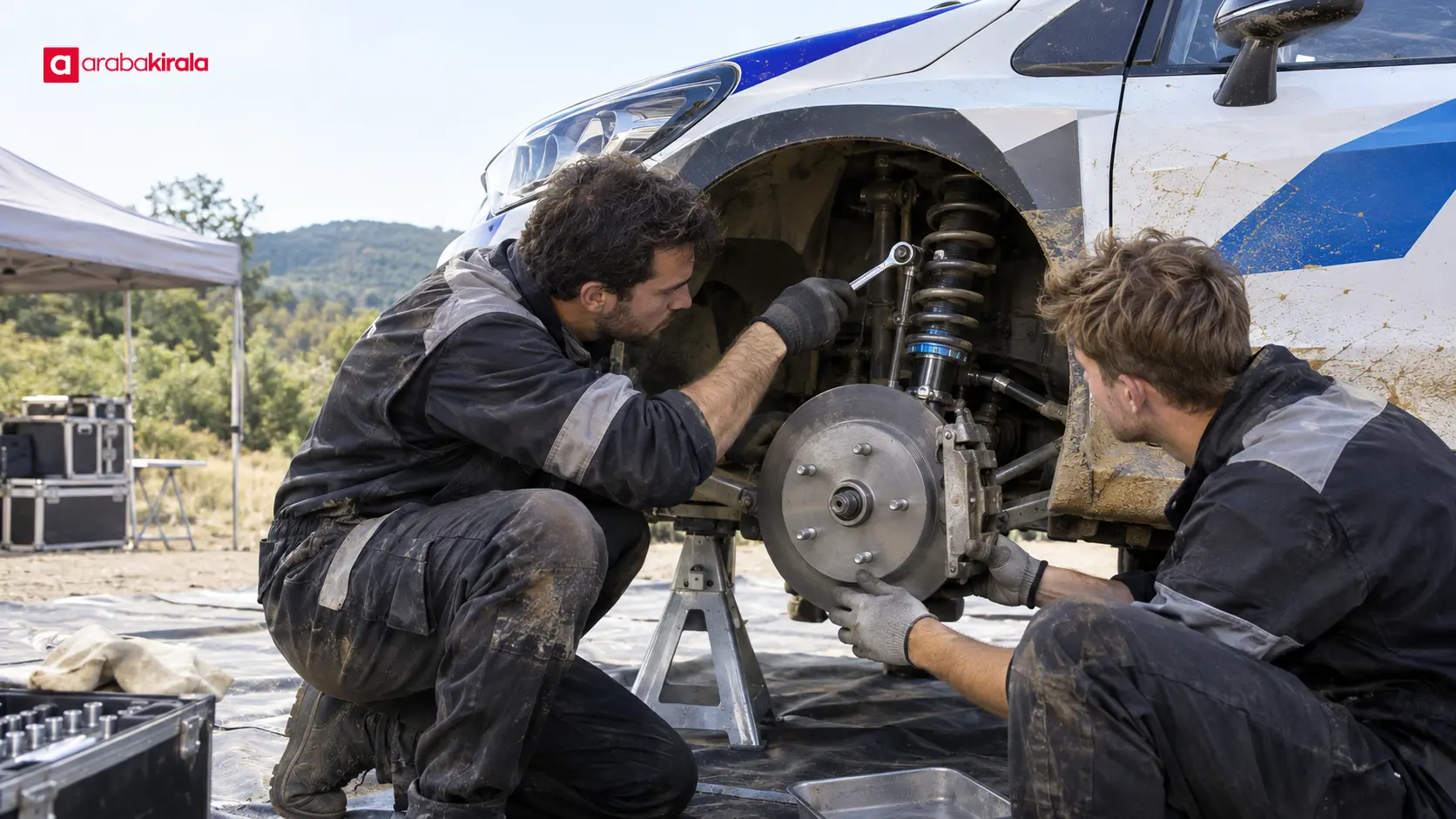
Tyre surfaces, wear patterns, and visible damage may be inspected. Wheel attachments, suspension components, and the underside of the car can also be checked for the effects of stage conditions. Contact with stones, ruts, or rough ground may warrant a closer look at underbody protection or suspension parts. The extent of an inspection depends on the car’s condition and the team’s work priorities.
Engine bay, fluids, and connections
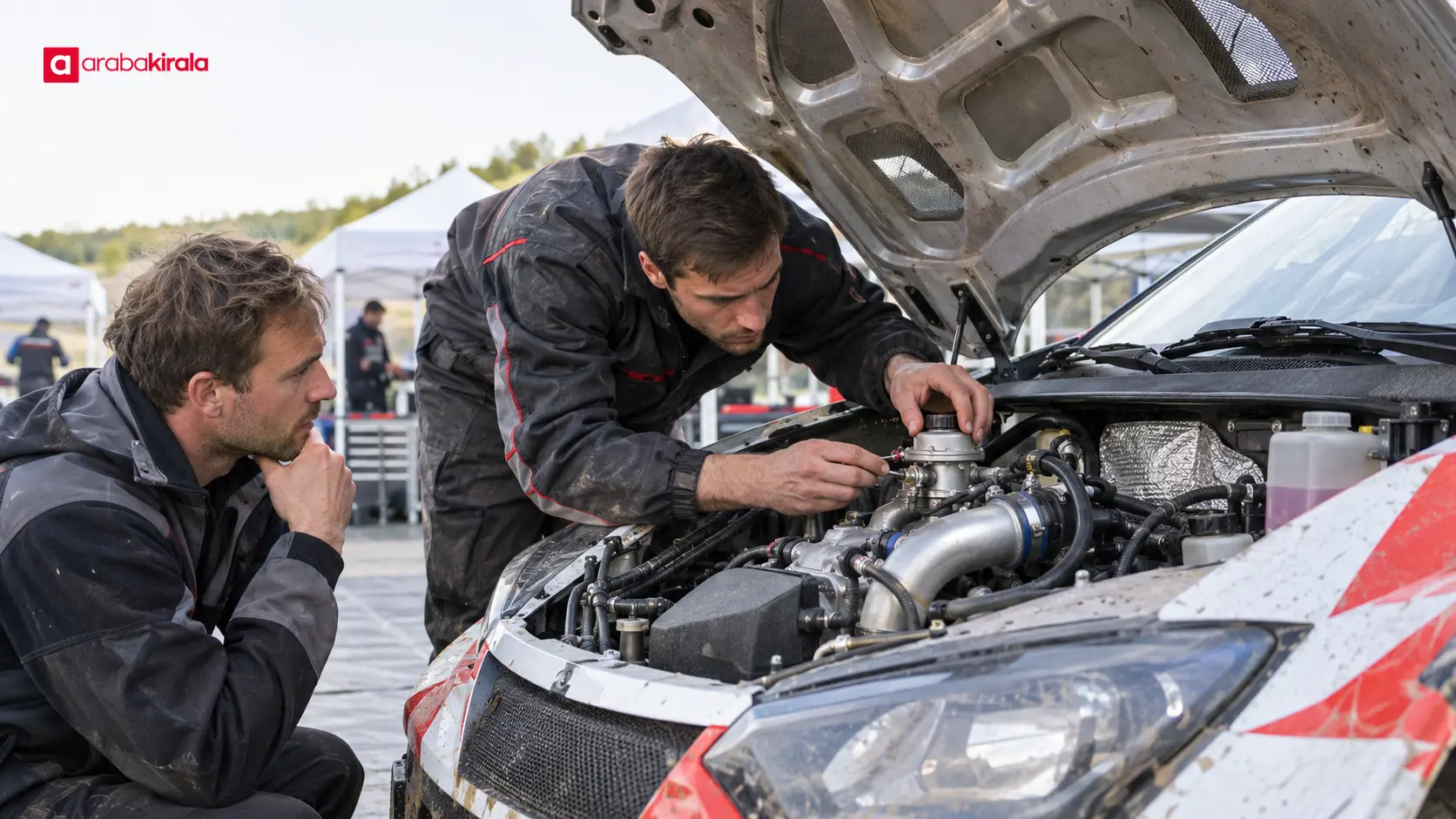
Checks under the bonnet may include an assessment of components, connections, and fluid condition around the engine. If a sign of a leak or a part that appears loose is found, the crew investigates its source and decides what action is appropriate. Spectators and drivers should not imitate these checks by working on a competition car. Rally vehicles require technical knowledge and a controlled work environment.
Bodywork, doors, and safety equipment
Body damage, the condition of doors, and accessible safety equipment can also be part of a service assessment. Visible damage does not automatically mean that a car must retire; its effect is assessed by the technical team under the rules in force for the event. The crew makes repair decisions in light of safety, function, and the time remaining.
How is teamwork organized?
Several tasks may happen at once in a service park. Mechanics can inspect different areas while a crew chief or service lead tracks priorities and completion. The driver and co-driver communicate changes they felt or observed on the stage in clear, concise terms. This information helps technicians decide where to focus first.
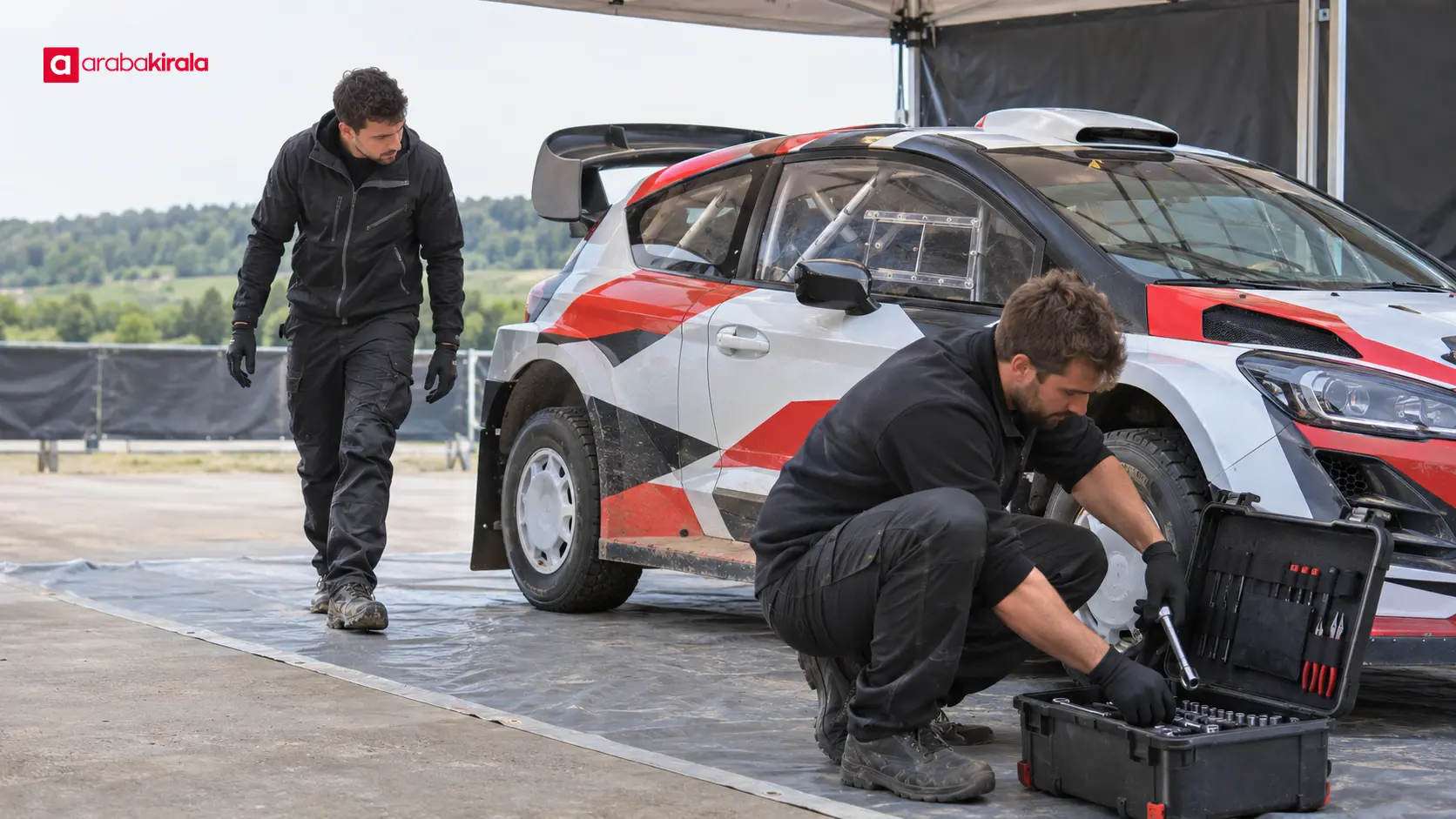
Dividing responsibilities helps reduce duplicated work and missed checks. One technician may inspect a particular component while another handles a separate task, but the crew still needs to make sure the work fits together before it is complete. Keeping tools organized, locating the required part quickly, and keeping removed parts identifiable are also part of an efficient workflow.
Communication matters as much as technical skill during service. Team members need to understand what was found, where it was found, and what work was done. That makes it possible to reassess the same area if needed and to conduct a final walk-around after the work is complete.
What are the usual stages of a service visit?
- Gather information: The driver and co-driver report symptoms and changes in the car’s behavior on the stage.
- Initial inspection: The crew reviews the car’s overall condition and prioritizes the findings.
- Assign tasks: Mechanics take on specific checks or repairs according to the time and needs.
- Carry out the work: The crew follows the technical requirements and conditions of the competition.
- Check and clear: The team reviews its work, puts tools away, and assesses whether the car is ready for the next section.
Not every service visit follows these steps with the same scope. The car’s condition and the flow of the rally affect the crew’s focus. Some visits emphasize inspection and routine preparation, while damage may call for more extensive work.
What should spectators keep in mind?
A service area is a workplace where crews are active and cars move. Spectators should use only the viewing areas designated by the event and stay clear of work zones, equipment, and vehicle routes. Approaching a car, touching a component, or interrupting a mechanic is unsafe and can disrupt the team’s work.
Follow barriers and signs when taking photographs, and avoid blocking the work area with a flash or camera equipment. Children should remain with an adult, and everyone should take care around busy walkways. Access arrangements can vary by event, so follow the organizer’s current site instructions.
How can you follow reliable service park information?
Do not assume every rally car uses the same components, every team follows an identical workflow, or every visit has the same duration and scope. Car class, stage conditions, and the event’s official regulations affect what happens. For technical details or a current event timetable, consult official FIA and event-organizer sources. A single clip of an operation does not establish a universal rule for all crews.
When watching a service park, notice how tasks are divided around the car, how drivers report what happened on stage, and how the crew checks its work before finishing. These details show that rally performance is not limited to what happens behind the wheel. Technical preparation, safe work, and communication are part of the competition too.
Summary and next step
WRC service work brings together information from the stage, prioritized checks, task allocation, and a final review. The time window requires planning, but effective work is measured by more than speed. If you plan to attend a rally, check the current official programme and spectator instructions in advance, and stay in the designated viewing areas around the service park.
Frequently Asked Questions
How is a WRC service park different from a special stage?
A special stage is a road section where drivers compete against the clock. A service park is a work area where crews inspect and maintain cars during an allowed period. The two serve different purposes within the rally.
Can any repair be done in a service park?
Not every job is possible in every situation. The work depends on the car’s condition, available parts, the time window, and the technical regulations that apply to the event. The crew sets priorities in light of those factors.
How do the driver and co-driver help the service crew?
They report changes in sounds, vibration, control, or performance that they noticed on the stage. Their feedback guides the technicians’ inspection, while the cause still needs to be checked on the car.
Why do teams inspect tyres in the service park?
Tyre wear and visible damage provide information about stage conditions and the car’s state. The crew considers these observations with other checks when preparing for the next competition section.
Can spectators approach the cars?
Spectators should remain within areas the organizer has designated for viewing. Crossing barriers, entering work areas, or approaching the route of moving cars can be dangerous; follow the event’s site instructions.
Where can I find a rally’s service timetable?
Service schedules can vary by event. The event’s official programme and notices from the FIA or organizer are suitable sources for the current timetable.
Legal Disclaimer: All content, articles and information on the Araba Kirala website are provided solely to inform users. No information shared on this website constitutes definitive advice or guidance. Araba Kirala Teknoloji A.Ş. and its authors cannot be held responsible for any direct or indirect damages arising from the application of information on the website. For all questions and requests regarding car rental, please contact the office from which you will rent your vehicle.