
How Do Automotive Noise and Vibration Tests Assess Manufacturing Quality?
Published: October 15, 2026 • Reading Time: 7 min • Last Updated: October 15, 2026
Learn how noise and vibration testing evaluates vehicle comfort, component behavior, and production consistency, and how drivers can interpret what these tests reveal.
Contents
- What do noise, vibration, and harshness mean?
- Where do vehicle sounds and vibrations come from?
- Powertrain
- Tires, road, and body structure
- Airflow and cabin equipment
- How are the tests carried out?
- How do test results inform manufacturing quality?
- What limits should readers keep in mind?
- How can drivers use this information?
- Summary and next step
- Frequently Asked Questions
Automotive noise and vibration tests measure the sounds and motions a vehicle produces while operating, helping engineers assess comfort, component behavior, and consistency in manufacturing. This guide explains which sources are examined, how measurements are interpreted, and why the results matter to production quality and drivers.
What do noise, vibration, and harshness mean?
Vehicle engineers often assess noise, vibration, and harshness together, commonly shortened to NVH. Noise is sound that reaches occupants through the air or through the vehicle structure. Vibration is repeated movement of components or the body. Harshness describes how noticeable or abrupt those movements and impacts feel to people inside. The concepts are connected but not interchangeable. A sound may measure at a modest level while a vibration felt through the steering wheel still affects the driving experience.
The aim is not to make a vehicle completely silent. Engines, electric motors, tires, ventilation, and road contact all create sounds that can be part of normal operation. Evaluation considers a sound's level and character, the conditions in which it appears, and whether it matches the intended behavior of the vehicle. Production quality also involves consistency: vehicles built to the same design should show comparable behavior under comparable conditions, rather than unexplained differences in sound or vibration.
Where do vehicle sounds and vibrations come from?
Powertrain
Engines, electric drive units, transmissions, and auxiliary components can produce different sounds and vibrations during acceleration, steady-speed driving, or changes in load. Their frequency and intensity may change with engine speed or vehicle speed. Engineers look for these relationships to narrow down a source. For example, a sound tied to engine speed may point toward a different system than one tied to wheel rotation. A single measurement does not prove that a component is defective; operating conditions and other inspection findings matter.
Tires, road, and body structure
Contact between a tire and the road can create cabin rumble or impact sounds that vary with the road surface. Suspension and body connections influence how that energy travels into the vehicle. Measurements on smooth pavement, rough texture, or surface joints can show when more sound reaches the cabin. To interpret road-related noise, the surface and speed need to be part of the record. Otherwise, two measurements may describe different conditions rather than a meaningful change in the vehicle.
Airflow and cabin equipment
Airflow can be heard around windows, doors, and mirrors, particularly as speed changes. Ventilation fans, climate systems, door seals, and interior trim also contribute to cabin sound. A loose panel or two parts touching can create a brief rattle that occurs only within a particular vibration range. Test teams try to reproduce the same condition and connect the sound's location and timing with the vehicle state recorded during measurement.
How are the tests carried out?
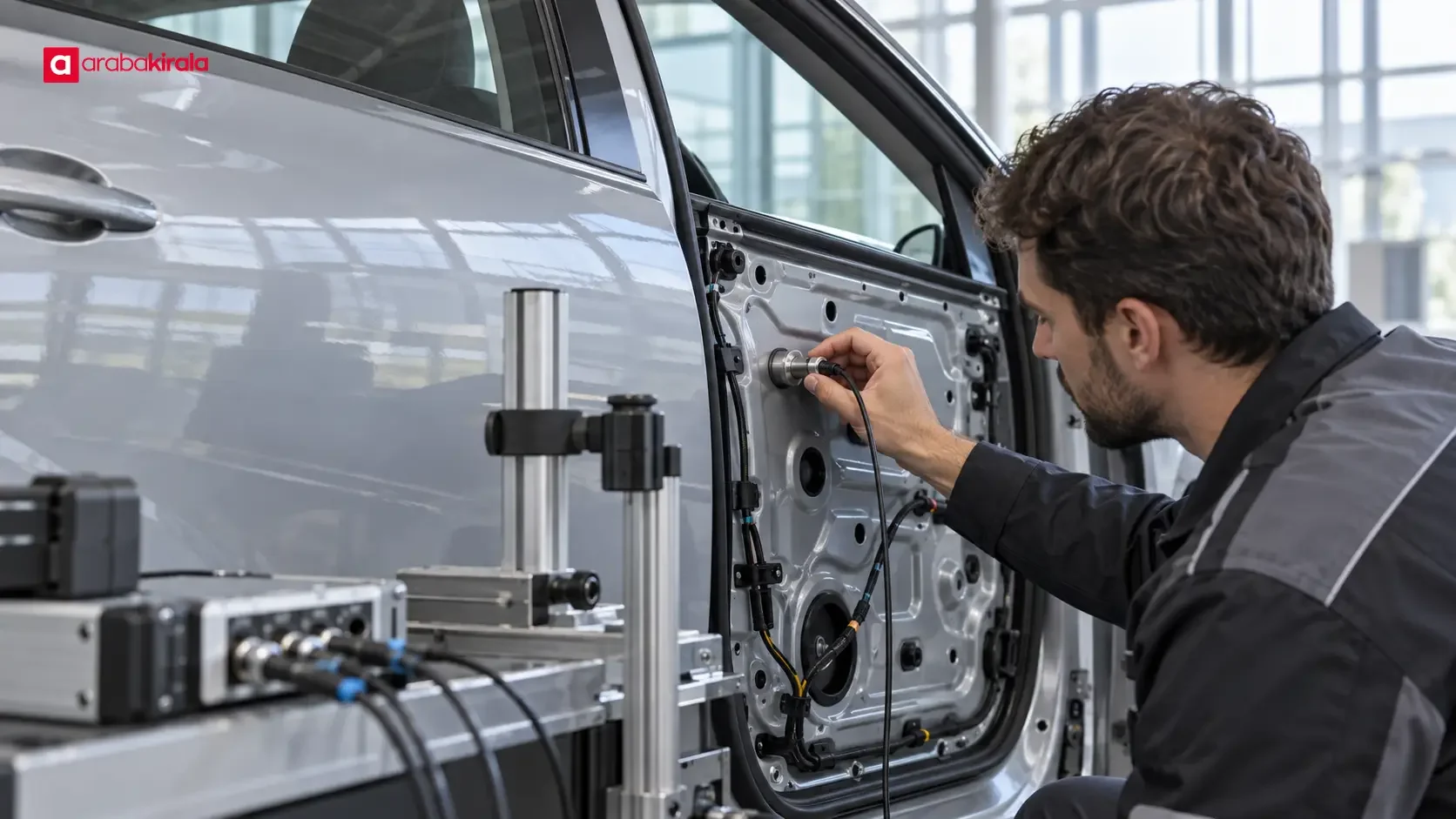
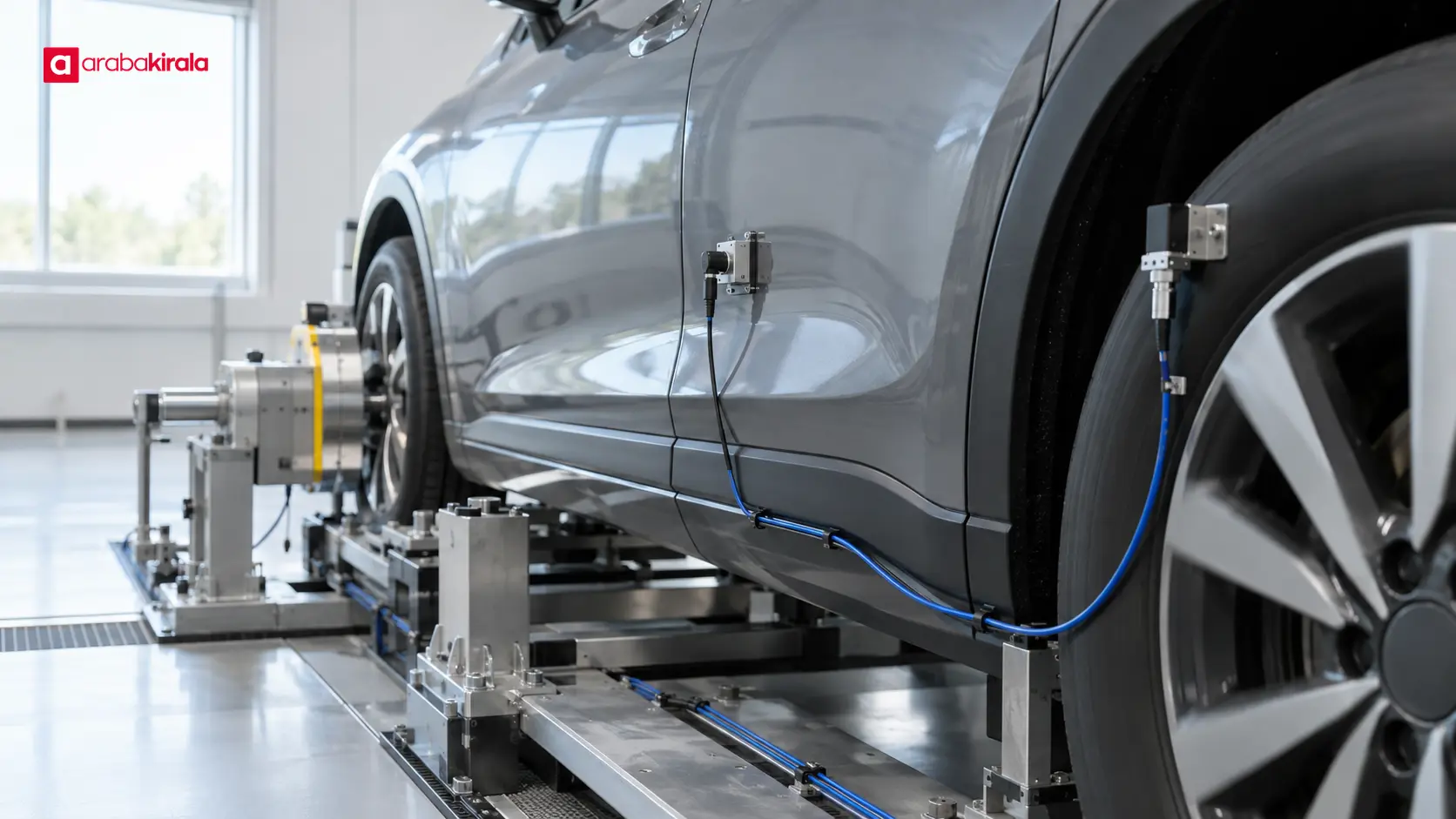
Testing begins with controlled preparation. The vehicle and test setup are readied, and microphones, accelerometers, or other sensors are placed where the relevant sound or motion needs to be observed. Sensor location matters: a microphone in the cabin captures sound near an occupant, while a sensor attached to the body can record structural movement. Calibrated equipment and notes about test conditions make later comparisons more useful.
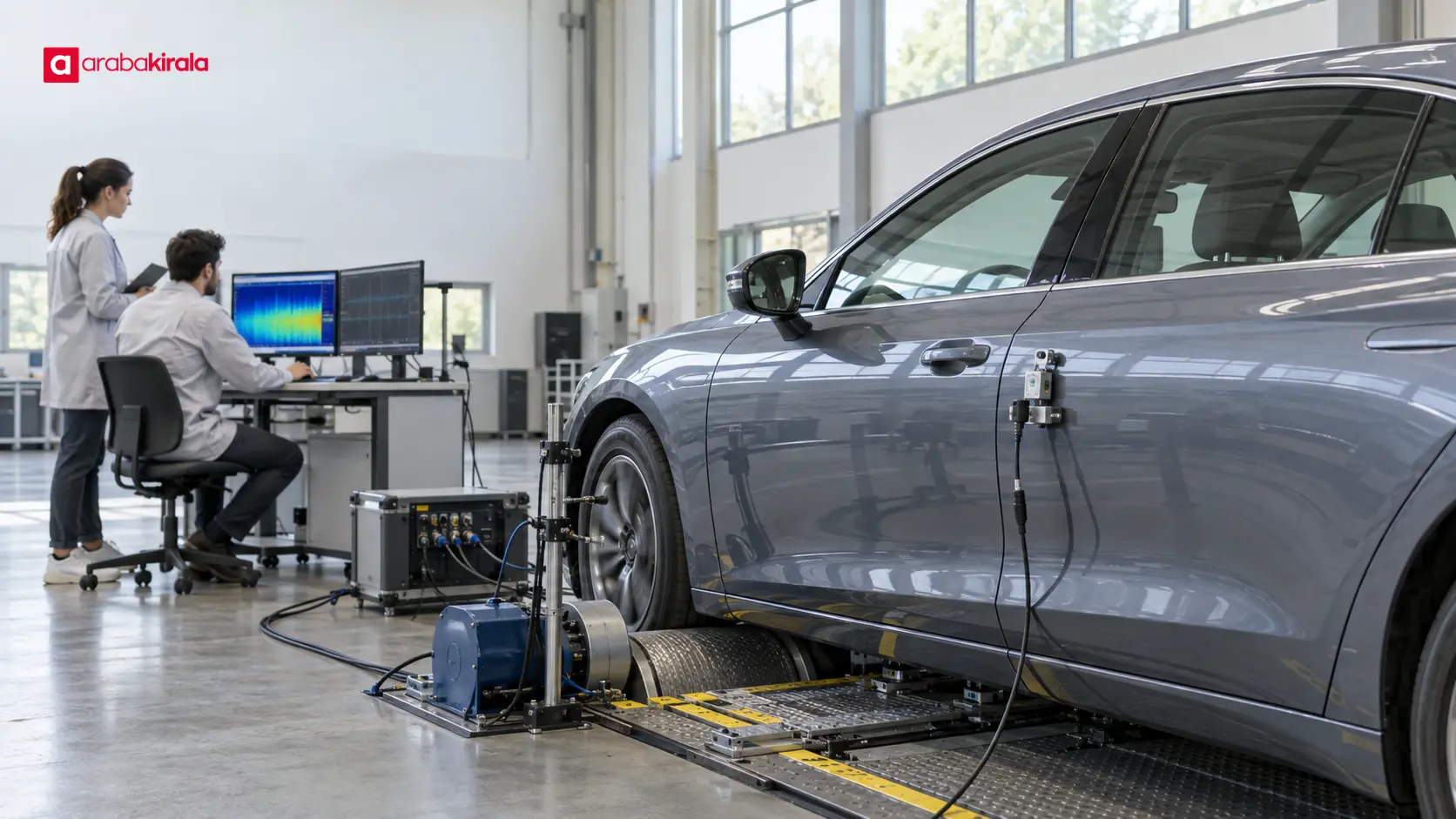
The team then applies selected operating conditions. A laboratory rig can examine engine or wheel behavior in a controlled way, while road testing can gather data across different speeds and surfaces. The plan depends on the vehicle and the symptom or design question being investigated. A reading at one speed does not represent every use condition. If cold and warm operation, acceleration, deceleration, or steady-speed behavior are compared, each condition needs to be identified in the record.
Instruments provide numerical data, but listening and physical inspection remain important. Specialists may describe a sound as a hum, whistle, click, or knock and note when it occurs. Sound pressure measurements indicate level, while frequency analysis can help identify vibration components associated with the sound. Neither measure makes the decision on its own. Engineers interpret it alongside observations, vehicle state, and the conditions of the test.
How do test results inform manufacturing quality?
During development, testing shows which sounds a design transmits into the cabin and how components respond in particular operating conditions. Engineers can compare findings with design targets and earlier measurements to identify areas for improvement. In production, checks on representative vehicles can indicate whether the process is producing consistent results across vehicles of the same design. Such checks do not amount to an absolute guarantee about every component or every possible use condition.
Repeatability is especially useful. Similar readings when the same test is repeated help establish whether both the measurement method and vehicle behavior are consistent. A rattle in one vehicle does not automatically establish a manufacturing fault. Its source might be a connection, road surface, accessory, normal operating sound, or another factor. To connect an observation to production quality, engineers examine patterns across vehicles and confirm that the conditions being compared are alike.
Sound quality is not just a decibel value. A short, sharp sound may be more intrusive than a lower, continuous rumble. How long it lasts, where it is heard, when it starts, and whether it repeats all matter. The location and strength of a vibration felt through the seat, floor, or controls also help describe the experience. This combination turns a measurement into a more useful account of how the vehicle behaves in use.
What limits should readers keep in mind?
A test result describes the conditions in which the measurement was made. Tire choice, road texture, temperature, vehicle load, and speed can all change sound and vibration. Comparisons are therefore most useful when these conditions are similar. A sound experienced in a cabin may also feel different from a laboratory reading because hearing, seating position, and surrounding noise affect perception.
Hearing a sound does not always mean there is a fault. A sound that is new, clearly increasing, or changing with steering, braking, or vehicle control may warrant professional inspection. Prioritize safe operation and follow the vehicle maker's maintenance guidance or consult a qualified service provider. Noise testing supports diagnosis and evaluation; it does not replace inspection or maintenance.
How can drivers use this information?
When getting to know a vehicle or collecting it, paying attention to sounds can help a driver give clearer feedback. Note the conditions in which a sound occurs so it can be distinguished from an ordinary operating sound or a later change. If cabin comfort matters when arranging a rental, a brief drive during pickup can help you assess seating position, visibility, and the sounds you notice under ordinary conditions. Ask the rental office about vehicle or location-specific inspection and selection details.
- Record the speed, road surface, and driving condition in which the sound appears.
- Note whether it is continuous or intermittent and whether it changes with engine or vehicle speed.
- Describe whether vibration is felt through the steering wheel, seat, floor, or another point.
- When comparing observations, consider whether tires, load, surface, and temperature are similar.
- Report sudden or pronounced changes to a qualified service provider for assessment.
Summary and next step
Automotive noise and vibration tests help identify sound sources and how a vehicle transmits them into the cabin. Measurements from microphones and vibration sensors, controlled test conditions, and expert listening together provide more useful evidence about design and production consistency. Interpret results with the test conditions, repeatability, and driving experience in mind. If you notice a clear change, record when it happens and seek a professional assessment; for a rental, confirm vehicle and location-specific details with the relevant office.

Frequently Asked Questions
Are noise testing and vibration testing the same thing?
No. Noise testing concerns audible sound, while vibration testing measures motion in components or the vehicle structure. The two can affect each other, but they may require different sensors and evaluation methods.
Does a rumble in a vehicle prove a manufacturing defect?
No. A rumble can come from tire-road interaction, the powertrain, airflow, or another source. Understanding it requires the conditions, measurements, and vehicle inspection findings to be considered together.
Why test at more than one speed or on more than one road surface?
Sound and vibration can change with vehicle speed, operating state, and road texture. Testing different conditions helps determine which factors affect the result and defines what the measurements actually cover.
Does a decibel reading alone tell me how quiet a vehicle is?
No. It describes sound level, but frequency, duration, character, and location in the cabin also shape perception. Measurements are interpreted alongside listening observations and test-condition records.
What should I do if I hear a new rattle?
Note when and under what conditions it occurs. If it is pronounced, increasing, or appears related to vehicle control, prioritize safety and have a qualified service provider assess it. Test information does not replace diagnosis.
What can I check about cabin sounds when renting a vehicle?
During pickup, listen to the cabin under ordinary driving conditions and tell the staff about any pronounced sound you notice. Ask the office about inspection or vehicle selection options specific to that location.
Legal Disclaimer: All content, articles and information on the Araba Kirala website are provided solely to inform users. No information shared on this website constitutes definitive advice or guidance. Araba Kirala Teknoloji A.Ş. and its authors cannot be held responsible for any direct or indirect damages arising from the application of information on the website. For all questions and requests regarding car rental, please contact the office from which you will rent your vehicle.












