
What Are Virtual Tests and Computer Simulations Used for in Vehicle Development?
Published: October 28, 2026 • Reading Time: 7 min • Last Updated: October 28, 2026
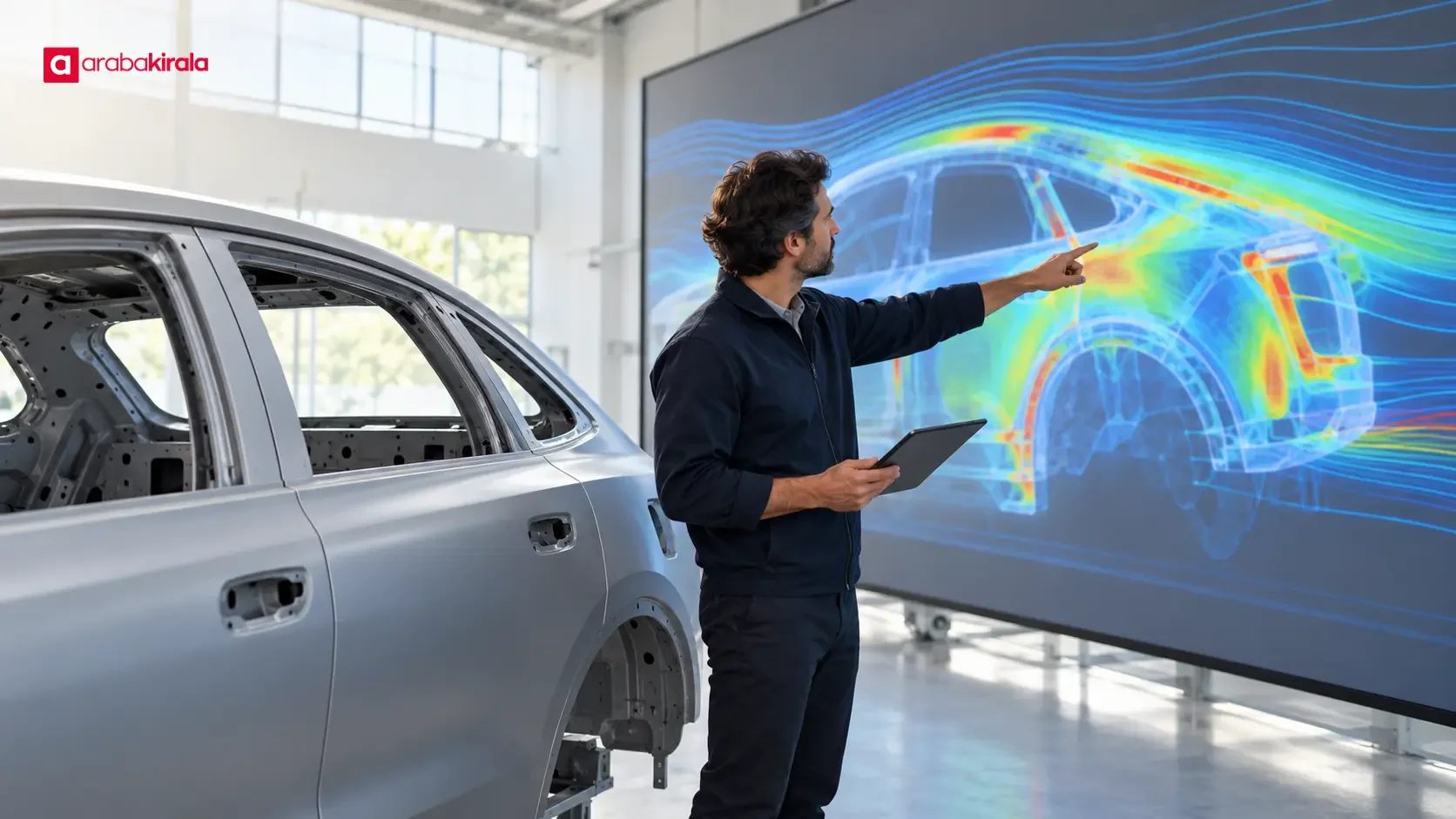
Automotive virtual tests let engineers examine vehicle designs, software and driving scenarios through computer models. Learn where simulation is used, how it differs from physical testing, and why results need validation.
Contents
- What is a virtual vehicle test?
- Where are simulations used in vehicle development?
- Crash behavior and occupant protection
- Vehicle dynamics and driving behavior
- Powertrains, energy use and software
- How virtual tests differ from physical tests
- Why model verification and validation matter
- What to check when reading automotive simulation results
- Why does this work matter to drivers and vehicle users?
- Summary and next step
- Frequently Asked Questions
Automotive virtual test simulation methods let engineers study how a vehicle or one of its systems may behave through computer models. This guide explains what a virtual test is, where it is used—from crash analysis and powertrains to driver assistance software—how it differs from physical testing, and why its results need to be checked against real measurements.
What is a virtual vehicle test?
A virtual test uses mathematical and computer models that represent a complete vehicle or a selected system. Depending on the question, a model may include geometry, material properties, mass, motion, control software and environmental conditions. Engineers adjust these inputs to calculate how the modeled system responds in defined circumstances. The output is not a perfect copy of every detail of a physical car. It is an engineering assessment whose usefulness depends on the model’s scope and accuracy.
Simulation makes it easier to compare design options. A component shape, system setting or software behavior can be changed and examined again under the same scenario. That helps teams decide which alternatives merit deeper analysis or a physical experiment. Computer calculations do not automatically replace prototypes, laboratory measurements or vehicle testing; they support decisions throughout development.
Where are simulations used in vehicle development?
Crash behavior and occupant protection
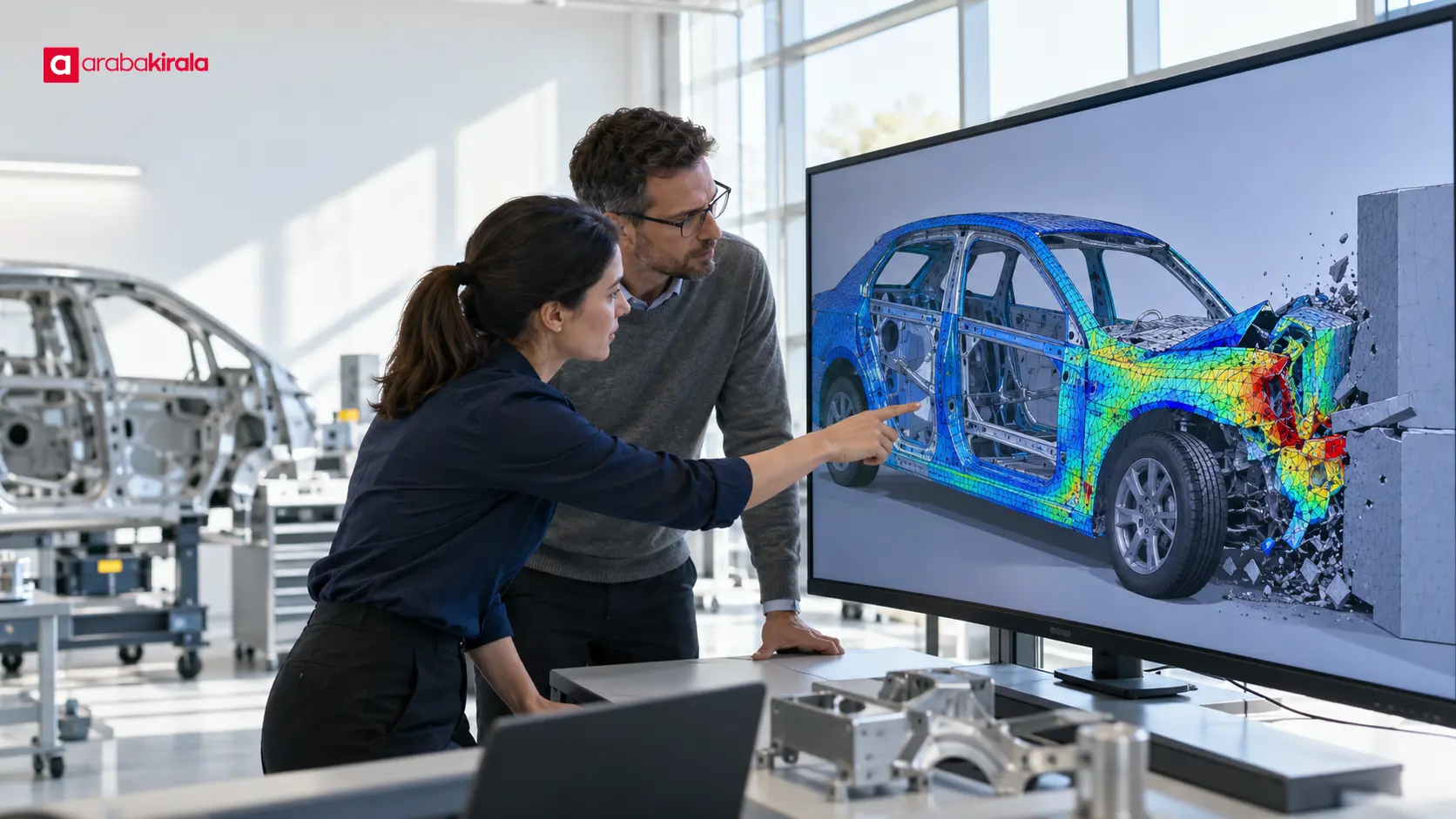
Structural crash simulations can represent a vehicle body, component deformation and the interaction of occupant protection systems. Calculated outputs such as stress, movement and deformation help engineers examine a design across defined crash conditions. The US National Highway Traffic Safety Administration’s research programs use crash simulation models as part of vehicle safety research alongside physical experiments. The agency also states that models may be validated only for specific conditions, a reminder that a result should not be generalized to every possible crash.
Vehicle dynamics and driving behavior
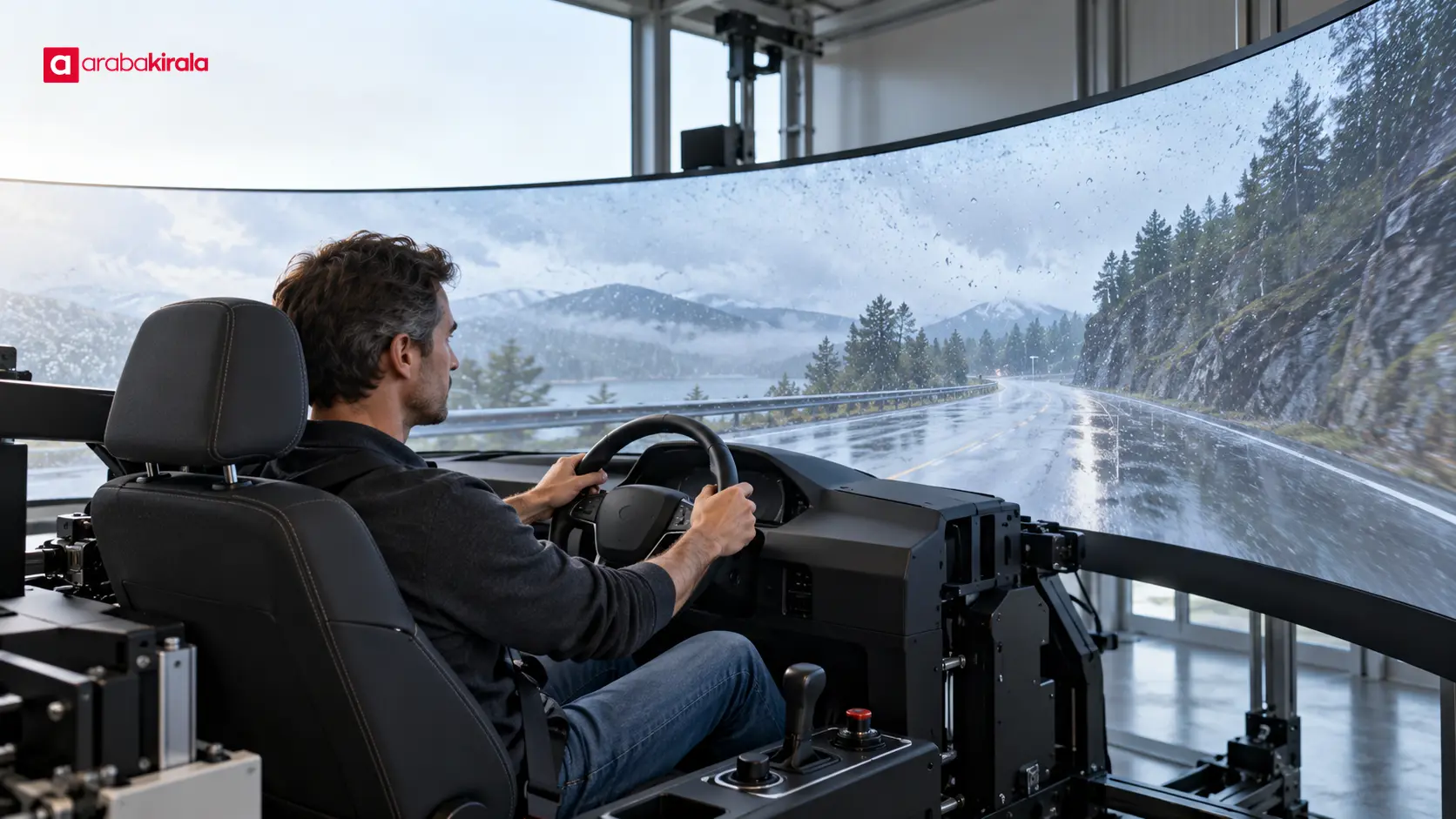
Vehicle dynamics models examine how inputs such as steering interact with tire-road forces, weight distribution and suspension to produce motion. Engineers can compare the effects of different parameters in handling, stability or maneuver evaluations. Driving simulators place a participant in a controlled virtual environment with selected road and traffic conditions. This can support research into driver responses in situations that would be hazardous to recreate in live traffic.
Powertrains, energy use and software
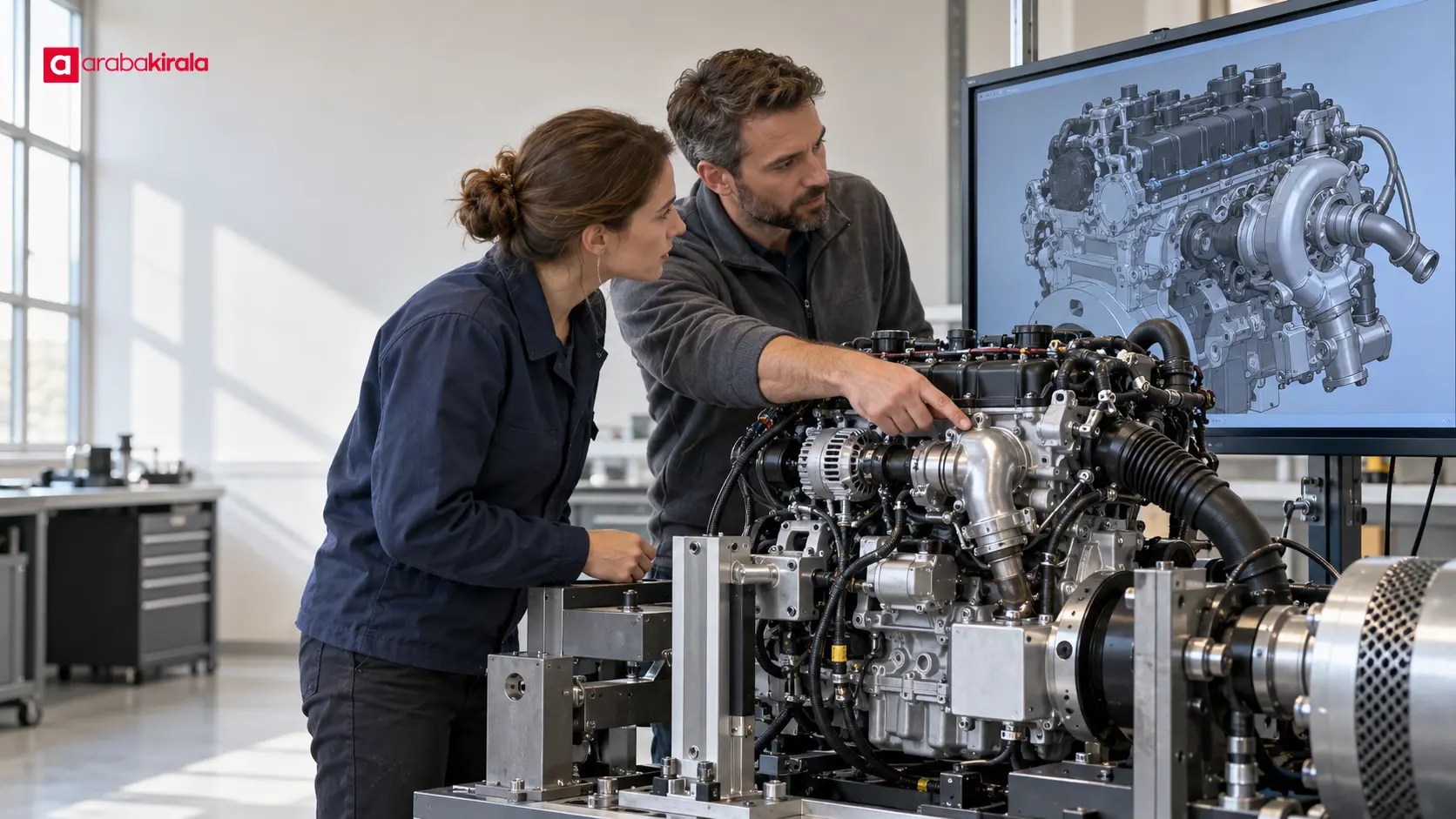
Models can combine an engine, battery, electric motor, transmission and control systems to evaluate powertrain layouts and operating conditions. The US Department of Energy explains that virtual vehicle models can help researchers assess many powertrain configurations without first building a physical vehicle for each one. Electronic control software can also be examined in a virtual environment to see how it responds to specified inputs. What the result means depends on how well the component models and scenarios represent the real system.
How virtual tests differ from physical tests
A physical test measures a real component, system or vehicle. Sensors, laboratory rigs, test tracks and crash experiments provide direct observations, while producing and measuring every new design requires resources. A virtual test changes variables within a model and can repeat defined conditions. Repeating the same scenario makes it easier to isolate the effect of a design change.
The two methods may answer different questions. A simulation calculates expected behavior under conditions included in its model. A physical test measures how an actual part or vehicle behaves under particular conditions. Model assumptions matter in the first case; test setup, measurement and sample coverage matter in the second. A sound engineering approach often compares model outputs with suitable physical measurements and defines where the model can be used.
Why model verification and validation matter
Checking that computer code correctly solves its intended equations is different from checking whether the model adequately represents a real vehicle. The first focuses on the consistency of the software and calculation method; the second asks how closely the model’s outputs match measured behavior. Engineers examine model inputs, test data, measurement conditions and differences in results. A model that performs well for one speed, material or crash configuration is not automatically proven accurate for another.
A colorful visualization or a single output value is not enough to interpret a simulation report. It also matters which components and systems are included, which parameters are assumed, how the environment is set up and what physical data was used for comparison. Making uncertainty visible gives simulation a stronger basis for engineering decisions.
What to check when reading automotive simulation results
- Test question: Which design decision or behavior was the model built to examine?
- Scope: Which parts of the vehicle, component, software and environment are represented?
- Scenario: How are speed, road, load, temperature or crash conditions defined?
- Validation: Which measurement or physical experiment was used to compare the output?
- Limits: What constraints and uncertainties are reported for the model?
- Decision: Is the result used to screen an option or to plan further testing?
These questions help distinguish a striking animation from technical evidence. A color map may display a stress distribution, for example, but by itself it does not establish that a vehicle will provide a particular level of protection in every crash. Interpret the result within the context of its model and scenario.
Why does this work matter to drivers and vehicle users?
Virtual testing can help development teams examine more design options, identify issues earlier and plan physical experiments more precisely. It plays a role in assessing goals such as safety systems, energy efficiency and driving comfort. Still, the fact that a simulation was performed does not by itself guarantee a vehicle’s safety, fuel use or durability. Those qualities call for clear, verifiable information about the relevant vehicle and test results.
When reading about a vehicle technology, treat “tested on a computer” as a starting point rather than a complete conclusion. It is more informative to find out which feature was assessed, under what conditions, by what method, and how the measurements were validated. For someone renting a car, simulation is an engineering method in vehicle development, not a rental condition. Ask the relevant rental office about branch-specific details such as vehicle class, equipment or handover arrangements before booking.
Summary and next step
Automotive virtual tests use models to examine design and system behavior before every physical vehicle or component is built. They support comparisons in areas such as crash behavior, vehicle dynamics, powertrains and software development. A reliable interpretation still requires understanding the model’s scope, validation data and limits. When assessing a technology claim, check what question the simulation addressed and what physical evidence supports it. That is a practical way to understand the value of virtual testing at the right scale.
Frequently Asked Questions
Can virtual vehicle testing replace testing a real vehicle?
Not in every case. Simulation calculates conditions represented by its model, while a physical test measures the behavior of an actual component or vehicle. Development teams can use both kinds of evidence to establish a model’s accuracy and limits.
Does a crash simulation prove that a vehicle is safe?
Not on its own. The result depends on which vehicle structure and crash conditions the model represents. It should be considered alongside physical comparisons and the conditions for which the model has been validated.
What can a driving simulator measure?
A driving simulator can help researchers study driver responses and vehicle behavior in controlled virtual road and traffic scenarios. How closely it represents real driving depends on the quality of its vehicle dynamics and environment models.
Which vehicle design decisions can simulations support?
They can help compare options involving body structure, vehicle dynamics, powertrains and control software. The decisions that can be examined depend on the model’s level of detail and the validation data available.
How can I judge whether a simulation result is reliable?
Look at the model’s scope, input assumptions, test scenario and the physical measurements used for comparison. Consider reported uncertainty and the conditions in which the model is considered valid; do not rely on a single image or number.
Legal Disclaimer: All content, articles and information on the Araba Kirala website are provided solely to inform users. No information shared on this website constitutes definitive advice or guidance. Araba Kirala Teknoloji A.Ş. and its authors cannot be held responsible for any direct or indirect damages arising from the application of information on the website. For all questions and requests regarding car rental, please contact the office from which you will rent your vehicle.












