What Do Automotive Wind Tunnel Tests Do?
Published: October 27, 2026 • Reading Time: 8 min • Last Updated: October 27, 2026
Wind tunnel testing measures how air moves around a vehicle under controlled conditions. Learn how engineers use it to study drag, aerodynamic balance, cooling, and noise during vehicle development.
Contents
- What is a wind tunnel test?
- What aerodynamic quantities are measured?
- Drag and resistance to motion
- Lift, side force, and balance
- How does the test setup represent a vehicle?
- What happens during a test?
- How does wind tunnel testing support vehicle development?
- Designing for lower drag
- Cooling and airflow management
- Crosswind and handling balance
- Noise and flow visualisation
- Wind tunnels, computer simulation, and road tests
- How to read a wind tunnel result
- Summary and a practical next step
- Frequently Asked Questions
Automotive wind tunnel tests examine how a vehicle interacts with moving air under controlled conditions. This guide explains how a tunnel works, what engineers measure, how the results inform design decisions, and why a laboratory reading is not the same as performance on every road.
What is a wind tunnel test?
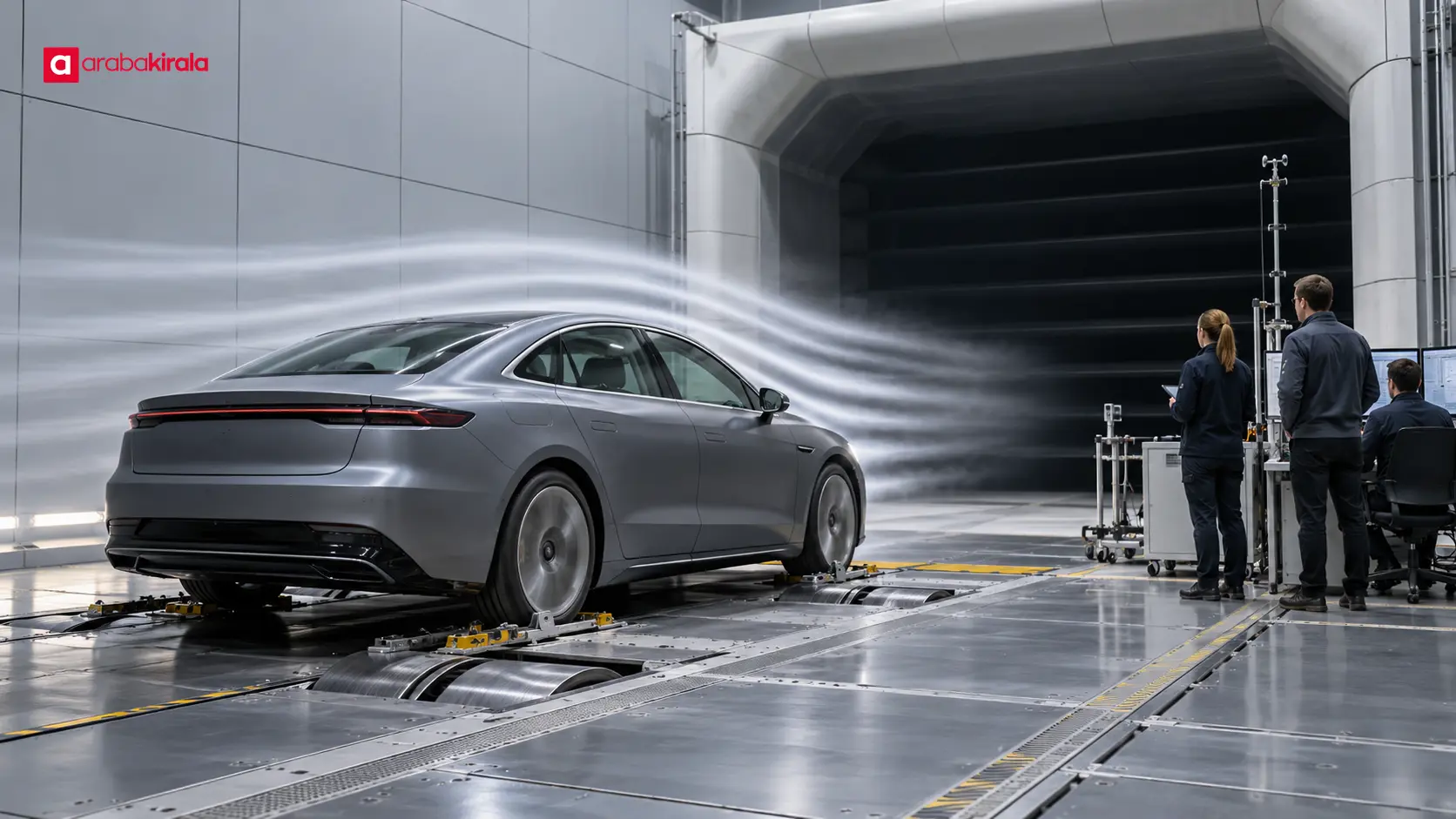
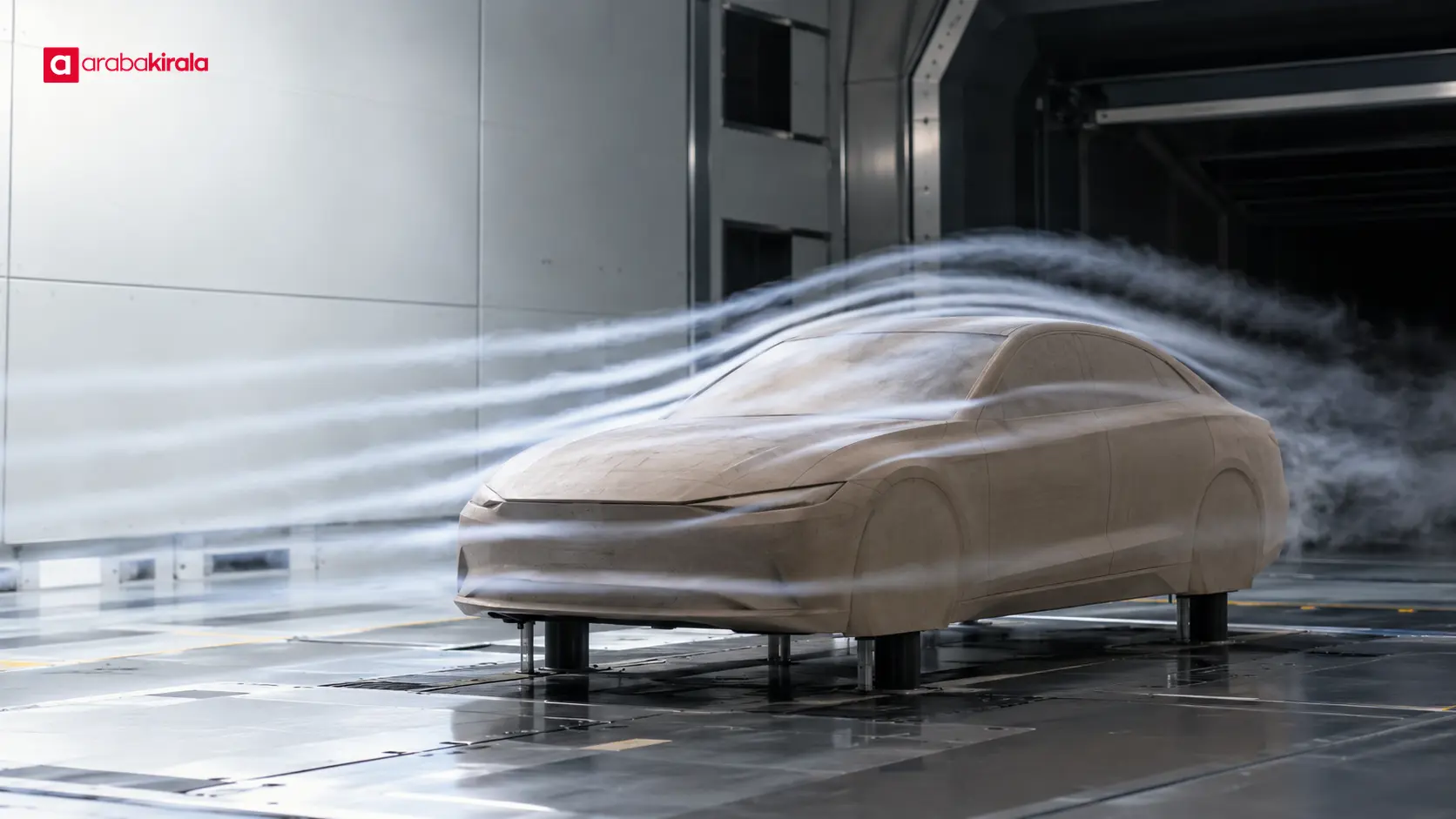
A wind tunnel is a test facility that moves air through a controlled section where a vehicle, scale model, or component is mounted. The test article may remain stationary while the air flows past it, creating relative airflow similar to a vehicle moving through still air. Engineers can adjust flow speed, direction, and test setup, which makes it possible to examine design alternatives under defined conditions.
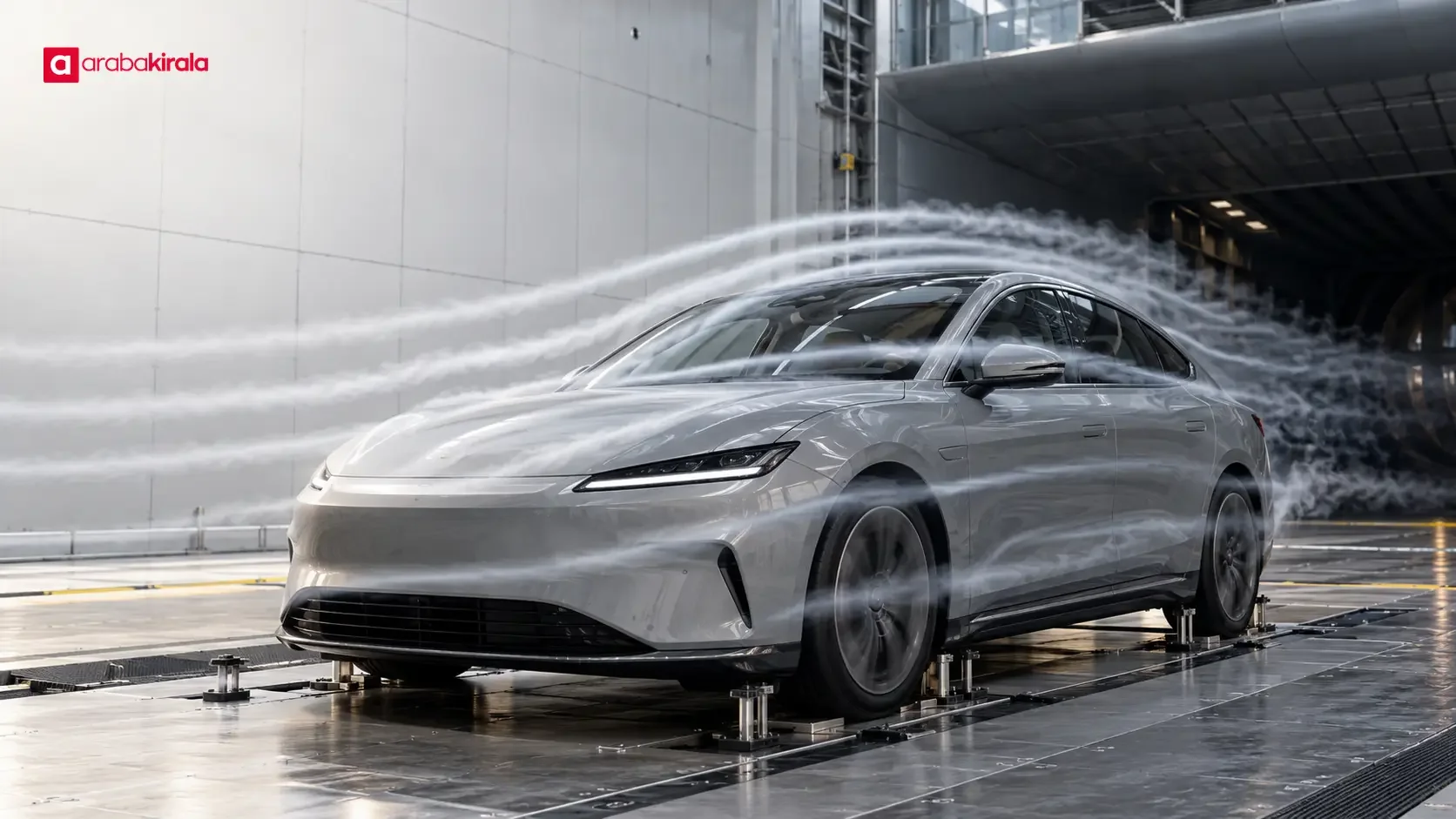
The purpose is not simply to judge the vehicle’s shape by appearance. Engineers study how air travels over the body, beneath the vehicle, around the wheels, and through cooling openings. These flow patterns affect resistance to forward motion, aerodynamic loads on the body, the movement of cooling air, and sometimes wind-related sound.
What aerodynamic quantities are measured?
Drag and resistance to motion
Air exerts a force against a moving vehicle. Drag describes the aerodynamic force acting opposite to the direction of travel. Body shape, frontal area, underbody flow, and the wake behind the vehicle can all influence it. Engineers use force measurement systems to record drag and assess how a design change affects the result.
Drag is one factor associated with energy use, but it does not by itself determine a vehicle’s fuel consumption or an electric vehicle’s range. Vehicle mass, powertrain, tyres, speed, road gradient, temperature, traffic, and driving style also affect real-world results. A wind tunnel measurement should therefore not be turned into a guaranteed consumption or range figure for every driver.
Lift, side force, and balance
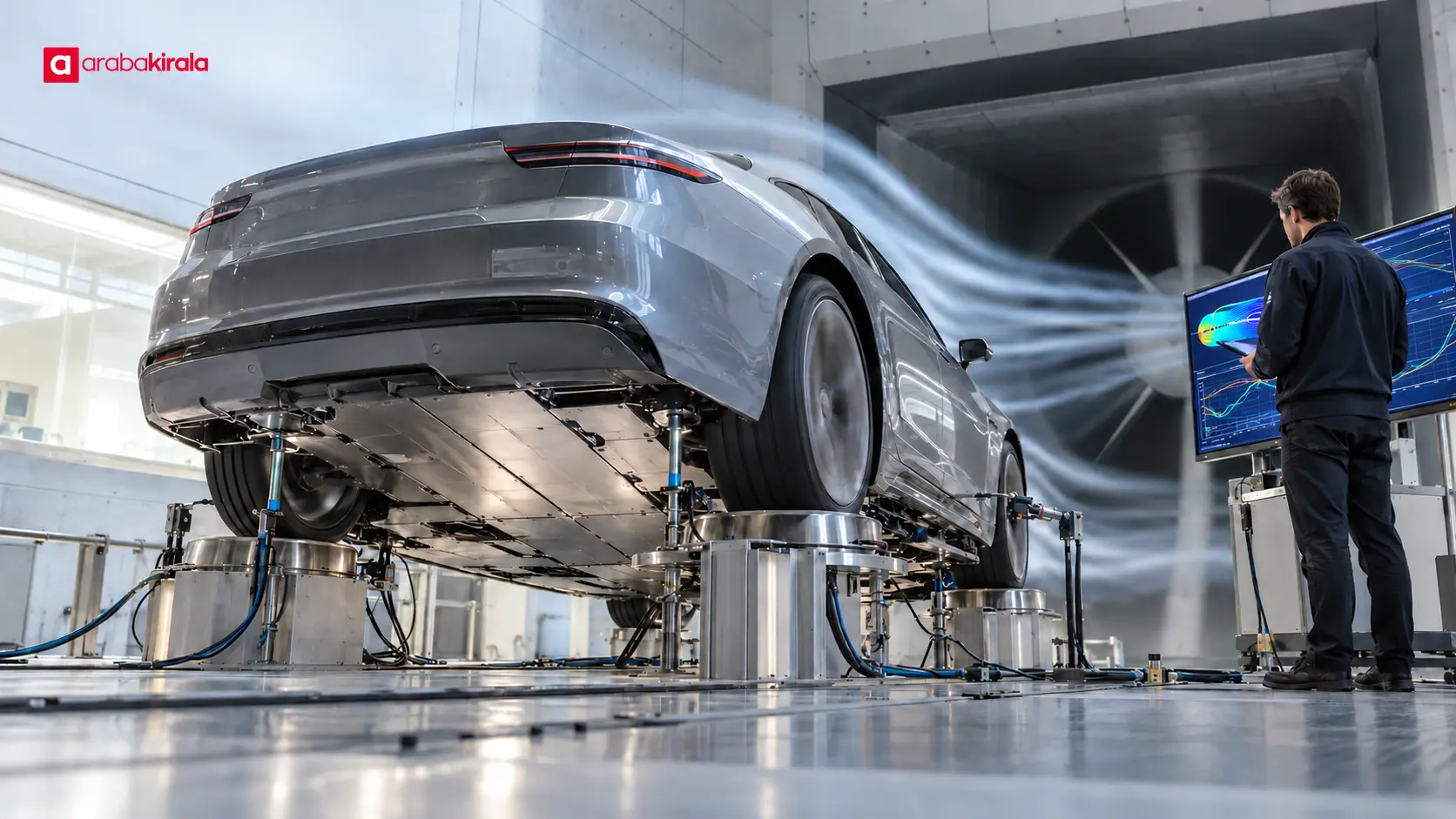
Airflow can exert forces in directions other than forwards and backwards. It can create upward or downward loads and side forces related to crosswind. Looking at how aerodynamic loads are distributed around the front and rear axles helps engineers assess balance at speed. Depending on the test objective, a force balance may measure some loads or several forces and moments across multiple axes.
A measurement does not mean the vehicle will behave identically at every speed. The effects change as airflow speed and direction change. Engineers may therefore plan additional tests at different speeds, wind angles, ride heights, or loading conditions. The test programme depends on the vehicle’s design goals and the question under investigation.
How does the test setup represent a vehicle?
Reliable testing requires the vehicle or model, measuring equipment, and tunnel conditions to be considered together. A full-scale test may use a vehicle close to production specification; early development work may use a scale model or an individual component. Each approach answers different questions. A scale model can make it easier to explore alternatives, but it does not reproduce every feature of a full-size vehicle and its use conditions.
Rotating wheels and a moving floor can help represent the relative movement between the road and vehicle. A tunnel with a fixed floor does not create the same conditions as one using a moving ground plane and rotating wheels. Tunnel walls, flow quality, model scale, and support structures can also affect how data should be interpreted. Comparing results from different facilities without their test context can therefore be misleading.
What happens during a test?
Define the test question: The aim may be to measure overall drag, examine front-to-rear load distribution, assess cooling airflow, or understand the effect of a particular component. A clear question helps determine which sensors and test conditions are needed.
Prepare the vehicle and tunnel: Vehicle configuration, loading, wheels, ride height, and measurement equipment are recorded according to the test plan. Defined conditions help make repeat runs more useful.
Measure the airflow and loads: Tunnel speed is set, and engineers may use force balances, pressure taps, velocity measurements, or flow-visualisation methods. Smoke or surface-flow indicators can help reveal where airflow separates or rejoins.
Test design changes: Changes to a component, surface, or body shape can be tested individually or in planned groups. Keeping conditions consistent with the baseline makes it easier to isolate the effect of a change.
Check and interpret the data: Measurement uncertainty, tunnel corrections, repeat tests, and other validation methods matter. A result is engineering data that must be read with its test conditions, not just a standalone number.
How does wind tunnel testing support vehicle development?
Designing for lower drag
How air passes from the front over the body and disperses behind the vehicle can influence drag. Tunnel measurements give the design team clues about areas that contribute to resistance. Engineers can measure changes to features such as mirrors, bumpers, rooflines, underbody panels, and the rear end. A change does not always improve the whole vehicle: a gain in one area may be offset by increased resistance elsewhere.
Cooling and airflow management
Engines, power electronics, batteries, or brakes may need airflow to enter and leave particular areas. Large or poorly directed openings can affect the external flow, while reducing an opening may conflict with cooling needs. Wind tunnel tests help teams consider external aerodynamics and cooling requirements together. These tests alone do not guarantee safe operating temperatures; appropriate vehicle-system testing is also needed.
Crosswind and handling balance
When airflow approaches from the side, side forces and yawing moments can change. Tests at controlled wind angles help examine how sensitive a body shape is to those conditions. The design team can evaluate changes in load from more than a head-on direction. Real roads include turbulence and nearby traffic, among other factors, so a tunnel condition is not a complete replica of the road.
Noise and flow visualisation
Turbulence around areas such as mirrors, window edges, and openings can contribute to wind noise. Aeroacoustic tunnels can examine sound alongside aerodynamic behaviour. Smoke, tufts, and pressure measurements help show not only the total force but also where and how the flow changes. That information lets engineers plan more targeted design work.
Wind tunnels, computer simulation, and road tests
Computational fluid dynamics (CFD) models airflow on a computer and can be used to examine many design options early in development. A wind tunnel is a physical experiment that can provide force or pressure measurements through its instrumentation. The two methods answer related but different questions: simulation helps screen options and study flow, while physical testing can check models against measured results.
Road tests examine a vehicle in real surroundings, where natural wind, temperature, road surface, and traffic influence the outcome together. A tunnel offers controlled and repeatable conditions; the road offers a changing environment. Development teams can combine simulation, tunnel work, and road measurements according to the question. One method does not remove the limitations of the others.
How to read a wind tunnel result
Check the test conditions: Was the measurement made on a full-size vehicle or a model? What were the loading, wheel setup, airflow speed, and wind angle? Comparing values without this context leaves out important information.
Identify the quantity reported: Drag, lift, axle load distribution, and cooling airflow are different measurements. An improvement in one does not show that the others changed in the same direction.
Avoid overreading a single figure: Measurement uncertainty, facility characteristics, and vehicle configuration can affect results. A standardised measurement on a production-ready car and a development prototype test may serve different purposes.
Assess road performance separately: A tunnel enables controlled comparisons, while actual consumption, range, noise, and driving feel depend on many variables. Laboratory data alone cannot describe every use condition.
Summary and a practical next step
Automotive wind tunnel tests provide controlled measurements of airflow around a vehicle and data for design decisions. Separate tests or a broader programme can examine drag, aerodynamic balance, crosswind sensitivity, cooling, and wind-related noise. Results make sense only when considered alongside the vehicle configuration, tunnel setup, and measurement method.
When assessing an aerodynamic claim about a vehicle, look for what was measured, under which conditions, and which use conditions the result represents. Read technical figures together with the manufacturer’s documentation or test description. Do not treat one laboratory value as a promise about consumption, range, or safety.
Frequently Asked Questions
Does the car move in a wind tunnel, or does the air move?
In a common setup, the vehicle or model is held in place while air moves through the test section. This creates controlled relative airflow. Some tunnels also use a moving floor and rotating wheels to represent road motion more closely.
Does a wind tunnel test measure fuel consumption directly?
An aerodynamic tunnel test primarily measures forces, pressure, and flow characteristics; it does not by itself measure everyday fuel consumption. Findings about drag can inform energy-use analysis, but real consumption depends on many factors, including driving conditions and vehicle systems.
Does a scale model fully represent a real car?
Model tests are useful for investigating particular design questions, but scale, surface detail, wheel motion, and airflow conditions may differ from those of a full-size car. Results are interpreted within the limits of the setup and may be supplemented with full-scale tests.
Why use a moving floor and rotating wheels?
Relative movement between the road and the vehicle affects flow beneath the body and around the wheels. A moving floor and rotating wheels aim to reproduce that interaction more realistically in a test. Their presence or absence affects the test conditions and how results can be compared.
What is the difference between a wind tunnel test and CFD?
CFD is a computer-based numerical model of airflow; a wind tunnel is a physical experiment. CFD can help explore design options quickly, while a physical test provides measured data. Development teams can use the two methods to check and complement each other.
Can I directly compare a wind tunnel result with one for another car?
A comparison is meaningful only when the reported quantity, vehicle configuration, and test conditions are sufficiently comparable. Tunnel type, loading, floor, and wheel setup can influence measurements, so check the context of a published value.
Legal Disclaimer: All content, articles and information on the Araba Kirala website are provided solely to inform users. No information shared on this website constitutes definitive advice or guidance. Araba Kirala Teknoloji A.Ş. and its authors cannot be held responsible for any direct or indirect damages arising from the application of information on the website. For all questions and requests regarding car rental, please contact the office from which you will rent your vehicle.