
Choosing a Car Size for Narrow Streets in Beylikdüzü

Published: October 15, 2026 • Reading Time: 7 min • Last Updated: October 15, 2026
Learn how width, length, turning space, parking dimensions, passengers, and luggage affect car choice in Beylikdüzü. Ask the branch you plan to rent from about the dimensions of the available vehicle class.
Contents
- Why car size matters in Beylikdüzü
- How to read vehicle dimensions
- Body width and mirrors
- Length and wheelbase
- Turning circle and turning space
- Choose a size that fits your use
- Practical checks before booking
- At pickup and while manoeuvring
- Common car-size mistakes
- Summary and next step
- Frequently Asked Questions
When searching for Beylikdüzü car rental car size, passenger capacity and luggage space are only part of the decision. Narrow street encounters, garage entrances, tight turns, and parking bay dimensions can affect how manageable a car feels. This guide explains how to assess width and length, what turning space can tell you, and which details to check before booking.
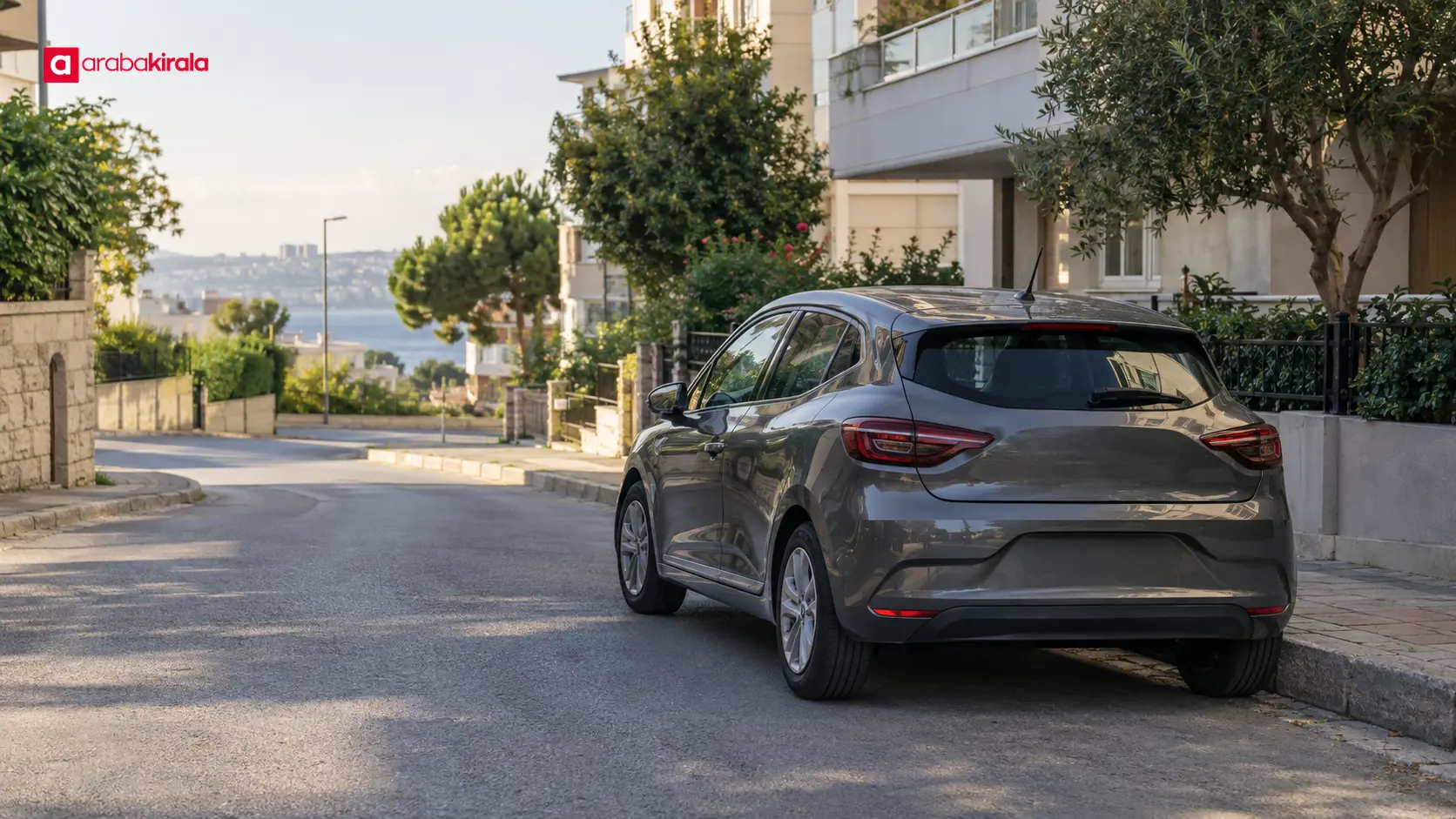
Why car size matters in Beylikdüzü
A car’s dimensions affect more than how much room it takes up when parked. Body width affects side clearance in a narrow passage, overall length affects whether it fits in a space, and steering geometry influences the room needed for a turn. Consider these measurements alongside traffic, parked cars, curbs, and garage pillars.
Road layouts and widths vary from one street to another. Checking the streets and parking facilities near the places you plan to visit helps you choose for your actual use. A map can offer a general impression, but it cannot reliably establish a passage’s width or a ramp’s gradient. Base your choice on the routes and parking conditions you expect to use, rather than the district name alone.
How to read vehicle dimensions
Body width and mirrors
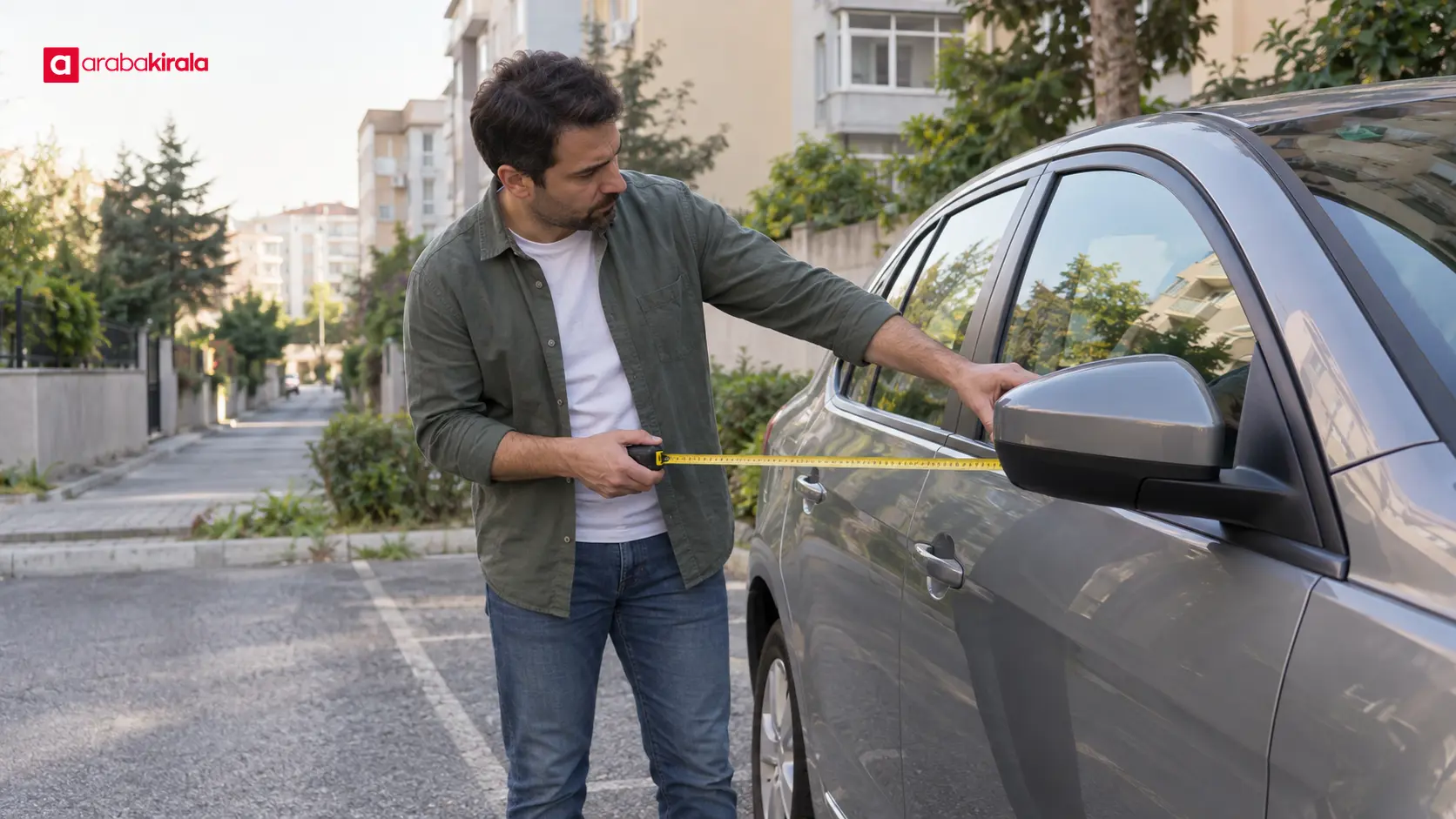
Published width figures often describe the body without the mirrors. Mirrors increase the vehicle’s overall span at a narrow entrance or in a garage. Ask whether the listed measurement includes mirrors and, if available, what the total mirror-to-mirror width is. When passing a curb, wall, or parked vehicle, allow room for the mirrors too.
Width also needs to be considered alongside the driver’s seating position and field of view. If the vehicle differs from one you usually drive, adjust the mirrors at pickup and take a moment to become familiar with it in a safe, open area. Knowing the dimensions does not guarantee that a car will fit through every tight passage; actual clearance and driving conditions matter as well.
Length and wheelbase
Overall length affects how much room is needed in front of and behind a car when parallel parking. Wheelbase is the distance between the centres of the front and rear wheels, and it is one factor in how a vehicle manoeuvres. Turning performance does not depend on wheelbase alone: steering angle and vehicle design also play a part. There is no reliable rule that every shorter-looking car will turn or park more easily.
In a covered garage, parking-bay depth and manoeuvring room matter as well as vehicle length. Check whether the front can approach a wall without the rear extending beyond the bay, and consider pillars, ramps, and the width of the entrance.
Turning circle and turning space
A turning-circle measurement describes the path a vehicle follows during a low-speed turn. Manufacturers may use different measurement conventions, so check how a figure is defined before comparing two vehicles. It can give an indication of whether a car may manage a tight turn in one movement, but it does not account for curbs, road width, or oncoming traffic.
The space a turn needs includes the paths of the front and rear of the car. As the steering wheel turns, the nose may approach the inside curb while the rear wheels follow a tighter line. Do not treat a turning-circle figure as a simple guarantee that a car will fit. In a narrow street or parking area, move slowly, observe the surroundings, and pause in a safe place if you need to reassess the manoeuvre.
Choose a size that fits your use
Small and compact cars may have shorter bodies and narrower exterior dimensions, which can be useful in city parking. Dimensions vary by model, however, so the class name alone is not enough. The number of passengers, child seats, and equipment you need to carry also affect the choice.
A larger vehicle may make sense when you need more luggage capacity, but greater luggage space can come with larger exterior dimensions. Be realistic about passengers and belongings. Choosing a car that is too small can force luggage into places that obstruct visibility, while a vehicle larger than you need can make tight parking less convenient.
Drivers looking for a higher seating position may consider a taller vehicle. Height does not solve side-clearance issues on a narrow street, and covered garages may have a height restriction. If your route includes a garage, compare the vehicle’s total height with the garage clearance.
Practical checks before booking
- Map your routes: Review the streets you expect to use, the destination parking area, and any ramps. Do not infer current road conditions from a map image alone.
- Check the parking space: Assess the approximate width and depth of your parking bay, including pillars and wall projections. Leave room for the mirrors to open.
- List your needs: Consider passengers, luggage, child seats, and longer trips together so the decision is not based only on ease of parking.
- Ask for dimensions: Contact the branch you plan to rent from for approximate exterior dimensions of the available class, mirror width, and, if available, turning-circle information. Clarify whether a reserved class guarantees a specific model.
- Confirm garage clearance: Compare the garage’s height and entrance limits with the vehicle dimensions. If you do not have the measurements, ask the parking facility for them.
At pickup and while manoeuvring
At pickup, inspect the body, mirrors, tyres, and any recorded existing damage. Ask your questions about the vehicle’s dimensions at this stage, and review the technical details shown in the vehicle information. A specific model and the measurements offered within a vehicle class may depend on the booking and branch availability. Confirm the details for your own rental with the relevant branch.
Before moving, adjust the seat, mirrors, and steering position. Keep luggage from blocking your view. Before turning in a tight area, check the front, sides, and rear clearance and manoeuvre slowly. If there is not enough room on both sides, do not force the turn. Stopping at a suitable safe place to plan another manoeuvre gives you more control than rushing toward a curb or another vehicle.
Common car-size mistakes
- Relying only on the class label: Vehicles within a class can differ in width and length. Confirm the dimensions or model details with the branch.
- Treating luggage capacity as exterior size: A boot-volume figure does not by itself explain the car’s total length or how easily it will park.
- Reading turning circle as a definite answer: The technical figure does not account for real street obstacles and conditions.
- Overlooking parking dimensions: A car may fit along the street but fail to clear a private garage entrance, ramp, or pillars.
Summary and next step
For a car rental in Beylikdüzü, assess body width together with mirrors, length against the parking space, and turning-circle information alongside real manoeuvring conditions. Include passenger and luggage needs when deciding which dimensions matter. Then ask the branch you plan to rent from about the available class and its dimensions. If you need to use a tight garage or expect a particular model, clarify that before booking. This preparation makes it easier to choose a vehicle for your everyday routes.

Frequently Asked Questions
What car size is best for narrow streets in Beylikdüzü?
No single size suits every street. Your routes, parking-space width, passenger count, and luggage needs all matter. A compact body may make city parking easier, but ask the branch you plan to rent from for the dimensions of the available vehicle.
Will a car with a small turning circle fit into every garage?
No. Turning-circle information is one technical clue about manoeuvring space. It does not establish entrance width, ramp clearance, pillar spacing, or ceiling height. Compare each garage limit with the vehicle dimensions.
Does a car’s width figure include its mirrors?
Check how the technical figure is defined. Published body width often excludes mirrors. Ask the branch whether its measurement includes mirrors and what the total mirror span is, if that information is available.
Does choosing a vehicle class guarantee a particular model?
Do not assume that a class name means a specific make or model. Confirm with the branch what the reserved class covers and how the vehicle for your booking is determined.
Which measurement should I check for a taller vehicle?
If you will use a covered garage, compare the vehicle’s total height with the entrance and ceiling clearance. Width, length, and room to manoeuvre on the ramp also affect whether it is suitable.
What should I do if there is not enough room to turn on a narrow street?
Do not force the turn. Stop at a safe place, assess the surroundings and available manoeuvring room, and consider a wider, safer route. Avoid hurried reversing in traffic.
Legal Disclaimer: All content, articles and information on the Araba Kirala website are provided solely to inform users. No information shared on this website constitutes definitive advice or guidance. Araba Kirala Teknoloji A.Ş. and its authors cannot be held responsible for any direct or indirect damages arising from the application of information on the website. For all questions and requests regarding car rental, please contact the office from which you will rent your vehicle.












