
Planning for Wind and Rain When Renting a Car in Beylikdüzü

Published: October 30, 2026 • Reading Time: 7 min • Last Updated: October 30, 2026 • Author: Merve B.
Learn how coastal wind and rain can affect visibility, grip and journey timing in Beylikdüzü, with practical steps for planning a route and checking a rental car before setting off.
Contents
A Beylikdüzü car rental driving plan should account for coastal wind and rain as conditions that can shape the journey, rather than as minor details in a forecast. This guide explains how crosswinds may affect steering, why rain changes visibility and grip, and how to prepare your route and timing. It also covers practical checks when collecting a rental car, so you can understand the vehicle’s controls and the rental details that matter before driving.
How coastal wind can affect a drive
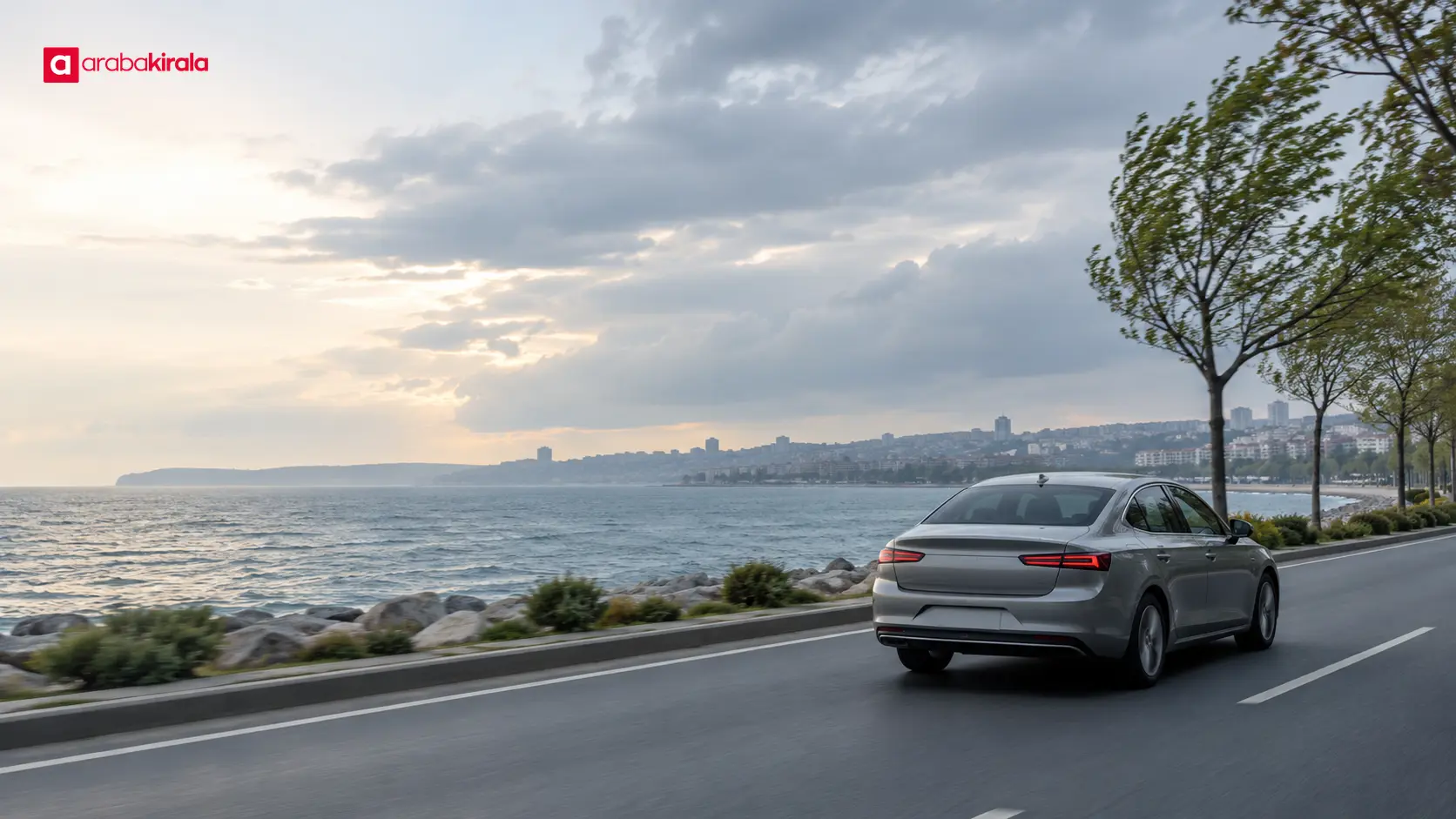
On exposed stretches near the coast, a crosswind can briefly push a vehicle off its line. The effect may be more noticeable in vehicles with a taller body and when moving from a sheltered area into an open one. The response is not to make a sudden correction: hold the steering wheel steadily with both hands, reduce speed to suit the conditions and avoid abrupt lane changes.
Bridges, overpasses, broad junctions and open coastal roads can expose a vehicle to stronger gusts. Passing or being passed by a large vehicle can also change the air movement around your car. The effect varies with the vehicle, road and weather, so a fixed prediction is not useful. Keep scanning the road, make smooth adjustments and leave enough room to respond if a gust catches you by surprise.
Check the forecast and route before departure
Look at an hourly forecast for wind direction, wind strength and rain around both your departure and return times. Forecasts can change, so check again before setting off. Official meteorological updates and current road information can help with planning. When choosing a route, consider a coastal road and an inland alternative alongside traffic, visibility, roadworks and your destination. An inland route is not automatically safer or quicker; current conditions determine which route makes sense.
Leave enough time to avoid rushing if rain becomes heavier or traffic slows. Include the option of pausing at a safe place if conditions deteriorate. Set your navigation before moving. A driver should not handle a phone to check a forecast or change a route while driving; stop somewhere safe if an update is needed.
Rain, visibility, grip and following distance
Water on the windscreen, spray from other vehicles and fogging can reduce visibility. Wet surfaces can also reduce tire grip compared with a dry road, making abrupt braking or steering harder to manage. Reduce speed, increase the space behind the vehicle ahead and use smooth inputs on the accelerator, brakes and steering. There is no single following distance that suits every speed and road: allow more room as rain, standing water or poor visibility make conditions worse.
Avoid standing water where possible. Do not try to cross water when its depth or the condition of the road beneath it is unknown: water can affect control and conceal potholes or other hazards. If heavy rain makes it difficult to see, consider stopping at a safe place that does not obstruct traffic. Follow local traffic rules for stopping and using hazard lights, and never wait in a position that creates danger.
Prepare the windows, lights and cabin
Before moving, check that the windows are clear, the wipers work and the washer fluid is adequate. If the glass fogs, use the vehicle’s ventilation and demisting controls. Do not try to wipe away a visibility problem by hand while driving. Use lighting appropriate to the conditions so other road users can see the vehicle. Do not assume automatic lights will respond correctly in every situation; consult the vehicle manual if you need guidance on the controls.
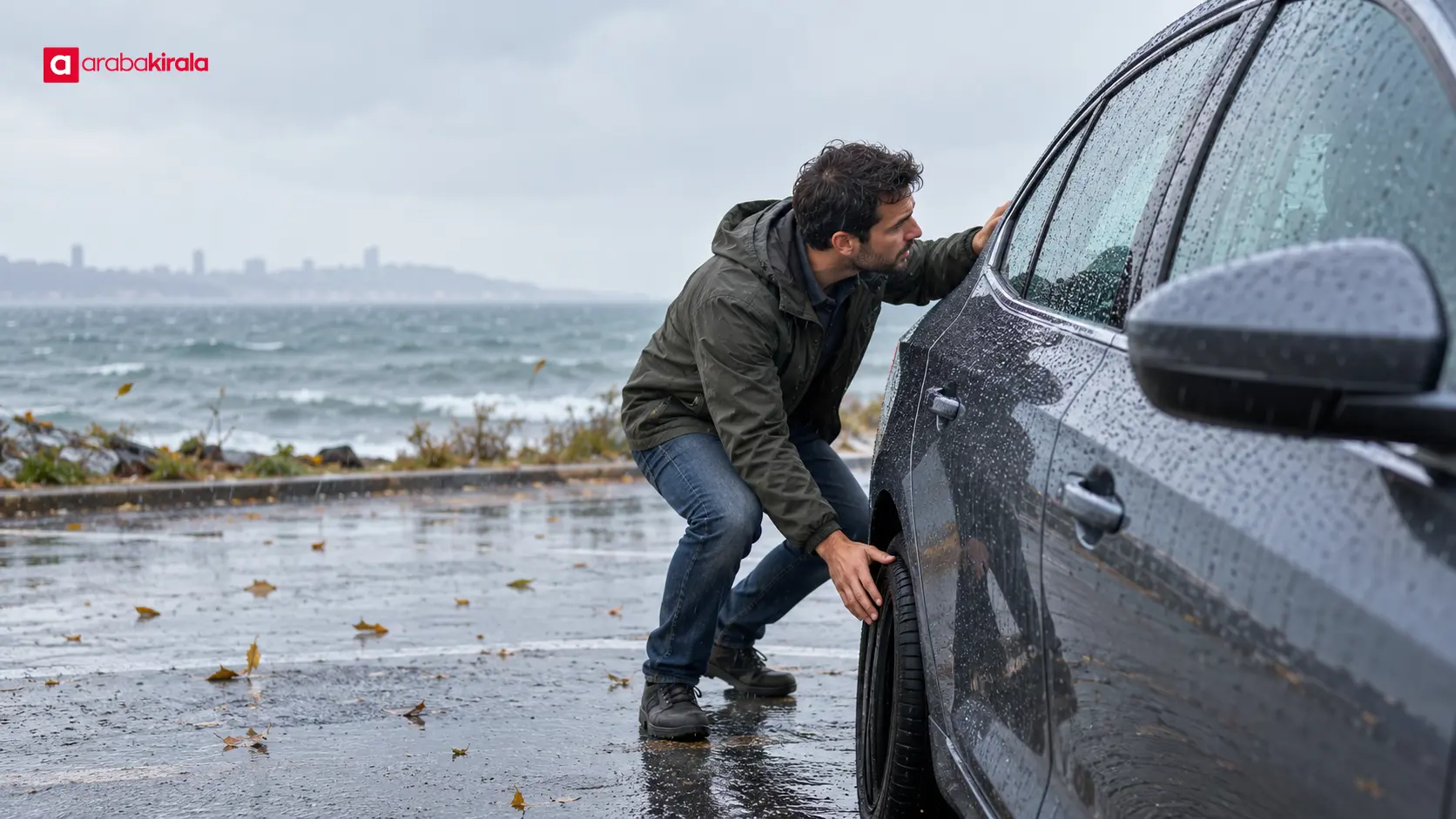
A quick visual inspection is part of preparing a rental car for a wet-weather journey. If you notice obvious tire damage, a crack affecting the driver’s view or a clear problem with the wipers, tell the staff member at the handover before setting off. A visual check is not a technical diagnosis of tire pressure or a mechanical fault. If something seems unsafe, ask the rental office for guidance instead of testing the vehicle on the road.
Rental handover details to include in the plan
Good planning also means understanding the practical rental details before the journey. Choose a vehicle that suits your passengers and luggage. Do not try to predict its wind response from body shape alone. During handover, learn the controls for lights, wipers and demisting so you are not searching for them if the weather changes.
- Review visible exterior damage and the fuel or charge indicator with the staff member, and understand how the handover condition is recorded.
- Ask what the odometer records at pickup and return, and confirm any mileage limit or route condition with the office you are renting from.
- Clarify the details that apply to your booking, such as deposit, additional drivers, age or licence requirements, collection and return times, late return and booking changes. These details can vary by rental arrangement.
- Learn the fuel type or charging method, dashboard warnings and the contact process to use if a problem occurs.
- If you need a child seat, navigation equipment or other accessory, ask about availability and setup before the booking is finalized.
These checks do not guarantee that a particular vehicle includes every feature or that every request can be accommodated. Read the agreement for the pickup and return terms, permitted use, damage reporting process and circumstances that may lead to a charge. Ask about anything unclear before completing the handover. If weather causes a change of plan, knowing how to contact the rental office helps you act promptly.
Route, breaks and timing
A coastal route may suit your destination, but consider wind, rain and traffic together. An inland road is not automatically the safer choice. Check live traffic before departure, keep an alternative route available if practical and set the vehicle’s navigation while parked. Do not handle a phone while driving; pull over safely before changing the route.
Driving for a long time in rain can be tiring. Choose a break point with safe access and parking in mind. If wind or rain makes you feel unable to control the car comfortably, do not force yourself to continue. Pause somewhere safe without obstructing traffic and wait for conditions to improve instead of trying to protect a planned arrival time.
A short pre-drive checklist
- Check the forecast for both the journey and return time.
- Learn the controls for the windows, wipers, lights and demister.
- Report visible tire or window damage before moving the car.
- Choose a route and alternative; do not use a phone while driving.
- In rain, slow down, increase following distance and avoid sudden movements.
- Use extra care on exposed roads if gusts strengthen, and pause somewhere safe if needed.
For a rental journey along Beylikdüzü’s coast, a useful plan starts with checking the weather and continues with learning the car, allowing flexible time and adapting if conditions change. Choose your route and departure time using the forecast for the day of travel. For booking-specific matters such as vehicle details, mileage, handover and return, ask the rental office directly before confirming your plans.
Frequently Asked Questions
How can a crosswind affect a rental car on the coast?
A crosswind may briefly affect the vehicle’s direction, especially on exposed stretches or when passing a large vehicle. Steady steering, a lower speed and avoiding sudden lane changes help you stay in control.
Should I always take an inland route instead of the coastal road in rain?
No route is the right choice in every situation. Consider the forecast, visibility, traffic, road conditions and destination together. Whether an inland route is more suitable depends on conditions at the time of travel.
What should I do if rain becomes much heavier?
If visibility drops significantly or you no longer feel comfortable controlling the vehicle, do not press on. Stop at a safe place that does not put you or other road users at risk, and wait for conditions to improve.
What should I check in a rental car before driving in wet weather?
Check the windows, wipers, lights and demisting controls. Report obvious damage to a tire or window to the handover staff before driving, and do not attempt a test drive if you suspect a mechanical problem.
Where can I find the mileage limit and return time for my rental?
These details can depend on the vehicle and rental office. Ask the office you are renting from about mileage, collection and return times, and what to do if a delay occurs. Compare the answers with the terms recorded in your agreement.
Legal Disclaimer: All content, articles and information on the Araba Kirala website are provided solely to inform users. No information shared on this website constitutes definitive advice or guidance. Araba Kirala Teknoloji A.Ş. and its authors cannot be held responsible for any direct or indirect damages arising from the application of information on the website. For all questions and requests regarding car rental, please contact the office from which you will rent your vehicle.












