Planning a Rental Car Drive on Beylikdüzü’s Sloped Roads
Published: October 26, 2026 • Reading Time: 6 min • Last Updated: October 26, 2026
Learn how to plan a rental car route around Beylikdüzü’s slopes, prepare the vehicle, and drive with care on uphill and downhill streets.
Contents
- Why slopes matter when planning a Beylikdüzü drive
- How to prepare your route before setting out
- Consider slopes and likely stops together
- Check parking and turning space in advance
- Choosing a rental car for the route
- Driving safely uphill and downhill
- Moving and traveling uphill
- Descending a hill
- Keep a clear handover and return record
- A short pre-drive checklist
- Plan around the road conditions
- Frequently Asked Questions
When renting a car in Beylikdüzü, plan for sloped streets alongside traffic and parking. This guide explains how gradients affect driving, what to consider when climbing or descending, which vehicle details to check before departure, and how to make your route easier to manage.
Why slopes matter when planning a Beylikdüzü drive
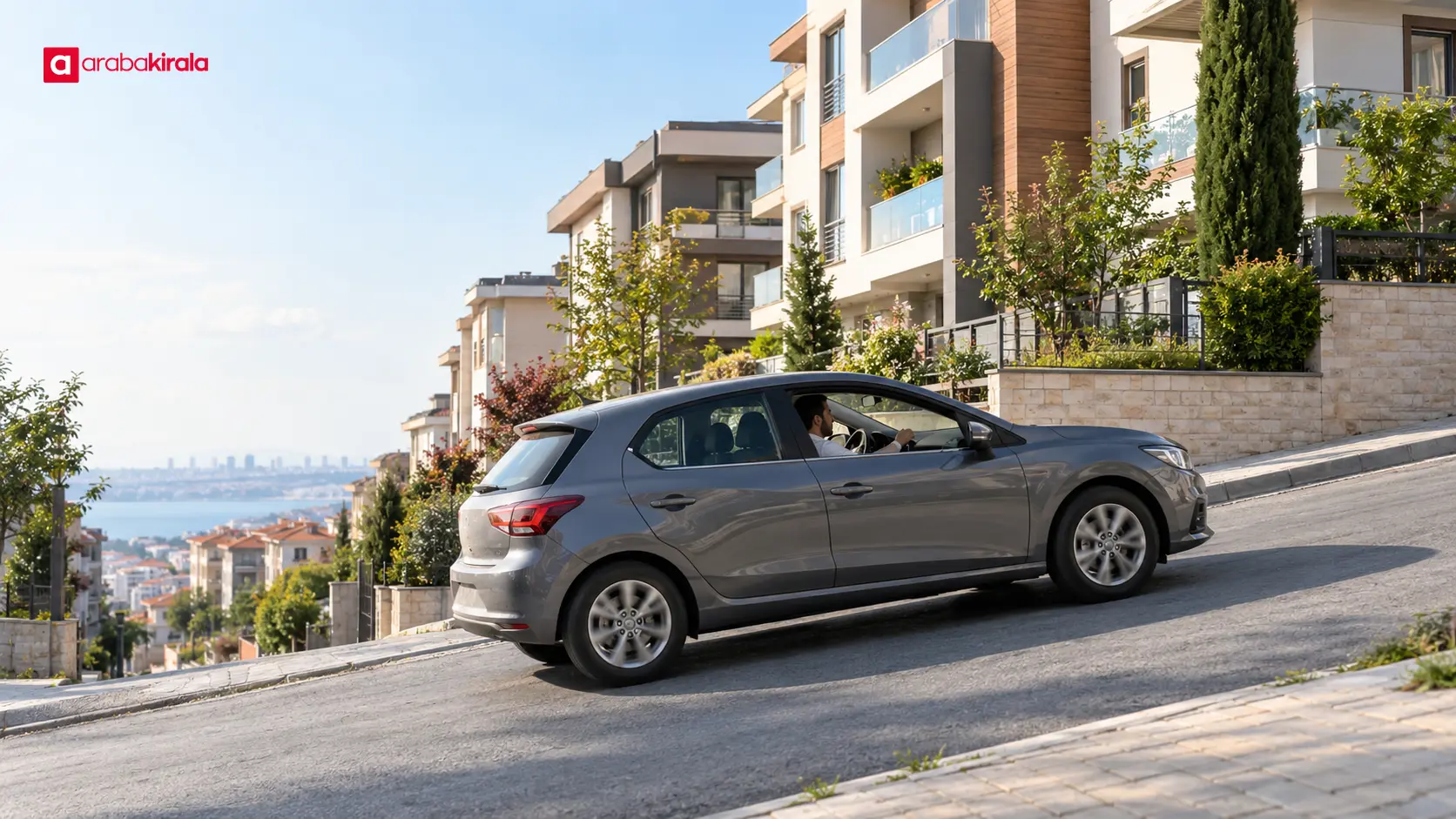
A gradient changes how a car responds compared with level ground. On an uphill stretch, the engine and drivetrain work harder to move the vehicle. Acceleration, distance from the car ahead, and lane choice all matter. On a descent, the car can gain speed; adjust your pace early and avoid relying on continuous, forceful braking.
Your everyday route may include more than a main road. Residential streets, intersections, parking ramps, and short roads near a destination can have different gradients. A map’s distance estimate does not necessarily show the steepness or the amount of stop-and-go traffic. Before collecting the car, mark your key destinations and review the route on a current map that includes traffic and road conditions.
How to prepare your route before setting out
Consider slopes and likely stops together
Plan not only which roads to take, but also where a hill begins and where you may need to stop nearby. Busy junctions and areas around schools or workplaces can involve frequent stopping and restarting, which calls for extra attention when moving off. Review navigation before departure. Use voice guidance while driving, or pull over somewhere safe before changing the route.
Check parking and turning space in advance
A parking space on a slope, a narrow street, or a steep garage entrance can affect maneuvering. Look into suitable parking near your destination and consider how you will enter and leave the lot. When collecting the vehicle, ask whether it has a reversing camera or parking sensors and learn how they work. These features do not replace checking mirrors and looking around the vehicle.
Choosing a rental car for the route
The vehicle’s size and powertrain should suit your planned roads and parking conditions. A loaded car may respond differently on a slope than an empty one. Tell the rental branch how many passengers and how much luggage you expect, then ask about the vehicle’s technical features, transmission, and any driving aids. Do not assume that one engine or vehicle type will perform better on every hill: gradient, traffic, load, and driving technique all play a part.
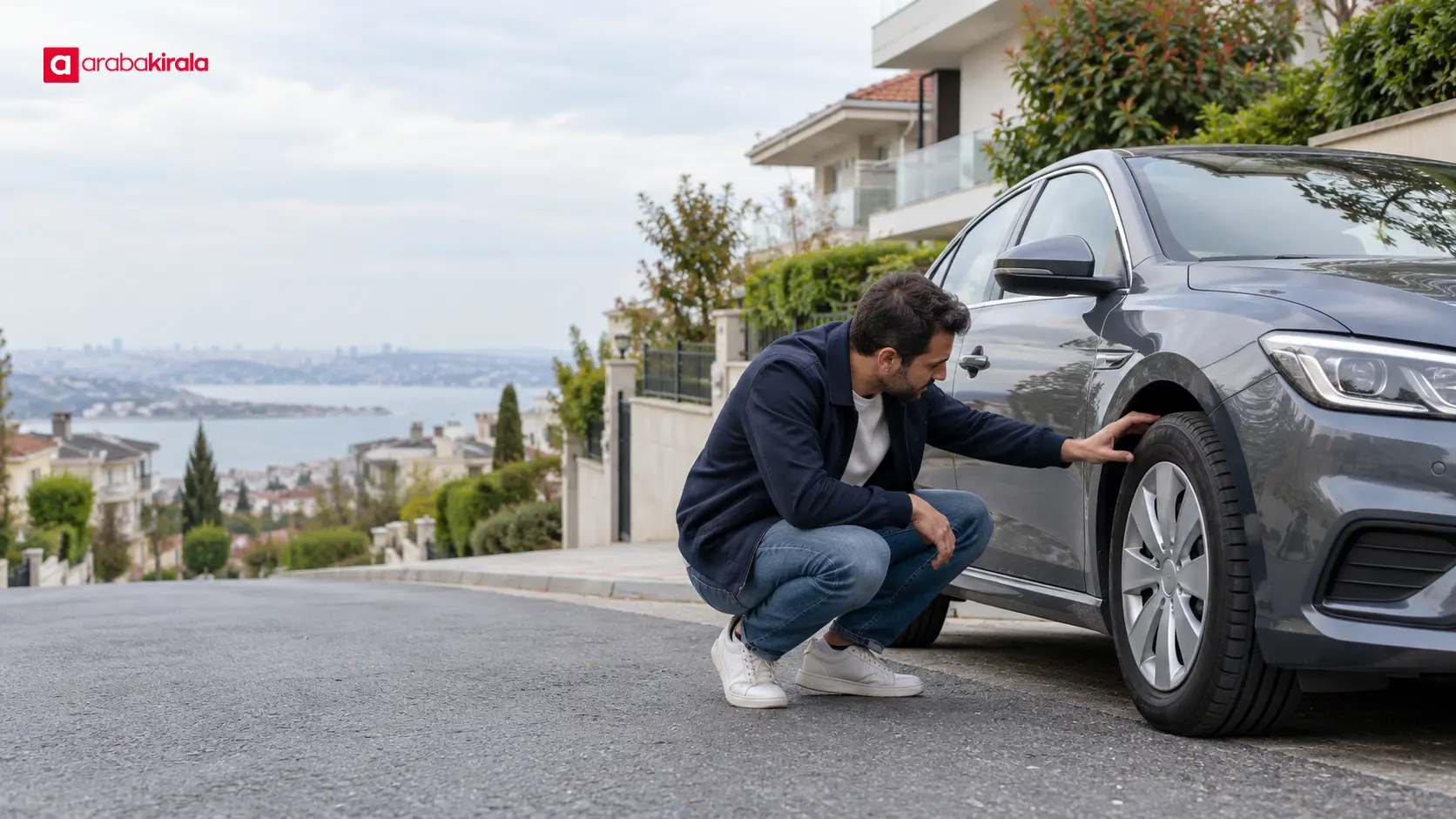
Before leaving, visually inspect the tires and check whether any warning lights are illuminated. Pay attention to any obvious concern with the brakes. These observations are not a mechanical inspection. If you notice a warning sign or damage, tell the staff before driving and clarify what to do. Read the vehicle manual, especially if the car has an automatic transmission, hill-start assist, or a descent-control feature.
Driving safely uphill and downhill
Moving and traveling uphill
Approach a hill at a speed appropriate to traffic and leave enough room to move with the flow ahead. Accelerate smoothly instead of making sudden throttle or steering movements. In an automatic car, follow the manufacturer’s instructions and do not change gear positions at random on a slope. In a manual car, use the clutch and accelerator smoothly when moving off. Leave room to respond if the vehicle ahead rolls back, while keeping an eye on surrounding traffic.
Descending a hill
Reduce speed before the descent and watch the road, junctions, pedestrian crossings, and traffic. Proceed in a controlled way rather than building speed and braking sharply at the last moment. How to use the transmission and engine braking depends on the model, so follow the manual. Keeping pressure on the brake pedal for a long time can heat the brakes. If you notice an unusual smell, sound, vibration, or change in braking response, stop somewhere safe and seek assistance.
Keep a clear handover and return record
At pickup, inspect the bodywork, wheels, windows, and interior in good light. Ask to have existing damage noted in the handover record. Check the starting fuel or charge level and the odometer reading. The odometer lets you compare pickup and return records; it does not by itself state a mileage allowance or limit. Ask the branch handling your rental about booking-specific details such as permitted use, fuel, additional drivers, collection time, and return location.
At return, follow the agreed handover process and report any new damage promptly. Photos can help you keep a personal record of the visible condition at handover. Do not assume that after-hours returns, one-way drop-offs, or fuel arrangements work the same way at every branch. Confirm those details in advance with the office handling your reservation.
A short pre-drive checklist
- Review your destinations and sloped connecting streets on a map.
- Include passenger and luggage load when choosing a vehicle.
- Check visible tire condition, dashboard warnings, and existing damage.
- Learn how the transmission, parking aids, and any hill assist work.
- Leave room uphill and manage speed before a descent.
- Confirm mileage, fuel, pickup, and return details with the rental branch.
Plan around the road conditions
The most useful preparation for Beylikdüzü’s sloped streets is to review the route and learn the vehicle’s controls. Smooth acceleration uphill, early speed adjustment downhill, and a quick look at parking access can make a local drive more predictable. Next, add your destinations to a map and ask the branch handling your booking about the vehicle’s features and location-specific handover details.
Frequently Asked Questions
What vehicle features should I consider for sloped roads in Beylikdüzü?
Choose a vehicle that suits your passenger and luggage load, preferred transmission, and planned parking. Ask the branch about the vehicle’s engine, transmission, and driving aids; no single feature guarantees the same response on every slope.
What should I keep in mind when driving an automatic car uphill?
Follow the vehicle manual, leave enough distance from traffic ahead, and avoid abrupt acceleration. At pickup, ask whether the specific car has hill-start assist and how to use it.
How should I use the brakes when driving downhill?
Start the descent at a controlled speed and adjust your pace early. Brake in a controlled manner according to traffic and road conditions rather than holding the brakes continuously for a long time. If braking feels different, stop safely and seek help.
What should I check when parking on a slope?
Consider the incline, available space, and nearby traffic. Once parked, follow the manufacturer’s parking instructions and use the gear selection and parking brake as described in the vehicle manual.
Why record the odometer reading at pickup?
The starting reading provides a handover record that can be compared with the return reading. It does not explain whether a mileage limit applies; confirm any usage limits and other booking terms with the branch.
Legal Disclaimer: All content, articles and information on the Araba Kirala website are provided solely to inform users. No information shared on this website constitutes definitive advice or guidance. Araba Kirala Teknoloji A.Ş. and its authors cannot be held responsible for any direct or indirect damages arising from the application of information on the website. For all questions and requests regarding car rental, please contact the office from which you will rent your vehicle.