Bike Transport and Safe Securing When Renting a Car in Istanbul
Published: October 29, 2026 • Reading Time: 9 min • Last Updated: October 29, 2026
Plan bike transport in a rental car in Istanbul by comparing inside-the-car, roof and rear carrier options, checking vehicle compatibility and securing the load safely.
Contents
- Build the transport plan before setting off
- Ways to carry a bicycle
- Inside the car
- Roof carrier
- Rear hatch or towbar carrier
- Compatibility, load limits and branch questions
- Secure the bicycle properly
- Driving and route planning in Istanbul
- Collection and return checks
- Complete your plan
- Frequently Asked Questions
When planning bike transport with a rental car in Istanbul, first work out how the bicycle will fit, then confirm that the chosen method is compatible with the vehicle you will collect. This guide explains carrying a bike inside the car, using a roof or rear carrier, checking the load before driving, and which vehicle-specific details to confirm with the rental branch.
Build the transport plan before setting off
No single method suits every car or bicycle. Frame and wheel size, the number of bicycles, the vehicle body style, luggage space and passenger needs all affect the choice. A setup that seems convenient for a short city trip may be harder to access or secure on a longer route. Before deciding on a carrier, tell the branch the bicycle dimensions and ask what vehicle type or body style may suit them. Do not rely on a vehicle category alone to guarantee that a specific bicycle will fit.
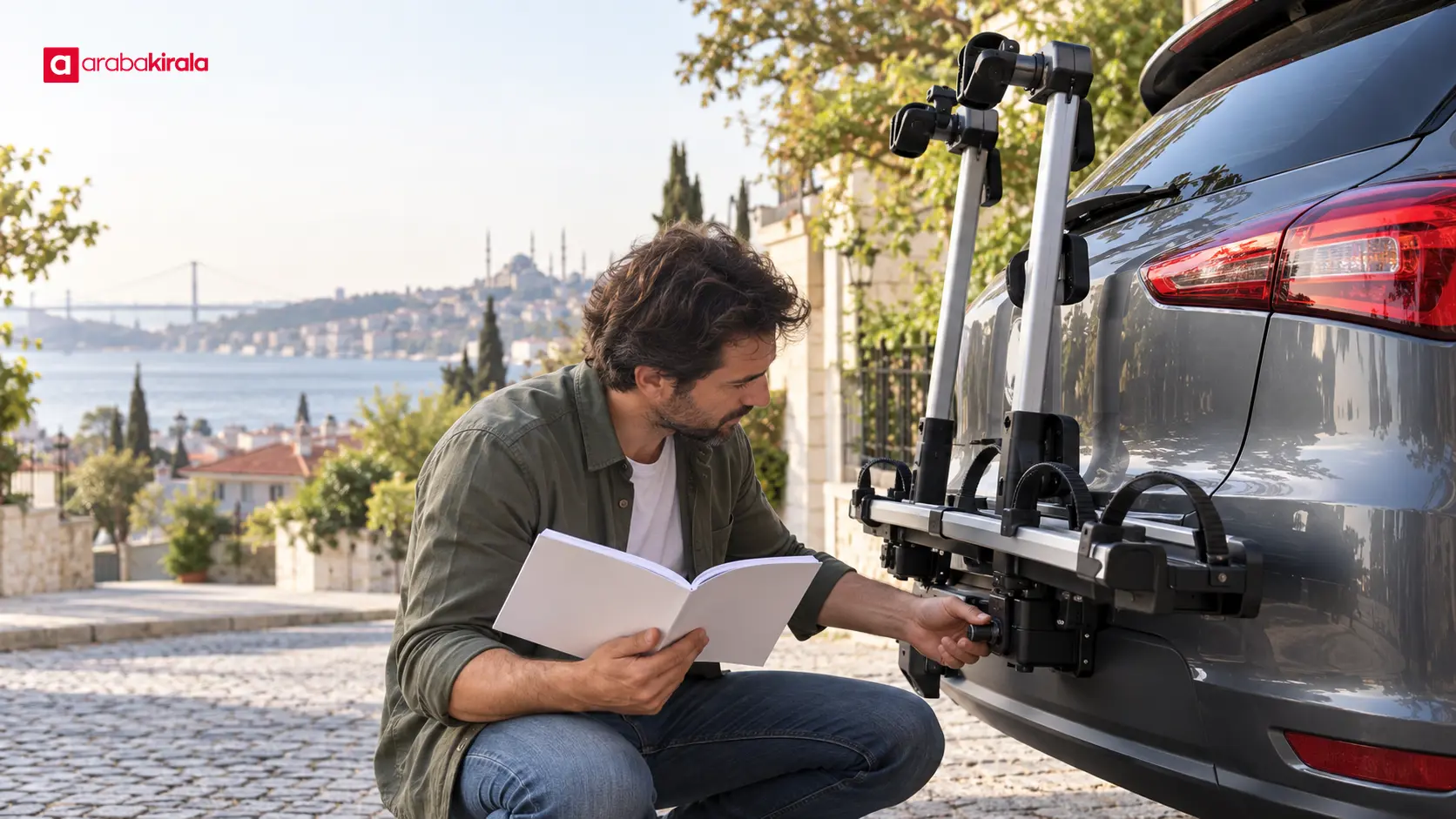
Measure the bicycle and note whether its front wheel can be removed, how many passengers will travel and how much luggage you have. This helps assess whether inside transport is practical. If you plan to use an external carrier, check its fit and installation method in the carrier maker’s instructions. Ask the branch whether the vehicle you will collect has the required attachment points and whether there are conditions for using outside equipment. Resolve compatibility before collection rather than after loading the bicycle.
Ways to carry a bicycle
Inside the car
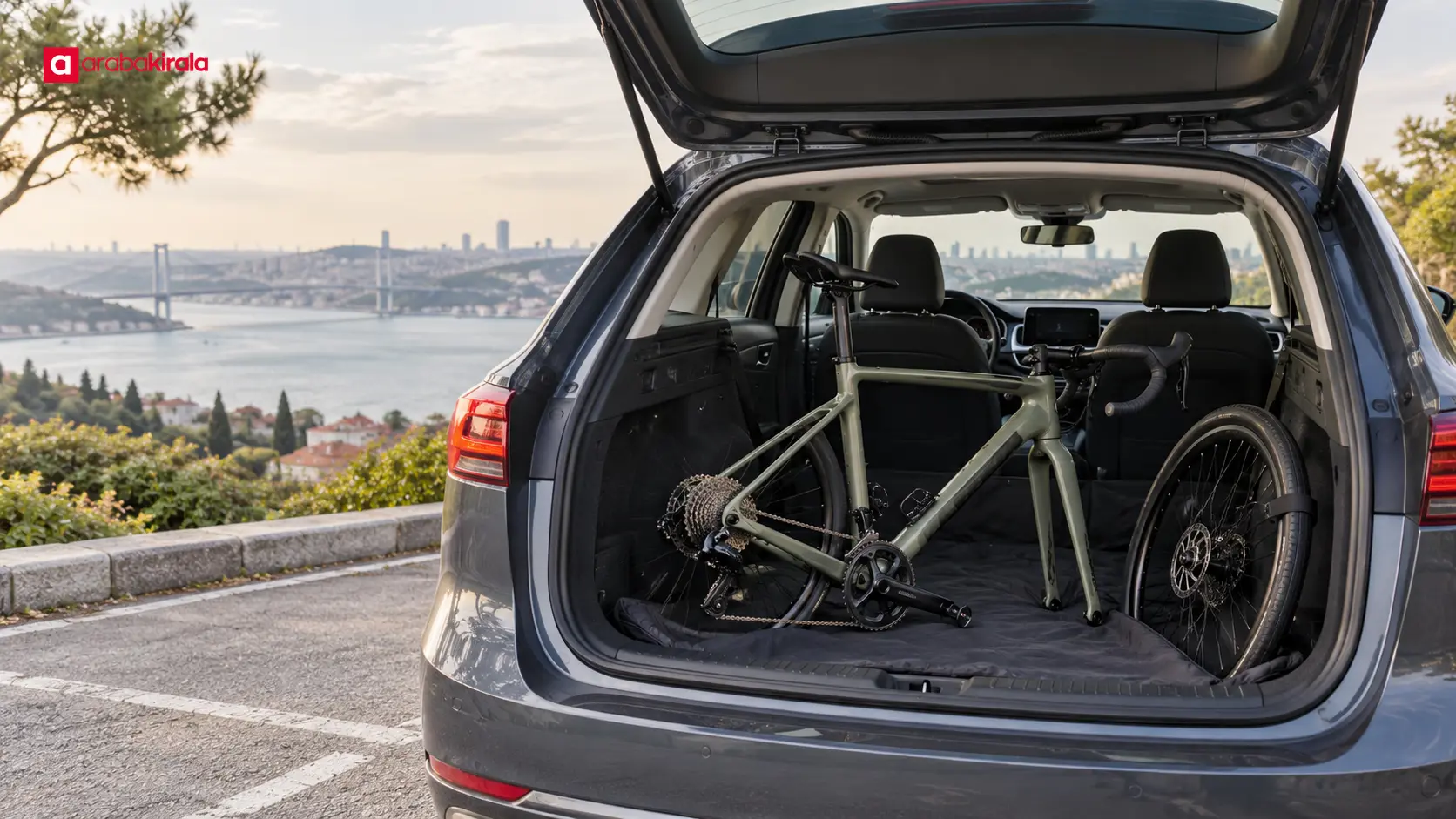
A bicycle may fit in the luggage compartment or, where the layout allows, in the rear passenger area. Removing the front wheel can reduce the space needed on some bikes. This avoids installing an external carrier, but uses space needed for passengers and bags. The frame, chain or pedals can soil or scratch the interior. Use a clean protective cover, and secure the removed wheel and small parts so they cannot move during the trip.
The bicycle must not block the driver’s view, mirrors, doors or safe seating for passengers. Leaning it against a seatback does not secure it. During sudden braking it can move forward, so check the car manual for suitable cargo anchor points and guidance on securing items. If the car cannot safely accommodate the bicycle and passengers together, do not force it into the cabin; consider another transport arrangement or a more suitable vehicle type.
Roof carrier
A roof carrier keeps the bicycle outside the cabin and leaves luggage space available. Its attachment method, the points supporting the bicycle and the system’s load limits all matter. Check the carrier maker’s instructions alongside the vehicle maker’s information about roof load and mounting. A carrier that appears to fit may still require attachment points that are absent from the rental vehicle.
The added height changes access to covered car parks, low entrances, toll structures and overhanging branches. Account for the total vehicle height with the carrier and bicycle attached rather than guessing. Keep the increased height in mind throughout the drive. Before entering a covered area, stop somewhere safe and check the clearance; do not assume the loaded car will pass beneath an obstacle.
Rear hatch or towbar carrier
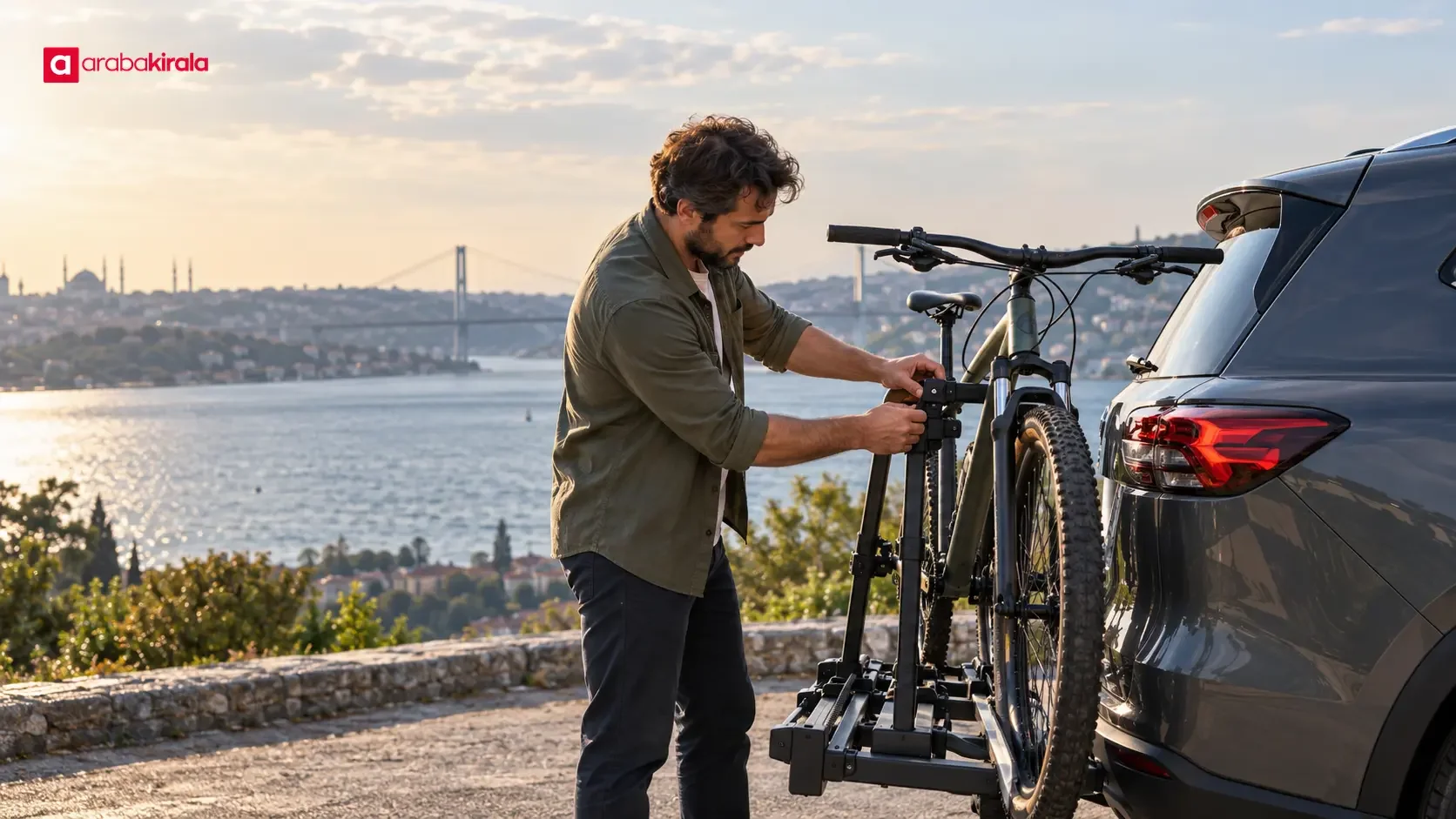
Rear carriers transport bicycles behind the vehicle. Some attach to a hatch or tailgate, while others are designed for a towbar; these mounting types are not interchangeable. Check that the carrier suits the vehicle body and connection, and that the bicycle count and total load are within the maker’s stated limits. Ask the rental branch in advance whether the vehicle has the needed connection and whether your chosen equipment is appropriate for it.
Bicycles and carrier must not obscure brake lights, indicators, reflectors or the plate area. If visibility is blocked, check the carrier instructions to determine whether additional lighting or a plate arrangement is needed; do not drive without suitable visibility. Follow the installation instructions for both the vehicle connection and bicycle straps. A rear-mounted system may restrict access to the luggage compartment, so take out anything you need before loading.
Compatibility, load limits and branch questions
The fact that a carrier can be attached does not prove that the vehicle and carrier are suitable in every respect. Compare the vehicle maker’s roof-load or connection information with the carrier maker’s limits, and stay within the lower applicable limit. Include the combined weight of the bicycle, carrier and any extra equipment. If you cannot confirm these figures, do not estimate. Tell the branch the vehicle type you need, bicycle dimensions and planned carrying method, and ask what vehicle options and equipment conditions apply to your booking.
Before reserving, clarify the following:
- Is there a vehicle body style or luggage space that suits the bicycle dimensions and passenger count?
- What information is needed to confirm that the selected carrier fits the vehicle you will collect?
- Are there branch or vehicle conditions for fitting a carrier you bring yourself?
- Is any additional equipment needed for the carrier connection, lights or plate visibility?
- Can the bicycle and carrier setup be checked when the vehicle is collected?
These questions clarify details about a particular vehicle and booking; they do not assume a universal company policy. Get the answers from the branch where you will collect the car. Read the carrier’s installation instructions as well, including who is to fit it and which connection method and equipment it requires.
Secure the bicycle properly
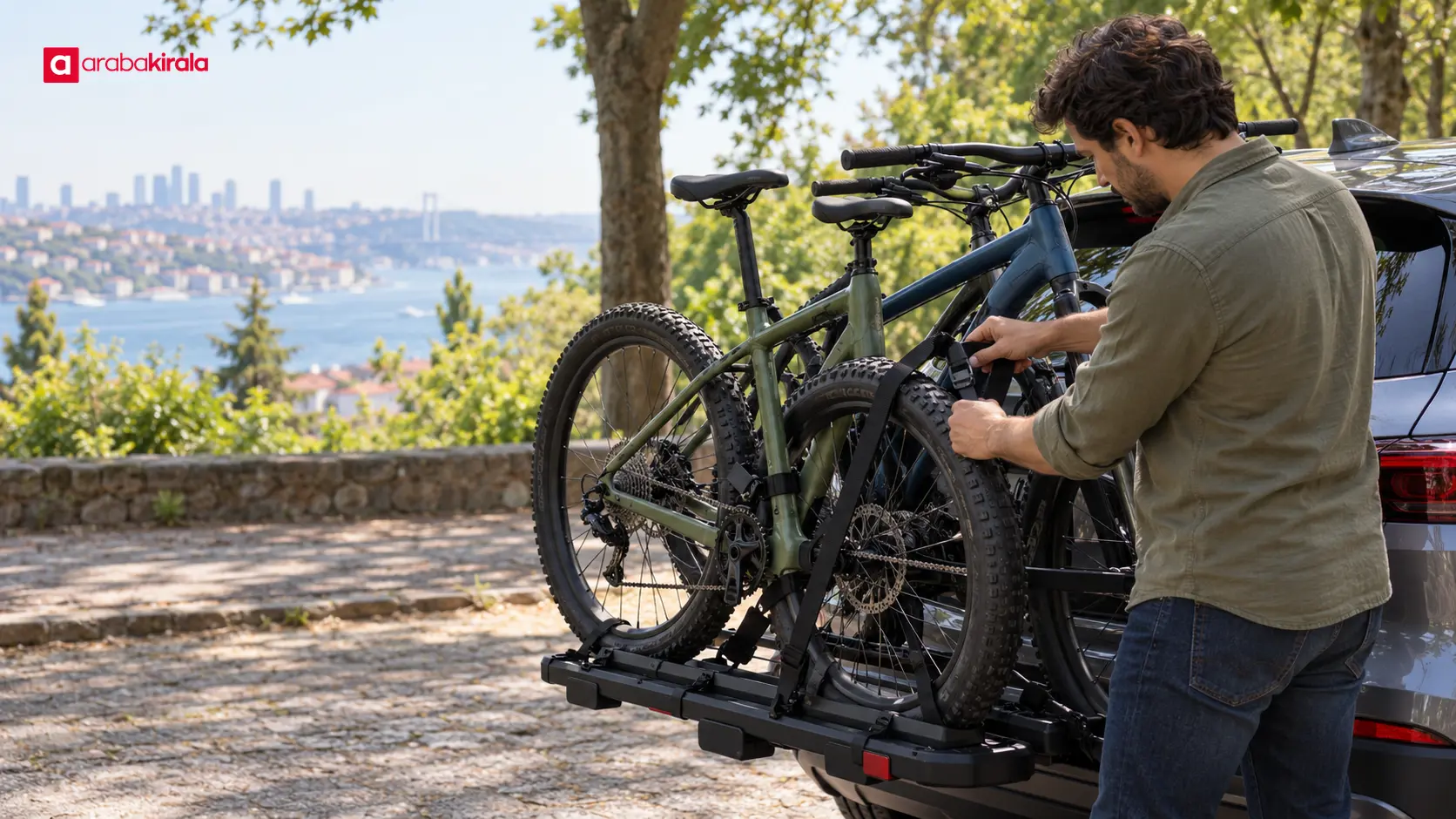
Securing a bicycle means more than preventing it from falling off. The frame and wheels need to be attached at the specified points, while pedals, handlebars and loose strap ends must not strike the vehicle or other bicycles. First attach the carrier to the vehicle in the sequence given by its maker. Then position the bicycle and secure its frame and wheels at the designated points. Do not guess which part should take a strap; follow the instructions.
Check that straps and locks are tidy, tight and not twisted. Gather loose strap ends so wind cannot whip them against the bodywork. If bicycles might touch each other or the paintwork, use a suitable protective separator. Clamping methods can vary by frame material and design, including carbon frames; avoid applying excessive force and read the bicycle maker’s transport warnings. If the carrier and bicycle instructions appear to conflict, seek guidance from the maker or its support before using the equipment.
Before departure, visually and manually check the vehicle attachment, wheel restraints, straps and loose items inside the luggage area. Do not drive if the carrier is loose or the bicycle can move. Recheck at a safe place after starting the trip, and check again at stops on a longer journey or when conditions change. These checks help reveal movement or slack but do not replace the maker’s instructions.
Driving and route planning in Istanbul
A carrier can change the vehicle’s outside dimensions. A bicycle extending to the side or rear may make narrow streets, parking and manoeuvres harder. Allow for the vehicle’s increased rear length when changing lanes, reversing or parking. Do not leave the carrier pressed against a wall, another car or a pedestrian route. External equipment is exposed to vibration and airflow, so think ahead about the route, suitable stops and safe places to park.
The bicycles must not reduce the driver’s view directly or in the mirrors, or hide vehicle lights and required signals. A carrier may block a reversing camera. Do not rely on camera or sensor alerts alone; check the surroundings before manoeuvring. If you notice noise, movement or a loose strap, stop somewhere safe without creating a traffic hazard and inspect the setup. Follow the maker’s guidance instead of attempting an improvised roadside repair on an uncertain connection.
Collection and return checks
At collection, inspect the relevant body panels and attachment areas before fitting a carrier. Make sure any existing visible scratches or dents are reflected in the vehicle condition record as appropriate. Keeping the contact points clean and dry before fitting can reduce the chance of grit being trapped between the carrier and bodywork. If new marks appear while loading the bicycle, pause before driving, document the condition and notify the branch.
Before returning the vehicle, remove the bicycles and carrier, and check for straps, keys or small parts left behind. Use the maker’s removal sequence and take care not to drag the carrier across the bodywork. Inspect the exterior and any interior surfaces the bicycle touched. These checks help make the vehicle’s condition clear at handover; also follow the collection and return process in your rental agreement.
Complete your plan
Start with the bicycle and passenger dimensions, then choose an inside, roof or rear-carrier method that suits the vehicle. Read the vehicle and carrier makers’ instructions for load, attachment and installation. Confirm booking-specific details about the vehicle and external equipment with the branch where you will collect the car. Secure the load so it cannot move and does not obscure the driver’s view or lights, then recheck it after setting off and during the journey. This preparation helps you plan a bicycle trip from Istanbul and identify compatibility issues before collecting the car.
Frequently Asked Questions
Will a bicycle fit in a rental car’s luggage compartment?
It depends on the vehicle’s luggage and cabin dimensions, the bicycle frame size and whether its wheels can be removed. Share the measurements with the branch and ask whether the particular vehicle body style can accommodate the bike and passengers. Forcing a bicycle into a position that blocks visibility or passenger space is not a safe solution.
Can I carry a bicycle on the roof of a rental car?
Consider this only if the vehicle has a suitable attachment and the carrier is compatible with it. Compare the vehicle maker’s roof-load and mounting information with the carrier instructions. Ask the branch about the specific vehicle and external equipment; do not assume a roof carrier fits every car.
What should I check when fitting a rear bicycle carrier?
Check that its connection type suits the vehicle, follow the installation sequence and stay within the maker’s limits. The bicycles must not hide lights, reflectors or plate visibility. If visibility is obstructed, confirm the required arrangement in the equipment instructions before driving.
When should I check the bicycle straps during a trip?
Check all connections before setting off and again at a safe place shortly after starting. On a longer journey, inspect them at stops and whenever you notice movement, noise or looseness. Use the carrier maker’s instructions for the inspection method.
What should I ask the rental branch before booking?
Ask which vehicle type suits your bicycle dimensions and passenger count, whether the carrier is compatible with the vehicle, and whether there are conditions for bringing your own equipment. Clarify any requirements for connections, lighting or plate visibility. Answers apply to the particular vehicle and booking, so treat them as specific details rather than general rules.
Legal Disclaimer: All content, articles and information on the Araba Kirala website are provided solely to inform users. No information shared on this website constitutes definitive advice or guidance. Araba Kirala Teknoloji A.Ş. and its authors cannot be held responsible for any direct or indirect damages arising from the application of information on the website. For all questions and requests regarding car rental, please contact the office from which you will rent your vehicle.