How to Organize Repair Invoices and Payment Records After an Insured Car Accident
Published: October 27, 2026 • Reading Time: 8 min • Last Updated: October 27, 2026
Learn how to review a repair invoice, connect it to payment proof, and organize records for a vehicle damage claim.
Contents
- What does a car insurance repair invoice show?
- What to check on the invoice
- How an estimate, work order, and invoice differ
- How to keep payment evidence
- Matching documents for a damage claim
- Common paperwork mismatches
- Before leaving the repair shop or rental branch
- Summary: a clear invoice and traceable payment
- Frequently Asked Questions
What does a car insurance repair invoice show?
A car insurance repair invoice records the work performed on a damaged vehicle and the amount charged for that work. An invoice may not explain the entire claim by itself, so it is useful to read it alongside the work order, itemized parts and labor, payment evidence, and records describing the damage. This guide explains how to check the invoice, keep payment records, and resolve gaps or mismatches in the paperwork.
Well-organized records help distinguish the repair from the movement of money. An invoice describes a service and its price; a bank record or receipt shows whether a payment was made, when it occurred, and through which channel. These documents serve different purposes. Knowing what each one supports makes it easier to locate the right evidence if someone asks for clarification later.
What to check on the invoice
Start by confirming who issued the invoice and which vehicle or repair it concerns. The issuer’s details, invoice date and number, customer information, and identifying details linking the document to the vehicle help make the record traceable. If a plate or vehicle identification number appears, check it against the vehicle records. Store copies containing personal information securely and share them only with the parties handling the matter.
Next, review the description of the work. A broad entry such as “repair” may not make the scope clear. The document should make it possible to understand which areas were repaired, which parts were replaced or used, what labor was performed, and whether there were additional services. If the invoice has limited detail, the work order or itemized statement should connect to it.
- Labor: The operation performed and, where possible, the part or area it concerns.
- Parts: Descriptions and quantities of replaced or used components.
- Price breakdown: Line amounts, tax, and a total that add up consistently.
- Date and claim link: The timing of the repair, vehicle handover, or damage record.
Invoice formats and levels of detail can vary. If a line is unclear, ask the repair shop for an itemized explanation or the work order associated with the invoice. The records required and the way they must be submitted can depend on the claim process, so confirm the current list and format with the party handling the file.
How an estimate, work order, and invoice differ
A repair estimate or preliminary assessment describes proposed work and an expected price. It may be prepared before repairs are complete, and it need not match the final amount if the scope changes. A work order records the service request and operational details of the work accepted or performed. An invoice is the financial document listing charges for the service. An estimate is therefore not a substitute for the final invoice, and a work order alone does not prove that payment took place.
If additional damage or a different repair is identified during the work, keep a record of the reason and approval for the change. The difference between the original scope and final invoice may be explained in a revised work order, an additional approval record, or a separate itemization. If the dates, work descriptions, or totals do not connect across the documents, a short written explanation from the shop can make the file easier to review.
How to keep payment evidence
Payment evidence supports that money was paid or collected. Depending on the claim process, this could be a bank transfer record, card transaction record, or receipt. The acceptable document can vary, so ask the file handler what it needs. Make sure the date, amount, parties, and any reference field are readable. If the payment description includes the vehicle, shop, or invoice number, that reference can help link the transaction to the repair.
If payment was made in several transactions, save each record and note which invoice amount it covers. Keep partial payments, deposits, remaining balances, and refunds distinct rather than collapsing them into one figure. If the invoice total differs from the amount paid, document the reason, such as an unpaid balance or a separate collection. That explanation does not establish that any amount is covered by insurance; coverage and payment are assessed under the applicable policy and claim review.
For a cash payment, obtain a receipt that shows the date and amount collected. The issuer, reason for payment, and related invoice should be clear. If a card slip or account statement does not identify which repair invoice it relates to, retain it together with the invoice number and any shop statement that connects the records.
Matching documents for a damage claim
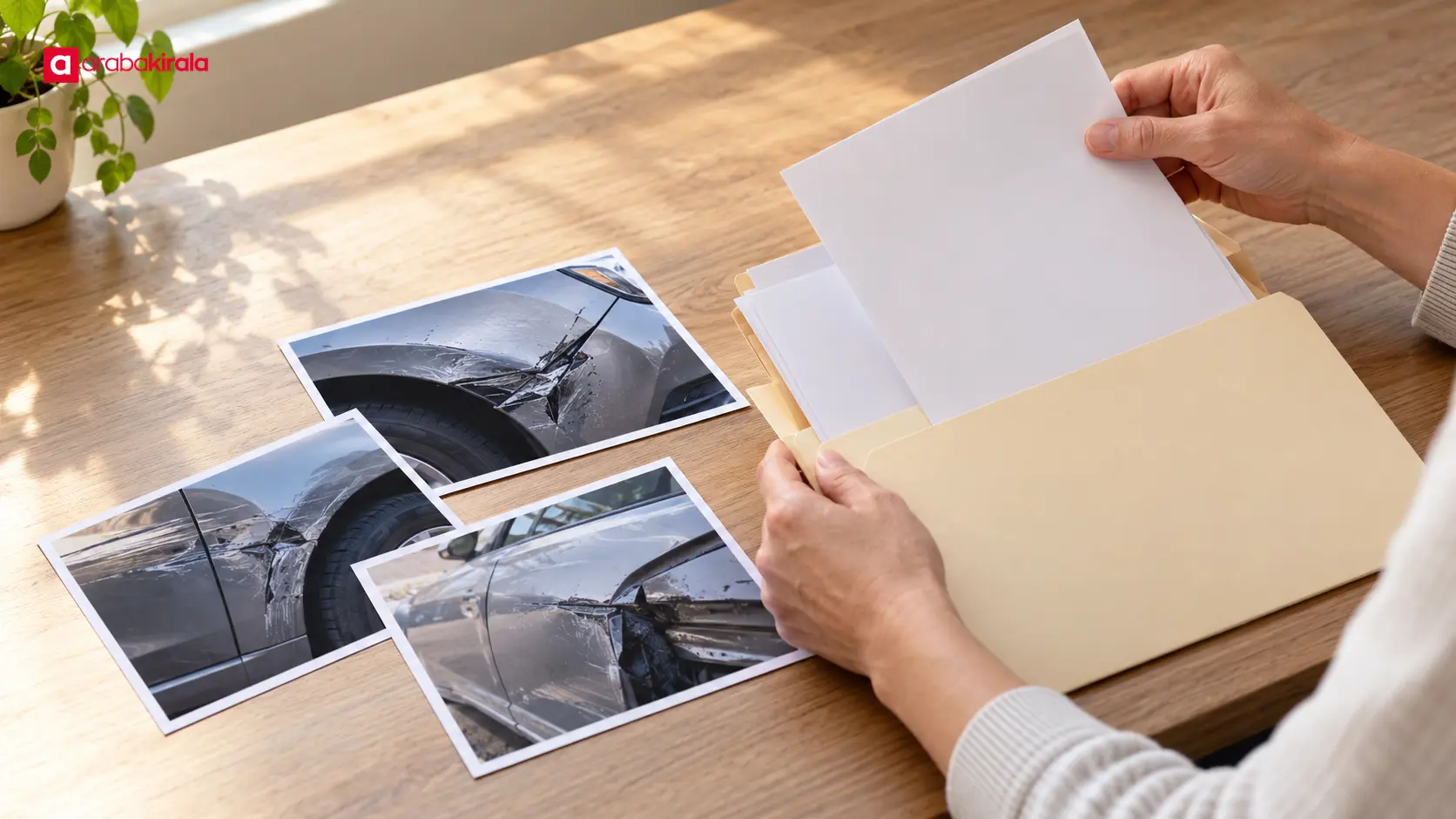
Rather than merely putting everything in one folder, make the relationship between the records easy to follow. A damage notice or claim reference, vehicle details, shop intake record, photographs, inspection records, work order, invoice, and payment evidence may complement one another. The same set will not necessarily be required for every case. Ask the party handling the file for the current document list and a secure way to submit it.
- Keep original digital files and legible scans; do not rely on cropped or blurry images.
- Name files by date and type, such as “invoice,” “payment,” and “work order.”
- Connect each copy to the relevant damage record using its claim reference.
- Keep a copy of what you submitted and a record that it was received.
- Note when a missing or later-issued document was requested and from whom.
Damage photographs can help describe the vehicle’s condition before repair. Their date and the area shown should be understandable. Photos alone do not verify the invoice line items, but they can help connect the damage record to the repair scope. Keep intake and inspection documents with the images so the file has context.
Common paperwork mismatches
An invoice may omit vehicle details, use a vague labor description, show totals that do not match the itemization, or be difficult to connect to a payment record. Do not edit the document yourself or add information to the record after it was issued. Ask the shop that issued it for a corrected document or supplementary explanation. Ask the claim handler what format will address the gap.
If invoice and payment totals differ, list all payments and any refunds in date order first. One payment may cover several invoices, or one invoice may be paid in installments; show each connection with a written note or account statement. If you find an error in a name, date, or amount, request a correction from the issuer and preserve the link between the original and corrected record.
Before leaving the repair shop or rental branch
For a rental car, clarify who must authorize the repair, whose name should appear as the invoice recipient, and what payment evidence is needed. Report the damage promptly to the rental branch that provided the vehicle and ask about the process before arranging repairs or making a payment. This is a practical way to keep responsibility and records with the right parties; it does not assume a particular company’s terms.
Before leaving the shop, obtain readable copies of the invoice and work order, proof of payment, and a clear description of completed work. If instructions are needed about the invoice recipient, vehicle details, or claim reference, ask in advance. Then confirm with the file handler how and when to submit the records. Submitting paperwork by itself does not mean repair costs will be reimbursed; that depends on the claim review and applicable coverage.
Summary: a clear invoice and traceable payment
A useful damage file answers three questions: what work was done to which vehicle, what charges were billed, and how was each amount paid? Connect the invoice, work order, and payment evidence by date, vehicle, and amount, and resolve differences with an explanation or corrected document. As a next step, review the repair invoice alongside the payment record, then ask the claim handler for the final list of required documents.

Frequently Asked Questions
Does a repair invoice prove that I paid?
An invoice shows the charge for the service; it does not always show that the charge was paid. Support the payment separately with a bank record, card transaction, or receipt, and link that record to the relevant invoice.
What if the invoice does not separate labor and parts?
Ask the repair shop for an itemized statement or a work order that explains the charges. Request a clear link to the invoice and vehicle details, and do not make handwritten changes to the issued document.
Which documents should I submit for an insurance claim?
Requirements can vary with the event and the claim file. Keep the invoice, payment evidence, work order, and damage records available, then confirm the current list and submission method with the party handling the claim.
Will a payment below the invoice total cause a claim to be rejected?
The difference alone does not establish an outcome. It may reflect a partial payment, remaining balance, or another transaction. Document every movement by date and amount and ask the claim handler how to explain the difference.
Whose name should be on an invoice for a rental car repair?
The invoice recipient and repair authorization depend on the rental arrangement and how the incident is being handled. Notify the rental branch and clarify with the relevant parties whose name and vehicle details should be used before authorizing work.
Legal Disclaimer: All content, articles and information on the Araba Kirala website are provided solely to inform users. No information shared on this website constitutes definitive advice or guidance. Araba Kirala Teknoloji A.Ş. and its authors cannot be held responsible for any direct or indirect damages arising from the application of information on the website. For all questions and requests regarding car rental, please contact the office from which you will rent your vehicle.