
Electric Car Puddle Safety: Assessing Risks on Wet Roads
Published: November 1, 2026 • Reading Time: 7 min • Last Updated: November 1, 2026 • Author: Merve B.
Learn how to assess water depth, flow, visibility and road conditions before approaching a puddle in an electric car. This guide covers safer decisions, post exposure checks and practical steps for rental drivers.
Contents
- Why standing water creates risk
- What to assess before reaching a puddle
- Depth and visible edges
- Flow and changing conditions
- Visibility, traffic and room to maneuver
- Practical steps for making a safer decision
- Electric car considerations
- Checks after water exposure
- Before setting off in a rental electric car
- Frequently Asked Questions
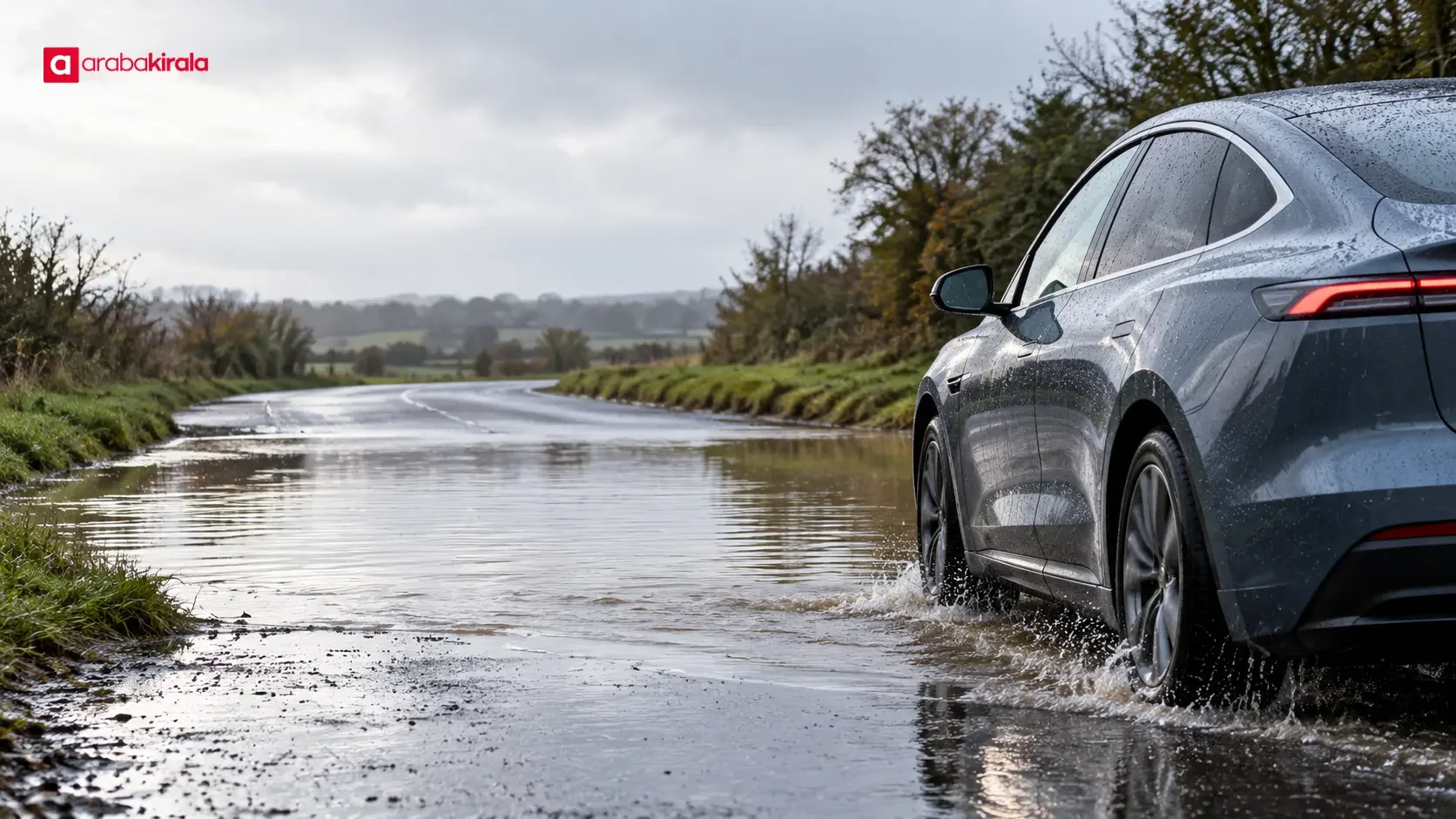
Before an electric car enters standing water, the driver needs to assess its apparent depth, movement, the condition of the road beneath it and nearby traffic. This guide explains how to make that assessment, why a puddle can be risky even when it looks shallow, and what to check if the car has been exposed to water. The safest decision is straightforward: if you cannot see the limits of the water and the route beneath it, do not drive through it. Choose a safe alternative or wait for conditions to improve.
Why standing water creates risk
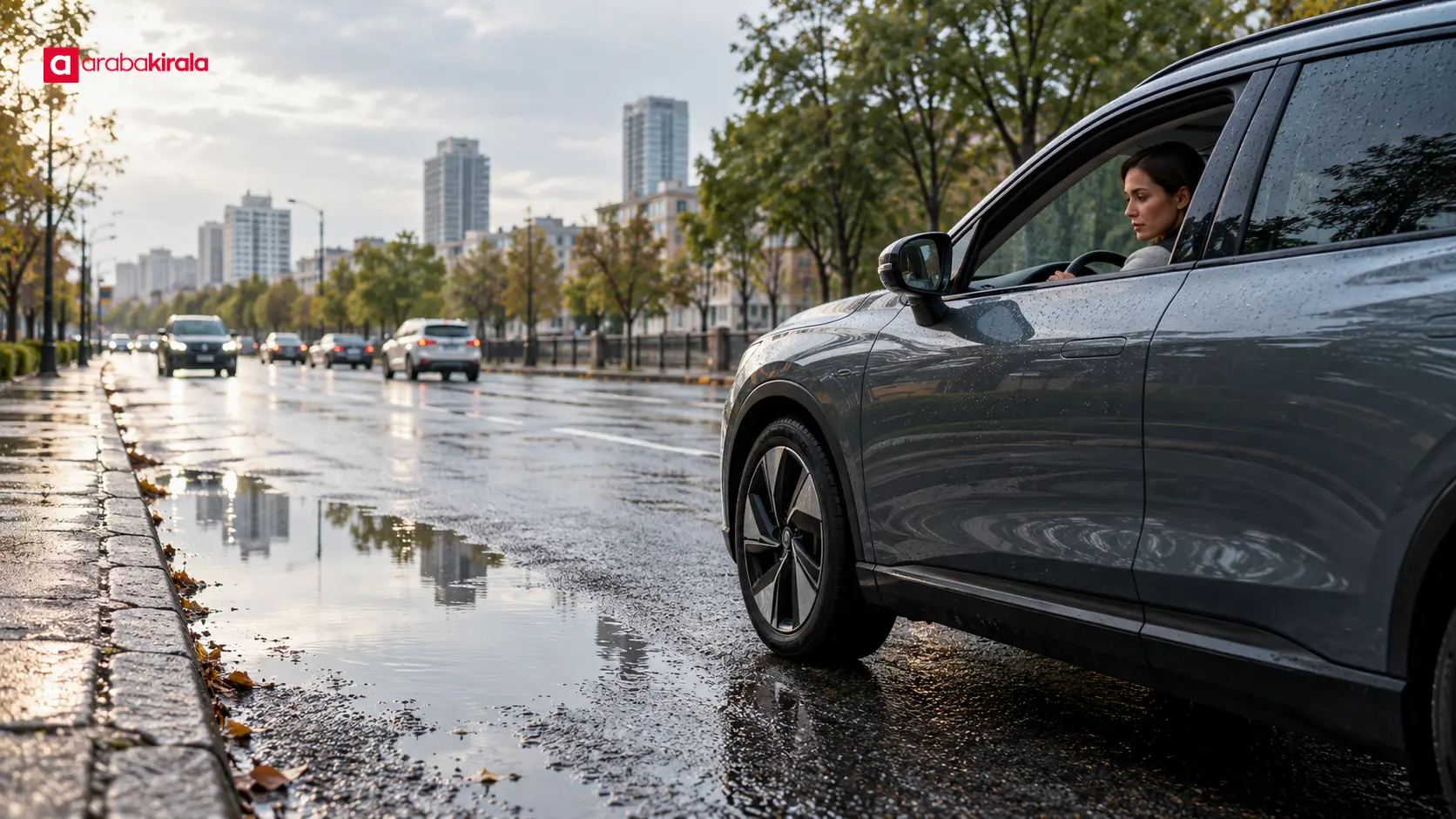
A puddle can conceal a pothole, damaged pavement, a missing drain cover or a slope toward the edge of the road. Rainwater hides these features, so the water may look shallower than it is. Flowing water can affect tire grip and vehicle stability, while mud and debris can make the surface slippery. Water can also splash onto pedestrians, cyclists and nearby vehicles.
Electric cars have protective enclosures around the battery and high voltage components. That design does not make them suitable for unlimited water exposure. The vehicle’s limits depend on its model, the manufacturer’s instructions, water depth and flow, and the condition of the road. Even when electrical components are protected, water may affect other vehicle parts, braking, traction or the cabin. Treat a flooded or uncertain route as a hazard, not as a test of the car’s water resistance.
What to assess before reaching a puddle
Depth and visible edges
Compare the water level with nearby fixed features, such as a curb, but do not treat them as precise measuring tools. Road camber and uneven surfaces can make one side of a puddle deeper than the other. If the water is cloudy, its edges are hard to distinguish, or it appears high enough to approach the vehicle’s underbody, avoid entering it. Check the owner’s manual for the model’s stated water crossing limits. A stated limit does not guarantee safe passage over a damaged road or through moving water.
Flow and changing conditions
Moving water is more concerning than still water. Ripples, floating debris and water crossing the road can show that it is flowing, but a visual estimate cannot establish a safe depth or force. Do not attempt a crossing when water is flowing, rising or still accumulating during rain. Conditions can change quickly, and a route that looked passable earlier may no longer be safe.
Visibility, traffic and room to maneuver
Night, heavy rain, glare from headlights and spray from other vehicles can make it difficult to judge the water’s edge or spot a concealed hole. If you cannot see the road beyond the puddle, you do not have enough information to choose a safe path. Following traffic closely, a narrow lane or roadside obstacles can also remove room to stop or turn. Reduce speed early where it is safe to do so, and avoid sudden braking or steering that could create another hazard.
Practical steps for making a safer decision
- Slow down before the water: A controlled approach gives you more time to observe. Driving quickly can increase spray and make hidden road damage harder to detect.
- Look at the whole route: Check the water’s edge, movement, the road on the far side and nearby traffic. Another vehicle getting through does not prove that the depth or route is safe for your car.
- Choose a clear alternative: If possible, use an open, sound route around the water. Do not move unpredictably into oncoming traffic, onto a sidewalk or into a pedestrian area. If there is no safe alternative and conditions remain unclear, wait or take another route.
- Do not force a crossing: Stay out of water whose depth you cannot judge, that is flowing or rising, or that may require you to stop or reverse midstream.
- Watch for changes in the car: Unexpected resistance, loss of traction, a dashboard warning or an unusual sound calls for a safe place to stop. Keep steering and control inputs smooth.
Electric car considerations
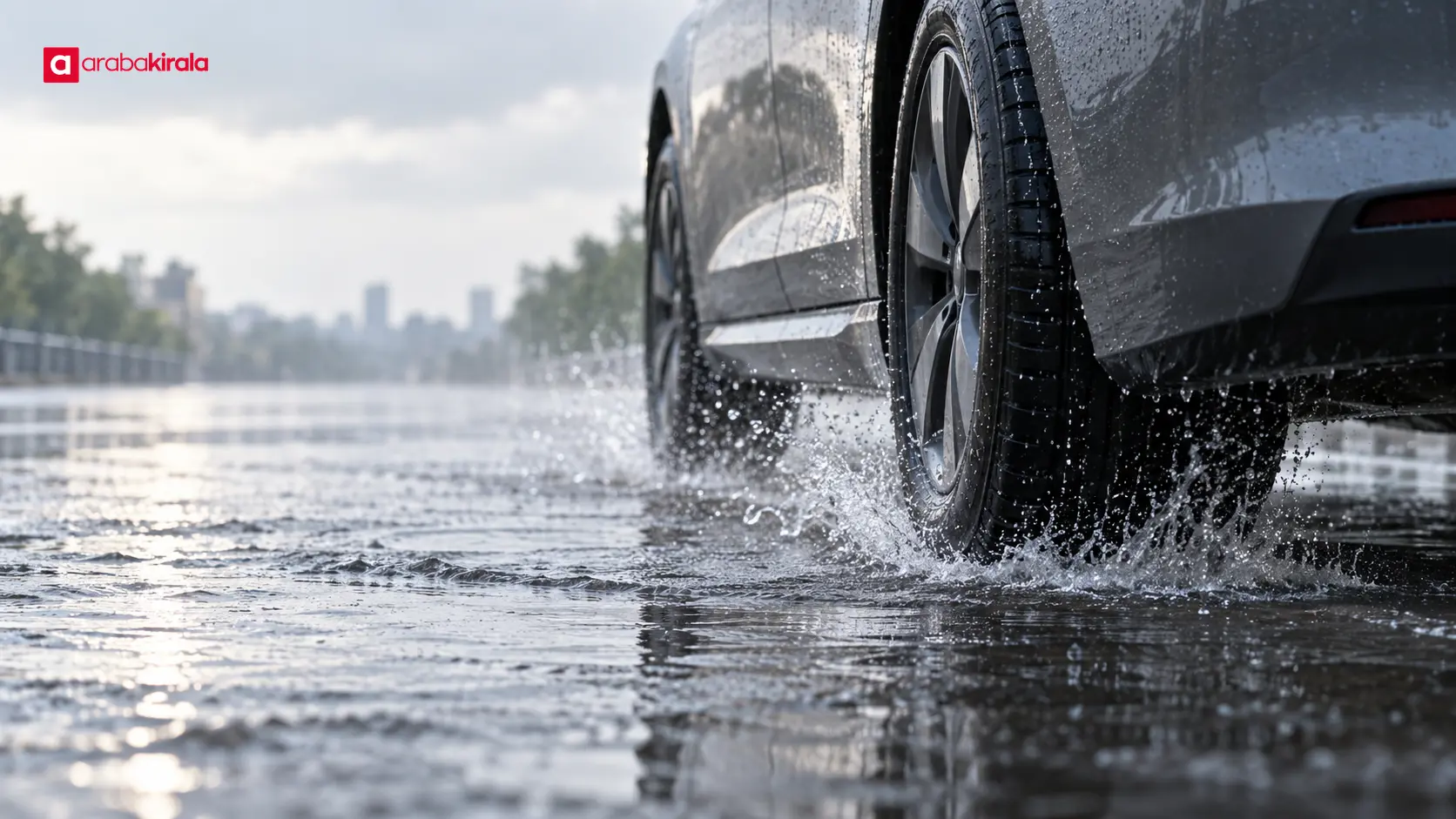
The battery enclosure and high voltage system are designed to meet the manufacturer’s protection specifications. This does not mean that driving through a flooded road, leaving the battery submerged or using a damaged vehicle is safe. Consult the manual for model specific warnings and limits. Do not assume a depth that is not documented is acceptable.
If you suspect damage around the battery after water exposure, do not continue driving or charging. Do not touch high voltage parts if there may be water intrusion, impact damage or an electrical fault. Leave the vehicle in a safe location and follow the manufacturer’s roadside assistance or service guidance. If you notice smoke, a sharp odor, unusual heat or noise, move away from the vehicle and call emergency services. Warning lights, reduced power or a change in how the car drives may also call for professional inspection, even if there are no other obvious signs.
Checks after water exposure
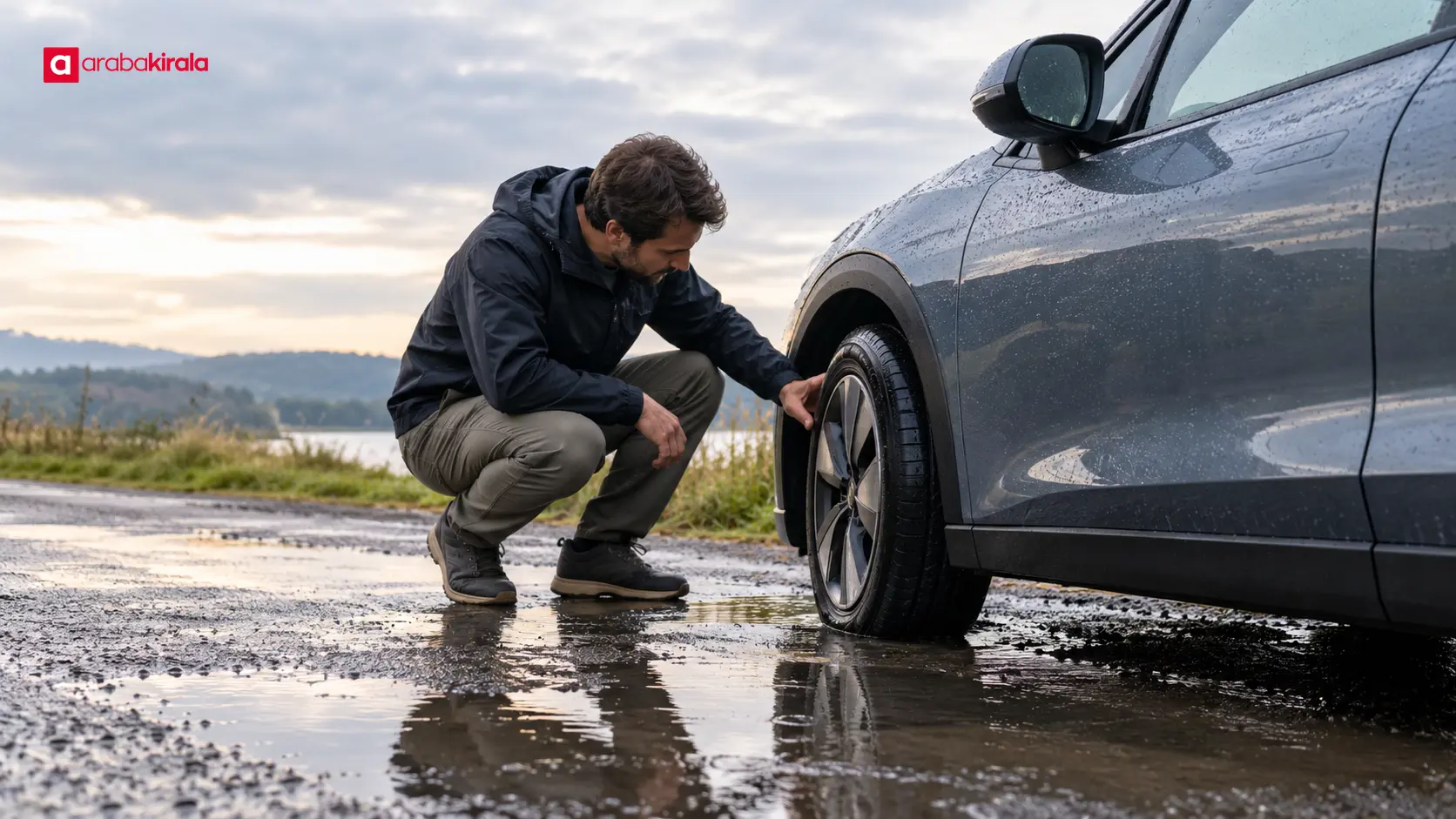
Once stopped in a safe place, check the instrument panel for warnings, look for visible exterior damage, and see whether debris is lodged near the tires or water has entered the cabin. Do not reach under the car or try to inspect high voltage components. If the brakes have been wet, pay attention to their response during the first slow movement in a safe area. If braking feels unusual, do not continue. Never perform checks while driving or stop where you obstruct traffic.
Seek professional assessment if the car was substantially exposed, remained in floodwater, struck something, or displayed an electrical warning. An exterior glance alone cannot determine whether a vehicle is safe to drive or charge. If you are using a rental car, contact the branch that provided it or the support channel given to you to report water exposure or damage and get instructions. Do not delay reporting a possible incident.
Before setting off in a rental electric car
At pickup, learn how to access the owner’s manual and view the vehicle’s basic warnings. Model specific features, charging port operation and driving modes can differ. Before driving in heavy rain, identify alternative routes that avoid low crossings or areas prone to standing water. Ask the branch you plan to rent from about details specific to that vehicle, its operating limits or the support process. These details should not be assumed to be identical for every car or location.
For electric car puddle safety, base the decision on the conditions: can you see clearly, is the water still and shallow, is the road surface known, and is there a safe way through or around it? If any answer is uncertain, do not force the crossing. Your next step is to review the vehicle manual’s water guidance and plan a safer route before travel.
Frequently Asked Questions
Can an electric car safely drive through a puddle?
That depends on the model and the water depth, flow, road surface and visibility. Check the owner’s manual for the vehicle’s limits. Not knowing the depth or being unable to see the road does not make a crossing safe. Avoid water that is moving or difficult to assess.
Is an electric car battery waterproof?
The battery enclosure is designed with water protection, but that does not mean that submerging the car or driving into floodwater is safe. Damage, duration of exposure and model limits matter. If the car has been exposed and shows a warning or signs of damage, do not drive it; seek professional help.
What signs matter after an electric car enters water?
Dashboard warnings, reduced power, unusual sound or odor, smoke, abnormal heat, water inside the cabin and changed braking response all deserve attention. Move away if there is smoke, heat or a sharp odor. Do not touch high voltage components if an electrical fault is suspected.
Should I accelerate or slow down when crossing standing water?
Slow down in a controlled way before reaching it so you have time to assess conditions. Speed can increase spray and the risk of losing control. Avoid sudden acceleration, hard braking and sharp steering once in water; if the conditions are unsafe or unclear, do not enter.
What should I do if a rental electric car is exposed to water?
Stop in a safe place and assess the vehicle’s behavior. If there is damage, a warning or a suspected electrical fault, do not keep driving or charging. Contact the providing branch or the support channel given to you to report the exposure and receive instructions.
Legal Disclaimer: All content, articles and information on the Araba Kirala website are provided solely to inform users. No information shared on this website constitutes definitive advice or guidance. Araba Kirala Teknoloji A.Ş. and its authors cannot be held responsible for any direct or indirect damages arising from the application of information on the website. For all questions and requests regarding car rental, please contact the office from which you will rent your vehicle.












