
Regenerative Braking and Brake Response in Electric Cars on Wet Roads
Published: October 30, 2026 • Reading Time: 7 min • Last Updated: October 30, 2026
Learn how regenerative braking works, why brake response can feel different on wet roads, and how to slow down more smoothly in rainy conditions.
Contents
How does electric car regenerative braking behave on wet roads? This guide explains how energy recovery works, what the brake pedal does, and how to make deceleration more predictable in rain. Regeneration can recover some energy, but it does not replace safe driving when tire grip is limited.
What is regenerative braking?
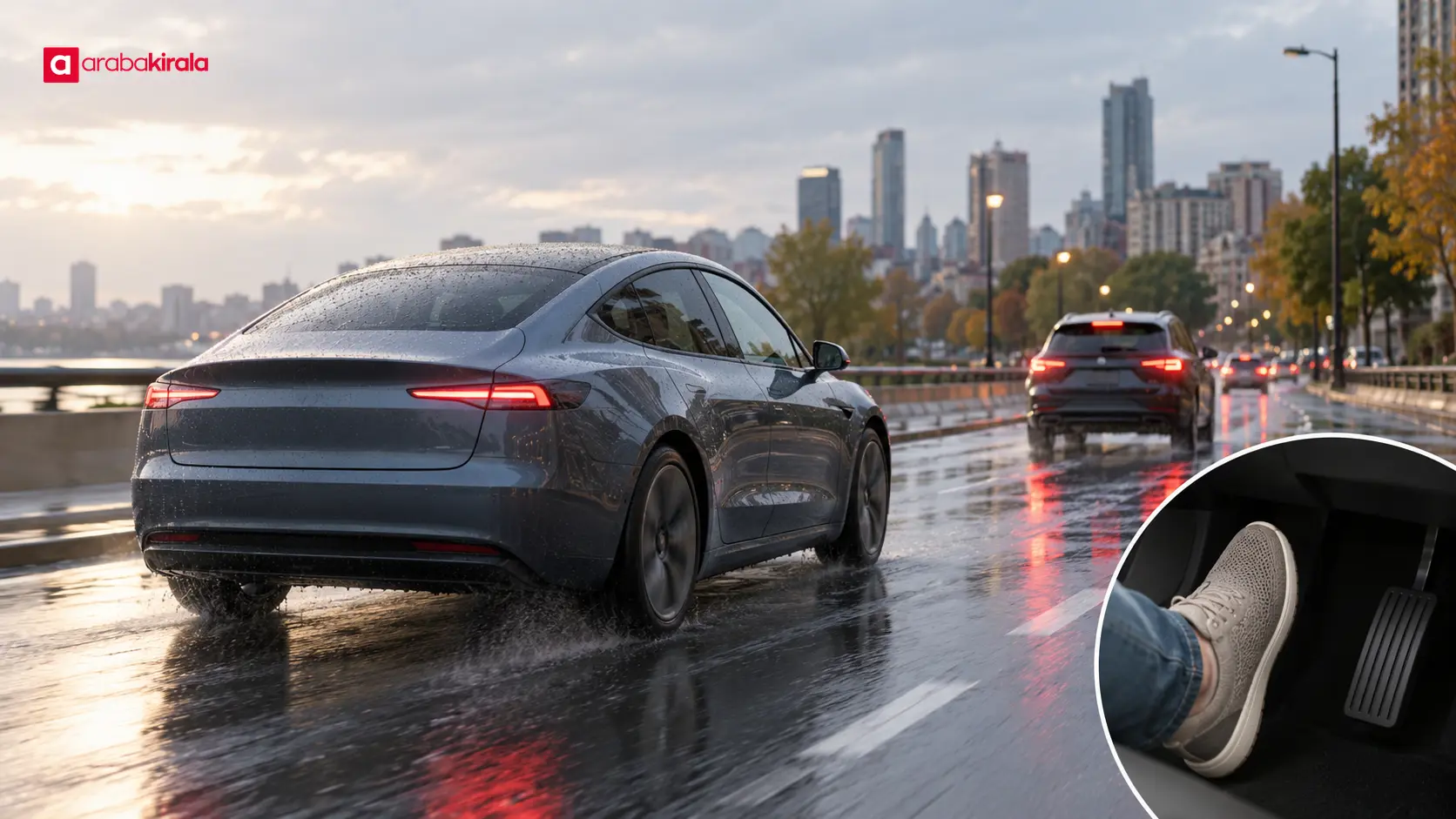
An electric car uses its traction motor to turn the wheels while accelerating. When the driver lifts off the accelerator or requests braking, the motor may operate as a generator, depending on the vehicle design and selected driving settings. Some of the energy from the moving wheels can then be sent back to the battery. This is called regenerative braking or energy recovery.
Regeneration can contribute to slowing the car, but it should not be treated as a separate replacement for the conventional braking system. Cars also have friction brakes. When the driver presses the brake pedal, the vehicle may blend regenerative and mechanical braking to meet the requested deceleration. The contribution of each system varies by model.
Why can braking feel different on a wet surface?
Rain can reduce the grip between the tires and the road. Water, standing puddles, dirt or oil residue, and tire condition all affect available traction. When the tires have less force to work with, sudden acceleration, hard braking, and sharp steering inputs can unsettle the vehicle. This basic risk applies to electric and combustion cars alike.
The deceleration a driver feels from electric car regenerative braking on a wet road can depend on the selected regeneration level, vehicle speed, battery charge and temperature, electronic controls, and available grip. Some cars slow noticeably when the accelerator is released; others produce a more modest effect. A vehicle may reduce or manage regenerative braking differently to help preserve wheel grip. Do not assume the pedal response you know from dry roads will feel identical in rain.
Even when regeneration slows the car, that does not mean stopping distances will be shorter in every condition. On wet roads, safe stopping still depends on adjusting speed and following distance to the conditions. An energy-flow or regeneration display can show system activity, but it is not a measurement of road grip.
Lifting off the accelerator versus pressing the brake
Lifting off the accelerator reduces the request for propulsion. Depending on the vehicle settings, it may create a certain amount of regenerative deceleration. In cars with one-pedal driving, the effect can be more pronounced. Still, lifting off does not guarantee that the brake lights behave the same way in every situation or that the car will apply the braking force you need. That behavior depends on the vehicle’s design.
The brake pedal gives the car a direct request to slow down. The vehicle may manage that request through regeneration and mechanical brakes. Press the brake pedal when you need more deceleration or need to stop. Instead of waiting to see whether regeneration slows the car enough, watch traffic and the available stopping space, then brake in good time. Reading the vehicle manual’s explanation of brake lights and one-pedal driving can help you understand responses that may otherwise feel unfamiliar.
How to slow down more smoothly in rain
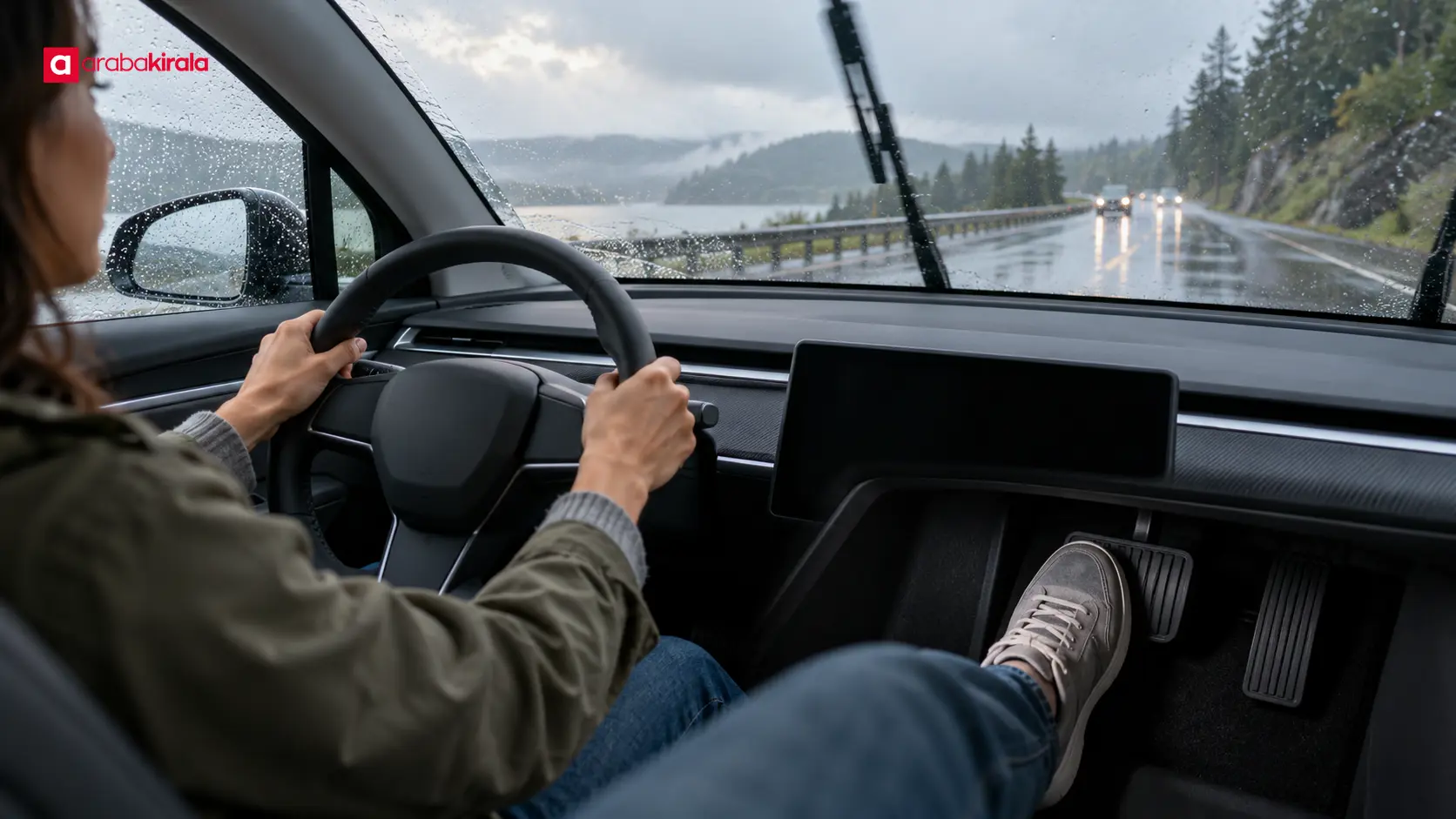
- Reduce speed for the conditions. If the asphalt is wet, water is pooling, or rain limits visibility, slow down gradually. The posted limit does not mean the same speed is safe in every weather condition.
- Leave more following distance. Watch the traffic ahead and the brake lights of other vehicles. A larger gap gives you more time to respond to unexpected slowing.
- Use the pedals gently. Increase the deceleration request in a controlled way rather than lifting abruptly or stamping on the brake. Keep steering inputs calm as well.
- Learn the regeneration behavior. Read the sections on energy recovery and drive modes in the vehicle manual. Get familiar with settings in safe, suitable conditions; do not try a new mode for the first time in heavy rain.
- Watch for standing water. Avoid entering water when its depth and the road beneath it are unknown. If control is reduced on water, avoid sudden maneuvers; stop somewhere safe and assess the situation.
- Keep a clear view. Use the wipers, windshield demisting system, and lights as conditions require. When visibility becomes seriously limited, stopping in a safe place may be better than continuing.
When regeneration may be limited
Energy recovery may not remain at the same level in all conditions. Battery charge and temperature, vehicle speed, driving mode, and intervention from electronic controls can affect how much energy is recovered. These changes may appear on the display or alter pedal feel. If the display shows a different regeneration level, do not rely on the system alone; use the brake pedal to achieve the deceleration you need.
Electronic stability and traction control systems can help preserve tire grip. They cannot overcome the laws of physics or create more grip than the tires and surface allow. Safe wet-weather driving still requires an appropriate speed, adequate distance, and smooth driver inputs, alongside the car’s assistance systems.
Renting and collecting an electric car
The regeneration settings and one-pedal driving behavior of a rental car may differ from the car you usually drive. Before setting off, ask the rental branch how to access the vehicle manual and learn the basic driving features. In particular, find out how the car slows when you lift off, how its brake lights operate, and how to select drive modes. This reduces the need to search for settings while moving.
At collection, look for visible tire damage or unusual wear, and check that the wipers and lights work. This is not a technical inspection; report a safety concern to the branch before driving. Charging and range planning are separate parts of a rainy trip. Use the vehicle’s own displays and accessible charging information to assess your route and charging needs. Do not treat a range estimate as independent of weather and road conditions.
Summary and next step
Regenerative braking can return some energy to the battery while slowing an electric car, but it does not guarantee grip or a particular stopping distance on a wet surface. In rain, reduce speed, leave more space, use the pedals progressively, and press the brake pedal in time when needed. If you rent an electric car, learn its regeneration and braking behavior from the manual before driving, and ask the rental branch about any vehicle-specific details you cannot confirm.
Frequently Asked Questions
Is regenerative braking stronger on wet roads?
There is no single rule that applies to every car and condition. The felt level of regeneration depends on vehicle settings and operating conditions; electronic controls may adjust it to help maintain traction. Do not leave wet-road deceleration to regeneration alone.
Will the car stop when I lift off the accelerator?
That depends on the car’s regeneration setting and speed. Some one-pedal driving systems can slow the vehicle to a stop, while other settings provide only limited deceleration when you lift off. Use the brake pedal when a complete stop is needed, and check the vehicle manual.
Should I turn off regeneration in the rain?
There is no single setting that suits all vehicles. Follow the manufacturer’s manual and avoid trying an unfamiliar setting on a wet road. If the car responds differently than expected, reduce speed and stop somewhere safe.
Does regeneration switch on the brake lights?
When brake lights come on can depend on the vehicle design and the level of deceleration. Do not assume all electric cars behave the same way; check the relevant section of the vehicle manual. Use the brake pedal when needed so that you slow as intended.
What should I do if the car skids on a wet road?
Avoid abrupt braking, acceleration, or steering. Look toward the safe direction you want to travel and try to guide the car with smooth inputs. If water covers the road or visibility is inadequate, stop at a suitable place. If the car shows a control or braking system warning, do not continue driving; contact the rental branch.
Legal Disclaimer: All content, articles and information on the Araba Kirala website are provided solely to inform users. No information shared on this website constitutes definitive advice or guidance. Araba Kirala Teknoloji A.Ş. and its authors cannot be held responsible for any direct or indirect damages arising from the application of information on the website. For all questions and requests regarding car rental, please contact the office from which you will rent your vehicle.












