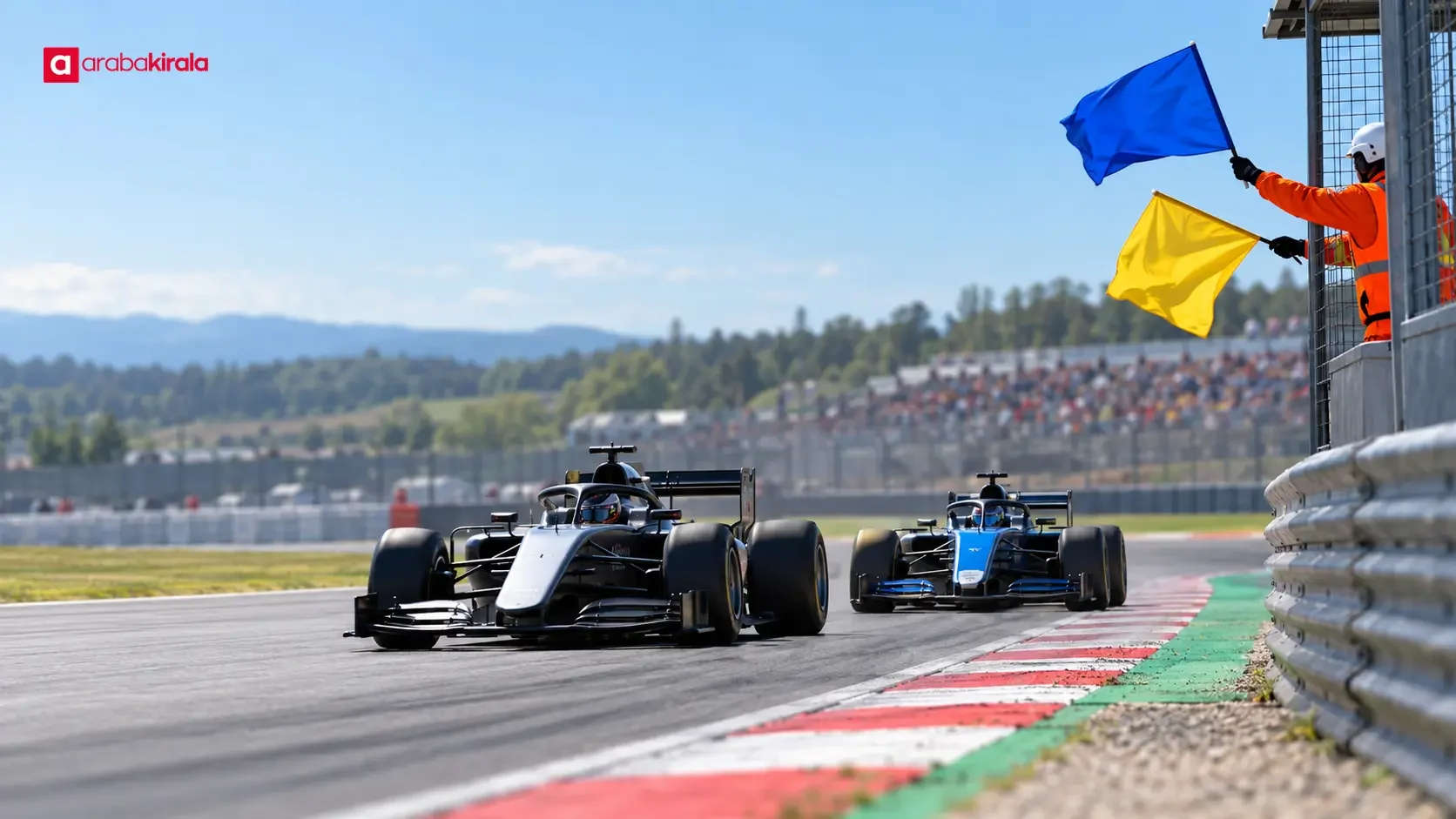
How to Read Blue and Yellow Flags Together in Formula 1
Published: October 29, 2026 • Reading Time: 6 min • Last Updated: October 29, 2026
Learn what blue and yellow flags communicate in Formula 1, why they may appear at the same time, and how to interpret them while following a race.
Contents
- What does a blue flag tell a driver?
- What changes under a yellow flag?
- When blue and yellow flags appear together
- Broadcast graphics and trackside signals may differ
- How to read the signals while watching
- Do not confuse lapping traffic with a hazard warning
- A quick viewer’s checklist
- Summary and what to watch next
- Frequently Asked Questions
Formula 1 flag signals give drivers concise information about traffic and conditions on the circuit. A blue flag concerns a faster car approaching from behind; a yellow flag warns of danger on the track and calls for caution and reduced speed. Seeing both close together does not create a separate combined signal. It usually means that different warnings apply at the same time, perhaps to different cars or sections. This guide explains each flag, how their messages interact, and what viewers can watch to make sense of a race incident.
What does a blue flag tell a driver?
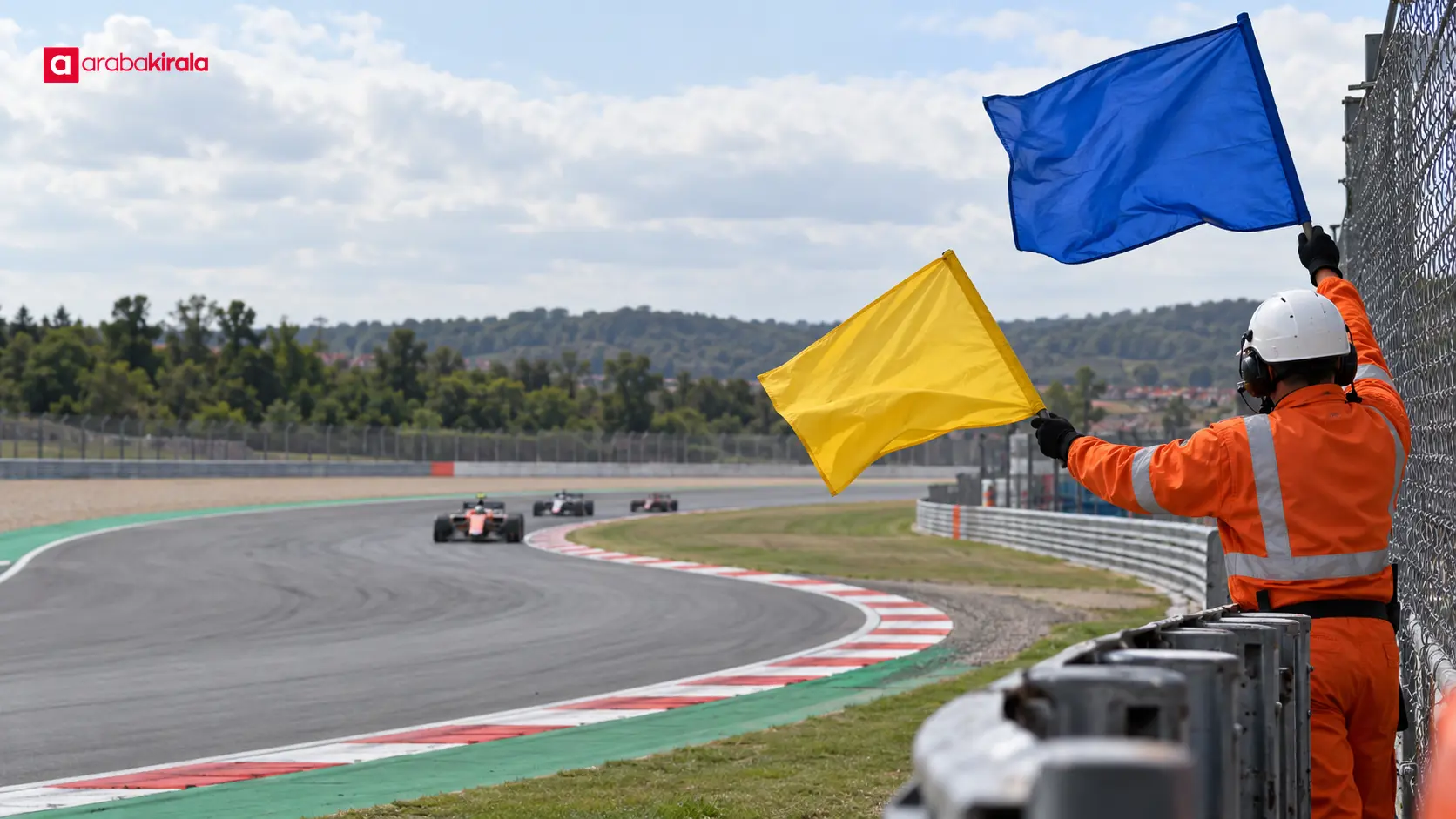
A blue flag indicates that a faster car is approaching from behind. When shown under the applicable race rules and direction, it alerts the driver to assess the situation and facilitate the pass safely. This is especially relevant when a car is about to be lapped, rather than simply defending its place in a close fight. A driver should check mirrors and surroundings, avoid abrupt braking or unpredictable movement, and not create a hazard while responding.
For viewers, the key point is that the approaching car may have a different race status or lap position. A single camera shot may not show the full context: the cars’ laps, their position on the circuit, and current race-control instructions all matter. A blue flag should not be read as an instruction for a car to leave the track in every circumstance.
What changes under a yellow flag?
A yellow flag warns of danger or an unusual condition on the circuit. The cause might be a stopped car, debris, a slippery surface, recovery activity, or another obstruction. The location of the signal and the race direction determine what drivers must do there. In general, drivers are expected to slow down, avoid overtaking, and be ready to react to the hazard. Double yellow signals indicate a more serious danger or possible intervention, requiring a more substantial reduction in speed and readiness to stop if necessary.
A yellow flag does not itself mean that the race has been stopped or that a driver has been penalized. Racing may continue, while a safety car or another control measure is a separate decision. Viewers should note the sector where the flag appears, the speed of the cars, and whether an obstruction is visible.
When blue and yellow flags appear together
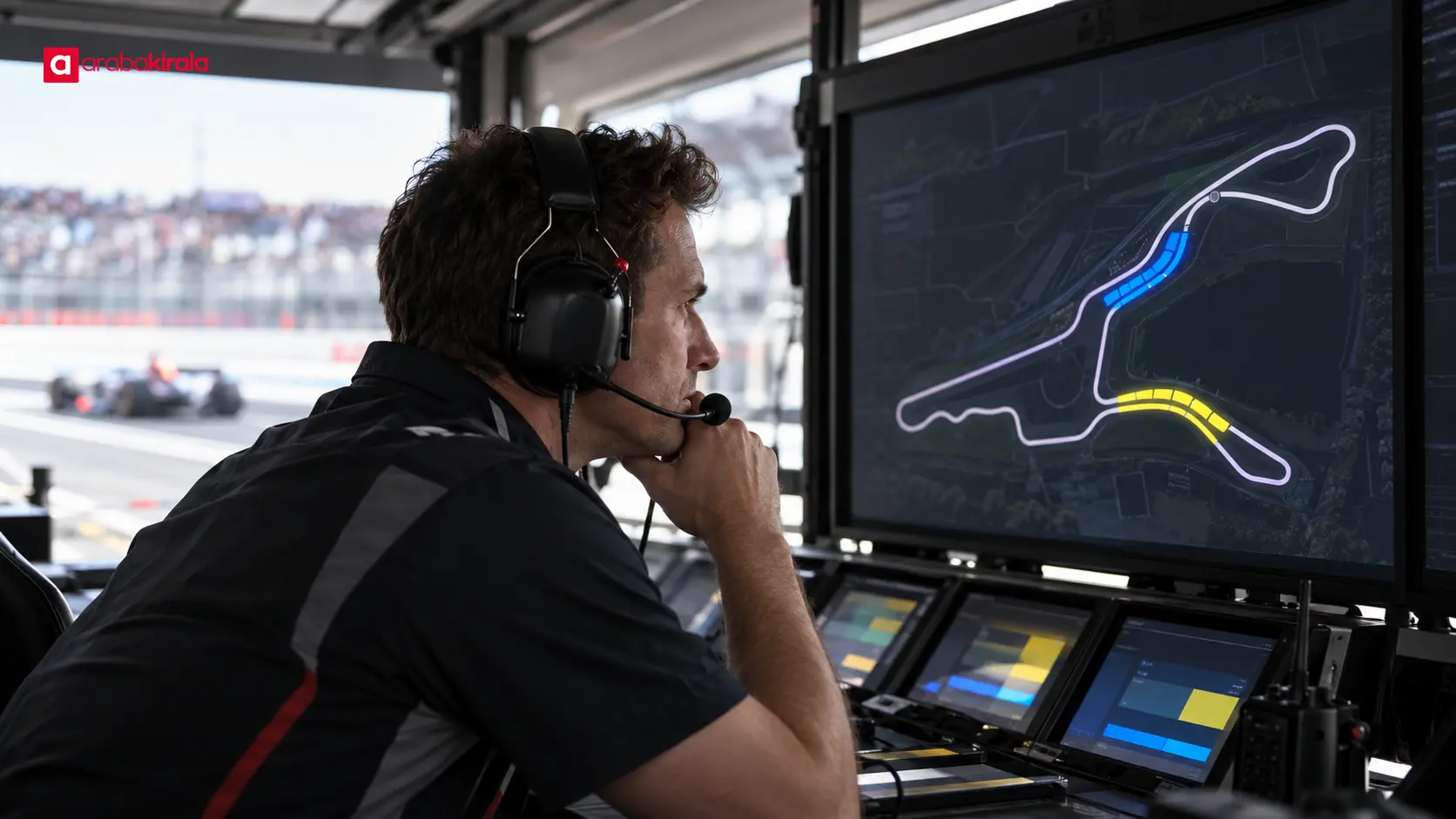
A broadcast may show blue and yellow flags close together for several reasons. A hazard may be present in one part of the circuit while a blue flag is shown to a car elsewhere. A driver may also need to manage a faster car approaching from behind while slowing for a hazard ahead. The crucial clues are where each signal is displayed and which car it concerns.
The messages do not cancel each other out. Blue concerns approaching traffic and the handling of a pass; yellow concerns caution and reduced speed in a dangerous area. Safe driving means the hazard warning remains central: a driver should not make a risky move in a yellow-flag zone just to clear a path for a car behind. The location and manner of any pass depend on track conditions and race-control instructions.
Broadcast graphics and trackside signals may differ
A television graphic, digital flag panel, or team display can show an alert at a different moment from a marshal’s physical flag. Each channel has its own coverage and update timing. A colored sector graphic is not necessarily a frame-by-frame representation of the signal shown to a driver. Read the graphic alongside the track camera, the cars’ behavior, and race-control messages.
How to read the signals while watching
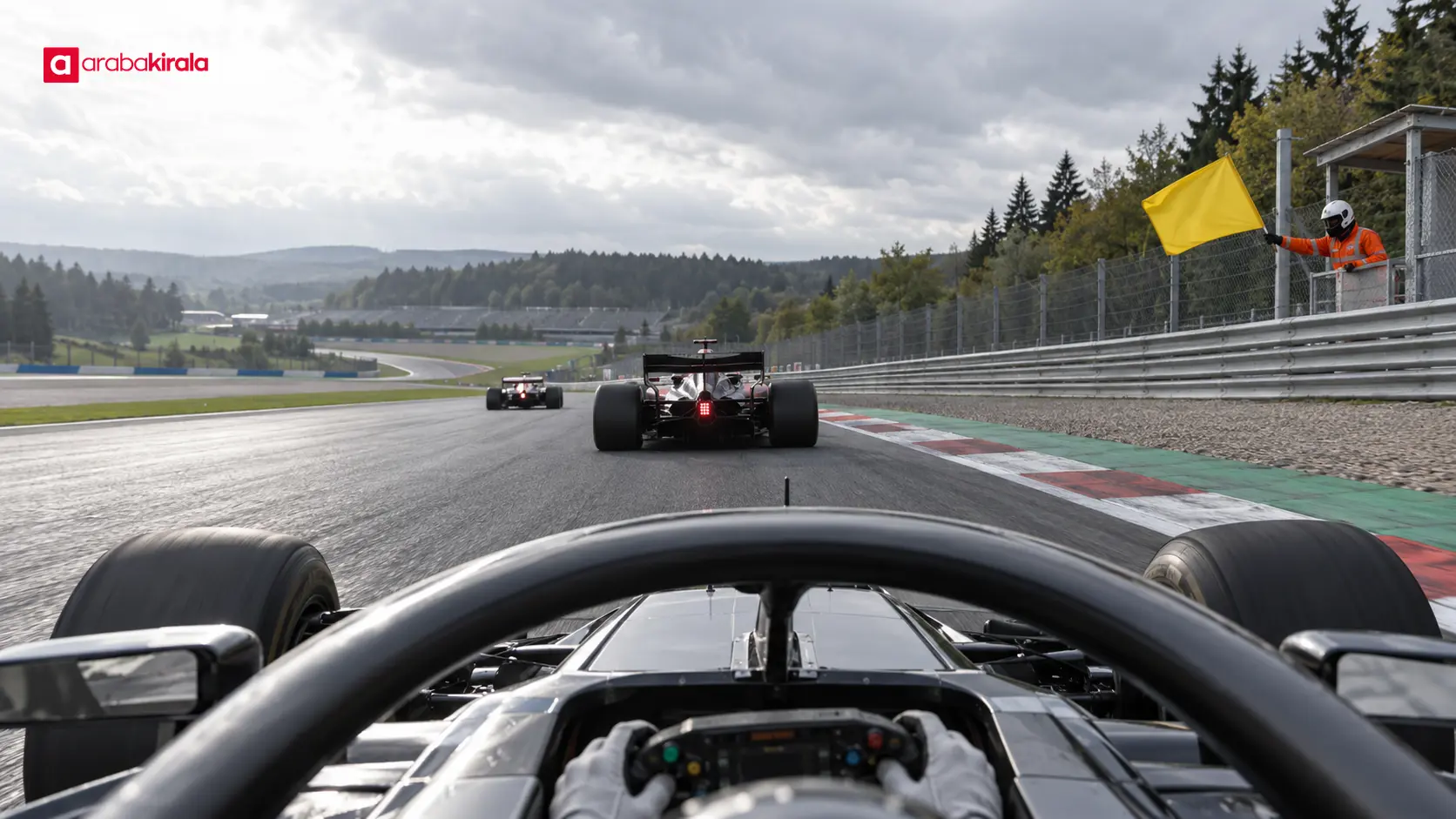
- Locate the signal: Identify the corner or sector where it appears. A hazard may be limited to one part of the circuit.
- Notice who it concerns: A blue flag may be directed at a particular car; a yellow warning affects drivers approaching the danger area.
- Watch the cars’ response: Slowing, changing line, or postponing a pass can show how drivers are responding to the warning.
- Follow official race information: Race-control messages can clarify the affected area and any additional safety measures.
- Avoid conclusions from one frame: Camera angles, broadcast delay, and screen graphics may leave out part of the event.
Do not confuse lapping traffic with a hazard warning
A blue flag relates mainly to the race flow of a car approaching from behind; a yellow flag relates to track conditions and safety. Their meaning depends on why the signal is displayed, not simply on a car’s position in the standings. A speed difference between two cars fighting for position does not by itself establish that a blue flag applies. Likewise, a yellow flag does not prove that a car has crashed; another risk or marshal intervention may be involved.
A quick viewer’s checklist
When a flag appears, first find its location, then identify the car or area to which the warning applies. With a blue flag, watch how the approaching car’s pass is handled. With yellow, watch whether drivers reduce speed and how they move through the hazard area. If both appear, treat them as two separate pieces of information rather than one color code. Race-control messages and a replay can clarify details that were unclear at first.
Summary and what to watch next
Blue flags warn of a faster car approaching from behind; yellow flags warn of danger and call for caution and reduced speed. Their simultaneous appearance means those messages may apply at once or in different parts of the circuit, not that a new independent signal exists. During the next race, compare the sector graphic with the track view, note which cars are affected, and watch their responses alongside race-control instructions.
Frequently Asked Questions
When is a blue flag shown in Formula 1?
A blue flag signals that a faster car is approaching from behind and that the pass should be handled in keeping with the race flow. The car receiving it, its lap status, and the applicable race instructions provide important context.
Can drivers overtake under a yellow flag?
In a yellow-flag area, drivers are expected to slow down and refrain from overtaking because of the danger. The applicable rules define the precise obligations; double yellow signals call for greater caution and a stronger reduction in speed.
Do blue and yellow flags together form one rule?
No. They communicate different things: blue concerns approaching traffic, while yellow warns about a hazard. They may be shown at the same time or in separate sectors.
Does a yellow flag mean the race has stopped?
No. A yellow flag generally warns of a localized danger while the race continues. Stopping the race or deploying a safety car is a separate decision made by race control.
Why might a broadcast graphic differ from a trackside flag?
Graphics and physical flags are separate information channels, with different coverage and update timing. Use the sector display, track images, and official race messages together to understand what happened.
Legal Disclaimer: All content, articles and information on the Araba Kirala website are provided solely to inform users. No information shared on this website constitutes definitive advice or guidance. Araba Kirala Teknoloji A.Ş. and its authors cannot be held responsible for any direct or indirect damages arising from the application of information on the website. For all questions and requests regarding car rental, please contact the office from which you will rent your vehicle.