
How do Formula 1 weight limits and ballast affect performance?
Published: October 25, 2026 • Reading Time: 7 min • Last Updated: October 25, 2026
Learn what the Formula 1 minimum weight means, why teams use ballast, and how weight distribution relates to balance, tires, braking, and lap performance.
Contents
- What does the Formula 1 weight limit mean?
- What is ballast and what does it do?
- Why can the same mass have different effects in different places?
- How mass affects lap performance
- Acceleration and braking
- Cornering and tire behavior
- What do teams consider when adjusting weight distribution?
- Why does weighing matter during a race weekend?
- Summary: how to think about ballast and performance
- Frequently Asked Questions
In Formula 1, the weight limit sets a minimum mass that a car must meet under the prescribed measurement conditions. Ballast is a controlled way to bring a light car up to that threshold and, within the rules, position mass to help tune balance. This guide explains what the minimum weight covers, how ballast works, and why the location of mass can affect braking, cornering, tire use, and lap performance. The key point is that being lighter is not the only consideration: where the mass sits and whether the car remains compliant both matter.
What does the Formula 1 weight limit mean?
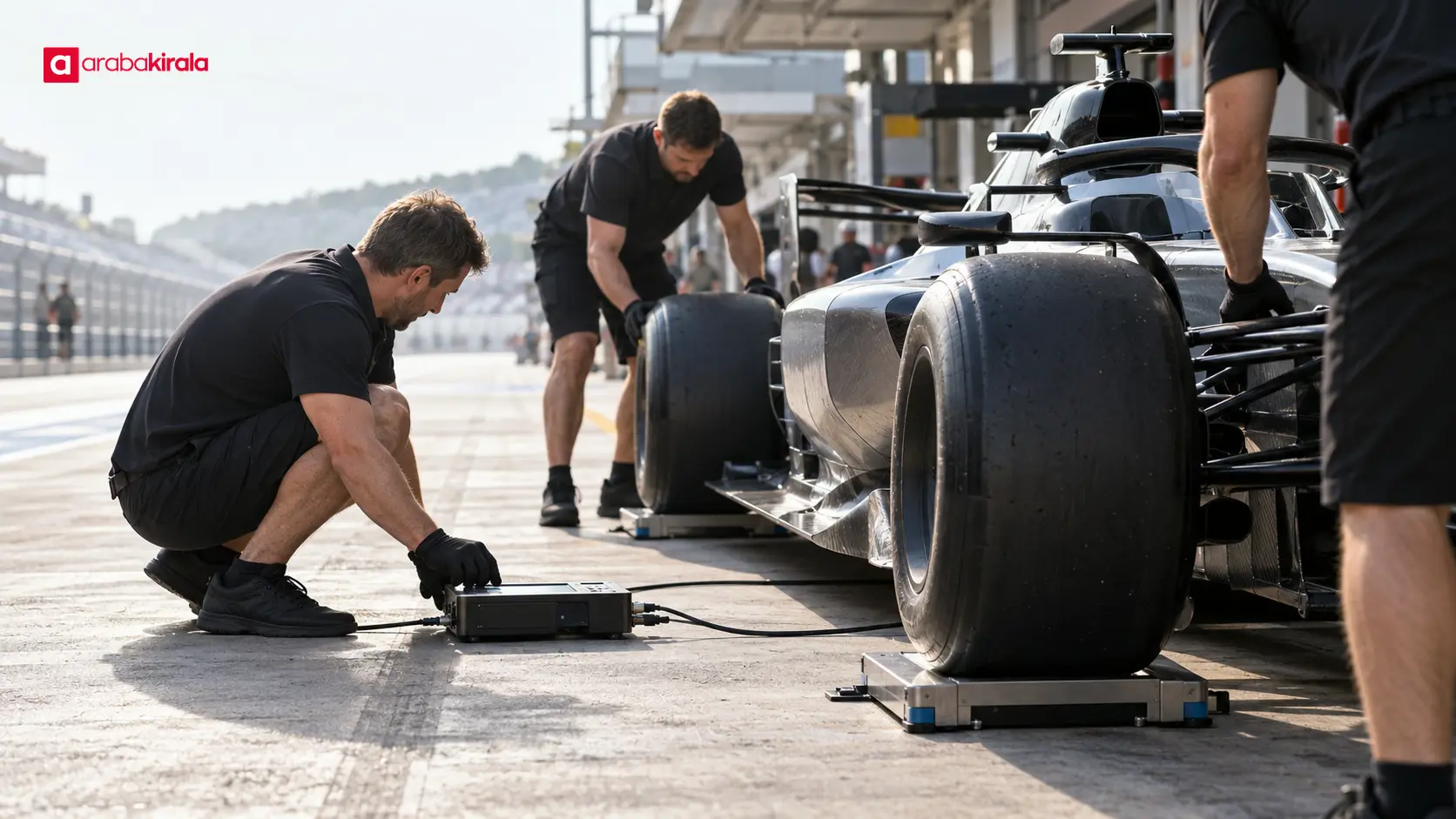
The minimum weight is a threshold in the technical regulations: a car cannot be below it when measured under the defined conditions. It does not mean the car weighs exactly the same throughout every lap. Fuel is consumed, tires wear, and fluids are present; the official rules specify the state of the car and which components count during a check. A figure from a different season should not be treated as the current value without checking the applicable regulations.
The limit creates a measurable framework for car design and technical checks. Teams account for the mass of the chassis, power unit, suspension, bodywork, and other components together. Reducing the mass of a component may lower the car's total, but that component still has to meet safety, durability, and compliance requirements. The design goal is not simply to produce a low reading on the scales; it is to make a fast, reliable car within the rules.
What is ballast and what does it do?
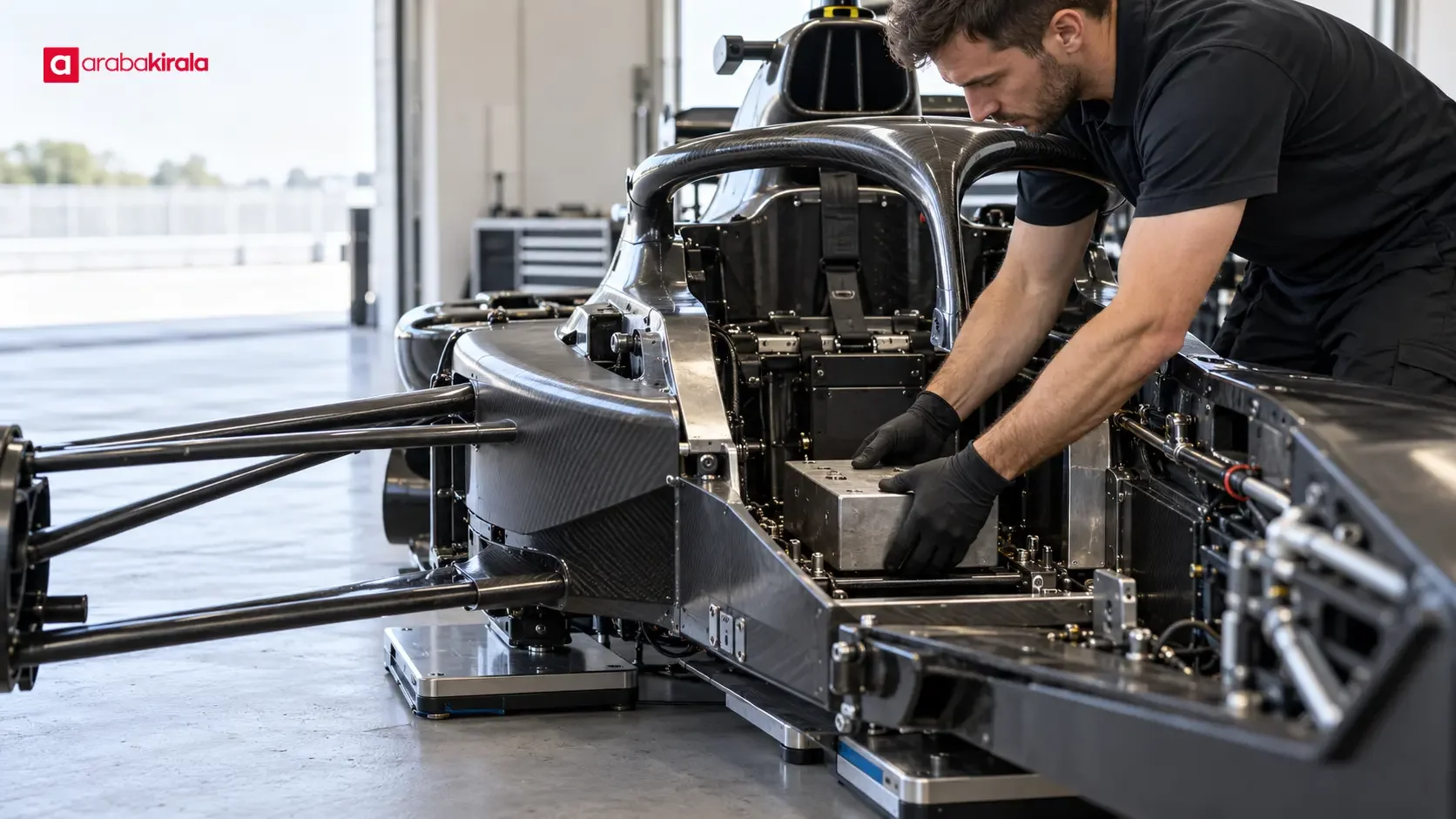
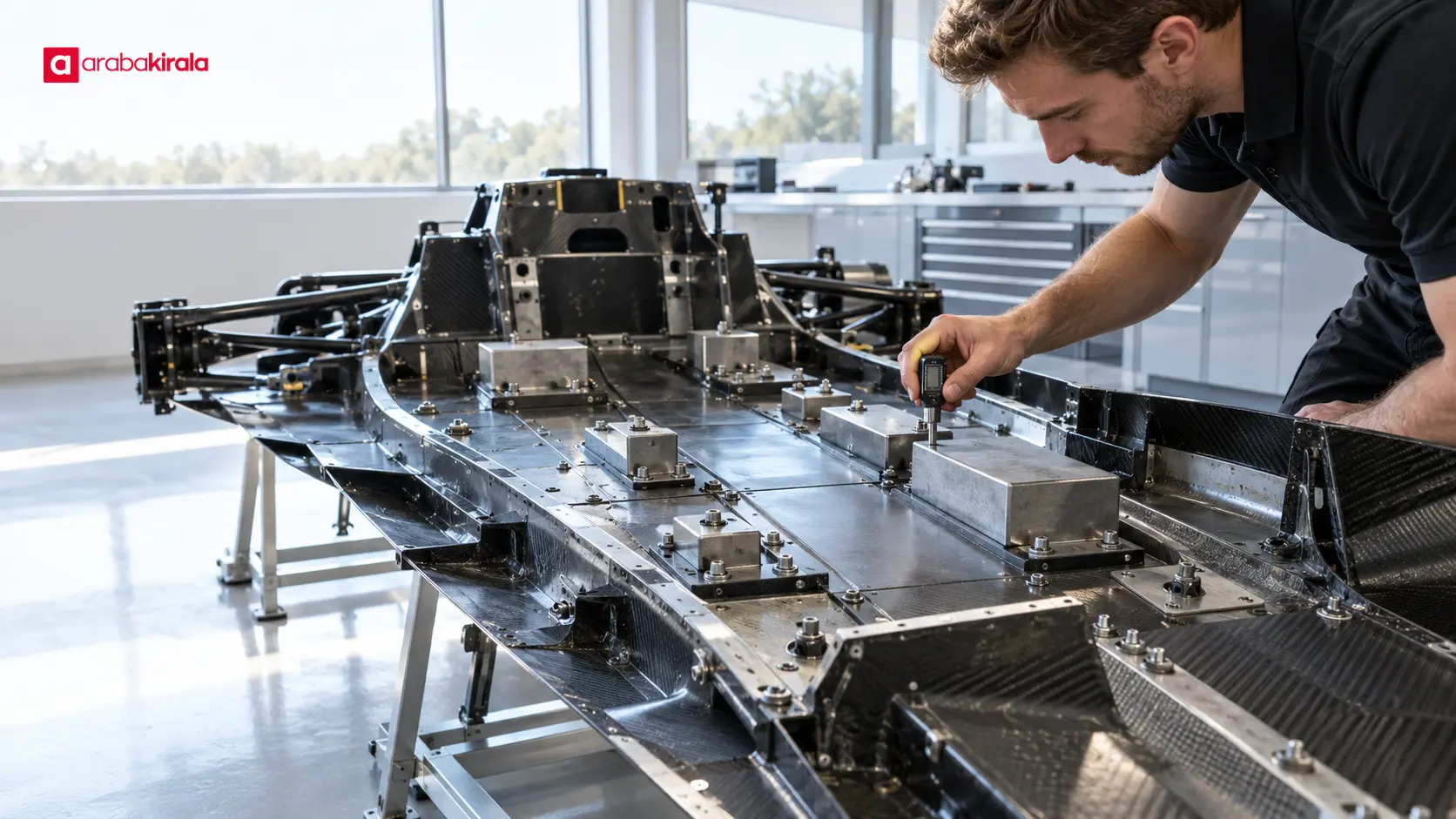
Ballast is fixed mass used to bring a car up to the required minimum or to adjust mass distribution within the permitted limits. If lightweight components leave a car below the minimum, ballast can make up the difference in a controlled way. Its position is chosen carefully because it changes the loads on the front and rear axles, the left-right balance, and the centre of gravity.
Ballast should not be thought of as loose cargo. In a racing car, it is secured at defined points so it cannot shift while the car is moving. Its placement is part of the car's design and is subject to regulation. The amount available and the areas where it may be fitted depend on the technical rules for the season, so there is no single placement practice that applies unchanged to every year.
Why can the same mass have different effects in different places?
A car's behavior depends on the distribution of mass as well as its total. More load on the front axle changes how the front tires work; more load at the rear can alter the response of the back of the car. A lower centre of gravity can help engineers manage body movement in corners, but the result also depends on suspension, aerodynamic load, tires, and track conditions.
Mass placed farther from the car's centre can increase its resistance to changing direction. This is related to moment of inertia: the distribution of mass influences how the car responds when accelerating, braking, and turning. Placing ballast near the centre or closer to one axle can produce different balance characteristics despite the same total mass. There is no universally ideal location; the aim is a predictable response on corner entry, through the middle, and on exit.
How mass affects lap performance
Acceleration and braking
A heavier car needs more force to gain speed under otherwise similar conditions. During braking, more mass must be slowed, and energy is transferred through the tires and braking system. Weight alone cannot produce a specific lap time or stopping distance for a Formula 1 car. Power, aerodynamic drag, tire grip, energy management, and the shape of the circuit all contribute to the result.
Cornering and tire behavior
In a corner, the tires generate the lateral force that keeps the car on its path. Increasing the car's mass changes the load and operating conditions on the tires, while the way that load is shared among the four wheels matters too. Load transfer shifts during braking and acceleration between the axles, and from side to side in a corner. Those changes can affect tire temperature and wear. A ballast adjustment therefore needs to support predictable tire behavior over a stint, not just improve one corner.
Balance influences a driver's braking point, timing when they apply throttle, and steering corrections. A front end that does not turn in sufficiently or an unstable rear can make the tires slide more and generate heat. Engineers consider ballast alongside suspension settings, aerodynamic configuration, tire pressures, and track conditions. Ballast is one tuning tool, not a substitute for the rest of the setup.
What do teams consider when adjusting weight distribution?
Teams combine track data, simulations, and driver feedback. Fast corners, heavy braking zones, kerb use, and surface grip reveal different aspects of a car's response. If the car behaves inconsistently in one section, engineers do not assume ballast is the cause; aerodynamic balance, suspension movement, tire condition, and other settings are also assessed.
- Total mass: Whether the car meets the measurement requirements defined by the applicable technical regulations.
- Axle loads: How load is shared between the front and rear affects tire use and the car's response.
- Centre of gravity: Its vertical and horizontal position contributes to body movement and direction changes.
- Consistency over a stint: Sustained tire performance and balance matter as well as one fast lap.
- Secure fitment and compliance: Ballast must be secured safely and placed where the rules allow.
Why does weighing matter during a race weekend?
Technical inspection checks measurable features of the car against the regulations. A reading is considered in the conditions present at the time of inspection; the configuration, whether the driver is in the car, and the measurement procedure can matter, so the official method is decisive. A post-race check follows the rules for that situation, including how changes such as fuel consumption are handled.
For teams, managing mass and ballast is part of technical preparation, not just a matter of avoiding a penalty. For spectators, weighing shows a technical check related to the car's mass; it does not by itself explain whether the car is fast or slow. Lap time is the combined result of track conditions, driving, tires, aerodynamic efficiency, and many other factors.
Summary: how to think about ballast and performance
Formula 1's weight limit defines a technical minimum, while ballast helps manage total mass and its placement within the rules. Total mass affects acceleration, braking, and tire loads; the location of that mass can change balance and response to direction changes. These effects interact. A good setup must comply with the regulations while supporting consistent handling and tire use on the circuit. When checking a current minimum weight or ballast-placement restriction, consult the FIA technical regulations for that season rather than carrying figures across from another year.
Frequently Asked Questions
Can Formula 1's minimum weight change from season to season?
Technical regulations and measurement conditions can change between seasons. For a specific year, check the official FIA technical regulations that apply to it. A figure from a previous season should not automatically be treated as current.
Does ballast always make a car faster?
No. Ballast adds mass; its potential value comes from bringing the car to the required minimum and helping distribute that mass more usefully. More total mass can be a disadvantage for acceleration and braking, while any balance benefit depends on the rest of the car's setup.
Can teams put ballast wherever they want?
No. Its position and attachment are constrained by the car's design and the technical rules. The applicable season's FIA regulations define the relevant limits; unrestricted placement should not be assumed.
Is a lower centre of gravity always better?
A lower centre of gravity can help manage body movement and load transfer. The overall balance still depends on suspension, aerodynamics, tires, and track characteristics, so one geometric feature cannot guarantee the same result at every circuit.
Does a post-race weigh-in show the car's starting weight?
The reading is interpreted under the technical procedure in force at the time of the check. Fuel is consumed during a race, so post-race conditions differ from the start; the applicable regulations define the measurement method and components used for the assessment.
Legal Disclaimer: All content, articles and information on the Araba Kirala website are provided solely to inform users. No information shared on this website constitutes definitive advice or guidance. Araba Kirala Teknoloji A.Ş. and its authors cannot be held responsible for any direct or indirect damages arising from the application of information on the website. For all questions and requests regarding car rental, please contact the office from which you will rent your vehicle.












