
What Do Yellow, Double Yellow and Red Flags Mean in Formula 1?
Published: October 17, 2026 • Reading Time: 7 min • Last Updated: October 17, 2026
Learn what yellow, double yellow and red flags communicate in F1, what drivers must do, and how each signal affects a session.
Contents
- Why Formula 1 uses flags
- Yellow flag: Hazard ahead, slow down
- A local warning is not the same as a race stoppage
- Double yellow flags: A more serious hazard
- How to follow the extent of a warning
- Red flag: The session or race is stopped
- How a red flag differs from a safety car
- The difference between the three signals
- Tips for reading flags while watching
- What the safety principle means for everyday driving
- Summary and next step
- Frequently Asked Questions
F1 flag signals quickly tell drivers about hazards and changes to the session. This guide explains the difference between a yellow flag, double yellow flags and a red flag, what drivers are expected to do, and how viewers can interpret each signal while watching a race.
Why Formula 1 uses flags
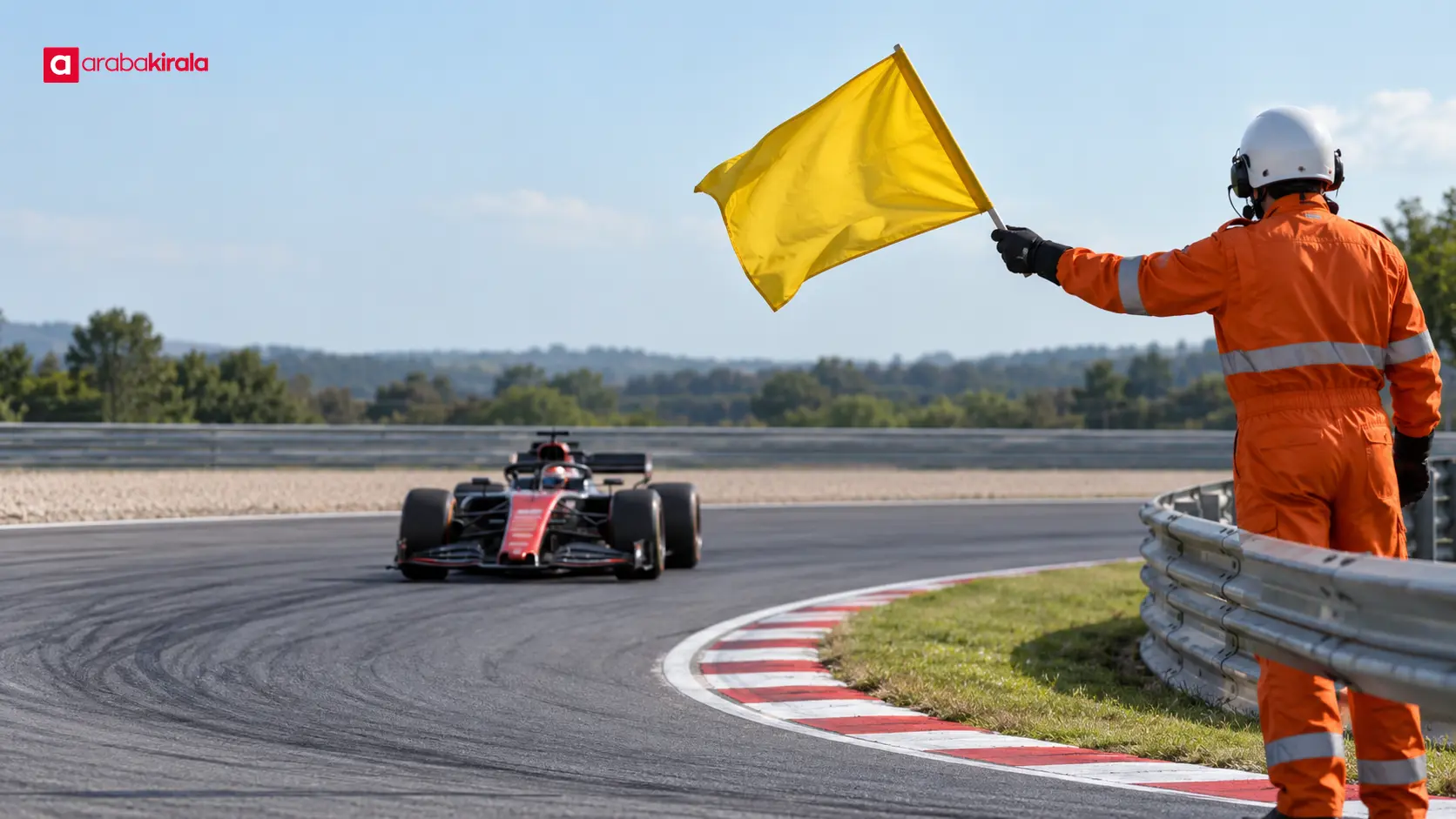
When cars are travelling at high speed, a spoken explanation may not reach every driver quickly enough. Flags provide a visible warning about conditions in a particular part of the circuit. Marshals can display them trackside, while race control may also communicate signals through electronic panels. The purpose is to help drivers respond safely and follow the applicable instructions.
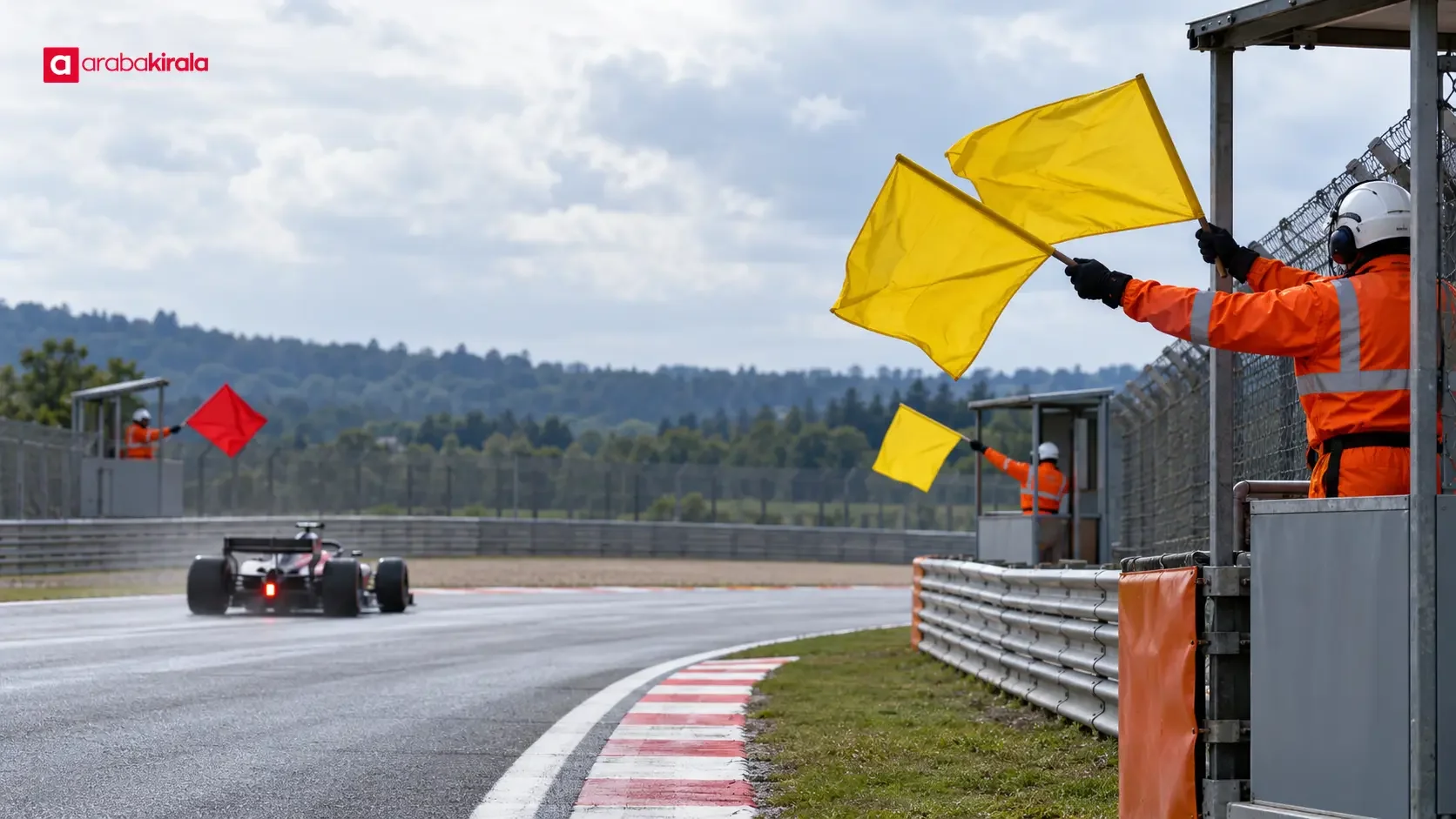
Yellow and red flags do not carry the same message. A yellow flag warns of a hazard in a section of the track and calls for reduced speed. Double yellow flags indicate a more serious danger and require drivers to slow significantly and be ready to stop if necessary. A red flag means the session or race has been stopped.
Yellow flag: Hazard ahead, slow down
A single yellow flag indicates a danger on or near the track ahead. It may relate to a stranded car, a slippery surface, debris or a situation that requires marshals to intervene. The flag alone does not explain the exact cause, so drivers need to pay close attention as they approach the indicated section and adjust their speed to the conditions.
Passing is prohibited in the section where the yellow signal applies. Drivers must proceed at a pace that lets them retain control and respond to the hazard. A single yellow does not automatically stop the entire race. The warning normally relates to a particular part of the circuit, while racing may continue elsewhere.
A local warning is not the same as a race stoppage
When viewers see a yellow flag, they should not assume that all cars must enter the pit lane or that the race has ended. It is a local warning. Cars may continue cautiously, and normal racing conditions return after the hazard has been cleared and the warning withdrawn. Following the sector information in the broadcast can help viewers understand where the signal applies.
Double yellow flags: A more serious hazard
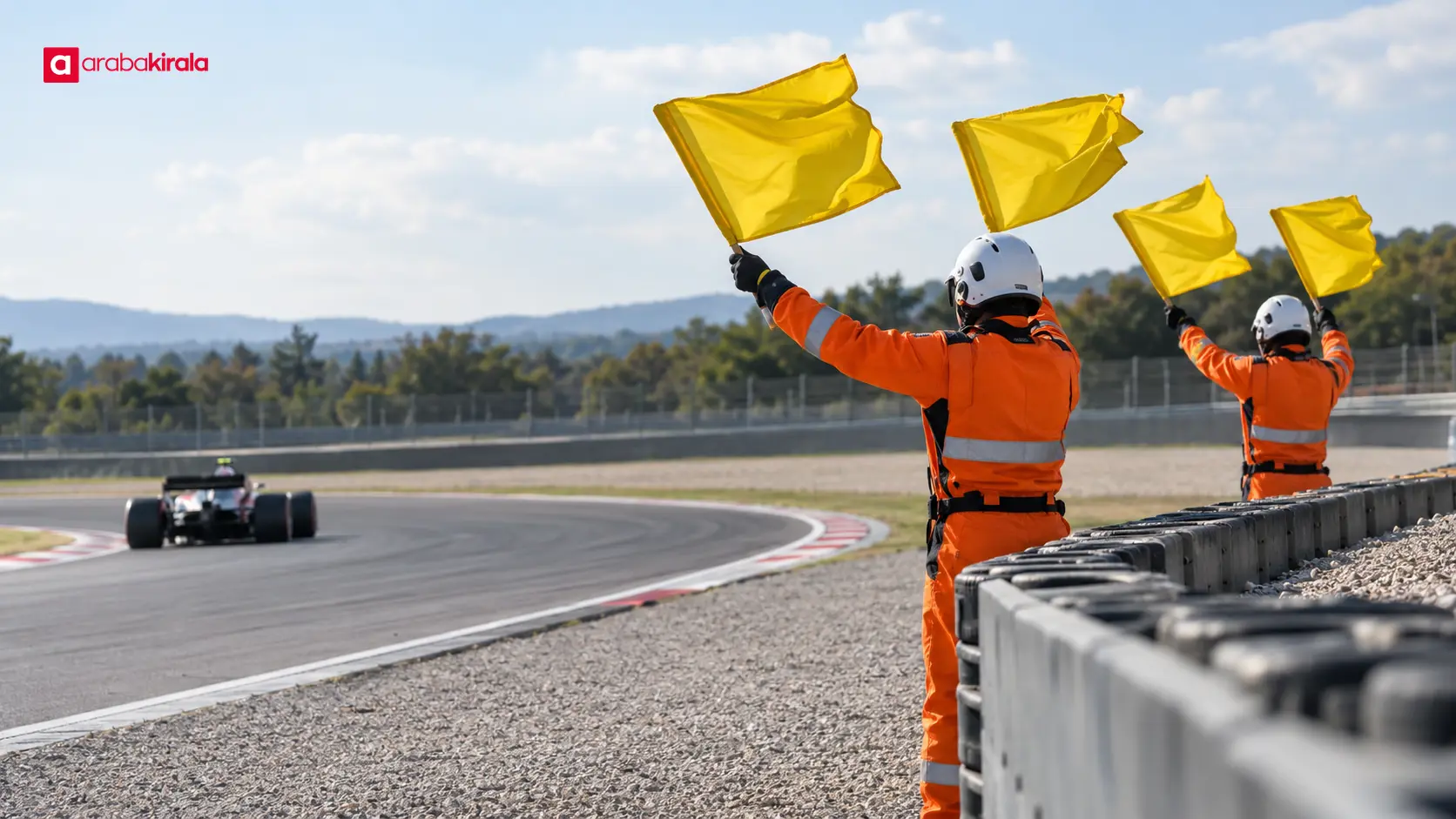
Double yellow flags indicate a more serious danger than a single yellow. A car or obstruction on the track, marshals working on the circuit, or a situation that limits visibility or escape space may prompt this signal. Drivers must slow significantly, maintain control of the car and be prepared to stop if needed.
Passing is not permitted in a double-yellow section. Simply lifting off the throttle may not be enough; the driver has to reduce speed to a degree that fits the danger. The key distinction is the need for greater caution and readiness to stop. Double yellow flags do not, by themselves, mean the whole race has been stopped.
How to follow the extent of a warning
Flags appear at designated points around the circuit and on electronic panels. A driver may encounter another signal after leaving the affected area. For viewers, broadcast graphics and race-control announcements help identify which sector has a yellow or double-yellow warning. Seeing a car slow down does not, on its own, explain the rule details; the official signal and race-control information should guide interpretation.
Red flag: The session or race is stopped
A red flag communicates that conditions do not allow the session or race to continue. Race control may use it after a major incident, when the circuit is blocked, or when the track needs to be cleared for safe intervention. Unlike a yellow flag, the message is not just to take care at one hazard: racing activity is being stopped.
When a red flag is shown, drivers reduce speed and follow the procedure specified by race control. Where cars wait, how they are positioned and whether the session will restart depend on the circumstances and official instructions. It is not safe to assume that every red flag leads to the same kind of restart or that it always ends the race.
How a red flag differs from a safety car
A safety car manages the pace and order of the cars while the race remains under way. A red flag stops the session or race. Under a safety car, cars continue moving in a controlled formation even though normal racing conditions are suspended. With a red flag, drivers follow the stoppage instructions from race control. The distinction helps viewers tell whether the event is being managed at reduced speed or has actually been halted.
The difference between the three signals
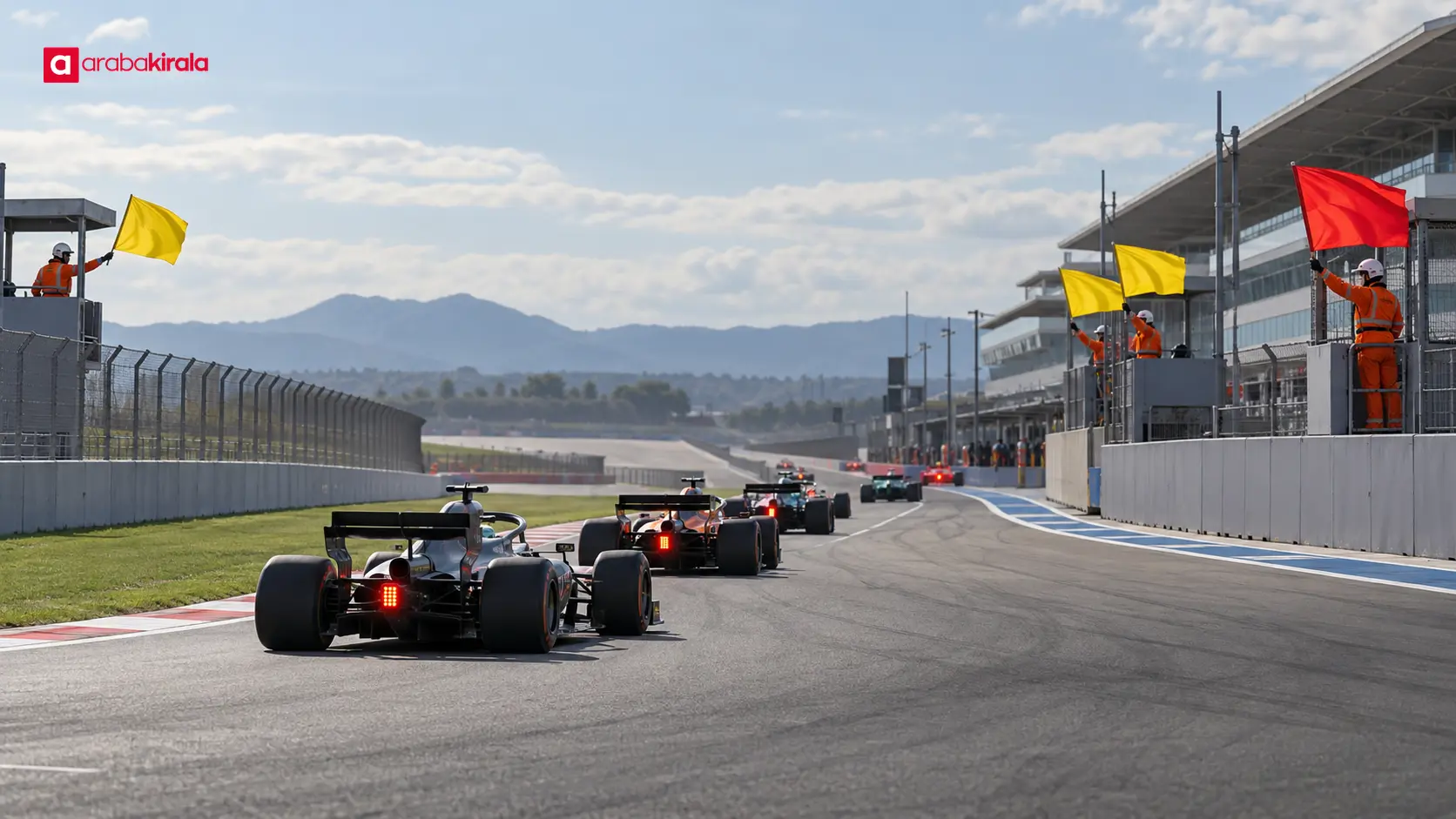
- Yellow flag: There is a hazard in a specific area; drivers slow down and do not pass there.
- Double yellow flags: The danger is more serious; drivers slow significantly and remain ready to stop.
- Red flag: The session or race is stopped; drivers follow race-control instructions.
The difference is not just the severity of the hazard. Yellow signals describe precautions for a particular part of the circuit while the session continues. A red flag communicates that racing activity has been stopped. Knowing this distinction makes it easier to understand broadcast updates and why cars have slowed.
Tips for reading flags while watching
- Check where the signal is shown: A local yellow warning does not mean the whole circuit is under identical conditions.
- Distinguish yellow from double yellow: Double yellow calls for a more substantial reduction in speed and readiness to stop.
- Follow instructions after a red flag: Race-control announcements explain whether cars will wait, where they will go and whether the session will resume.
- Do not guess the cause: The flag warns of a hazard; the broadcast or official race update may clarify what happened.
What the safety principle means for everyday driving
Formula 1 flags operate under racing rules and should not be treated as the same signals used on public roads. The general safety idea is familiar, though: when a hazard is indicated, adapt speed to conditions, leave enough following distance and avoid abrupt manoeuvres. Drivers renting a car should also choose a speed suited to the road, especially in rain, reduced visibility or roadwork areas, and maintain control of the vehicle.
Before setting off, learning the car’s basic controls, including the lights and wipers, and checking the tyres and fuel or charge level can support a prepared journey. Ask the rental branch about vehicle-specific use or handover details when needed. Like trackside flags, road warnings are reminders to stay attentive and anticipate changing conditions.
Summary and next step
In F1, a single yellow flag warns drivers to slow for a hazard; double yellow flags call for a greater reduction in speed and readiness to stop; a red flag stops the session or race. During the next Grand Prix, watch which sector displays the signal and follow race-control updates to understand its scope and what happens next.
Frequently Asked Questions
Can drivers overtake under a single yellow flag in F1?
No. Passing is prohibited in the section where the yellow flag applies. Drivers should reduce speed as they approach the hazard and keep control of the car. Broadcast sector information and the official signal help identify the affected area.
What must a driver do under double yellow flags?
The driver must slow significantly, stay alert to the danger and be prepared to stop if necessary. Double yellow flags indicate a more serious risk than a single yellow flag.
Does a red flag always end the race?
No. A red flag stops the session or race, but the decision to restart or end it depends on the circumstances and the official instructions from race control.
Is the race stopped when the safety car is deployed?
No. Cars continue to move under a controlled procedure behind the safety car. A red flag stops the session or race and requires drivers to follow separate stoppage instructions.
Does a yellow flag apply to the whole circuit?
It normally warns about a particular section where a hazard has been identified. Track signals and race-control announcements help indicate where the warning applies and when it has been withdrawn.
Legal Disclaimer: All content, articles and information on the Araba Kirala website are provided solely to inform users. No information shared on this website constitutes definitive advice or guidance. Araba Kirala Teknoloji A.Ş. and its authors cannot be held responsible for any direct or indirect damages arising from the application of information on the website. For all questions and requests regarding car rental, please contact the office from which you will rent your vehicle.












